Water Stress on Mint: Causes, Checks & Fixes
Quick answer
Water stress wilts Mint from drought or paradoxically from soggy roots that cannot absorb water. First step: Finger-test soil-soak if dry, stop watering and inspect roots if wet.
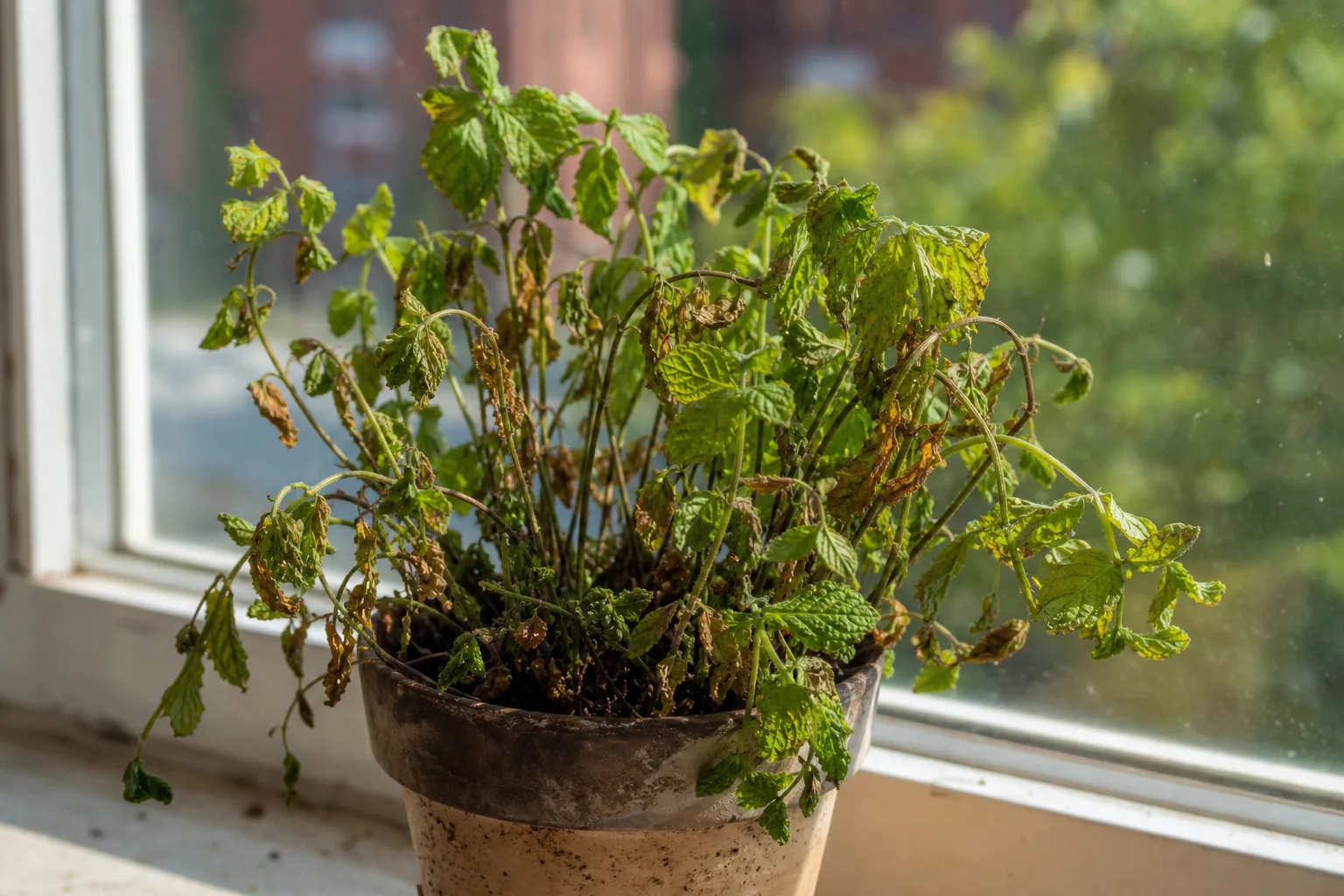
Water Stress on Mint: Causes, Checks & Fixes
This guide covers water stress on Mint. See also the general Water Stress guide, watering, and light pages for this plant.
Water Stress on Mint: Causes, Checks & Fixes
Quick answer
Mint wilts from two opposite moisture problems: the mix is too dry to supply water, or it stays so wet that roots lose oxygen and cannot move water upward watering and oxygen balance. Your first fix is one check, not a treatment bundle: press 1-2 cm into the mix and lift the pot. If it is dry and light, rehydrate deeply once. If it is wet and heavy, stop watering and inspect roots.
Mint is vigorous and water-demanding in active growth, especially in containers mint growth habit, but “consistently moist” does not mean constantly saturated. The most common mistake is reacting to wilt by watering again without checking soil, which can push a mildly dry plant into wet-root stress.
For related Mint care, see Mint overview, Mint watering, Mint light, Mint soil.
For related Mint care, see Mint problems, Root Rot on Mint, Yellow Leaves on Mint, Leggy Growth on Mint.
When to use this page vs similar mint guides
Use this page when the main symptom is wilt with unclear moisture status (dry vs wet). If you already confirmed one direction, jump to the matching deep guide:
- Dry soil pattern:
[underwatering on Mint](/plants/mint/underwatering/)workflow - Wet soil pattern:
[overwatering on Mint](/plants/mint/overwatering/)orroot-rotworkflow - General collapse with mixed causes:
wiltingguide
Why Mint gets water stress
Fast top growth in small pots
Container mint adds leaf mass quickly in warm weather, so water demand can jump over a few days mint growth habit. A pot that was “fine every three days” last week may need daily checks during heat.
Swing-stress cycle after overcorrection
A common kitchen-herb pattern is dry wilt on day one, then heavy watering and saucer water retention, then repeat wilt on wet soil two to three days later. That second wilt is often oxygen-limited roots rather than thirst root stress from excess water.
Drainage and container setup problems
Mint in decorative cachepots, compacted media, or containers without open drainage holes stays saturated too long container drainage basics. The top can feel slightly dry while lower mix remains wet.
Season and light mismatch
In cooler or dimmer periods, transpiration drops and mint uses water more slowly. Keeping summer watering frequency through winter is a reliable way to create wet-root stress.
What water stress looks like on Mint
Dry-soil pattern
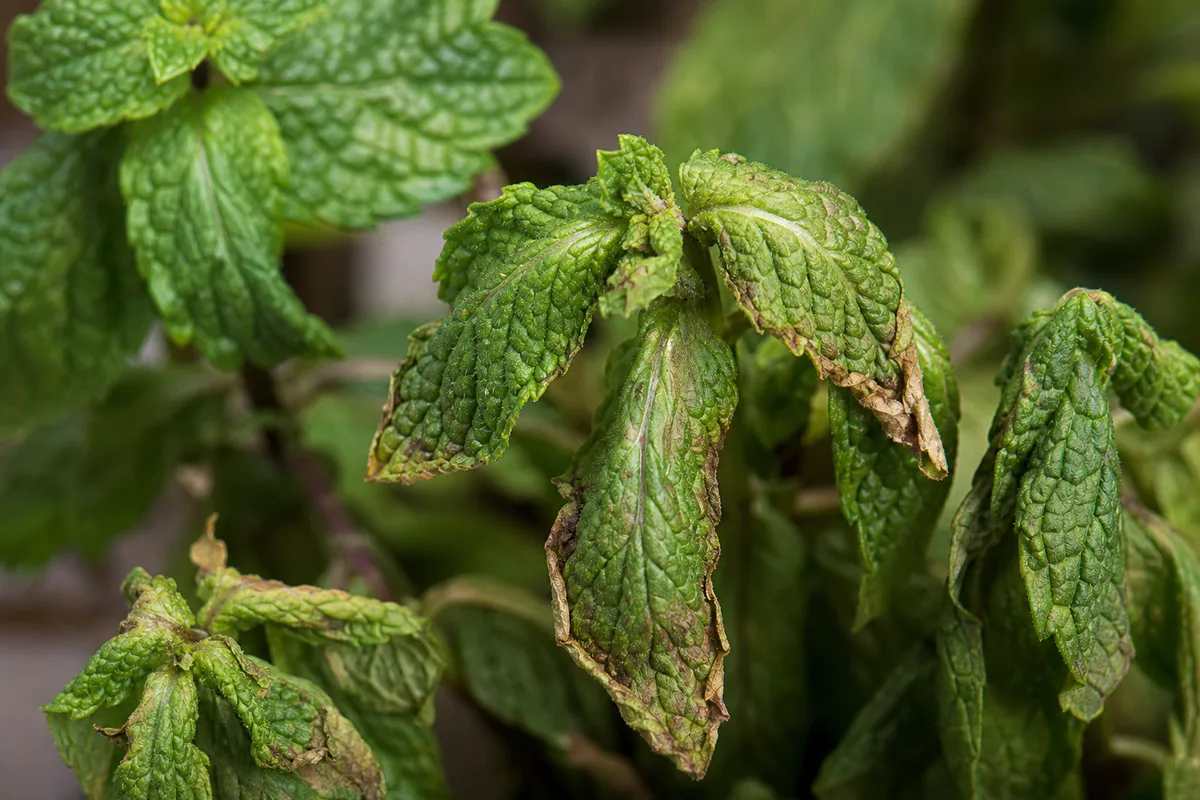
Water Stress symptoms on Mint - compare with healthy tissue on the same plant.
- Leaves and shoot tips droop but stems remain mostly firm
- Mix is dry at 1-2 cm and pot feels noticeably light
- Leaf edges may crisp after repeated drydowns
Wet-soil pattern
- Leaves droop even though mix feels damp or wet
- Pot remains heavy for days
- Lower leaves yellow first, stems may soften, and the root zone may smell stale or sour
Both patterns can look like “wilt,” which is why touch-and-lift checks are more reliable than appearance alone.
How to confirm the cause at home
- Probe moisture at 1-2 cm. Dry indicates drought risk; wet indicates wet-root risk.
- Lift the pot. Lightweight supports drought diagnosis; persistent heaviness supports wet-root diagnosis.
- Check stem firmness. Firm stems usually indicate early stress; soft tissue suggests deeper root trouble.
- Inspect roots if wet wilt persists 48-72 hours. Healthy mint roots are pale and firm; brown, mushy roots indicate decline from prolonged saturation root decline signs.
Lookalikes to rule out
- Afternoon heat wilt: mint can droop in strong midday heat and recover by evening when roots are healthy.
- Pest pressure: mites or aphids cause distortion and stippling, not just moisture-linked wilt mint pest profile.
- Transplant slump: temporary wilt can follow recent Mint repotting guide even with proper moisture.
First fix to try
If mix is dry: rehydrate once, thoroughly
Water until runoff is steady from drainage holes, then let excess drain fully. Do not do repeated “small sips” that only wet the top layer. Re-check pot weight the next day so you learn the feel of a properly hydrated container.
If mix is wet: pause watering and restore air
Stop watering until the top layer dries, increase airflow, and remove standing saucer water immediately avoid standing water. If stems keep softening or odor worsens, unpot and trim clearly rotten roots before replanting into an airy mix.
What not to do
Do not water on a fixed calendar. Do not fertilize as a first response to wilt. Do not repot just because leaves droop if the root ball is otherwise firm and healthy. Most importantly, do not water limp leaves in an already heavy pot.
Step-by-step recovery after first fix
Days 1-3
Stabilize moisture direction: no extra interventions besides correct watering action. Remove collapsed leaves only if they are fully necrotic.
Days 4-10
Look for the trend, not perfection. Improvement means less daytime wilt, firmer petioles, and no spread of yellowing to new nodes.
Weeks 2-3
Healthy recovery appears as clean new shoots. Old damaged leaves often remain marked and can be pruned gradually once new growth is active.
If symptoms worsen despite corrected moisture and drainage, escalate to a root-rot workflow and consider restarting from healthy stem cuttings.
Recovery timeline and realistic expectations
Drought-only cases may perk up within 12-24 hours after deep rehydration. Wet-root cases usually improve more slowly, often over one to three weeks, because roots must recover before canopy turgor normalizes root recovery takes time. Judge progress by new growth quality, not by whether old leaves become perfect.
How to prevent water stress on Mint next time
- Use containers with open drainage and a free-draining herb mix container herb guidance.
- Water by soil dryness plus pot weight, not by weekday routine.
- Empty saucers after watering; do not let roots sit in runoff.
- Increase check frequency during hot, bright weather when mint is growing fastest mint growth habit.
- Reduce watering frequency in cooler, dimmer conditions.
Practical checks
Urgency check
Treat as urgent if wilt persists in wet mix, stems feel soft, roots smell sour, or collapse is spreading to new shoots.
Best inspection order
Soil moisture at 1-2 cm, pot weight, stem firmness, then root color/texture if unpotting.
Mint care cross-check
Mint likes evenly moist conditions while actively growing, but roots still need oxygen in the container profile moist but not saturated. For this reason, “check before you pour” is the safest long-term rule.