Nitrogen Deficiency on Mint: Causes, Checks & Fixes
Quick answer
Nitrogen deficiency on mint usually starts with uniform yellowing on older leaves while newer growth stays somewhat greener. First step: give one half-strength balanced liquid feed to moist soil, then reassess new growth in 10-14 days.
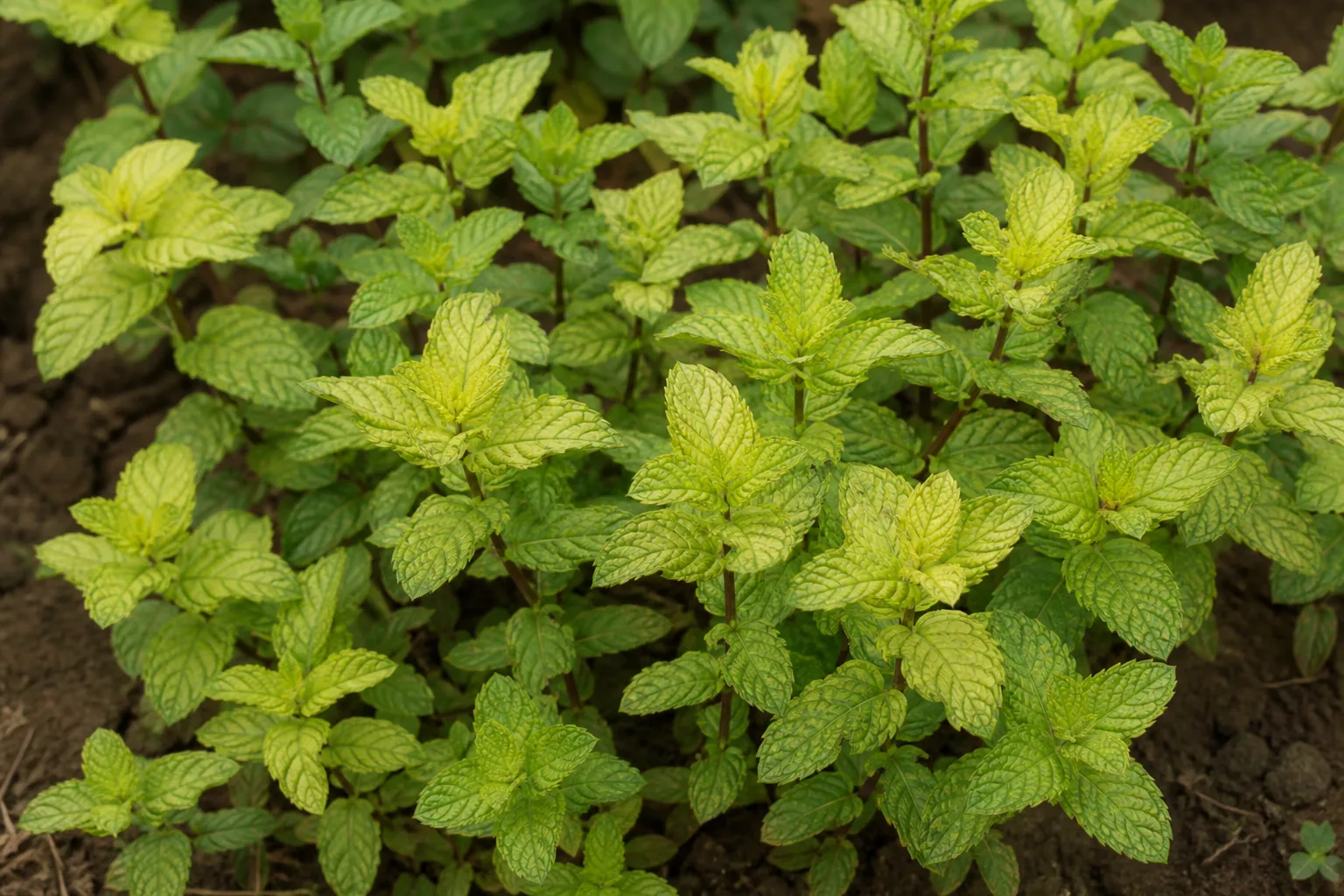
Nitrogen Deficiency on Mint: Causes, Checks & Fixes
This guide covers nitrogen deficiency on Mint. See also the general Nitrogen Deficiency guide, watering, and light pages for this plant.
Nitrogen Deficiency on Mint: Causes, Checks & Fixes
Quick answer
Nitrogen deficiency on mint usually appears as uniform yellowing on older leaves first, while newer tips stay greener for a while because nitrogen is a mobile nutrient that plants reallocate to new growth Iowa State Extension, MSU Extension. In container mint, frequent cutting plus repeated watering can drain available nutrients over time UMD Extension.
First fix: apply one half-strength balanced liquid feed to already moist potting mix, then wait 10-14 days and judge recovery by the color and pace of new growth, not old leaves UMN Extension.
If you are not sure the issue is nutrient-related, start with /plants/mint/yellow-leaves/ for broader triage.
Why Mint gets nitrogen deficiency
Mint is vigorous and repeatedly harvested, so it removes nutrients from a small root zone faster than many lower-harvest herbs. In pots, nutrients are also lost through leaching as you water through the mix UMD Extension.
Common mint-specific triggers:
- heavy cutting from a small container for weeks without feeding
- older mix that has not been refreshed at division/Mint repotting guide
- frequent summer watering in fast-draining media
- long active-growth periods with no supplemental fertilizer
Mint also spreads quickly and can outgrow small pots, increasing nutrient demand relative to soil volume UMD Extension.
For ongoing feeding strategy after diagnosis, use /plants/mint/fertilizer/.
What nitrogen deficiency looks like on Mint
On mint, true nitrogen deficiency usually presents as:
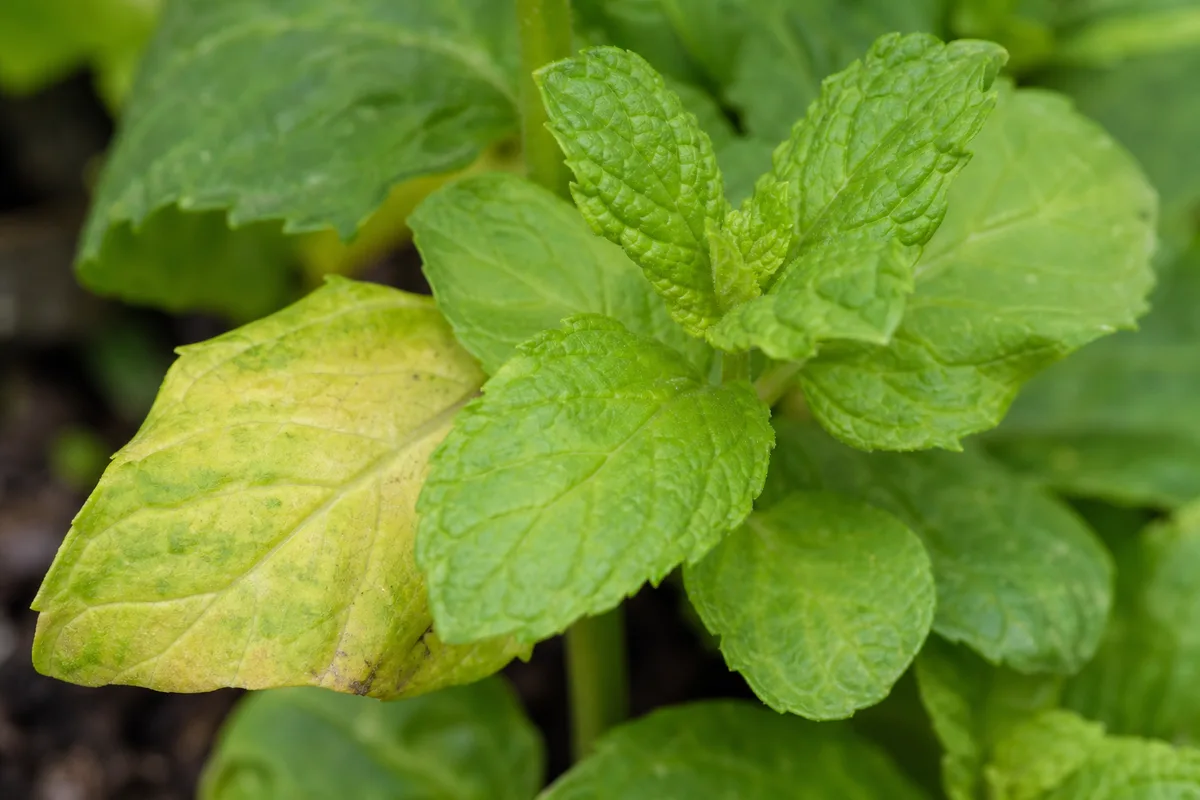
Nitrogen Deficiency symptoms on Mint - compare with healthy tissue on the same plant.
- mostly uniform paling to yellow on older/lower leaves first
- slower, smaller new growth if deficiency worsens
- reduced vigor after repeated harvests
- no distinct rust pustules or mite stippling pattern
Mint rust typically shows lesions/pustules rather than even lower-leaf chlorosis USU Extension. If you see rust-like signs, compare with /plants/mint/rust-disease/.
How to confirm the cause
Use this six-step check before feeding:
- Check leaf age pattern: if oldest leaves yellow first, nitrogen is more likely than iron deficiency (which appears first on newer leaves).
- Inspect root condition: healthy mint roots are firm and pale; soft, dark, smelly roots suggest waterlogging/root rot on Mint first.
- Check soil moisture cycle: nitrogen deficiency can occur in normally draining mix; constantly wet mix points elsewhere.
- Review harvest pressure: daily or near-daily cutting in small pots rapidly removes leaf biomass and nutrients.
- Check feeding history: no feed for many weeks during active growth increases probability of deficiency in containers UMN Extension.
- Rule out lookalikes: pests, rust, and overwatering on Mint can all yellow leaves but with different patterns.
If roots are compromised, use /plants/mint/root-rot/ or /plants/mint/overwatering/ before adding fertilizer.
First fix for Mint
Apply one half-strength balanced liquid fertilizer to moist potting mix (not bone-dry roots), then pause and observe UMN Extension. Do not stack multiple treatments on day one.
Practical sequence:
- water lightly first if the pot is dry
- apply diluted balanced feed to the root zone
- remove only fully spent yellow leaves
- keep normal light and watering
- reassess new shoot color and growth in 10-14 days
If your mint is still actively growing after recovery, continue light periodic feeding through the season and refresh compost during repot/division cycles RHS.
Recovery timeline
Expect old yellow leaves to stay yellow. Recovery is confirmed by:
- greener, stronger new shoots within about 10-14 days
- improved regrowth after harvest
- symptom spread slowing or stopping
If there is no improvement after two careful feeding intervals, reassess diagnosis (root stress, low light, or another deficiency). For broader branching checks, see /plants/mint/stunted-growth/ and /plants/mint/not-enough-light/.
Lookalike symptoms to rule out
| Problem | Typical leaf pattern | Root/soil clue | First response |
|---|---|---|---|
| Nitrogen deficiency | Older leaves yellow first, often more uniform | Roots firm, mix drains | Half-strength balanced feed |
| Overwatering | Yellowing with limp growth, may affect many leaves | Wet/sour mix, stressed roots | Fix drainage/watering first |
| Root rot | Yellowing plus collapse and decline | Dark soft roots, odor | Repot and root rescue protocol |
| Rust disease | Distinct pustules/lesions rather than uniform pale leaves | Disease signs on foliage | Isolate/prune and disease management |
| Normal aging | A few oldest leaves decline, plant otherwise vigorous | Overall healthy roots and growth | Routine pruning, monitor only |
What not to do
Do not dump heavy fertilizer into a stressed pot. Over-fertilization in containers can raise soluble salts and injure roots Penn State Extension. Also avoid feeding waterlogged plants until drainage and root health are corrected.
For culinary mint, excess fertilization can drive lush but lower-quality growth and can increase rust risk under favorable conditions USU Extension, RHS.
How to prevent nitrogen deficiency on Mint
Prevention is mostly about matching feeding and pot maintenance to how aggressively you harvest:
- use a container size that supports sustained growth for your harvest pattern UMD Extension
- use a well-draining soilless mix and repot/divide on schedule UMD Extension
- feed lightly during active growth, especially in high-harvest periods UMN Extension
- avoid overfeeding, especially if flavor quality is your priority RHS
- flush salts periodically if you fertilize often in containers Penn State Extension
Practical checks
Urgency check
Act quickly if yellowing reaches newest growth, growth stalls, or the plant declines despite corrected watering. If roots are soft/dark, treat root stress first.
Best inspection order
Leaf age pattern -> root firmness -> soil moisture pattern -> harvest intensity -> last feed date -> lookalike signs (rust/pests/light stress).
When to use this page vs other Mint guides
- Mint watering guide - Use for routine moisture checks before assuming nitrogen deficiency is the main issue.
- Mint problems hub - Browse all 40 common issues on this species.
- Yellow Leaves on Mint - Different entry point when symptoms overlap with nitrogen deficiency.
- Slow Growth on Mint - Different entry point when symptoms overlap with nitrogen deficiency.