Mold on Soil on Mint: Causes, Checks & Fixes
Quick answer
Surface mold on mint usually means the top of the pot stays wet too long. First step: scrape off the fuzzy top layer and let the surface dry before you water again.
Mold on Soil on Mint: Causes, Checks & Fixes
This guide covers mold on soil on Mint. See also the general Mold on Soil guide, watering, and light pages for this plant.
Mold on Soil on Mint: Causes, Checks & Fixes
Quick answer
Surface mold on mint usually means the top of the pot stays wet too long. First step: scrape off the fuzzy top layer and let the surface dry before you water again.
Mint (Mentha spicata) wants evenly moist compost during active growth, but a constantly damp surface invites saprophytic fungi that feed on decomposing peat and compost. The mold itself rarely attacks mint leaves directly-it is a warning that watering, drainage, or airflow is out of balance. Judge success by a dry surface between drinks and clean new shoots, not by whether yesterday’s leaves look perfect.
What mold on soil looks like on Mint
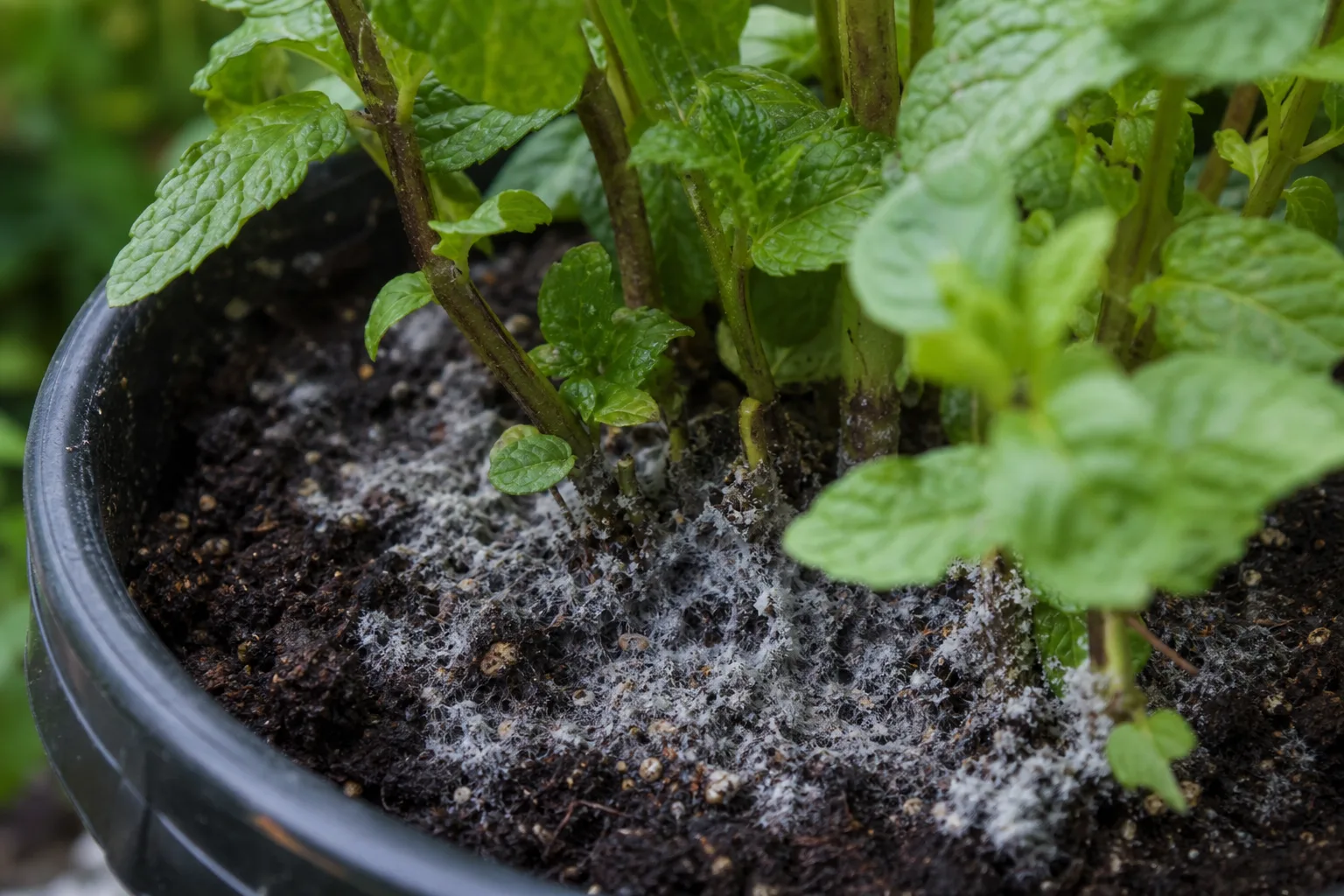
On kitchen-window mint, the first sign is usually a white, gray, or occasionally greenish fuzzy film on the top of the potting mix. It may look like fine threads (mycelium) or a soft dusting. The surface often stays dark and damp for days after you water, even when lower leaves still look fine.
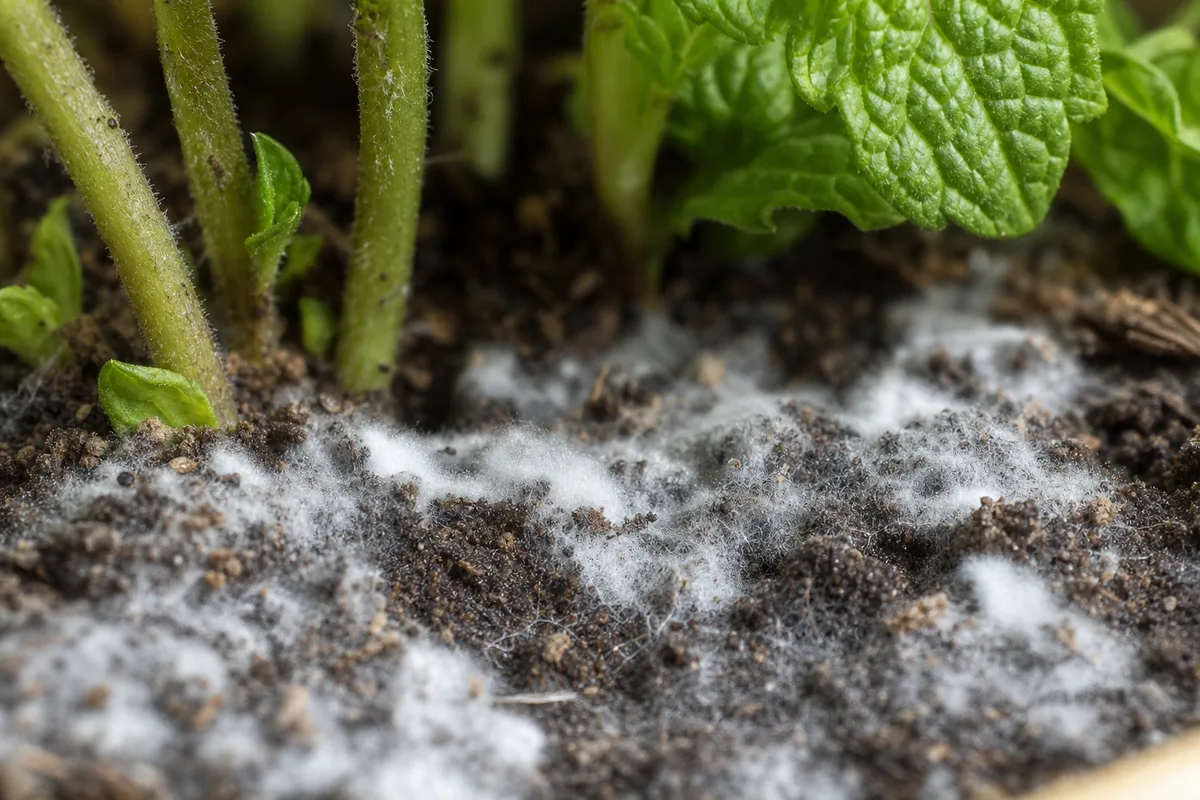
Mold on Soil symptoms on Mint - compare with healthy tissue on the same plant.
Mint-specific clues that point to surface mold rather than a leaf disease:
- Fuzz is only on soil, not on leaf blades or stems (unless fallen debris is rotting on the surface)
- Fungus gnats on Mint hover near the pot when you disturb the plant
- A musty smell rises when you lift the pot or scrape the top layer
- Lower leaves may yellow later if roots stay waterlogged, but early mold often appears while shoots still look normal
Green slick patches on wet soil are usually algae, not white mold. Both signal the same problem-surface moisture sitting too long-but algae tends to show up in dim, cool spots while white mold is common on rich, organic-heavy mixes.
Why Mint gets mold on soil
Mint drinks heavily in warm weather and is often grown in organic-rich, moisture-retentive compost with added cocopeat or vermicompost. That mix is ideal for steady root moisture but easy to overwater once growth slows, light drops, or drainage fails.
Common mint-specific triggers:
- Frequent top watering that soaks the surface while the plant still wants moisture deeper down
- Dense, harvested stems crowding the soil line and slowing evaporation
- Dim winter light on a windowsill-mint grows slower, uses less water, but many owners keep the summer schedule
- Fallen mint leaves left on the surface, giving fungi fresh organic food
- Saucers holding runoff or pots without open drainage holes
- Oversized containers where a small root ball sits in a large wet zone near the top
Mint is a vigorous spreading herb best kept in pots; that confined root zone dries unevenly. The top inch can stay swampy while you are trying to keep the root ball from drying out-a classic setup for surface mold and the fungus gnats that share the same wet habitat.
How to confirm the cause
Work through these checks before Mint repotting guide or spraying anything:
- Surface dryness - Does the top 2 cm stay wet for more than 48 hours after watering? Chronic dampness confirms the environment, not bad luck.
- Pot weight and drainage - Lift the pot. Heavy mix plus blocked holes or a full saucer points to overwatering on Mint.
- Plant tissue - Are new tips firm and green? Soft stems at the soil line suggest rot advancing below the mold.
- Pest pairing - Gnats plus mold almost always mean wet organic soil, not a separate infestation to treat first.
- Light level - Leggy, pale mint in a shady corner dries slowly; mold recurrence fits that pattern.
- Debris on soil - Trimmed leaves or old stems sitting on the surface feed saprophytic fungi.
If mold is only on soil, shoots are firm, and the mix dries reasonably at depth between waterings, treat as a surface moisture issue. If stems soften, the pot smells sour, or leaves yellow on wet soil, inspect roots for rot before assuming mold is harmless.
First fix for Mint
Scrape off the top 1–2 cm of moldy mix and stop top-watering until the surface dries.
Use a spoon or fork to remove the fuzzy layer and any loose organic debris. Discard that material-not back into the compost pile if gnats are present. Do not repot on day one unless the mix is compacted, smells sour, or mold returns within three days of scraping.
After scraping:
- Wait until the top 2 cm feels dry before the next drink
- Empty the saucer within 15 minutes of watering
- Move the pot to brighter light with airflow around the base-mint recovers faster with full sun to partial shade
- Remove fallen leaves from the soil surface after each harvest
If you must keep roots evenly moist without rewetting the surface, bottom-water: set the pot in a tray of water for 15–30 minutes, then lift it out and drain fully. Keeping the surface dry disrupts gnat larvae and slows mold return while mint still gets water from below.
Make this one change first. Stacking cinnamon dust, fungicide sprays, and a full repot on the same day hides what actually helped.
Step-by-step recovery
Once the surface is scraped and drying cycles improve:
- Days 1–3 - No top watering. Confirm drainage holes flow and gnats are fewer when you disturb the pot.
- Days 4–7 - Resume watering only when the top 2 cm is dry. Harvest outer stems to open airflow at the soil line.
- Week 2 - Mold should not reappear if the surface dries between drinks. New tips should stay firm.
- If mold returns quickly - Replace the top inch with fresh, dry potting mix or repot into airy compost with 15–20% perlite. Trim any soft roots.
Do not fertilize stressed mint until new growth looks stable. Nutrients will not fix a wet surface.
Recovery timeline
Surface mold can clear within days once the top layer dries. Mint is a fast grower-expect visible improvement in one to two weeks if roots stayed healthy: no new fuzz, fewer gnats, and firm shoots after each watering cycle.
Yellow lower leaves from brief overwatering may not green up again; that is normal. Recovery means the problem stops spreading and new leaves come in clean. If stems soften or wilting continues on wet soil after two weeks of corrected watering, unpot and check for root rot on Mint.
Lookalike symptoms
| What you see | Likely cause | What to check |
|---|---|---|
| White fuzzy film on wet topsoil | Saprophytic mold on organic mix | Surface dryness, gnats, debris |
| Green slick layer on soil | Algae in constant surface moisture | Light level, watering frequency |
| White powder on leaf blades | Powdery mildew on foliage | Leaf surface, not soil |
| Fine webbing under leaves | Spider mites | Stippling on leaves, not soil fuzz |
| Orange pustules on stems | Mint rust | Leaf and stem spots, not pot surface |
Mold on soil alone rarely explains mint flavour loss or widespread leaf spotting. If damage is on leaves, diagnose the foliage problem separately after you fix surface moisture.
Mistakes to avoid
- Scraping mold repeatedly without letting the surface dry between waterings-the spores return to the same wet habitat.
- Pouring more water because leaves look slightly limp when the soil is already heavy.
- Using decorative cachepots with no drainage-they trap humidity at the base.
- Spraying fungicide on edible mint as a first response when cultural fixes usually work.
- Ignoring fungus gnats-they confirm wet organic soil and can stress roots in severe cases.
- Repotting into garden soil-it compacts in containers and holds surface moisture longer.
Mint care cross-check
Mint wants steady moisture at the roots but cannot sit in stagnant water. Your goal is moist deep, drier surface-especially indoors. In summer, daily checks are normal; in cool months, the same volume of water can leave the top wet for days.
Harvest regularly. Dense mint cushions trap humidity at the soil line. A quick weekly trim improves airflow and removes debris that fungi feed on. If the pot stays heavy for days after one watering, improve light and drainage before the next drink-not more scraping alone.
How to prevent mold on soil on Mint
- Water when the top 2 cm dries, not on a calendar.
- Use pots with drainage holes and empty saucers after every watering.
- Grow in airy, peat-free compost with perlite for faster surface drying.
- Give mint at least 4–6 hours of direct sun or strong supplemental light so the mix cycles moisture faster.
- Bottom-water if surface mold keeps returning on an otherwise healthy plant.
- Clear fallen leaves from the pot after harvesting.
- Divide and repot every 6–12 months so root mass matches container size-oversized pots stay wet at the surface.
Healthy drying cycles usually eliminate chronic surface mold. If fuzz still returns after four weeks of corrected care, repot with fresh mix and inspect roots before the wet conditions invite rot.
When to worry
Treat as urgent if:
- Mold returns within three days of scraping and the surface never dries
- Stem bases soften or turn dark while soil stays wet
- The pot smells sour or swampy
- Wilting continues on heavy, wet mix
- Fungus gnats persist in large numbers despite dry surface management
Those signs mean root stress may be advancing-not just harmless surface fungi. Unpot, rinse roots gently, and trim mushy tissue before repotting into fresh, gritty mix.
For surface mold alone on firm, actively growing mint, stay calm. Scrape, dry the top, improve airflow, and adjust watering. Most kitchen mint pots recover without losing the whole plant.
When to use this page vs other Mint guides
- Mint watering guide - Use for routine moisture checks before assuming mold on soil is the main issue.
- Mint problems hub - Browse all 40 common issues on this species.
- Fungus Gnats on Mint - Different entry point when symptoms overlap with mold on soil.
- Overwatering on Mint - Different entry point when symptoms overlap with mold on soil.
- Root Rot on Mint - Different entry point when symptoms overlap with mold on soil.