Transplant Shock on Mint: Causes, Checks & Fixes
Quick answer
Transplant shock wilts Mint for 1–2 weeks after repotting or rhizome division. First step: keep soil evenly moist-not soggy-move the pot to partial shade for three to five days, and hold fertilizer until new shoot tips firm up.
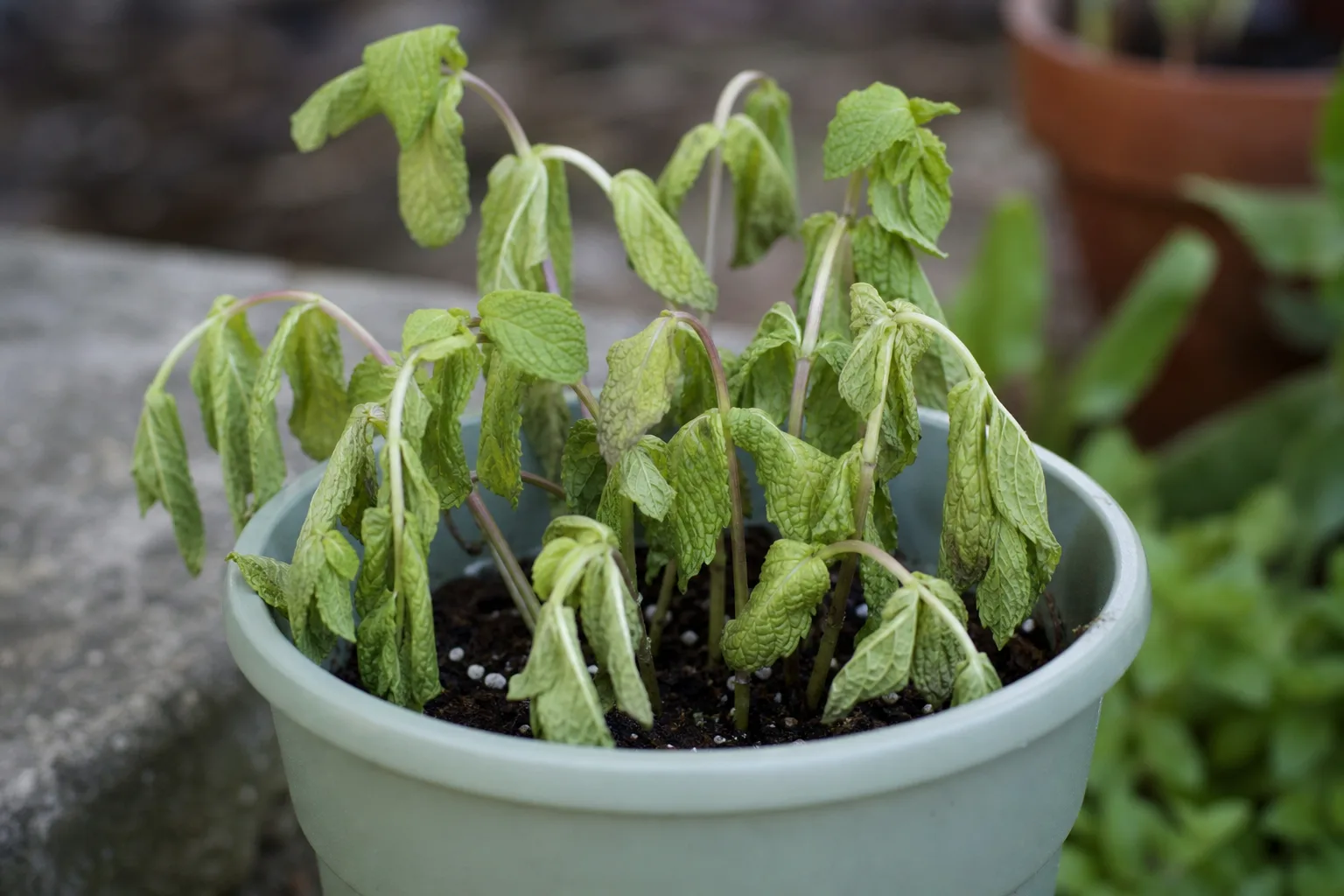
Transplant Shock on Mint: Causes, Checks & Fixes
This guide covers transplant shock on Mint. See also the general Transplant Shock guide, watering, and light pages for this plant.
Transplant Shock on Mint: Causes, Checks & Fixes
Quick answer
You divided mint yesterday-or slid a supermarket pot into fresh mix-and now every stem hangs limp. That panic is common, and on mint it is often transplant shock, not a death sentence.
Transplant shock on mint (Mentha spp.) shows as temporary wilt, yellowing lower leaves, or stalled new growth for one to two weeks after repotting, rhizome division, or moving a nursery pot indoors. Fine root hairs that absorb water break when you disturb the rhizome mat; until new roots grow, leaves lose more moisture than damaged roots can replace-even when mix feels moist.
First step: keep soil evenly moist-not soggy-and move the pot to partial shade for three to five days. Hold fertilizer and heavy harvest until new shoot tips firm up. For step-by-step division procedure, see the mint repotting guide; this page focuses on post-move diagnosis and recovery.
Why mint gets transplant shock
Repotting interrupts the root-to-shoot pipeline. When you lift mint from its old pot, you break delicate root hairs and slice through horizontal rhizomes-underground stems that store energy and send up shoots. Until new roots penetrate fresh mix, uptake drops and leaves wilt. That mismatch looks like thirst but is really a temporary plumbing problem.
Mint makes shock predictable in ways Mediterranean herbs like rosemary do not. Spearmint and peppermint evolved for rich, moist soil in sun to partial shade-not the dry-down culture you would use after moving lavender. Missouri Botanical Garden notes spearmint grows best in rich, moist soils with medium to wet water needs. After division, mint needs steady moisture and oxygen together; letting mix bake dry while roots re-form adds a second stress layer on top of mechanical damage.
Rhizome division vs. nursery pot upgrade
These are different shock tiers:
- Nursery pot upgrade - You move a store-bought clump one size up with minimal root tearing. Shock is usually mild: wilt for three to seven days, then new tips appear.
- Runner-mat division - You split a dense rhizome pancake into multiple sections. Shock is moderate to heavy: more cut surfaces, more broken hairs, wilt across every division for up to two weeks.
- Outdoor-to-indoor move - Lower light and drier indoor air after a patio summer can stall regrowth even without repotting. Wilt plus pale new tips often means light shock stacked on transplant stress.
University of Maryland Extension recommends growing mint in containers because mint spreads aggressively via runners-division is standard maintenance, not an emergency rescue. That also means you will see shock more often on mint than on slow-rooting houseplants.
Root-hair biology and fast recovery
Mint is a fast-rooting herb that propagates readily by division or cuttings. Rhizome sections with firm white roots typically re-anchor within seven to fourteen days in warm, bright conditions-faster than woody herbs, slower than succulents that you would leave dry after repot.
Stacking stress multiplies damage. Heavy harvest the same day strips foliage that would shade soil and feed regrowth. Peak afternoon heat on a freshly divided pot drives transpiration faster than damaged roots can match. Oversized containers leave wet, unused soil around a small root ball-shock lasts longer and can slide into overwatering or root rot. Pest sprays plus repotting the same day adds chemical and physical stress; space major interventions by at least a week.
What transplant shock looks like on mint
Typical shock signs:
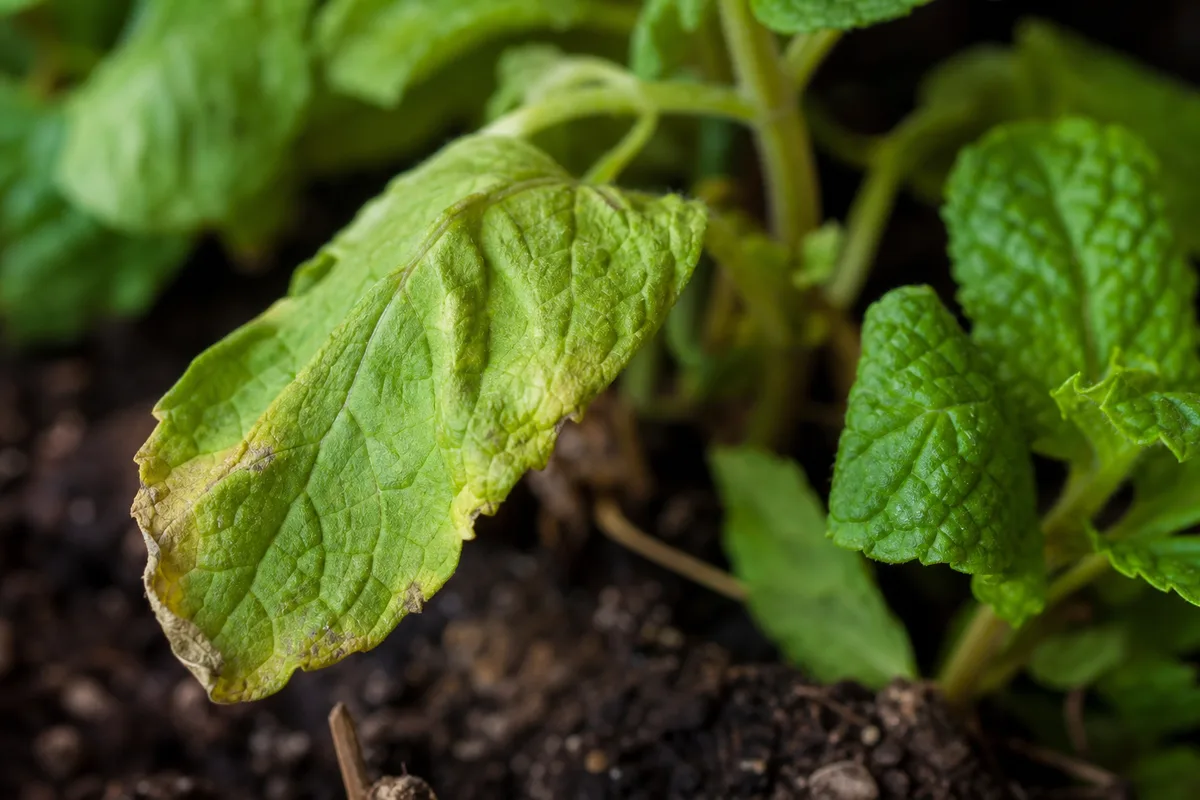
Transplant Shock symptoms on Mint - compare with healthy tissue on the same plant.
- Wilting or drooping stems within one to three days of repot, division, or nursery transplant-even when mix is moist but not soggy
- Older lower leaves yellowing or dropping while upper leaves stay green briefly
- Stalled new shoot tips for several days despite otherwise firm green stems
- Slight leaf curl on exposed shoots while rhizomes re-establish
- Neutral or earthy soil smell-not sour or swampy
What shock usually does not include:
- Mushy stems at the soil line
- Sour or rotten smell from the drainage hole
- Blackened tissue spreading up stems on constantly wet mix
- Widespread collapse that deepens daily after the first week on soggy soil
Damaged leaves from shock rarely green up again-they yellow and fall. That is normal shedding, not proof the whole plant is dying. Judge recovery by firm stems and fresh tip break, not by old foliage returning. For general wilt patterns beyond repot week, see wilting on mint.
How to confirm the cause
Work through these checks in order before you change anything else:
- Timeline - Did wilt start within a week of repotting, dividing, moving from nursery pot, or bringing a patio pot indoors? Shock fits a tight post-move window.
- Stem firmness - Pinch stems above the soil line. Firm, pliable green tissue suggests shock. Soft, darkening bases point to root rot or crown damage.
- Soil moisture and smell - Probe the top 2 cm. Evenly moist but aerated fits shock. Constant sogginess with sour odor does not.
- Pot weight - Lift the container. A pot that stays heavy days after one settling water may be too large or poorly drained-extending stress.
- Division context - Whole-mat chop during a heat wave or into an oversized pot strongly predicts longer shock; small sections with intact roots predict faster recovery.
- Root peek - If you must confirm, gently slide the root ball out. White or tan firm roots with moist (not mushy) tips support shock. Brown slimy roots mean rot.
If wilting began before any repot and soil smells fine, look elsewhere-heat stress, drought, or pests are common mint issues unrelated to transplant.
Symptom lookalike comparison
| Pattern | Timing | Stem / root feel | Soil | Likely cause |
|---|---|---|---|---|
| Transplant shock | Days after repot or division | Firm stems; firm white roots | Moist but not soggy; neutral smell | Broken root hairs; normal adjustment |
| Root rot | Builds over days to weeks | Soft base; brown slimy roots | Stays wet; sour smell | Overwatering, poor drainage, oversized pot |
| Underwatering | Any time | Firm stems | Dry throughout; light pot | Missed drinks; hydrophobic old mix |
| Heat stress | Hot afternoons | Firm stems | Surface dry, deeper moist | Fast transpiration on patio pots |
| Overwatering | After repot “help watering” | May soften later | Wet for days; heavy pot | Daily soaking in fresh oversized mix |
First fix for mint
Keep soil evenly moist-not soggy-and move the pot to partial shade for three to five days.
This single step matches mint’s moisture biology while preventing the overwatering spiral that kills repotted herbs. Bright indirect light, morning sun with afternoon shade, or a few feet back from a hot south window gives enough energy without baking reduced roots. If you soaked heavily at repot, let the top 2 cm dry slightly before the next drink-roots need oxygen as much as moisture.
Do not fertilize, heavily harvest, or repot again on day one. Do not shuffle the pot between rooms daily hunting for a perfect spot. Stability matters more than ideal placement during the first week.
Step-by-step recovery
After the initial stabilization:
- Moisture rhythm - Water when the top 2 cm feels dry, soaking until excess drains freely. Empty the saucer within 15 minutes. RHS advises keeping container mint compost evenly moist, never soggy-that balance is the core recovery task for this species.
- Partial shade hold - Keep divisions out of all-day blazing sun for three to five days (five to seven after summer division). Move toward your usual light placement only after new tips firm up.
- Hold harvest seven to ten days - Let the plant redirect energy to roots. Resume light picking of outer stems once new leaves match pre-repot size and turgor.
- Hold fertilizer three to four weeks - Salts burn tender regrowing roots. Mint does not need feeding while shocked.
- Remove only clearly dead tissue - Yellow leaves that detach easily can go. Do not scalp the whole plant hoping to “help” unless stems are genuinely dead.
- Terracotta vs. plastic note - Unglazed terracotta dries the root zone faster than sealed plastic. In terracotta, check moisture more often; in plastic, prioritize drainage holes and saucer emptying so shock does not become rot.
If you divided a grocery-store clump, expect some sections to fail-that is normal. Pot survivors individually per the repotting guide rather than crowding weak divisions together.
Recovery timeline
Most mint divisions show the first firm new tips within seven to fourteen days when moisture, light, and pot size are appropriate. Full visual fill-in-replacing dropped lower leaves-may take several more weeks because mint grows moderately fast once rhizomes anchor.
Mild nursery upgrade: wilt often eases within three to seven days.
Heavy runner-mat division: seven to fourteen days is typical; summer heat can stretch toward three weeks.
Outdoor-to-indoor move without repot: one to two weeks for new growth to match former vigor if light is adequate.
Old wilted leaves may drop-normal. Worsening signs: stems blacken from the base up, every shoot collapses despite appropriate moisture, or no new tips after three weeks in warm bright light. Persistent decline on wet mix is not normal shock-inspect for hidden rot.
Causes to rule out
Before blaming shock alone, confirm you are not stacking a second problem:
- Rot from overwatering - Common when growers water daily “to help roots settle” in a fresh, oversized pot. See overwatering on mint.
- Dry core after repot - Water ran down the sides of a hydrophobic root ball without wetting the centre. Bottom-soak once, then return to even moisture.
- Heat collapse - Afternoon wilt on a patio pot with firm stems; often recovers overnight. Not the same as division shock unless timing coincides.
- Pests - Aphids on new tips can stunt shoots after repot. Check for sticky residue or clusters before assuming shock only.
What not to do
Do not fertilize stressed roots-salts burn tender regrowth. Do not place fresh transplants in all-day hot sun through glass. Do not let soil dry completely while root hairs re-form; mint is not a succulent you dry down after repot.
Do not water daily into a soggy oversized pot-that is how mint rot starts after division. Do not repot again on day four because the plant looks sad; double disturbance often kills divisions that would have recovered from one move.
Do not harvest heavily the same week you divide-wait until new tips firm up. Do not stack pest sprays and repotting the same day.
How to prevent transplant shock on mint
Repot or divide in early spring before peak summer heat when possible. RHS recommends dividing established clumps in spring or autumn, discarding woody centre tissue and potting vigorous side sections-workflow detailed in the mint repotting guide.
Choose the right intervention:
- Modest root circling, healthy centre - Repot one size up only (roughly 2–3 cm wider), keeping the root ball intact.
- Dense rhizome mat, harvest only at pot edge - Divide into sections with two to three shoot clusters each rather than upsizing into wet unused soil.
- Grocery-store crowded pots - Divide into separate 12–15 cm containers; expect some losses.
Water immediately after transplanting to settle fresh mix around roots, then follow touch-based rhythm-not a daily soak calendar. UF/IFAS notes mint is propagated by cuttings or division and grows best in containers that restrain runners-plan division every 6–12 months on vigorous spearmint rather than letting mats choke themselves.
Shade briefly after division (three to five days). Avoid dividing the entire runner mat during a heat wave unless you can shade and irrigate steadily.
For restarting failed divisions, use mint propagation from healthy stem tips or rhizome cuttings once firm tissue is confirmed.
Practical checks
Use this single checklist when you are unsure whether to wait or escalate:
- Days since move - Shock fits days 1–14 after repot or division; deepening wilt on wet soil after day 10 needs rot inspection.
- Stem firmness - Firm green stems support waiting; soft bases demand unpotting.
- Soil smell - Neutral or earthy is fine; sour means rot protocol.
- New tip turgor - First recovery signal on mint; old leaves may stay limp.
- Pot weight vs. watering - Heavy pot days after one drink suggests oversize or poor drainage.
- Cross-check watering habits - If you are on the mint watering schedule and only wilt followed repot, shock is likely; if wilt predated repot, inspect roots before blaming the move alone.
Urgency: Escalate immediately for mushy stems, sour soil on constant wetness, or total collapse within a week on soggy mix. Patience: Temporary leaf drop on firm-stemmed mint in evenly moist soil is expected, not an emergency.
When to worry
Treat as urgent when stems soften at the soil line, the mix smells sour, or wilting deepens daily on constantly wet soil within the first week. Those signs point to rot from overwatering or poor drainage-not recoverable shock without intervention.
Also escalate if every division collapsed despite firm roots you checked at repot-sometimes hidden stem damage or removing too much rhizome left too little absorptive surface.
Normal shock shows gradual improvement after a brief stall: firm stems, neutral soil smell, and new tips within two weeks. If decline continues past fourteen days on appropriate moisture with good light, contact your local extension office or a master gardener clinic with photos-chronic failure may indicate rot, wrong soil structure, or disease rather than simple adjustment.
For year-round mint care context, pair this page with the mint overview and sibling guides linked above.
When to use this page vs other Mint guides
- Mint watering guide - Use for routine moisture checks before assuming transplant shock is the main issue.
- Mint problems hub - Browse all 40 common issues on this species.
- Wilting on Mint - Different entry point when symptoms overlap with transplant shock.
- Leaf Drop on Mint - Different entry point when symptoms overlap with transplant shock.