Stunted Growth on Mint: Causes, Checks & Fixes
Quick answer
Stunted mint in warm weather usually means rhizome damage, vascular wilt, root crowding, or weak light-not a slow-growing species. First step: unpot and inspect rhizomes for tunnels and cut a stem to check for brown vascular streaks before feeding or repotting.
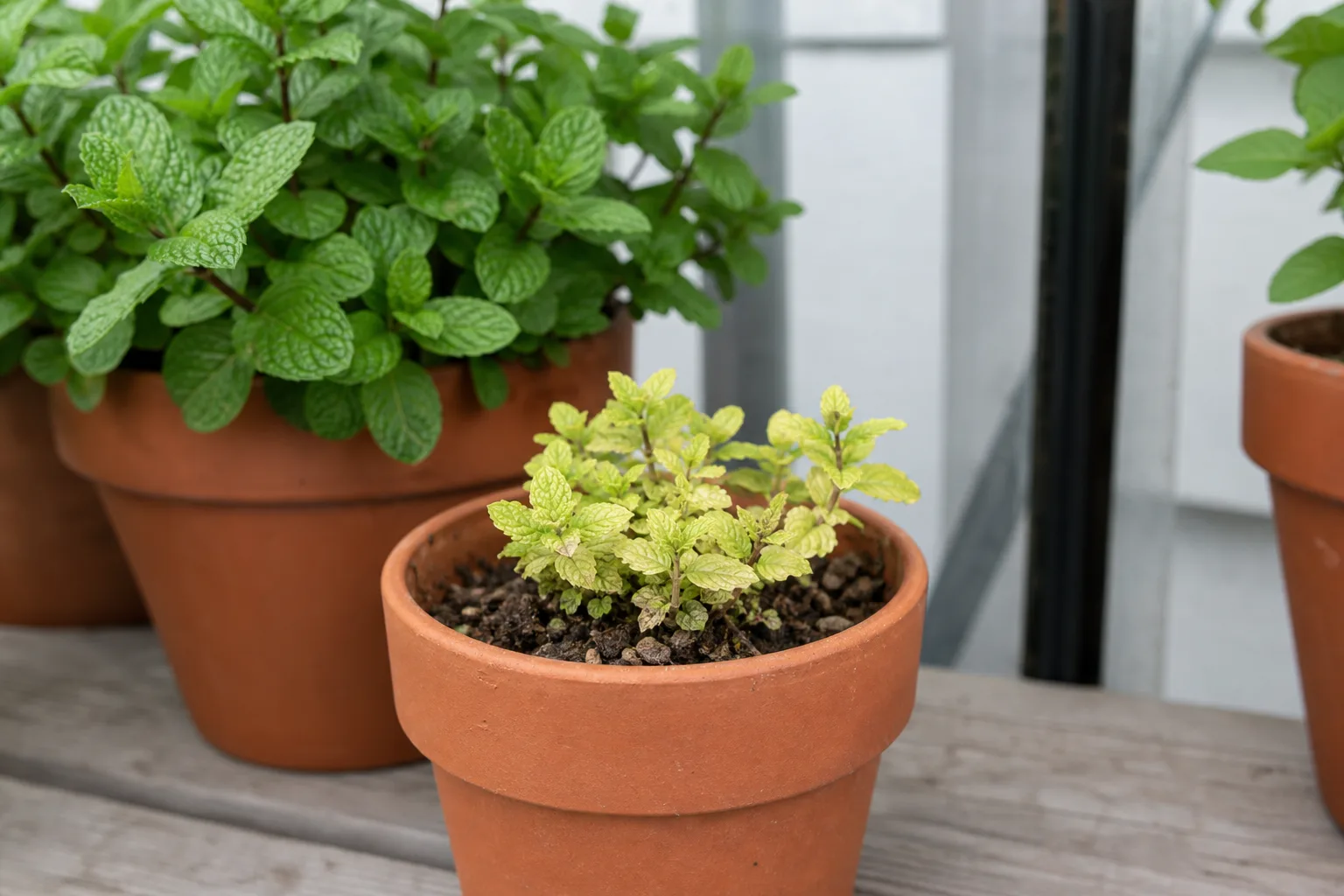
Stunted Growth on Mint: Causes, Checks & Fixes
This guide covers stunted growth on Mint. See also the general Stunted Growth guide, watering, and light pages for this plant.
Stunted Growth on Mint: Causes, Checks & Fixes
Quick answer
Mint is a vigorous rhizomatous perennial that normally produces harvestable flushes quickly when warmth and light are adequate. Stunted growth means shoots stay small, pale, and short-stemmed through warm weather-not a species that grows slowly by nature.
First fix: unpot the plant and inspect rhizomes and stems before changing water, light, or fertilizer. Larval tunnels in rhizomes, brown vascular streaks inside stems, severe root crowding, and chronic dim light are the main limits. Discard wilt-positive stock; divide and restart clean sections for pest or cultural causes.
This page is the stunting triage hub for mint-especially flea beetle rhizome damage and verticillium wilt, which sibling cultural guides do not cover in depth.
Is stunted mint normal?
Winter pause is normal. Outdoor mint and cool-window pots often sit quiet in short days; rhizomes typically survive and regrow when warmth returns. A bare crown in late winter is not the same problem as persistent stunting in summer.
Warm-season stunting is not normal. In active conditions, mint should produce usable tips with normal internode length within days of a corrective fix. If you are harvesting regularly but every flush stays miniature-small pale leaves, tight gaps between nodes, weak stems-treat the pot as a diagnostic case.
| Signal | Likely normal pause | Likely pathological stunting |
|---|---|---|
| Season | Cool months, short days | Warm spring/summer |
| Shoot size | Quiet but firm crown | Small pale tips with short internodes |
| Growth pattern | Even dormancy | One-sided branch decline, rim-only weak shoots |
| Rhizome check | Firm, no tunnels | Scarring, tunnels, or mushy tissue |
| Stem cut test | Green vascular tissue | Brown streaks in vascular bundles |
Post-harvest pause is also different: mint often pauses briefly after a hard cutback, then pushes fresh tips. Stunting persists across multiple harvest windows.
What stunted growth looks like on Mint
Stunted mint produces recognizable signals beyond simply “not growing fast”:
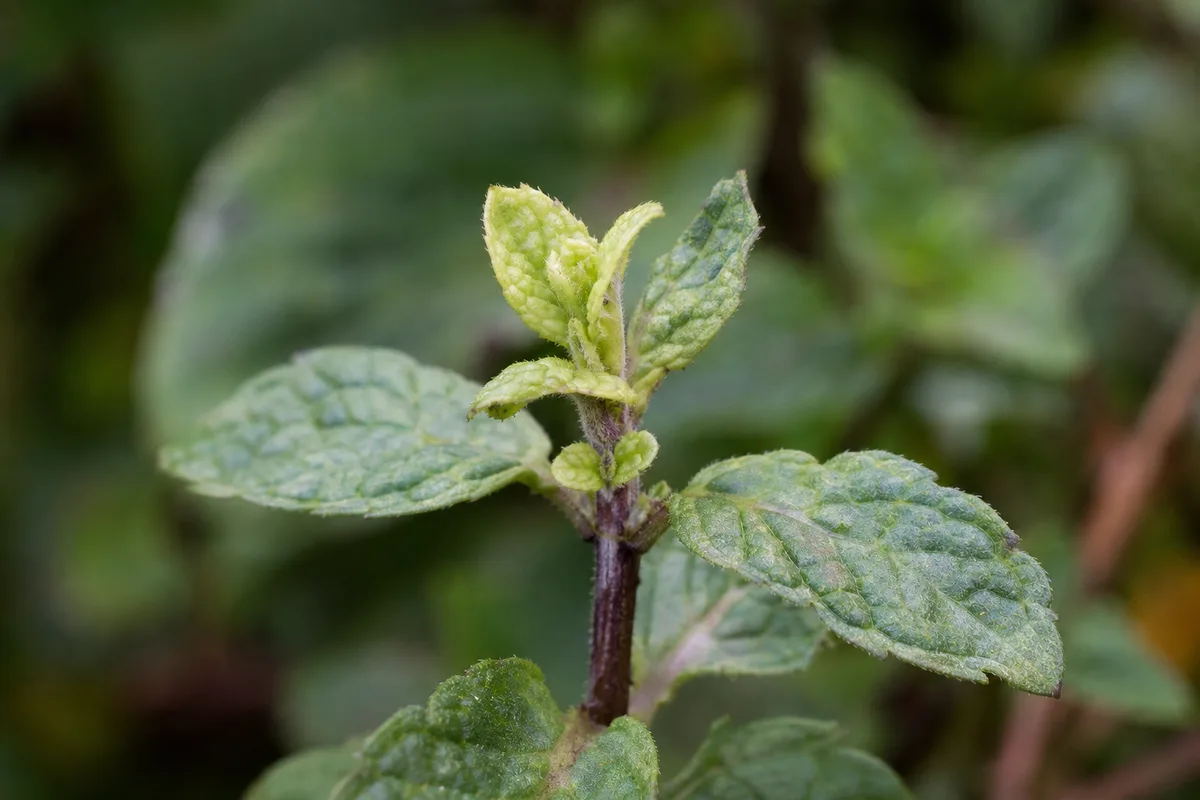
Stunted Growth symptoms on Mint - compare with healthy tissue on the same plant.
- Small pale leaves with short internodes instead of the vigorous upright shoots mint is known for
- Slow or absent harvestable flushes during warm weather despite moisture
- One-sided branch decline-one stem wilts and stunts while neighbors look fine (classic verticillium pattern)
- Rim-only weak growth in cramped pots while the center dies back
- Reddish or bronze foliage on outdoor beds after spring regrowth (can follow flea beetle larval feeding)
- Rhizome scarring or tunnels visible only after unpotting
Compare against a healthy baseline: container mint in full sun to part shade during peak season should produce firm, aromatic tips. A “ruler check” on new growth-if internodes stay under a few millimeters for weeks in summer sun-that is stunting, not patience.
Stunted vs. no new growth vs. post-harvest pause
| Pattern | Stunted growth | No new growth | Post-harvest pause |
|---|---|---|---|
| Tip production | Tiny weak tips | Zero fresh tips | Brief quiet after hard cut |
| Leaf size | Consistently small | Old leaves hang on; nodes flat | Normal size returns quickly |
| Best guide | This page | No new growth on mint | Wait one to two weeks, then recheck |
Why Mint growth stunts
Mint flea beetle larval damage
Mint flea beetle larvae feed on small roots and tunnel into rhizomes from late April through early June in commercial mint regions. Spring regrowth on injured plants is slow, with spotty stands and reddish, stressed, stunted plants. Larvae leave cream-colored bodies with brown heads in black or brown tracks just below the rhizome surface.
This cause is easy to miss on kitchen herbs because it is primarily documented on outdoor and in-ground mint in the Pacific Northwest and Midwest-but any mint grown from outdoor divisions can carry larval damage into a pot.
Verticillium wilt
Verticillium wilt, caused by Verticillium dahliae, blocks vascular flow. Upper leaves twist and bunch; infected plants are stunted with yellowish to bronze foliage. Lower leaves die first, then stems collapse. Scotch spearmint and Black Mitcham peppermint are susceptible; native spearmint is relatively resistant.
The fungus spreads through infected rhizomes and persists in soil as microsclerotia for years. Co-infection with root-lesion nematodes worsens damage in commercial fields.
Rootbound or exhausted center
Mint spreads through underground rhizomes that eventually fill a container. When the center dies, live tissue produces only at the rim-weak, small shoots that look stunted rather than vigorous. Illinois Extension suggests dividing every three to four years; many kitchen pots need attention sooner. See root bound on mint for the full circling-rhizome diagnosis.
Low light and nutrient limits
Mint is most productive in full sun but tolerates part shade. Chronic dim indoor light produces pale, weak growth with long gaps-sometimes etiolated stretch that mimics stunting. Nutrient exhaustion in old, root-filled mix stalls tips even when water and light are otherwise adequate.
Chronic underwatering can also cap size, but mint more often stunts from crowding, disease, or pests than from occasional dry spells. Rule out underwatering when soil pulls away from the pot and leaves crisp-not just small.
How to confirm the cause
Work through these checks in order. Stop early if you find a discard-level problem.
- Confirm the season. If mint is outdoors in late winter or recently moved inside after frost, wait for warmth before diagnosing stunting.
- Measure light. Indoor mint needs strong direct sun-aim for at least five hours on a south or west window, or use supplemental light when days are short (UMD indoor herbs). Dim all-day brightness keeps old tissue alive without normal shoot size.
- Compare internode length on the newest tips during warm weather. Persistent miniature nodes signal a real limit.
- Lift and unpot. Shake away mix and inspect rhizomes for tunnels, brown tracks, scarring, or mushy tissue.
- Look for shot-holed leaves on outdoor mint in late June through July-adult flea beetle feeding marks can confirm pest history even after larvae finish feeding.
- Perform the vascular cut test. Snip a suspect stem and look for brown streaks in the vascular tissue. One-sided wilting plus streaks strongly suggests verticillium.
- Check rootbound signs. Circling rhizome mat, rim-only growth, and water running straight through a dry core point to congestion-link to root bound detail.
- Rule out etiolation. Leggy pale lean toward a window without tight miniature nodes fits not enough light better than true stunting.
| Finding | Likely cause | Next step |
|---|---|---|
| Rhizome tunnels / brown tracks | Flea beetle larvae | Trim affected sections; replant clean tissue |
| Brown vascular streaks, one-sided wilt | Verticillium wilt | Discard plant and soil |
| Circling rhizome mat, dry core | Rootbound / exhausted mix | Divide and repot |
| Pale weak tips, dim window | Low light | Move to brighter site |
| Firm roots, good light, old mix | Nutrient stall | Divide, fresh mix, light feed |
First fix for Mint
Do not fertilize or repot blindly. Your first action depends on what the rhizome and stem checks show:
- Suspected verticillium (one-sided wilt, vascular streaks): discard the plant and bag the soil. Do not compost. Start clean stock in a different container or bed.
- Rhizome tunnels with enough firm tissue remaining: trim away scarred sections, replant only clean divisions in fresh mix, and place in bright sun.
- Rootbound or exhausted mix without disease signs: divide, discard the dead center, repot vigorous outer sections-see the step-by-step below and mint repotting.
- Low light only: move to the brightest available spot before any other intervention.
One change first, then reassess in one to two weeks during active growth.
Step-by-step: inspect rhizomes and restart stunted mint
Use this workflow when disease discard is ruled out and you need to salvage cultural or pest damage.
- Water lightly the day before so rhizomes are workable but not soggy.
- Tip the pot and slide the rootball out. Loosen mix gently with your fingers.
- Shake or rinse away old mix until rhizomes are visible.
- Look for tunnels and brown tracks just under the rhizome surface-compare with clean white or cream tissue.
- Trim out scarred, hollow, or mushy sections with clean scissors. Keep only firm rhizomes with visible nodes.
- Discard the dead woody center if the clump is congested-outer vigorous sections regrow fastest (RHS division guidance).
- Choose a wide container (about 12–16 inches for a kitchen crop) with drainage (UMD mint in containers).
- Replant divisions at the same depth, water once to settle, and place in full sun to part shade.
- Wait for new tips before feeding. After the first inch of new growth, apply half-strength liquid feed once during active season-not before roots stabilize.
- Harvest lightly once shoots firm up-regular picking encourages bushier regrowth on healthy mint.
Verticillium on mint: when to discard and dispose safely
Verticillium is a soilborne fungus that cannot be eradicated once established because microsclerotia survive in soil for years. Commercial growers rotate out of mint for five or more years and plant certified clean rootstock; home growers should take a simpler line:
- Discard any mint with one-sided wilting and brown vascular streaks-treatment in pots is not reliable.
- Bag the plant and used potting mix; send to municipal waste, not compost or garden beds.
- Wash pots and tools before reuse. A dilute bleach rinse on containers reduces carryover risk.
- Never propagate divisions from wilt-positive stock, even if some stems look green.
- Start clean plants elsewhere-not in the same soil. For in-ground beds with wilt history, avoid replanting mint in that spot for several years.
Native spearmint shows more resistance than Scotch spearmint or Black Mitcham peppermint, but resistance is not immunity-discard symptomatic plants regardless of cultivar in a small kitchen garden.
Recovery timeline
Recovery depends on the cause and how much healthy tissue remains:
- Rootbound or nutrient fixes: many divided clumps show larger, normal tips within one to two weeks in warm bright conditions after repotting-though exact timing varies with temperature and light.
- Partial rhizome tunneling: regrowth depends on how much clean rhizome you saved. Trimmed plants with firm nodes often restart within two to three weeks; severely hollowed stock may never reach full vigor.
- Verticillium: affected plants rarely return to productive harvest. Replacement is safer than prolonged rescue attempts.
- Low light correction: new growth may look healthier within one to two weeks after a bright move, but old miniature leaves do not enlarge-they are replaced by new shoots.
Judge success by new tip size, internode length, and even growth across the clump-not by old stunted leaves magically expanding.
Lookalike symptoms
| What you see | Often mistaken for | How to tell apart |
|---|---|---|
| Small pale tips, short nodes | Not enough light | True light stunting may show lean toward window; etiolation has longer weak gaps. Stunting from disease or rhizome damage can occur in bright sun. |
| Rim-only weak shoots | Root bound | Overlap is common-unpot to see circling mat vs. rhizome tunnels. Root bound emphasizes congestion; this page emphasizes pathology triage. |
| Zero tips for weeks | No new growth | Stunting still produces tiny tips; no-new-growth is a full stall. Use the comparison table in that guide. |
| Slight wilting, dry soil | Underwatering | Underwatered mint crisps and rebounds after watering. Verticillium wilts one branch at a time with vascular browning on wet soil. |
| Winter quiet crown | Stunting | Wait for warmth. Pathological stunting persists in peak summer. |
What not to do
- Do not keep propagating from wilted stock that fails the vascular streak test.
- Do not max-feed stunted mint before fixing roots, light, and disease status.
- Do not compost suspect verticillium plants or reuse their mix.
- Do not confuse winter slow growth with summer pathological stunting.
- Do not assume hunger is the cause-mint thrives with modest feeding once roots and light are right.
- Do not treat all stunting as root bound without checking for rhizome tunnels and vascular streaks.
How to prevent stunted mint
- Start from clean divisions-avoid planting rhizomes from beds with flea beetle shot-holing or wilt history (USPEST on certified beetle-free stock).
- Rotate outdoor mint beds when larval damage or verticillium has appeared; do not replant mint immediately in failed commercial fields.
- Divide before pots become solid root mats-refresh every few years, or sooner in small containers (RHS; Illinois Extension).
- Site for sun-full sun to part shade outdoors; indoors, prioritize bright exposure or supplemental light.
- Scout rhizomes when dividing-tunnel scars are easier to catch at repot time than from above-ground leaves alone.
- Feed lightly in active season only after new growth confirms roots are working.
When to worry
Escalate immediately when:
- One-sided wilting spreads branch by branch with brown vascular streaks-discard, do not treat.
- Rhizomes are mostly mushy with sour odor-likely rot, not simple stunting; see root rot on mint.
- More than half the rhizome mass is tunneled or hollow with no firm nodes to replant.
- Stunting worsens in full summer sun after corrective divide and bright placement-recheck for wilt or hidden rot.
Mint is easy to restart from a healthy division when salvageable tissue remains.
Related Mint guides
Use these when one cause clearly dominates:
- Root bound on mint - circling rhizomes, rim-only growth, very fast dry-down.
- Not enough light on mint - leggy pale stems without rhizome tunnels or vascular streaks.
- No new growth on mint - zero-tip stall triage and dormancy decision path.
- Underwatering on mint - dry soil, crisp leaves, rapid wilt recovery after watering.
- Mint repotting - container sizing, mix, and seasonal timing.
- Mint overview - baseline care and harvest rhythm.
Conclusion
Stunted mint in warm weather is a rhizome-and-stem inspection problem first. Unpot for tunnels and scarring, cut stems for vascular streaks, then address crowding or light if pathology is ruled out. Flea beetle larval damage and verticillium wilt are the causes most growers miss-discard wilt-positive stock, trim and restart clean divisions for pest damage, and divide/repot for cultural limits. Use the lookalike table to route to sibling guides when one symptom pattern dominates.