Wrong Soil Mix on Mint: Causes, Checks & Fixes
Quick answer
Wrong soil mix leaves Mint waterlogged or drought-stressed-heavy garden soil and pure cocopeat both fail. First step: unpot, inspect rhizomes, and repot into the 60/20/20 container blend (60% potting soil, 20% cocopeat, 20% compost) with up to 15% perlite substituted in when the old mix stayed wet.
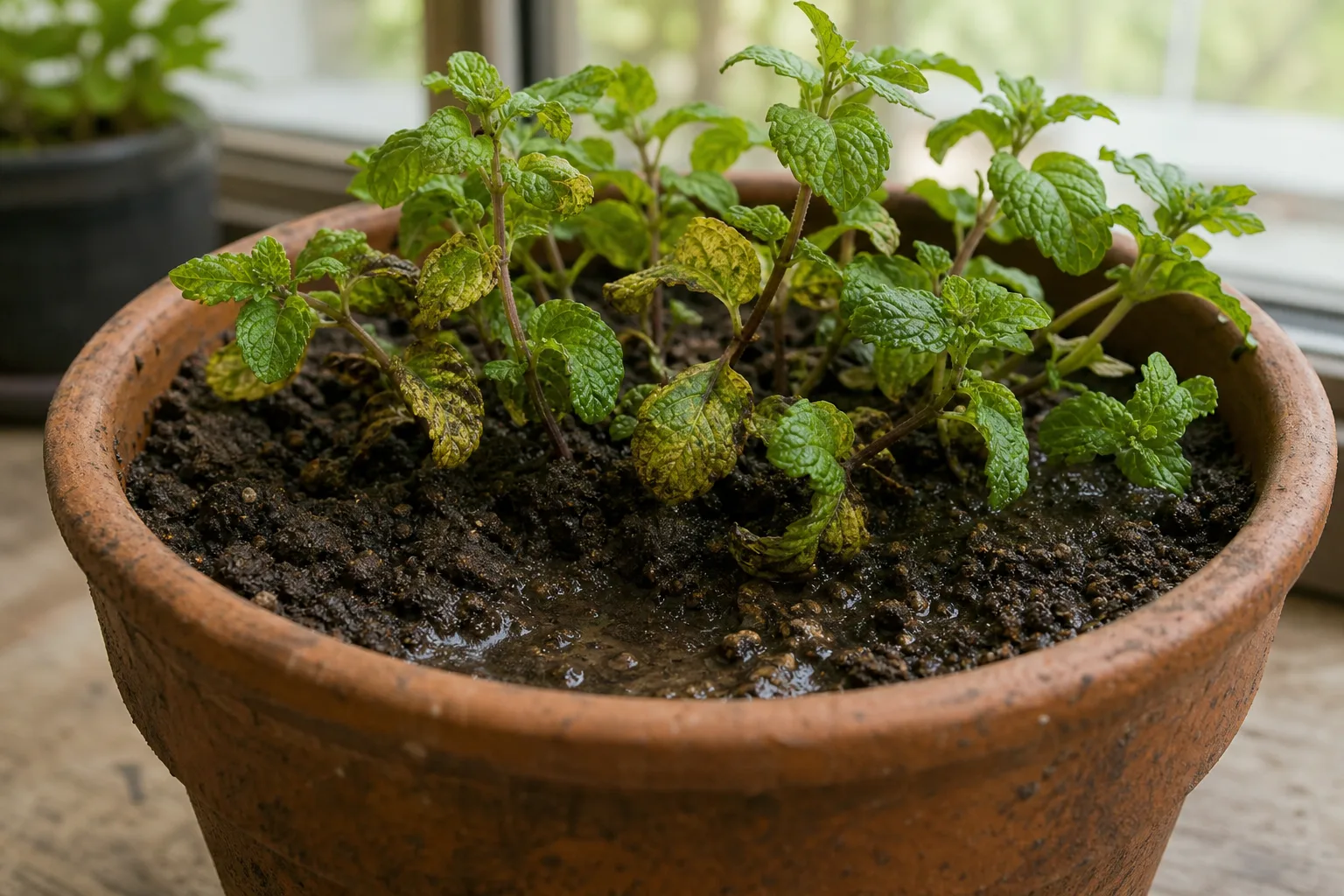
Wrong Soil Mix on Mint: Causes, Checks & Fixes
This guide covers wrong soil mix on Mint. See also the general Wrong Soil Mix guide, watering, and light pages for this plant.
Wrong Soil Mix on Mint: Causes, Checks & Fixes
Quick answer
Wrong soil mix on Mint (Mentha spicata, spearmint) shows up as two opposite failures in the same herb: heavy, water-retentive mix that suffocates spreading rhizomes, or structureless cocopeat that channels water past roots and dries unevenly. Mint wants moist, rich, well-drained soil near pH 6.0–7.0-not a bog and not a desert.
First step: unpot the plant, inspect rhizome firmness and mix texture, then repot into the 60/20/20 container blend (60% quality potting soil, 20% cocopeat, 20% finished compost). If the old mix stayed wet for days, substitute up to 15% perlite into that total-for example 50% potting soil, 20% cocopeat, 15% compost, 15% perlite-so percentages sum to 100%. Use a pot with drainage holes, not garden clay straight from the yard.
This page troubleshoots active mix failure on a struggling plant. For building the correct blend from scratch, see the Mint soil guide. For watering mistakes on an otherwise good mix, see overwatering.
What wrong soil mix looks like on Mint
Kitchen mint fails quietly until flavour drops and lower leaves yellow. Above soil, wrong mix often shows as:
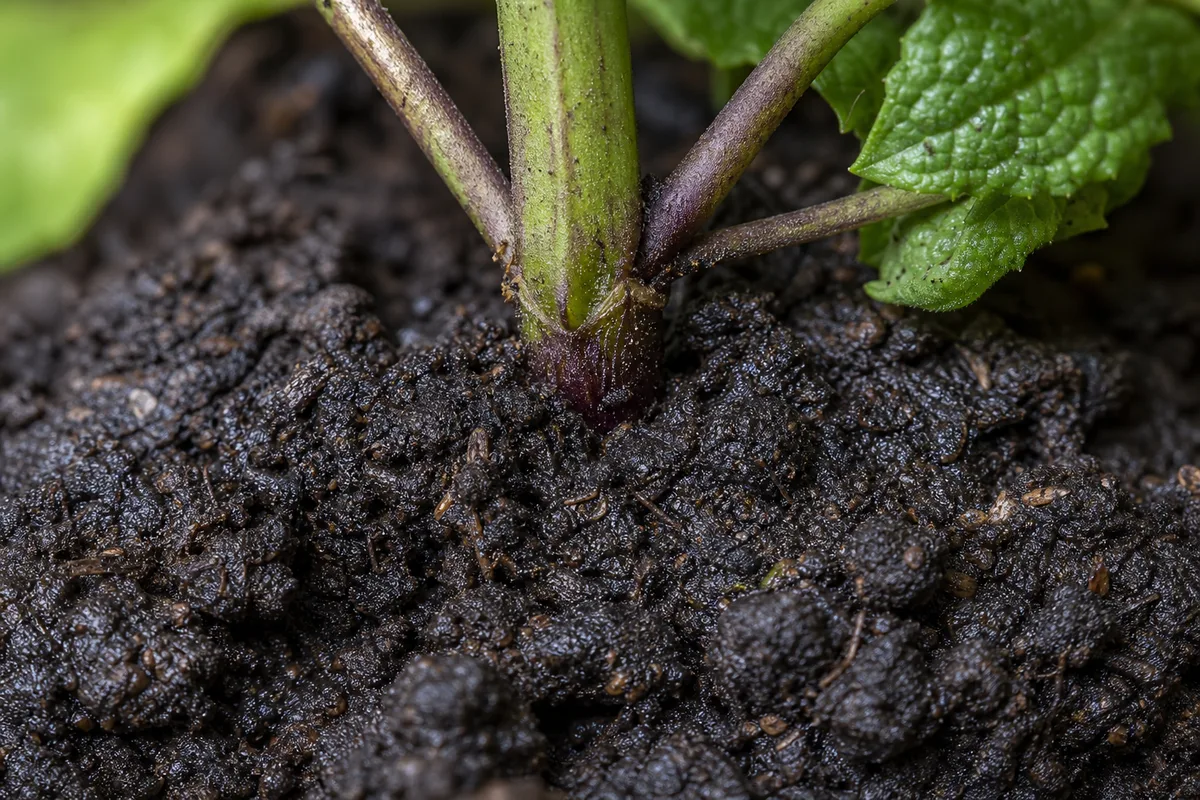
Wrong Soil Mix symptoms on Mint - compare with healthy tissue on the same plant.
- Constant surface wetness on heavy blend, sometimes with white mold or fungus gnats
- Afternoon wilting on cocopeat-heavy mix even though you watered that morning
- Yellow lower leaves that spread while care “looks correct”
- Weak scent and thin flavour on leaves that still look green-a soil-stress signal harvesters notice before colour changes
- Stalled regrowth after the first month in a supermarket herb plug
- Centre stems dying back while outer runners still look alive briefly
Below soil, rhizomes tell the story. Healthy mint roots and rhizomes are firm, pale cream or white. Heavy anaerobic mix turns them brown and soft; droughty structureless mix leaves them shrivelled with dry pockets around the root ball.
Heavy or water-retentive mix
Garden soil, dense peat plugs, and compost-heavy blends without pore space stay wet too long in pots. Mint spreads aggressively by underground rhizomes, and that root mass compresses mix faster than slow herbs. Symptoms cluster as:
- Soil soggy 3+ days after one watering
- Sour or swampy smell near the drainage hole
- Soft stems at soil level
- Slow new shoots despite frequent watering
This pattern overlaps root rot when decay has started-unpot early to see whether firm white tissue remains.
Cocopeat-only or structureless mix
Pure cocopeat, old peat that has collapsed, or bagged mix with no perlite drains too fast or channels water down the pot wall while the centre stays dry. On a sunny windowsill you may see:
- Hydrophobic dry patches on the surface while the core is still wet-or the opposite, dust-dry throughout by afternoon
- Pot feels light hours after watering
- Wilting that looks like thirst but returns after every soak because roots miss even moisture
UF/IFAS container media guidance stresses combining materials that hold moisture with materials that let water drain-a single-component cocopeat pot breaks that balance.
Compacted supermarket plugs
Store-bought mint often arrives in a dense peat plug sized for shipping, not for months of kitchen harvest. The plant greens up for two to three weeks, then stalls as roots hit the plug wall and water sits in the centre. That is a mix problem even when the label says “water regularly.”
Why Mint gets wrong soil mix problems
Mint evolved along moist fields and pond margins in temperate climates. Growers hear “likes moisture” and reach for heavy compost or pure cocopeat-both miss that mint also needs oxygen at the roots in a confined pot.
Mint-specific forces make mix choice harder than for rosemary or thyme:
- Rhizomatous spread - Spearmint is a rhizomatous perennial that fills a 20 cm pot within a season, compressing mix and creating dry side channels
- Fast harvest turnover - Repeated cutting stimulates new shoots that pull water and break down organic matter quickly in small volumes
- “Moist” confused with “wet” - UF/IFAS notes spearmint prefers consistently moist soil, but moist means damp at depth after drainage-not stagnant mud day after day
- Container physics - Garden soil lacks the structure containers need and compacts under repeated watering; mint’s runner mass accelerates that compaction
Peppermint (Mentha × piperita) and spearmint share the same container mix and pH target. Peppermint may prefer slightly cooler roots; spearmint tolerates heat when drainage is good. The wrong-mix symptoms are identical-fix structure before chasing species differences.
Mint is not a succulent and not a bog plant. It needs both steady moisture and air pockets in the same pot-a balance the 60/20/20 recipe is designed to hold.
How to confirm the cause
Work through these checks before buying new soil or trimming half the plant:
- Dry-down speed - Water once until drainage runs. If soil stays soggy at 2 cm depth for 3+ days, the mix is too heavy. If the pot is light within hours and leaves wilt by afternoon, structure is too loose or channelled.
- Pot weight - Lift after watering. A heavy pot days later on a heavy mix confirms slow drainage. A light pot the same afternoon on cocopeat-only mix confirms fast pass-through.
- Repot history - Supermarket plugs, straight garden soil, and “whatever was in the garage” are common culprits. Note whether perlite or compost was ever added.
- Stem base firmness - Pinch rhizomes at soil level. Mushy tissue on wet heavy mix means urgent repot; firm tissue with dry channels may mean cocopeat structure failure.
- Smell - Sour anaerobic odour from heavy mix; neutral smell with drought wilt points to loose mix or underwatering on Mint-cross-check underwatering if the pot is light and dry throughout.
- Drainage test - Confirm holes are open. If water pools on the surface after 60 seconds, mix is too fine-see poor drainage when holes exist but water still stalls.
- Unpot if unsure - Rinse the root ball gently. White, firm rhizomes in a wet brick of soil confirm heavy-mix failure. Firm roots in dust-dry cocopeat confirm structureless mix. Brown slime on either mix means escalate to root rot rescue.
Lookalike symptoms to rule out
| Clue | More likely cause |
|---|---|
| Good open mix, but soil wet for days on a fixed schedule | Overwatering - fix schedule and saucer first |
| Dry throughout, light pot, wilt revives after deep soak | Underwatering - not a mix recipe issue |
| Mushy rhizomes, sour smell, spreading yellow on any mix | Root rot - trim and repot same day |
| Water sits in saucer, outer decorative pot has no holes | No drainage hole - culture, not blend |
| White fuzz on surface only; firm roots below | Mold on soil - often heavy organic surface plus overwater |
| Orange pustules on leaf undersides | Mint rust - not a soil-mix issue |
Wrong mix and overwatering often coexist: heavy soil makes it easy to overwater. Fix the blend and the watering rhythm together-dry the top 2 cm between drinks after repot.
First fix for Mint
Unpot, inspect rhizomes, and repot into fresh 60/20/20 mix with drainage holes.
Do not add fertiliser, extra compost top-dress, or another soak on the old failing mix until you have seen root condition. If rhizomes are firm and only texture is wrong, a same-day repot is the clearest fix. If tissue is mushy or the smell is sour, trim decay first-follow the root rot guide before worrying about perfect percentages.
Use the unified container recipe from the soil guide:
| Component | Share | Role |
|---|---|---|
| Quality potting soil | 60% | Structure and base fertility |
| Cocopeat | 20% | Even moisture between waterings |
| Finished compost | 20% | Organic matter for repeated harvests |
When replacing a chronically wet heavy mix, substitute up to 15% perlite into that total (reduce potting soil accordingly)-for example 50% potting soil, 20% cocopeat, 15% compost, 15% perlite. All four numbers must sum to 100%.
Pre-moisten blend before filling. Plant at the same depth as before. Water once until drainage runs, then let the top 2 cm guide the next drink.
Step-by-step recovery
- Water lightly and unpot - Slide the root ball out. Shake or rinse away failing mix so you can see rhizomes clearly.
- Assess rhizomes - Keep firm white tissue. Trim brown, mushy sections with clean scissors. If more than half the mass is rotten, take healthy 8–10 cm stem cuttings per the propagation guide and discard the parent.
- Pre-moisten new mix - Blend 60/20/20 (plus perlite substitution if the old mix stayed wet). Texture should feel like a wrung-out sponge.
- Choose the right pot - Match pot width to root mass plus one size up-about 2–5 cm wider-not a huge tub that stays wet in the centre. Confirm holes are open.
- Fill and plant - Set rhizomes at the same depth. Do not bury crowns deeper than they were growing.
- First watering - Soak until water exits the hole. Empty the saucer within 15 minutes.
- Hold fertilizer - Stressed roots do not need feed for two weeks. Resume half-strength only after new tips look firm.
- Rewet hydrophobic cocopeat once - If old mix was dust-dry, soak the new pot thoroughly; do not let the surface crust while the centre stays dry.
For division of overcrowded healthy clumps during repot, see the repotting guide.
Recovery timeline
Mild mix mismatch - Firm roots, no sour smell. After repot into 60/20/20, expect firmer new shoot tips within 7–14 days in warm, bright light.
Moderate stress - Some yellow lowers and weak flavour. New growth should smell stronger within two to three weeks. Old damaged leaves rarely green up again-judge success by new shoots, not old foliage.
Chronic heavy-soil decline - Mushy rhizomes trimmed, plant divided or restarted from cuttings. Full harvest recovery may take 4–6 weeks after a hard trim in spring or early summer.
Signs recovery is working: New shoots emerge, stem bases stay firm, soil dries at a predictable rate between waterings, flavour improves on the next harvest pinching.
Signs it is getting worse: Spreading softness up stems, sour smell returns after repot, water still pools on the surface, no new growth for three weeks in good light-re-inspect roots or escalate to root rot steps.
What not to do
- Do not repot into garden soil without perlite and compost - Container herbs need well-drained growing media, not in-ground clay in a small pot
- Do not use pure cocopeat or pure sand long term - Neither holds fertility and structure mint needs through a harvest season
- Do not add stones or gravel at the pot bottom instead of perlite - That creates a perched water table; perlite opens the whole root zone
- Do not stack 60% + 20% + 20% + 15% perlite as separate add-ons - Perlite must substitute into the 100% total, not sit on top as a fifth ingredient
- Do not fertilize a struggling root zone - Fix texture and moisture first
- Do not assume wilting means thirst - On heavy wet mix, wilting often means roots are failing; unpot before soaking again
How to prevent soil mix problems on Mint
- Start from the 60/20/20 base in the soil guide for every new pot and annual refresh
- Substitute perlite when wetness persists - If mix stays damp more than 48 hours after watering in dim light, swap up to 15% of total volume to perlite
- Repot before rhizomes crush the mix - Plan refresh every 6–12 months for vigorous container mint
- Use holed pots and empty saucers - Pair soil fixes with drainage culture
- Test a batch before repotting - Water should exit holes within minutes; soil should feel evenly moist the next day, not waterlogged or dust-dry
- Match watering to dry-down - After correct mix is in place, follow top-2-cm checks from the watering guide
In-ground mint in heavy clay beds needs bed amendment and extension guidance for your region-container rules above do not translate to open garden patches.
When to worry
Treat as urgent if:
- Stems are mushy on constantly wet heavy soil
- Sour smell returns within days of repotting
- Daily wilt persists in structureless mix after a full repot into 60/20/20
- Most rhizome tissue is brown slime - switch to root rot rescue or cuttings the same day
Non-urgent but worth fixing this week: weak flavour with stalled growth, supermarket plug stall after one month, or chronic mold on soil surface on dense mix.
Related mint problems
| Topic | When to read it |
|---|---|
| Mint soil guide | Building the correct 60/20/20 blend from scratch-not active failure |
| Overwatering | Good mix, but schedule or saucer keeps soil soggy |
| Root rot | Mushy rhizomes and sour smell after mix has been wet too long |
| Poor drainage | Holes exist but water still pools or saucer stays full |
| Fungus gnats | Gnats hovering over chronically wet surface on heavy mix |
| Mold on soil | White fuzz on surface with otherwise firm roots |
| Repotting | Division workflow when healthy rhizomes overcrowd the pot |
| Propagation | Restart from cuttings when root mass is lost |
Wrong soil mix is fixable when you catch it before rhizomes turn to slime. Mint recovers fast from firm tissue and a corrected blend-flavour often returns on the first pinching of new growth after repot.
When to use this page vs other Mint guides
- Mint watering guide - Use for routine moisture checks before assuming wrong soil mix is the main issue.
- Mint problems hub - Browse all 40 common issues on this species.