No New Growth on Mint: Causes, Checks & Fixes
Quick answer
When mint produces no fresh shoots during warm, bright conditions, treat it as a triage problem-not a fertilizer problem. First step: decide whether the pause is seasonal dormancy or a true stall, then inspect roots and light before feeding.
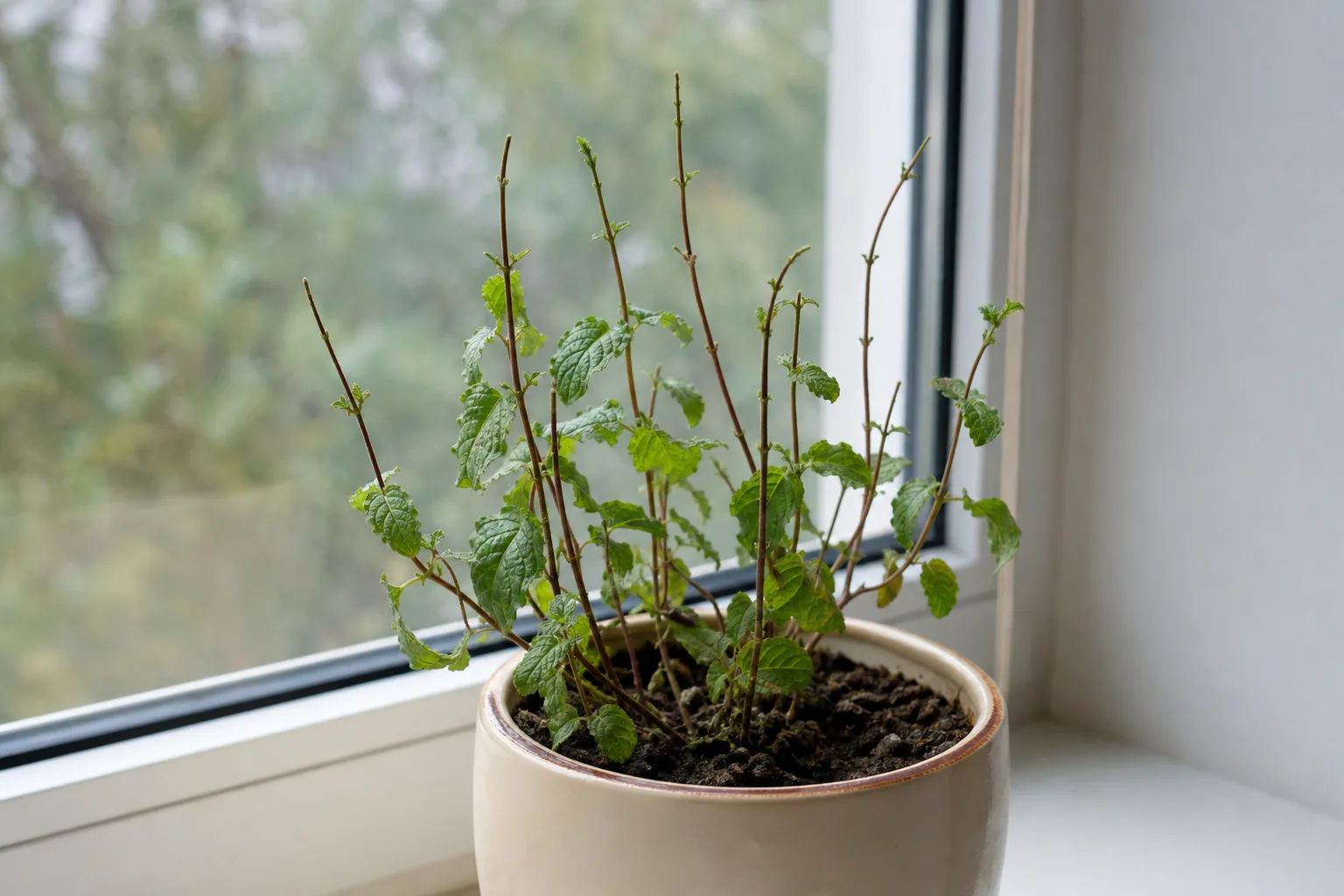
No New Growth on Mint: Causes, Checks & Fixes
This guide covers no new growth on Mint. See also the general No New Growth guide, watering, and light pages for this plant.
No New Growth on Mint: Causes, Checks & Fixes
Quick answer
Mint is a vigorous rhizomatous perennial that normally pushes fresh shoots quickly when warmth and light are adequate. When you harvest regularly but see zero new tips for weeks during spring or summer, treat the pot as a diagnostic case-not a fertilizer shortage.
First fix: run the dormancy-vs-stall triage below. If the stall is real, inspect roots and crown before changing anything else. Crowded or rotting roots and weak light are the most common causes; division and brighter placement usually restart growth faster than feeding a stressed plant.
This page is a zero-growth triage hub. Use it to decide why mint has stalled, then follow the linked specialist guides when one cause is clearly dominant.
Quick triage: dormancy or true stall?
Start here so you do not repot or fertilize a plant that is simply resting.
Decision path
- Check the calendar and temperature. Outdoor and cool-window mint often pauses in winter; rhizomes typically survive and regrow when warmth returns. Indoor mint may also slow when days are short.
- Ask whether you recently cut back hard or moved pots indoors after frost. University of Maryland Extension notes that mint, chives, and tarragon can benefit from a light frost before coming inside, which can induce a brief rest period before firm new growth.
- If air and soil are warm and days are lengthening, a multi-week stall is not normal. Mint in active conditions should produce harvestable regrowth; persistent stillness is actionable.
- Scratch a suspect stem. Green tissue under the bark can still sprout; dry brown wood will not.
| Signal | Likely normal pause | Likely real stall |
|---|---|---|
| Season | Cool months, short days | Warm spring/summer |
| Crown condition | Firm, no sour smell | Dead woody center or mushy base |
| Shoot pattern | Even quiet across plant | Growth only on pot rim |
| Soil moisture | Dries on a normal cycle | Stays wet many days after watering |
| Recent events | Hard prune or frost rest | No recent shock; gradual decline |
Act now when you see sour-smelling mushy roots, a fully dead center during peak harvest season, or zero tips for roughly three weeks in warm bright conditions on a pot you rely on daily.
Wait and observe when mint is outdoors in late winter, recently moved inside after frost, or sitting in cool dim light during the shortest days-recheck after temperatures and day length improve.
What no new growth looks like on Mint
A genuine growth stall on container mint usually shows a recognizable pattern:
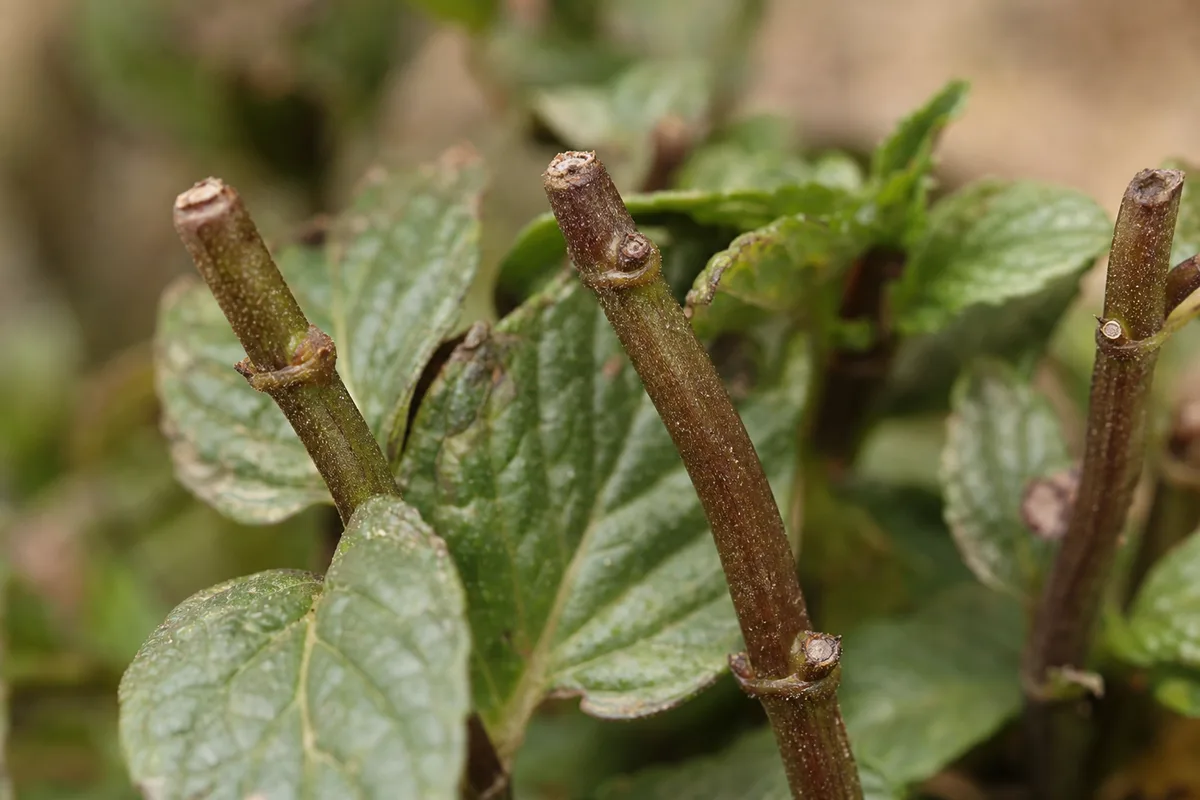
No New Growth symptoms on Mint - compare with healthy tissue on the same plant.
- No fresh tips even after normal harvest windows pass
- Old leaves hang on while nodes stay flat and do not swell
- Vigorous shoots only at the outer rim; the center looks exhausted or woody
- Pale, weak foliage with long gaps between usable stems
- Pot stays wet unusually long, or water runs through instantly then the plant wilts anyway
Mint is naturally fast when conditions are right (RHS), so rim-only growth with a silent center is a classic congestion warning-not a cosmetic issue.
Container vs in-ground mint
Container mint stalls sooner because rhizomes fill limited soil volume. Extension guidance recommends growing mint in containers about 12–16 inches wide partly because crowding and runner escape are constant management issues. Edge-only growth in a pot almost always means roots need attention.
In-ground mint can look bare in winter and return from crowns in spring. Summer stalls are less often “root-bound” and more often drought stress, shade, or rot in poorly drained soil. If outdoor mint fails to return after soil warms, dig a small section and inspect rhizome firmness before assuming dormancy.
Why Mint stops producing new shoots
Root-bound or exhausted center
Mint spreads through underground runners and rhizomes that eventually occupy most of a pot. When the center dies back, live rhizomes keep producing only at the edges-exactly the rim-growth pattern growers describe on congested plants. Illinois Extension suggests dividing mint every three to four years to maintain vigor; many container pots need attention sooner.
Too little light for active growth
Mint tolerates part shade outdoors, but productivity is highest in stronger light (University of Maryland Extension). Indoors, herbs need at least five hours of sun on a south or west window, with supplemental LED or fluorescent light for 14–16 hours daily when natural light is weak. Prolonged dim conditions often produce “maintenance mode”-old stems persist, but new shoots do not form.
Chronic overwatering and root decline
Excess moisture reduces soil oxygen and damages fine roots, which can cause wilting and yellowing that mimic drought stress. When roots turn dark and mushy, top growth stalls until damaged tissue is removed (University of Maryland Extension on root rots). Mint likes steady moisture but not saturated mix.
Seasonal dieback mistaken for failure
Outdoor mint can die back in cold months and regrow from rhizomes in spring (RHS). Do not apply summer-intervention repotting to a plant that is simply between seasons.
How to confirm the cause
Work through these checks in order:
- Season and temperature - winter pause can be normal; warm-season zero growth is not.
- Pot dry-down speed - mix that stays wet for many days suggests overwatering or failing roots first.
- Unpot and inspect roots - firm, pale roots are viable; dark, soft, foul-smelling roots indicate rot.
- Crown center - dead woody middle with live outer edges usually means overdue division.
- Light exposure - count rough daily sun hours; weak all-day indoor light is a common stall driver.
- Scratch-test stems - green cambium can regrow; dry brown wood will not.
Root-bound, low light, or root rot?
| Clue | Root-bound / congested | Low light | Root rot |
|---|---|---|---|
| Root feel | Dense mat, firm | Often normal unless overwatered in dim conditions | Soft, dark, sour smell |
| Shoot pattern | Rim growth, dead center | Leggy, pale, stretched stems | Wilting despite wet mix |
| Soil behavior | Fast dry-down or uneven moisture | Normal cycle, slow weak growth | Stays wet; may smell |
| First fix | Divide and repot | Increase light | Trim rot, refresh mix, reduce water |
When two columns match, treat the more urgent problem first-rot before fertilizer, light correction alongside division when both congestion and dim placement are present.
First fix for Mint
If triage confirms a real stall (not dormancy), inspect roots and crown before fertilizing or watering more.
When the pot is crowded or the center is dead:
- Lift the clump and split into sections with healthy roots and shoot points.
- Discard exhausted center material and any mushy rhizomes.
- Replant divisions in fresh, well-draining mix with open drainage holes.
RHS propagation guidance supports dividing mint in spring or after flowering; congested summer pots benefit from the same division logic rather than waiting.
After division, place mint in the brightest safe location available and water only when the top layer begins to dry. Hold fertilizer until fresh tips appear-feeding stressed or rotting root systems often makes things worse.
Step-by-step recovery
1. Prepare
Gather clean pruners, fresh potting mix, and containers with drainage. Water lightly the day before if the root mass is brittle.
2. Unpot and diagnose
Slide the plant out, shake off loose spent mix, and separate the congestion-vs-rot decision using the table above. Trim black, collapsing crown tissue; keep firm rhizomes with attached shoots.
3. Divide and reset
Cut through rhizome mats at natural seams (RHS mint guide). Pot each division at the same depth as before. For light-limited indoor mint, move to a south or west window or add supplemental light per UMD indoor herb guidance.
4. Water and wait
Water deeply once to settle mix, then let the top inch dry before the next soak. Do not keep soil soggy “to encourage growth.”
5. Resume harvest carefully
Once new tips are firm, light harvesting can encourage branching-as extension sources note, frequent harvesting promotes bushy regrowth.
Recovery timeline and what progress looks like
Judge recovery by new shoots from rhizomes or nodes, not by old woody stems greening up.
| Situation | What to expect |
|---|---|
| Mild stall, firm roots, better light | First new tips often within about one to two weeks in warm active conditions |
| Root damage trimmed | Slower restart-often several weeks before steady harvest rhythm returns |
| Cool season or short days | Growth may stay quiet until warmth and light improve; avoid repeated repotting |
| Advanced crown rot | Limited salvage; restart from the healthiest division or cutting |
Signs you are winning: swelling nodes, upright fresh tips, firmer crown, and soil that dries on a predictable cycle.
Signs it is worsening: spreading mushy roots, sour odor, increasing wilt despite wet mix, or more brown scratch-test stems each week.
Example recovery path
A typical stalled container: three-year-old spearmint in a 20 cm pot, edge-only growth, center woody, firm roots but densely circling. After dividing into four sections, discarding the dead core, repotting in fresh mix, and moving from a north kitchen sill to a west window with roughly six hours of sun, the first new tips often appear on healthy divisions within one to two weeks in late spring. Full harvest rhythm may take a few more weeks depending on heat and how much root mass was removed-consistent with mint’s normal vigor once roots and light are corrected.
What not to do
- Do not fertilize a plant with wet, failing roots or unexplained stall.
- Do not increase watering frequency when growth has already stopped.
- Do not leave congested mint in the same exhausted pot for another full season.
- Do not wait indefinitely in dim light expecting spontaneous recovery.
- Do not confuse winter dieback outdoors with a summer root problem.
How to prevent no new growth next time
- Divide on a schedule - refresh congested clumps every few years, or sooner in small pots (RHS; Illinois Extension).
- Match container to habit - wide pots with drainage suit spreading rhizomes better than tall narrow ones (University of Maryland Extension).
- Keep productive light - full sun to part shade outdoors; indoors, prioritize south or west exposure or supplemental light (UMD indoor herbs).
- Water by moisture, not calendar - lift pots or check the top inch before soaking (UMD on overwatering).
- Remove dead center growth when dividing so vigorous outer sections dominate.
When to worry
Escalate quickly if mushy roots smell sour, the crown collapses in peak summer, or scratch tests show mostly dry brown wood. Mint is easy to replace from a healthy division-salvage what is firm, discard what is not.
Related Mint guides
Use these when triage points to one dominant cause:
- Root bound on mint - circling rhizomes, rim-only growth, very fast dry-down.
- Not enough light on mint - leggy pale stems without strong root congestion.
- Root rot on mint - sour smell, mushy dark roots, wilt despite wet mix.
- Mint repotting - container sizing, mix, and timing detail.
- Mint overview - baseline care and harvest rhythm.
Conclusion
No new growth on mint is usually a triage question first: dormancy or real stall? Once you confirm a warm-season failure, root congestion, weak light, and rotting roots explain most cases-and division plus brighter placement beats fertilizer as the first response. Use the comparison table to separate lookalikes, follow the numbered recovery steps, and route to the specialist mint guides when one cause clearly dominates.