Pot Too Small on Mint: Causes, Checks & Fixes
Quick answer
Mint outgrows small pots fast-cramped rhizomes stall growth and dry out daily. First step: slide the plant out, confirm a dense rhizome mat with little soil left, then divide and repot into at least a 20–25 cm wide container with drainage holes.
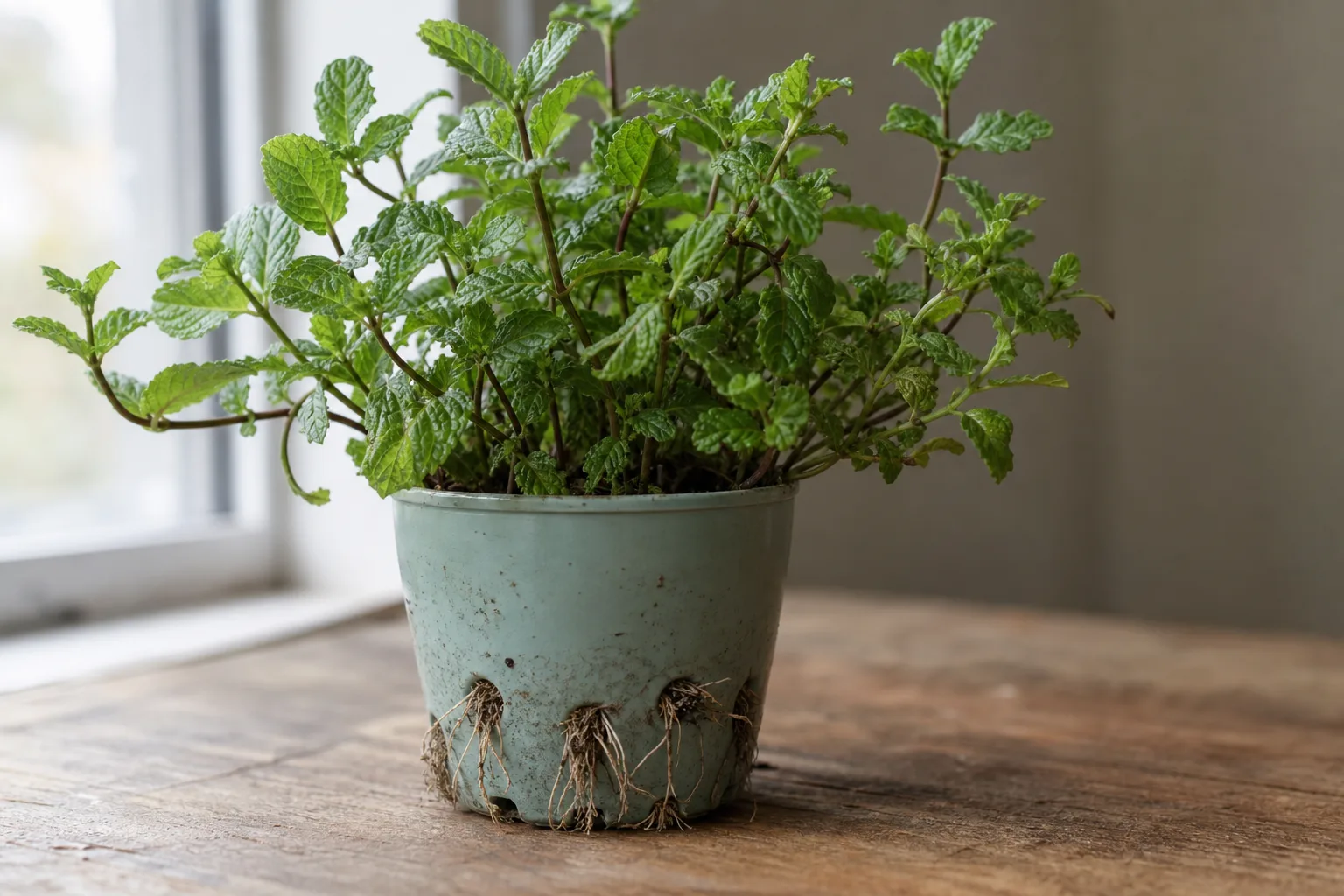
Pot Too Small on Mint: Causes, Checks & Fixes
This guide covers pot too small on Mint. See also the general Pot Too Small guide, watering, and light pages for this plant.
Pot Too Small on Mint: Causes, Checks & Fixes
Quick answer
Mint outgrows cramped containers quickly because it spreads by rhizomes and forms dense root masses in limited soil. First step: slide the plant out of its pot, confirm root crowding and an undersized container, then divide and repot into a wider pot with drainage.
This page is about container choice mistakes-the supermarket herb cup, the decorative windowsill pot, or the narrow deep planter that looked fine at purchase. Mint is naturally vigorous and is usually grown in containers to control spread rather than left loose in beds (RHS). When the pot never matched that vigor, you get fast dry-down, stalled growth, and weak stems even if you water faithfully. If your mint has simply filled a once-adequate pot over time, see root bound on mint for the overlapping crowding diagnosis.
What an undersized pot looks like on Mint
A too-small mint pot often looks thirsty even when you water on schedule. Watch for this pattern:
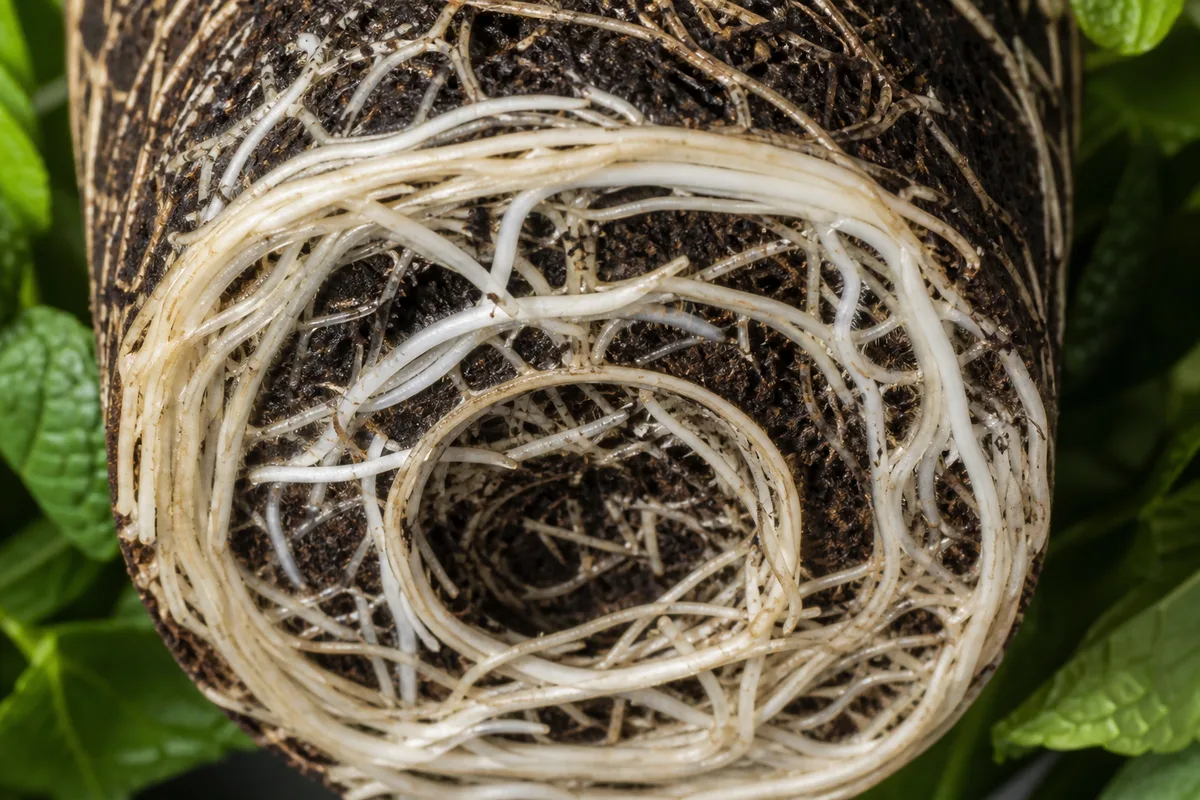
Pot Too Small symptoms on Mint - compare with healthy tissue on the same plant.
- Roots visible at drainage holes or circling tightly when you slide the plant out
- Pot diameter clearly small for the clump-common with 8–10 cm grocery pots holding multiple stems
- Soil dries within hours after a thorough soak; the pot feels light again by afternoon in warm weather
- Water runs straight through without soaking the centre, leaving the middle dry
- Growth concentrated on the outer edge while the centre thins, goes woody, or stops shooting
- Smaller new leaves and weaker regrowth after normal harvest
- Frequent wilting in summer despite regular watering
- Narrow tall pot where rhizomes have no horizontal room-mint prefers width over depth
Normal, not too small: Mint in an appropriately wide container dries when the top layer of mix is dry on your usual schedule-often every one to three days in warm balcony sun. Slow winter die-back with firm stems and reasonable dry-down is seasonal rest, not a sizing crisis.
Not a small pot: Yellow leaves on soil that stays wet for days, soft stems at the base, or sour-smelling mix point to overwatering or root rot. A bigger pot alone will not fix rotting tissue.
Why Mint outgrows small pots
Rhizomes fill horizontal space fast. Mint spreads through underground rhizomes and surface runners (Missouri Botanical Garden). Unlike fibrous-root herbs such as basil or cilantro, mint stores energy in lateral stems that circle inward when they hit pot walls. University of Maryland Extension recommends growing mint in containers about 30–40 cm (12–16 inches) in diameter because mint spreads aggressively by runners-undersized pots exhaust that horizontal space within one active growing season.
Harvesting does not slow underground spread. Regular pinching keeps top growth bushy, but it does not stop rhizomes from occupying soil volume. Illinois Extension notes mints spread aggressively by rhizomes and are best grown in containers above ground-yet even container culture fails when the container is too narrow or shallow for that biology.
Small soil volume swings between wet and dry. As rhizomes displace mix, less material remains to hold moisture and nutrients. The plant briefly saturates, then drought-stresses hours later. A 10 cm grocery pot with a dense rhizome mat often dries within four to six hours on a mild day-editorial observation from LeafyPixels repot logs, consistent with how little mix remains once rhizomes dominate a shallow container.
The supermarket pot trap. Grocery mint is often several rooted cuttings crammed into an 8–10 cm pot designed for short shelf life, not months of kitchen harvest. The rim looks lush while the centre exhausts first-a mint-specific crowding signature. UF/IFAS emphasizes container restraint for mint precisely because unchecked spread is difficult to manage; starting in a pot that is already too small simply front-loads the problem.
Spearmint vs. peppermint vigor. Both spread aggressively, but fast container spearmint (Mentha spicata) often fills a small pot in six to nine months, while peppermint (Mentha × piperita) in warm bright conditions can match that pace. The fix is the same-wider pot plus division-but spearmint windowsill growers should inspect roots more often.
Sizing context vs. routine repotting. This page targets pots that were never adequate-grocery rescue and first windowsill setup. The mint repotting guide covers maintenance upgrades on plants already in reasonable containers: modest one-size-up when roots circle lightly and the centre still shoots. For grocery rescue or daily wilting in a 10 cm cup, skip straight to at least 20–25 cm wide (or divide into multiple 12–15 cm pots). For long-term productive mint, University of Maryland Extension recommends 30–40 cm diameter-wider than the routine one-size-up rule because rhizome spread is the limiting factor, not stem height.
How to confirm the cause
Work through these checks before repotting:
- Measure the pot - Note inside diameter. Pots under 15 cm wide holding a multi-stem clump are usually undersized for sustained growth; grocery pots under 10 cm are almost always temporary.
- Slide the plant out - Grasp the base and lift. If the rootball holds the pot shape and white rhizomes wrap the outside with little visible mix, crowding in a small container is confirmed.
- Drainage hole inspection - Roots poking through are a clear signal that the current volume is exhausted (RHS recommends repotting or dividing container mint when plants become cramped).
- Dry-down speed test - Water thoroughly and note how long the pot stays heavy. Drying within four to six hours on a mild day strongly suggests too little soil volume for the root mass.
- Growth pattern check - Edge-heavy shoots with a tired or bare centre point to rhizome congestion in a pot that was never wide enough or was not divided in time.
- Rule out underwatering alone - If roots are sparse, mix pulls away from walls because you rarely water, and the pot still has loose soil visible on the sides, fix watering habit first. Undersized pots dry fast after you soak them; chronic underwatering leaves dusty, shrunken mix throughout.
- Smell and root texture - Sour odor or mushy dark roots mean rot. Do not repot into a larger container with wet rotting roots-trim affected tissue and replace sour mix as part of the same intervention.
If rhizomes are dense, the pot is clearly narrow for the clump, and dry-down is abnormally fast, a too-small container is confirmed.
Symptom comparison: pot too small vs. lookalikes
| Pattern | Pot too small | More likely cause |
|---|---|---|
| Dry-down speed | Fast after thorough soak | Chronic underwatering - sparse roots, dusty shrunken mix |
| Soil moisture | Channels through; centre stays dry | Pot too large - wet outer ring, yellow lower leaves |
| Stem base | Firm and green | Root rot - soft, blackened, sour smell |
| Growth pattern | Rim lush, centre woody or bare | Root bound - crowding in a once-adequate pot over time |
| Post-repot droop | Starts after confirmed repot | Transplant shock - temporary; do not repot again |
Pot too small vs. root bound: Both show dense rhizomes and fast dry-down; the fix (divide and repot wide) is the same. This page emphasizes starting undersized or never sizing up from a grocery pot. Root bound on mint focuses on crowding that develops over months in any container.
First fix for Mint
Slide the plant out and inspect the rootball. If rhizomes form a dense mat in a clearly undersized pot, plan division and repot into a wider container with drainage-not more daily watering.
Do not repot blindly without looking. Confirmation takes under a minute and prevents unnecessary disturbance when the real issue is missed watering or low light. Once undersizing is verified, gather a wide pot (at least 20–25 cm for kitchen use; 30–40 cm for long-term productivity per University of Maryland Extension), fresh free-draining mix, and repot during spring or early summer when growth is active.
Do not jump to a huge decorative pot with an intact exhausted centre. Upsizing alone carries a dead core into wet unused soil. Division removes woody centre tissue and restarts vigorous sections-see the step-by-step below and the full mint repotting guide for soil ratios and seasonal timing.
Do not fertilize a cramped, stressed mint before repotting. Root space and fresh mix matter first.
Step-by-step: divide and repot into the right size
After confirming the pot is too small:
- Water lightly the day before - Moist rhizomes are more flexible and less likely to snap during handling.
- Choose a wide container - Prioritize diameter over depth. Aim for at least 20–25 cm wide for windowsill harvest, or 30–40 cm for long-term growth (University of Maryland Extension). Ensure drainage holes are open.
- Prepare mix - Use fresh, moisture-retentive but well-draining potting media (UF/IFAS herb guidance). Avoid heavy garden soil in containers. For exact ratios, see the mint soil guide.
- Lift and divide the clump - Shake off only loose exhausted mix. Cut through rhizomes along natural seams with clean pruners or a knife. Keep sections with two to three healthy shoot clusters and attached roots. Discard woody, bare centre portions (RHS recommends discarding old dead parts in the centre when dividing).
- Replant at the same depth - Set each division so stems sit at the same soil line as before. Backfill and firm gently without compacting mix into a dense block.
- Water once thoroughly - Let excess drain fully. Empty the saucer within thirty minutes.
- Place in bright light - Avoid harsh midday sun through glass for a few days while divisions settle. Hold fertilizer for at least four weeks until new growth appears.
- Resume harvest gradually - Light picking of outer stems can resume once new tips look firm and full. Heavy harvest waits until clear regrowth confirms roots have colonized fresh mix.
Same-pot refresh option: When the decorative pot is already 20–25 cm wide but the mix is exhausted, you do not always need a larger container. Trim outer rhizomes, remove the woody centre, refill with fresh mix in the same pot, and replant vigorous edge sections. This beats upsizing into a huge planter that stays wet around unused soil.
Skip repotting if you moved the plant within the past two weeks unless roots are rotting. Fresh repots need settle time; wilting for a few days may be transplant shock rather than ongoing pot stress.
Recovery timeline
Immediately after repot: Expect mild wilt or droop for a few days while rhizomes adjust-normal if stems stay firm.
Several days: Better water retention and less afternoon collapse once root mass and soil volume are balanced.
One to two weeks: Visible new shoot tips during active growing weather in spring or summer. RHS notes that cutting mint back after flowering encourages fresh shoots within weeks-a useful parallel for how mint responds once root room is restored.
Three to four weeks: Light harvest rhythm often resumes on vigorous spearmint in warm, bright conditions-aligned with the mint repotting guide harvest-pause window of seven to ten days minimum, then weeks three to four for heavier picking once new leaves match pre-repot size. Full productivity depends on light, temperature, and how aggressively you divided the clump.
Old yellow or crispy leaves from repeated dry-down do not green up. Judge success by new shoot vigor, leaf size on fresh tips, and slower dry-down between waterings-not by reversing old damage.
Editor observation (March 2026): A supermarket spearmint in a 9 cm pot showed rim-heavy growth and dry-down within four to five hours after soak. Unpotting revealed a solid rhizome disc roughly 1 cm thick with almost no visible mix. Divided into three 12 cm pots with fresh mix; first new shoot tips appeared on days 9–11 in warm spring conditions. Dry-down extended to roughly two days between waterings by week three.
Lookalike symptoms to rule out
Root bound in a once-adequate pot overlaps heavily with pot too small-the fix (divide and repot wide) is the same. This page emphasizes starting undersized or never sizing up from a grocery pot; root bound on mint focuses on crowding that develops over time in any container.
Underwatering also causes wilt and dry soil, but roots are sparse and soil shrinks away from the pot because it was never soaked-not because rhizomes filled the space.
Overwatering in an oversized pot produces yellow leaves on persistently wet mix-the opposite mistake. See pot too large on mint. Cramped mint dries fast; overpotted mint stays wet.
Low light stall mimics slow growth without visible roots at holes. A bright, crowded mint still needs a wider pot; a dark, uncrowded mint needs better light before sizing up.
Heat stress causes short midday droop during heat waves even in correctly sized pots. If wilt resolves overnight and roots are not dense, heat-not pot size-may be the driver.
What not to do
Do not keep “chasing wilt” with extra water while ignoring a packed rhizome mat in a 10 cm pot. Chronic wet-dry swings stress roots and do not replace lost soil volume.
Do not move an undivided solid rhizome pancake into a very large pot and expect the dead centre to recover. Division is usually required.
Do not use heavy garden soil in containers, since poor drainage can create rot right after repotting.
Do not fertilize immediately after repotting hoping to force growth. Roots need time to establish in fresh mix.
Do not leave mint in a sealed decorative cachepot with no drainage exit. Remove the inner pot to drain after every watering.
Do not repot on the same day you also prune heavily, move windows, and fertilize. Change one stressor at a time.
How to prevent pot size problems on Mint
Use a maintenance schedule instead of waiting for severe stress:
- Start with adequate width - Plan for at least 20–25 cm for kitchen use, or 30–40 cm for long-term pots (University of Maryland Extension).
- Grow in containers to manage spread and inspect roots easily (RHS).
- Check root congestion each growing season - Lift the pot and look for circling rhizomes before the centre declines.
- Divide every six to twelve months on fast container spearmint, or when growth slows and dry-down speeds up (Illinois Extension).
- Harvest regularly, then reassess vigor - Weak regrowth after normal picking is a signal to inspect roots, not just to water more.
- Rescue grocery mint early - Divide supermarket pots into individual sections within the first few weeks for best results.
- Refresh same-width pots - When a 25 cm container still fits your space but mix is exhausted, divide and refill with fresh media instead of waiting for daily wilting.
When to worry
A mint in a slightly snug but firm-rooted pot is medium urgency-not an emergency if stems are green and wilt recovers overnight. Escalate when:
- Mint wilts daily despite thorough morning watering and firm roots-container volume is likely exhausted
- Roots force through drainage holes and deform the pot-repot before exposed roots desiccate
- Centre has stopped shooting while the rim still looks green-the rhizome mat has outgrown the pot
- Stems soften at the soil line or the mix smells sour-suspect rot, not simple crowding
- No new growth through an entire warm season after repotting into an appropriately wide container and good light
A droopy but firm mint that dries within hours in a supermarket pot is uncomfortable, not dying. Divide and repot within the next week during active growth and recovery is usually straightforward.
Conclusion
Mint punishes undersized pots faster than most kitchen herbs because rhizomes expand horizontally, not just downward. Slide the plant out, confirm a dense mat in a container that was never wide enough, then divide and repot into a wide pot with fresh mix-not a giant decorative planter carrying a dead centre. Most cramped mint resumes pushing vigorous tips within one to two weeks once root room and watering rhythm align. Treat grocery pots as temporary, schedule seasonal root checks, and open the mint repotting guide when you need soil ratios, division timing, or grocery-mint rescue detail.
Related Mint guides
- Mint overview
- Mint repotting
- Root bound on mint
- Pot too large on mint
- Root rot on mint
- Transplant shock on mint
- Overwatering on mint
- Mint watering
Related tool
Use the Plant Problem Diagnosis Tool to narrow causes for pot too small on this plant before changing multiple variables at once.