Whiteflies on Mint: Causes, Checks & Fixes
Quick answer
Whiteflies on Mint fly up in clouds from leaf undersides and stipple tender shoots. First step: Isolate the pot and blast stem tips and leaf undersides with a strong stream of water before any spray.
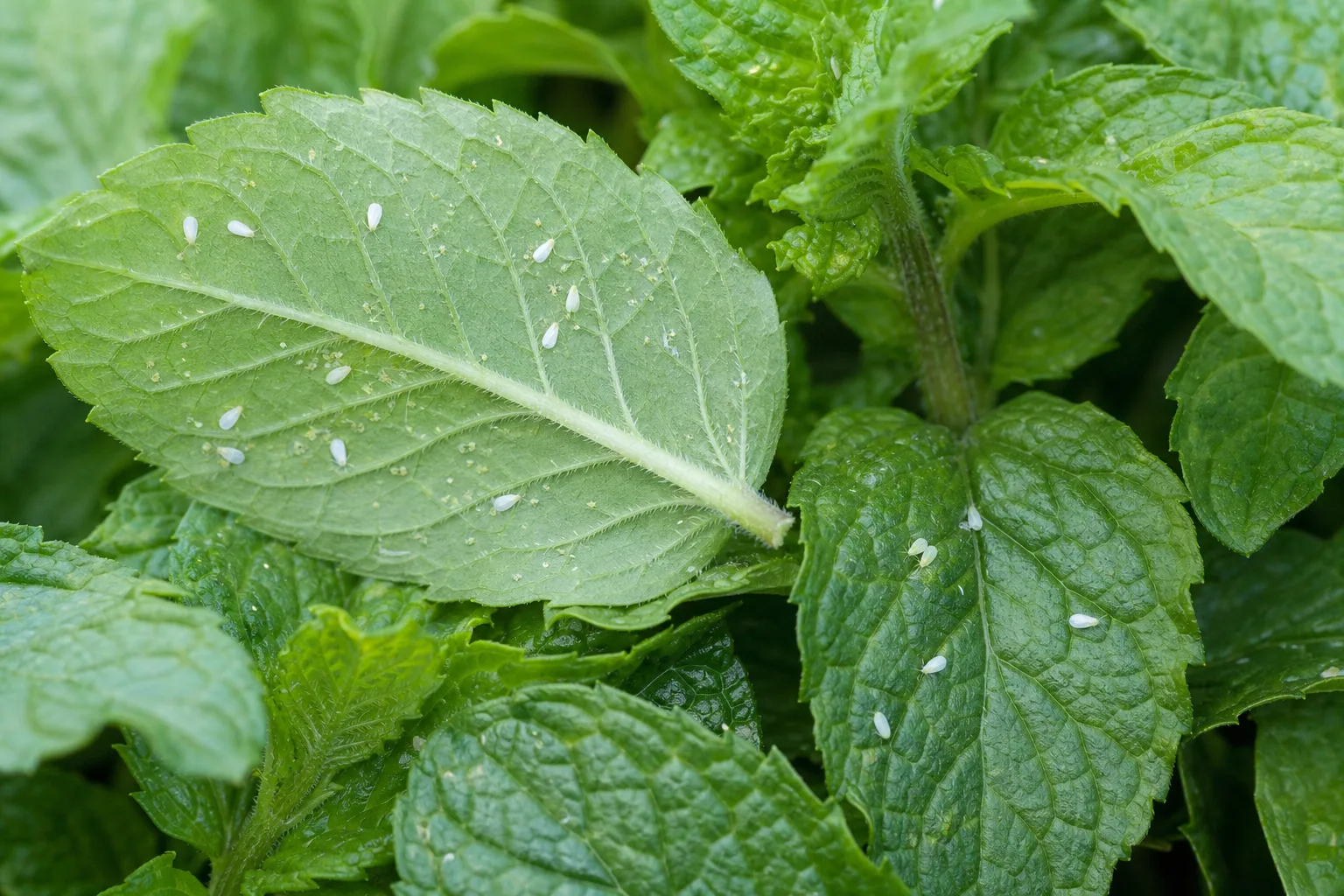
Whiteflies on Mint: Causes, Checks & Fixes
This guide covers whiteflies on Mint. See also the general Whiteflies guide, watering, and light pages for this plant.
Whiteflies on Mint: Causes, Checks & Fixes
Quick answer
Whiteflies on mint (Mentha spp., including spearmint and peppermint) show up as tiny white insects that fly from leaf undersides when you disturb the stems-often the same soft shoot tips you pinch for tea and garnish. Nymphs feed on sap from tender regrowth, causing pale stippling, sticky honeydew, and sometimes black sooty mold on leaves you planned to eat.
First step: move the pot away from other herbs and blast stem tips and leaf undersides with a strong stream of water. That mechanical knock-down is the safest start on an edible kitchen plant. Only after you still see live nymphs or flying adults should you follow with labeled insecticidal soap or yellow sticky traps for monitoring.
Reviewed 2026-06-16 by LeafyPixels Review Board against extension IPM guidance and mint care references.
What whiteflies look like on Mint
On mint, whiteflies are rarely confusing once you disturb the right tissue. Adults are tiny white-winged insects roughly 1–2 mm long. They rest on leaf undersides and along soft stem joints-not on the tough lower stems unless the infestation has spread.
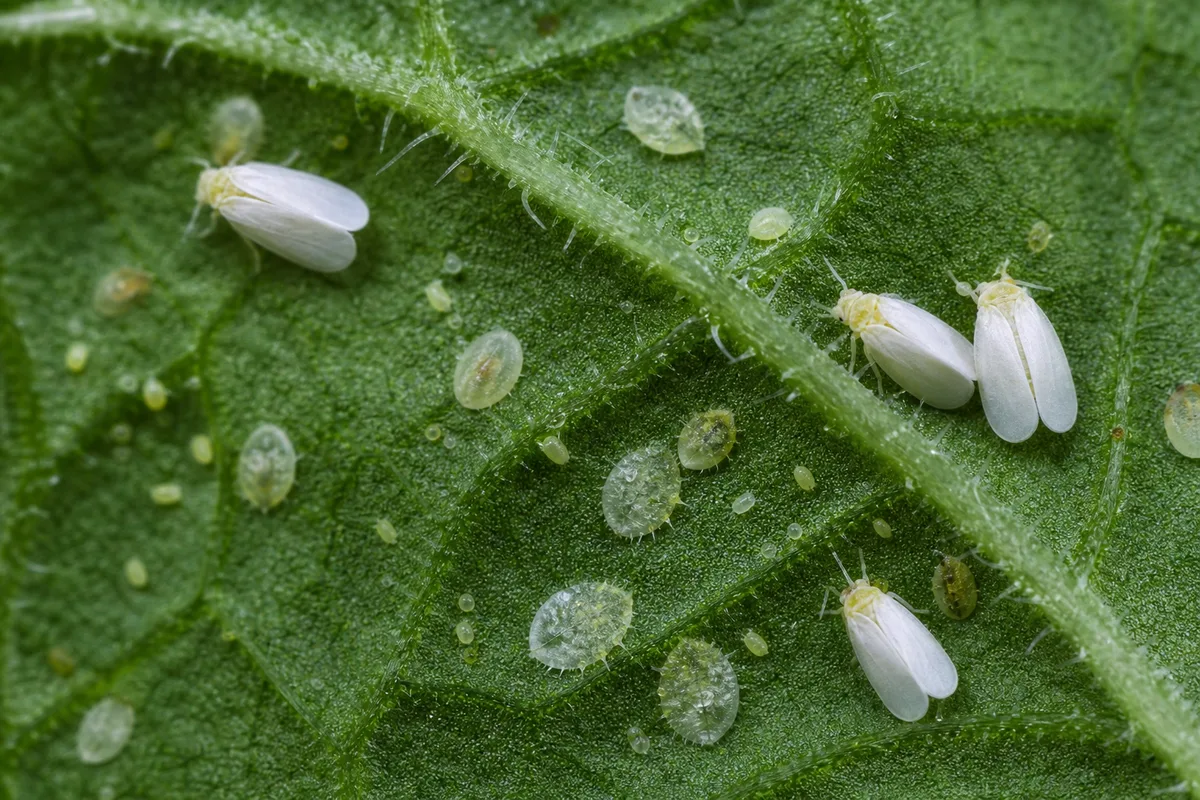
Whiteflies symptoms on Mint - compare with healthy tissue on the same plant.
Typical signs on mint:
- A cloud of white insects rising when you brush or shake stems over white paper
- Flat, oval, pale nymphs glued to undersides-these immobile stages cause most feeding damage
- Yellow or pale stippling on upper leaf surfaces where nymphs have fed
- Glossy, sticky honeydew on leaves and pot rims; black sooty mold may follow on outdoor or humid indoor mint
- Ants marching on stems-they harvest honeydew and may protect whiteflies from predators
- Weak or slow new tips after pinching when feeding is heavy
Whiteflies attack many herbs and vegetables, including mint indoors and out. Unlike aphids on mint, which form stationary pear-shaped clusters on shoot tips, whitefly adults fly readily when disturbed. Immature whiteflies look like flat pale scales on undersides, not clustered soft bodies on new buds.
Heavy pressure rarely kills an established potted mint outright, but it can ruin harvest quality, stunt regrowth after pinching, and coat leaves with honeydew until populations drop. If leaves feel tacky without visible insects, also check the sticky leaves guide for honeydew overlap with aphids.
Why Mint gets whiteflies
Mint is not randomly infested. Its growth habit and how we grow kitchen herbs create reliable feeding sites.
Constant soft new growth after pinching. Mint regrows fast after harvest cuts. Regular harvesting encourages bushy growth and keeps pushing tender shoot tips-exactly the tissue whiteflies prefer for feeding and egg laying. Every weekly pinch opens fresh feeding sites if adults are already nearby.
Lush nitrogen-fed shoots. Heavy feeding or rich compost pushes tender, nitrogen-rich tissue that sap feeders colonize quickly. University of Minnesota Extension notes that rich soils can promote rapid lush herb growth; soft shoots on windowsill mint are easier targets than firm mature leaves.
Crowded indoor herb trays. Dense mint stems beside basil, parsley, and supermarket herb pots create humid pockets where rinsing misses nymphs tucked between overlapping leaves. Whiteflies move readily between plants on a shared kitchen counter.
Warm indoor air without predators. Greenhouse and windowsill conditions favor whitefly reproduction when natural enemies are absent indoors. Lack of beneficial predators on houseplants lets populations explode through several life cycles before you notice stippling.
Introduction from outside. New nursery herbs, mint brought indoors after summer outdoors, and open windows can all introduce winged whiteflies. Skipping quarantine is the most common entry route in herb collections.
Mint rarely dies from whiteflies alone on an established pot, but heavy feeding reduces vigor, invites sooty mold on edible foliage, and can spread to tomatoes and peppers on the same sheltered bench.
How to confirm the cause
Work through these checks before spraying anything beyond water:
- Cloud test - Gently shake or brush stems over white paper. A brief cloud of tiny white insects confirms whiteflies. If nothing flies but you see soft pear-shaped clusters on tips, suspect aphids instead.
- Underside inspection - Part overlapping leaves and look at undersides with a hand lens. Whitefly nymphs look like flat pale scales. Adults rest with wings folded tent-like.
- Stippling pattern - Yellow or pale dots on upper leaf surfaces with insects below fit whitefly feeding. Whole-plant yellowing without insects points to watering stress or other causes.
- Honeydew check - Rub a leaf between fingers. Sticky residue that transfers to your skin points to sap feeders, not drought alone.
- Sooty mold check - Black film that wipes off with a damp cloth supports honeydew from whiteflies or aphids-not mint rust, which shows orange pustules.
- Ant activity - Ant trails on mint stems strongly suggest honeydew producers are present on nearby tissue.
- Neighbor scan - Check basil, tomatoes, peppers, and other herbs on the same windowsill. Shared infestations are common on crowded kitchen counters.
Confirmed diagnosis requires flying adults or flat nymphs on undersides with stippling or honeydew, not yellow leaves alone.
First fix for Mint
Isolate the pot and blast whiteflies off with water.
Move mint away from basil, parsley, and other herbs. Spray or shower stems forcefully-early whitefly populations can be held down by hosing down with water sprays and a forceful spray of water dislodges soft-bodied pests from sturdy plants. Aim at undersides and stem joints where nymphs hide. Repeat every two to three days until you stop seeing live insects after rinsing.
Do not jump to neem, horticultural oil, and pruning all the same afternoon. Water knock-down alone often clears light indoor infestations on mint, and it leaves no residue on leaves you harvest.
If colonies remain after two or three rinses, proceed to contact sprays and traps-not before.
Step-by-step recovery
Once water alone is insufficient, work in this order:
Light infestation (few flies on one or two stems)
- Continue water blasts every two to three days on undersides until inspection shows no live nymphs.
- Hang one yellow sticky trap beside the pot at canopy height to catch adults and monitor decline. Traps help monitor or reduce whitefly numbers but do not replace underside coverage.
- Pinch out any heavily stippled shoot tips into soapy water rather than composting them indoors.
Moderate infestation (clouds on several stems, honeydew present)
- Apply insecticidal soap - Use a product labeled for edible plants. Soaps work on contact with little residual effect; coat undersides until runoff, not just tops.
- Repeat every five to seven days for two to three cycles. MU Extension notes eradication usually requires applications at five- to seven-day intervals because eggs and pupae survive single sprays.
- Manage ants if present - Disrupt ant trails with water so natural enemies can reach whiteflies once honeydew access is broken.
- Hold fertilizer - Do not feed stressed mint to push soft shoots while whiteflies are active.
Heavy infestation (cloud on every stem, sooty mold, stalled growth)
- Prune heavily infested shoot tips on edible mint-drop them into soapy water, not the compost pile indoors.
- Combine soap, traps, and repeated rinses through one full generation cycle before judging failure.
- Wash sooty mold off lower leaves with plain water once honeydew production stops.
- Consider replacing severely weakened grocery-store mint in a crowded tray if three full soap cycles fail and no clean tips emerge after pinching-starting a clean division is often faster than fighting chronic reinfestation on a stressed plant.
Neem oil and horticultural oils are options when soap fails, but test a few leaves first; mint in the Lamiaceae family can be sensitive to oils in hot sun. Morning or evening application when temperatures are under 90°F reduces burn risk.
Systemic insecticides like imidacloprid are a poor fit for kitchen herbs you harvest weekly and may harm bees if outdoor mint flowers. Prefer contact methods on edible mint.
Recovery timeline
Stippled leaves do not fully re-green. Heavily damaged foliage stays pale even after whiteflies die. Judge success by new clean shoots after pinching, not old leaves.
- 48–72 hours - Flying adult count should drop after the first thorough rinse; honeydew may still feel sticky until you wipe leaves.
- 7–14 days - With repeated water or soap cycles, new tips should open with fewer insects on inspection.
- 2–3 weeks - Bushy regrowth resumes if roots, light, and watering are sound; pinch once after control to reset shape for harvest.
Worsening signs: clouds from every stem when disturbed, sooty mold coating most leaves, winged adults on neighboring herbs, or new tips that fail to regrow after pinching-these need faster escalation and wider inspection across the whole collection.
Mint’s fast rhizome growth means a saved pot can look harvest-ready again within a month; a severely weakened plant with few clean shoots may be easier to replace from a division than to nurse through repeated generations.
Lookalike symptoms to rule out
- Aphids - Soft pear-shaped clusters on newest tips; usually do not fly in clouds when disturbed. Also produce honeydew-see aphids on mint for side-by-side checks.
- Spider mites - Fine stippling and webbing at stem joints in dry heat; mites are microscopic dots, not flying white adults (UMN Extension distinguishes mite stippling from whitefly honeydew).
- Thrips - Silver scarring and black specks of frass; adults are slender and do not rise in white clouds from mint stems.
- Mealybugs - White cottony tufts in axils; insects stay stationary unlike active whitefly adults.
- Mint rust - Orange pustules on leaves with firm growth; not sticky honeydew pattern.
- Drought stress - Whole stems wilt limply; soil is dry deep down; no honeydew or insects on undersides when shaken.
What not to do
Do not harvest treated leaves the same day you spray soap or oil if the label requires a waiting period. Avoid homemade dish soap mixes-UMN Extension warns they can burn leaves; use potassium fatty acid products sold as insecticides.
Do not ignore adults caught on traps while nymphs remain on undersides-traps monitor adults; undersides need direct treatment.
Do not return isolated mint to the herb bench after a single rinse. Whitefly eggs and nymphs hatch in cycles; treatment must continue until new growth stays clean.
Do not over-fertilize while fighting whiteflies; lush shoots attract more feeding. Do not eat honeydew-coated leaves without thorough rinsing and a clean pest check.
Do not compost heavily infested tips indoors without killing insects first.
How to prevent whiteflies on Mint
Prevention on mint is mostly scouting and culture-not permanent immunity.
- Quarantine new herbs two weeks before placing them beside established mint (UMN Extension recommends isolating infested plants).
- Inspect undersides during weekly pinching-the same rhythm as regular harvest keeps plants bushy and catches pests early.
- Rinse foliage on indoor mint in winter when air is dry; outdoor summer rinsing knocks early colonizers before stippling spreads.
- Avoid excess nitrogen on small pots; modest feeding produces flavorful mint without whitefly-friendly softness.
- Improve airflow between crowded herb pots on one windowsill.
- Use row cover on outdoor seedlings until stems toughen in spring.
- Check after outdoor season - Mint brought inside in autumn often carries hitchhiking whiteflies on sheltered undersides.
Lady beetles, lacewings, and parasitic wasps consume whiteflies outdoors. Tolerating brief presence on garden mint near flowering can feed beneficial insects-less practical on a kitchen sill where you want clean leaves daily.
When to worry
Treat as urgent when whitefly clouds appear on most stems, sooty mold spreads across lower leaves within days, or new tips stall completely during active growth. Isolate immediately from other herbs and act before your next harvest if sprigs are coated with honeydew.
Contact your local cooperative extension office or master gardener helpline if edible mint stays heavily infested after repeated rinse-and-soap cycles-you may need help identifying species-specific resistance or bench-wide reinfestation sources.
Replace severely declining pots that stay infested in sheltered indoor conditions with no access to outdoor sun. Mint is easy to restart from division or a fresh supermarket pot-fighting endless reinfestation on a weak shaded plant is often slower than beginning clean stock.
Mint care cross-check during treatment
Whiteflies are not a watering schedule problem, but stressed mint recovers slowly. While treating, confirm the pot drains freely, the plant gets enough light for regrowth after pinching, and you are not letting soil stay soggy in a dim corner-see the mint watering guide for moisture rhythm. Heavy honeydew can mimic “sticky leaves” from other causes; cross-check the sticky leaves page if stickiness persists after pests are gone.
For the full care picture-light, soil, harvest rhythm-start with the mint overview.
Conclusion
Successful whitefly control on kitchen mint means clean new tips after your next weekly pinch, not perfect old foliage. Isolate early, blast undersides with water before sprays, repeat treatments through one full pest generation, and hold harvests until labels allow. When new shoots emerge unstippled and the cloud test stays clear for a week, you are back on track for tea and garnish harvests.
When to use this page vs other Mint guides
- Mint watering guide - Use for routine moisture checks before assuming whiteflies is the main issue.
- Mint problems hub - Browse all 40 common issues on this species.