Stem Rot on Jade Plant: Causes, Checks & Fixes
Quick answer
Stem rot on Jade Plant starts at wet roots and climbs the woody trunk-upper leaves can stay plump while the base goes mushy. Stop watering, squeeze the stem at the soil line, and unpot to see how far rot has spread before choosing root trim or beheading salvage.
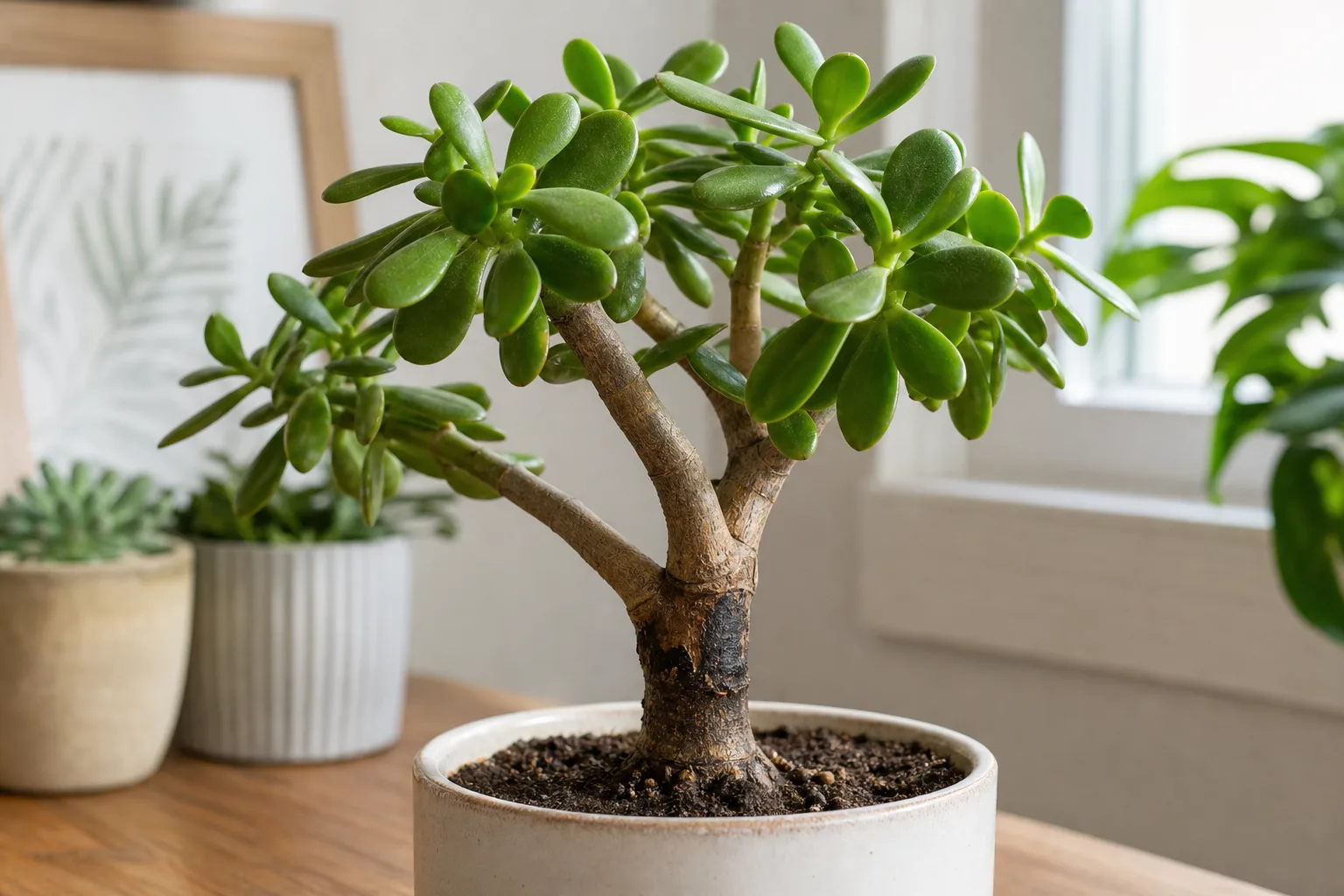
Stem Rot on Jade Plant: Causes, Checks & Fixes
This guide covers stem rot on Jade Plant. See also the general Stem Rot guide, watering, and light pages for this plant.
Stem Rot on Jade Plant: Causes, Checks & Fixes
Quick answer
Stem rot on jade plant means decay has moved from wet roots into the trunk tissue above the soil line. Because Crassula ovata stores water in leaves, stems, and roots, upper growth can stay plump while the base is already failing.
First action: stop watering and do a basal squeeze test at the soil line. If the base is soft, mushy, dark, or hollow with wet sour-smelling mix, treat this as stem rot now, not later. If the trunk is firm and only roots are mushy, follow root rot. If the trunk is soft above the line, you will usually need beheading salvage or propagation.
Stem rot vs. root rot on Jade Plant
These two problems share the same trigger (chronic saturation) but require different decisions.
| Pattern you find | What it means | Urgency | Best next move |
|---|---|---|---|
| Mushy roots, but trunk is firm at soil line | Root rot only | High, but salvage window is usually wider | Trim rotten roots, dry cuts, repot into dry gritty mix; then follow root rot |
| Soft black/brown tissue at stem base, or softness climbing upward | Stem rot (crown/trunk involved) | Very high, often same-day action | Behead above all discolored tissue, callus, then replant |
| Trunk soft from soil line through first branches | Advanced stem collapse | Critical | Propagate firm tips/leaves; discard failed trunk |
| Firm trunk, no sour smell, temporary wilt after repot | Transplant stress | Lower | Keep dry for a week, then reassess firmness |
What stem rot looks like on Jade Plant
Stem rot has a clear progression when you inspect the base first:
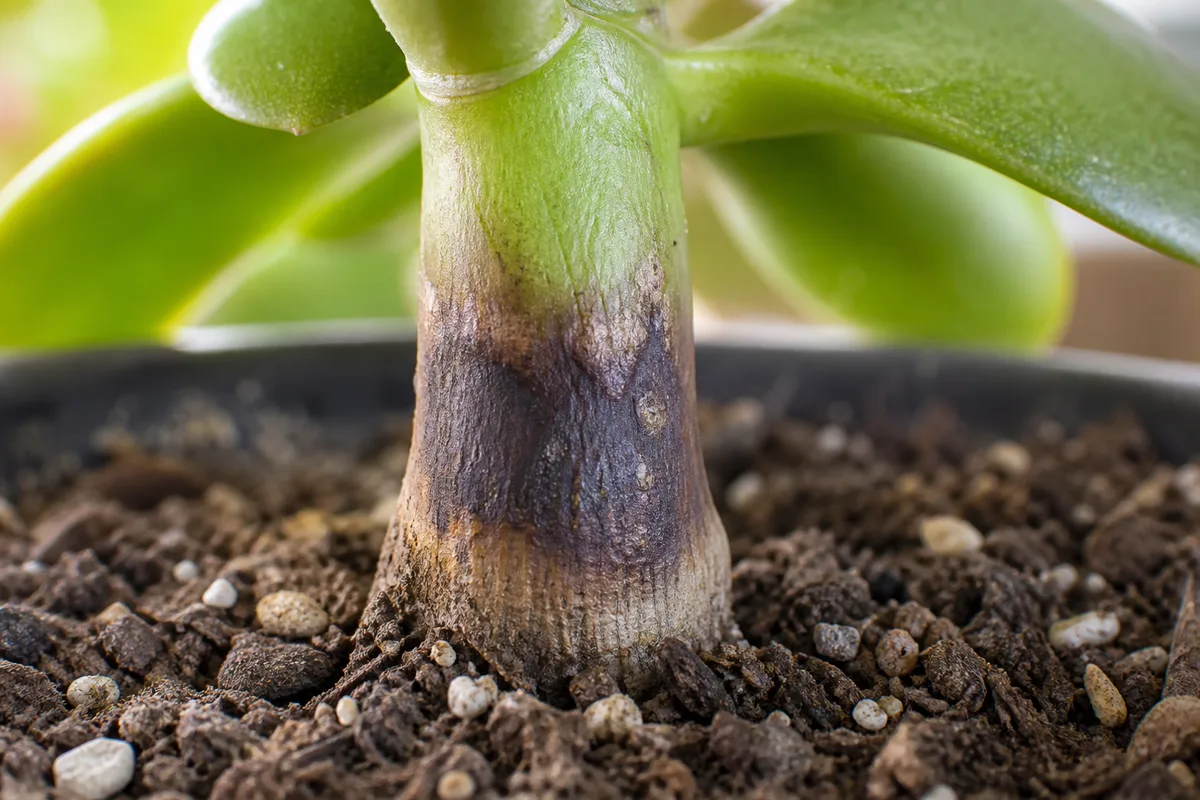
Stem Rot symptoms on Jade Plant - compare with healthy tissue on the same plant.
- Basal softness: the lowest stem feels rubbery, squishy, or hollow instead of firm and corky.
- Dark spread upward: black or dark brown streaking moves from the soil line toward branch points.
- Top still looks fine: leaves can stay thick while the base fails because jade uses stored water.
- Sour, stale soil odor: common in chronically wet, low-oxygen media where roots and stems become mushy and brown.
- Structural failure: leaning, buckling, or sudden topple at the stem base means tissue strength is gone.
Why Jade Plant stems rot
Jade is adapted to dry, fast-draining conditions. In containers, overwatering is the primary cause of jade root and stem rot, especially in cool or low-light months. Missouri Botanical Garden notes jade is intolerant of moist, poorly drained soils, so saturated media quickly creates oxygen stress in roots.
Then the sequence is predictable: stressed roots fail first, pathogens colonize weak tissue, and decay advances into the crown and stem. Pythium and Phytophthora are common organisms in these wet-condition cases.
Most home triggers are simple:
- watering by calendar through winter rest, even though semi-dormant jade should be kept drier,
- dense mix that stays wet for days,
- oversized pots that hold moisture too long,
- drainage trays left full after watering.
Lookalike symptoms to rule out
Before cutting, rule out common lookalikes:
- Overwatering droop before decay: leaves soften in wet soil, but trunk base stays firm; improve dry-down first.
- Underwatering wrinkle: leaves become thin and wrinkled with very light dry soil; trunk remains hard.
- Edema: tiny water-soaked bumps can appear on older leaves, but stem tissue is still firm.
- Mechanical damage: one bruised branch may soften locally; true stem rot usually starts at the soil line.
- Repot shock: brief wilt with firm stem and no sour smell can settle in one dry week.
How to confirm the cause
Run these checks in order:
- Basal squeeze test: pinch stem at the soil line. Soft or hollow tissue confirms stem involvement.
- Smell and moisture check: sour odor plus persistent wetness supports rot conditions.
- Unpot inspection: healthy roots are firm and pale; rotted roots are dark, soft, or sloughing.
- Trace the boundary: if discolored softness crosses from root crown into stem, treat as stem rot.
- Top-versus-base mismatch: plump upper leaves with a failing base confirms delayed symptom progression in jade.
If damage stays below soil line with a firm trunk, use root rot rescue. If softness reaches stem tissue, move to beheading salvage.
First fix for Jade Plant
Stop watering immediately, then unpot. Do not wait for a scheduled care day.
Choose one path based on inspection:
- Root-only rot, firm trunk: trim mushy roots, dry cuts, repot in dry gritty mix.
- Stem involvement with healthy tissue above: behead above every dark or soft section.
- Full trunk softness: skip rescue of main trunk and propagate firm tips/leaves.
Avoid stacking multiple interventions in one day. A single correct move gives the best chance to stabilize tissue.
Step-by-step beheading salvage
Use this when rot has entered the trunk but firm tissue remains above the damage.
- Unpot and clear media: remove wet soil so tissue boundaries are visible.
- Identify the highest rot point: include blackening, translucency, odor, or softness.
- Cut above that point: use sterile shears; inspect cross-section each time.
- Repeat until clean tissue: keep cutting higher until interior is uniformly firm and pale.
- Discard infected pieces and old mix: do not compost rotted material.
- Callus in dry bright shade: allow cut surfaces to heal for a few days before planting.
- Plant in fresh fast-draining mix: small pot, drainage hole, dry media.
- Delay first watering: wait until cutting remains firm and callused; then water lightly.
When the trunk has collapsed
If the trunk is soft from soil line into main branch junctions, the original specimen is usually unsalvageable.
- Stem-tip rescue: take firm branch tips, remove lower leaves, and callus before planting.
- Leaf rescue: viable but slower; use only plump leaves with intact base tissue.
Wisconsin Extension notes jade cuttings should dry first and root in fairly dry, well-drained soil. If a cutting base turns soft or black after planting, discard it and restart from cleaner tissue.
Recovery timeline
- Early/root-dominant cases: stability can return after one to two dry-down cycles once wet media is removed.
- Beheaded stem salvage: callus in days, then rooting usually starts over the next few weeks in warm bright conditions.
- Propagation-only cases: stem tips generally establish faster than leaves.
Judge progress by firm new growth and stem stability, not by trying to restore old damaged tissue.
What not to do
Do not keep watering because top leaves still look full. Do not fertilize during active rot. Do not stop cutting while cross-sections still show dark or soft tissue. Do not plant fresh cuts before callusing. Do not repot into moisture-holding mix without enough mineral drainage.
ASPCA lists jade plant as toxic to cats and dogs. If ingestion is suspected, contact your veterinarian or ASPCA Animal Poison Control promptly.
How to prevent stem rot on Jade Plant
Prevention targets the wet-soil conditions that start every stem rot case.
- Water sparingly in summer and even less in winter, matching irrigation to growth rate.
- Use a fast-draining succulent mix. Wisconsin Extension recommends high-porosity media and adding perlite or sharp sand to improve drainage.
- A practical home blend is roughly half potting mix and half mineral amendment (perlite, pumice, or coarse grit) for faster dry-down.
- Empty saucers within ten minutes of watering. Never let pots sit in standing water.
- Squeeze the stem base during weekly care-the trunk should stay firm year-round.
- If the root zone stays wet for days, repot promptly into drier media and a pot sized to the root mass.
When to worry
Treat this as urgent when stem softness increases quickly, the pot smells sour, dark streaks move upward, or the trunk starts leaning at the soil line. In wet conditions, a rescueable plant can become propagation-only quickly.
Escalate to propagation-only when every new cut still shows dark mushy tissue, or when the main trunk remains soft through multiple branch junctions.
Lower urgency applies only when softness is very limited, clean tissue clearly exists above it, and you have already removed wet media.
Related Jade Plant problems
- Root rot - when decay stays below the soil line
- Overwatering - the usual trigger before rot climbs the stem
- Drooping leaves - early warning before basal tissue fails
- Wilting - when damaged roots cannot move water to leaves
- Jade plant watering - seasonally adjusted watering rhythm
- Jade plant soil - drainage-first potting setup
- Jade plant propagation - stem and leaf cutting details
- Jade plant overview - full species care context
When to use this page vs other Jade Plant guides
- Jade Plant watering guide - Use for routine moisture checks before assuming stem rot is the main issue.
- Jade Plant problems hub - Browse all 49 common issues on this species.