Bacterial Wilt (Soft Rot) on Jade Plant: Causes, Checks &
Quick answer
Bacterial wilt on jade plant is usually Erwinia bacterial soft rot - water-soaked spots that turn mushy brown or black with a foul odor and collapse from inside the stem. First step: isolate the plant, do not water, and cut into the stem to check whether interior tissue is firm or mushy before deciding to prune or discard.
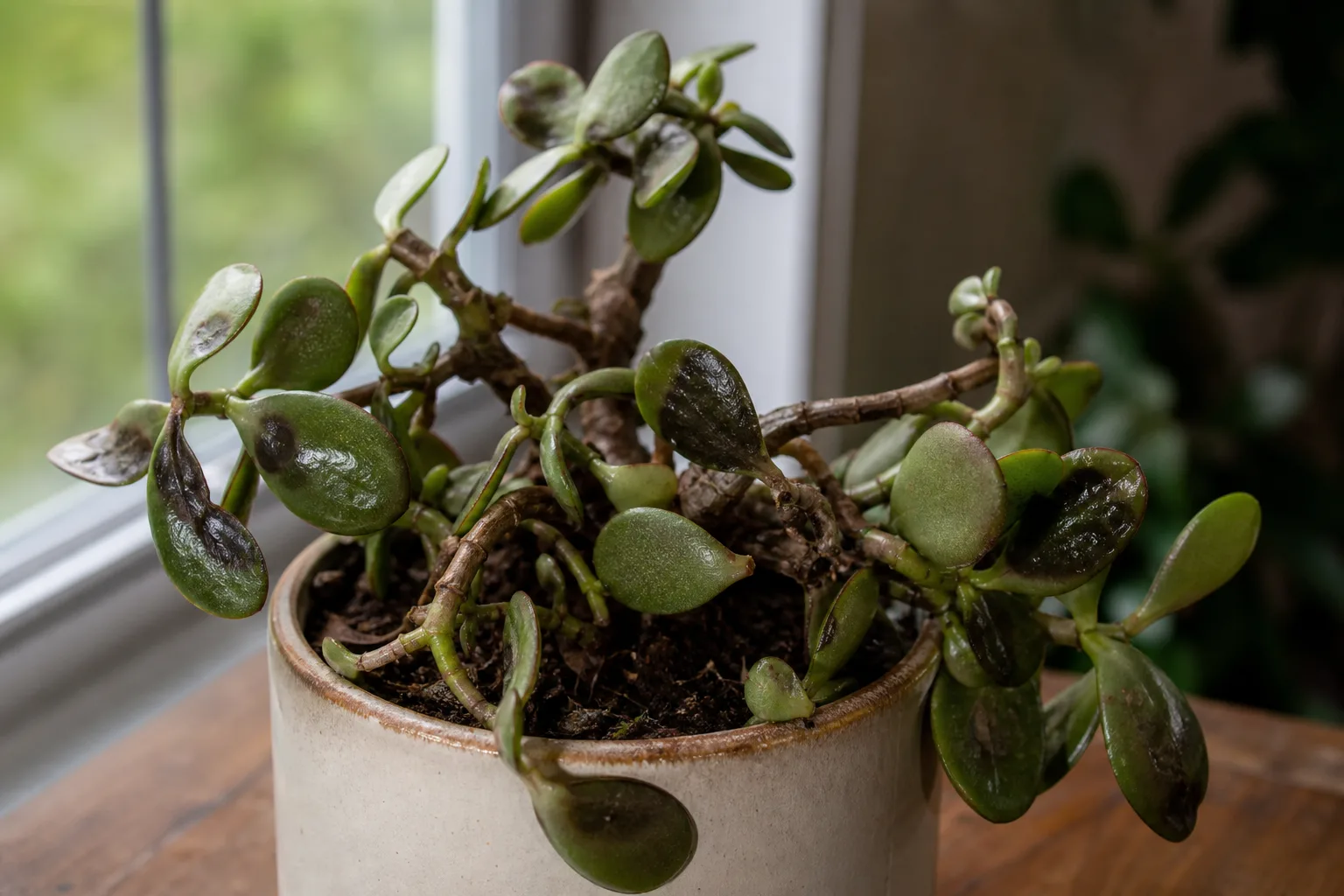
Bacterial Wilt (Soft Rot) on Jade Plant: Causes, Checks & Fixes
This guide covers bacterial wilt on Jade Plant. See also the general Bacterial Wilt guide, watering, and light pages for this plant.
Bacterial Wilt (Soft Rot) on Jade Plant: Causes, Checks & Fixes
Quick answer
Bacterial wilt on jade plant (Crassula ovata) indoors almost always means Erwinia bacterial soft rot, not the vascular wilt field crops get. On jade, the disease shows up as water-soaked spots on leaves or stems that quickly turn brown or black and mushy, often with a foul odor as tissue breaks down inside. Stems and branches collapse while interior tissue is soft and mushy - the woody outside can look partly intact even when the center has rotted hollow.
First step: isolate the plant and stop watering. Do not mist, do not ” perk it up” with a drink, and do not propagate yet. Make a small shallow cut or squeeze test on the suspect stem: firm pale green interior suggests you may still be in overwatering or root rot territory; cream-to-black mush with smell confirms bacterial soft rot. Penn State Extension management for Crassula is blunt: discard affected plants when infection is systemic.
Jade stores water in thick leaves and stout stems evolved for dry South African slopes. That succulent anatomy means overwatering can rot stems - but Erwinia soft rot is a distinct bacterial disease with water-soaked lesions and odor, not the same salvage path as trimming mushy roots after chronic wet soil.
What bacterial soft rot looks like on jade
Erwinia bacterial soft rot on jade has a recognizable progression if you know what separates it from ordinary stress.
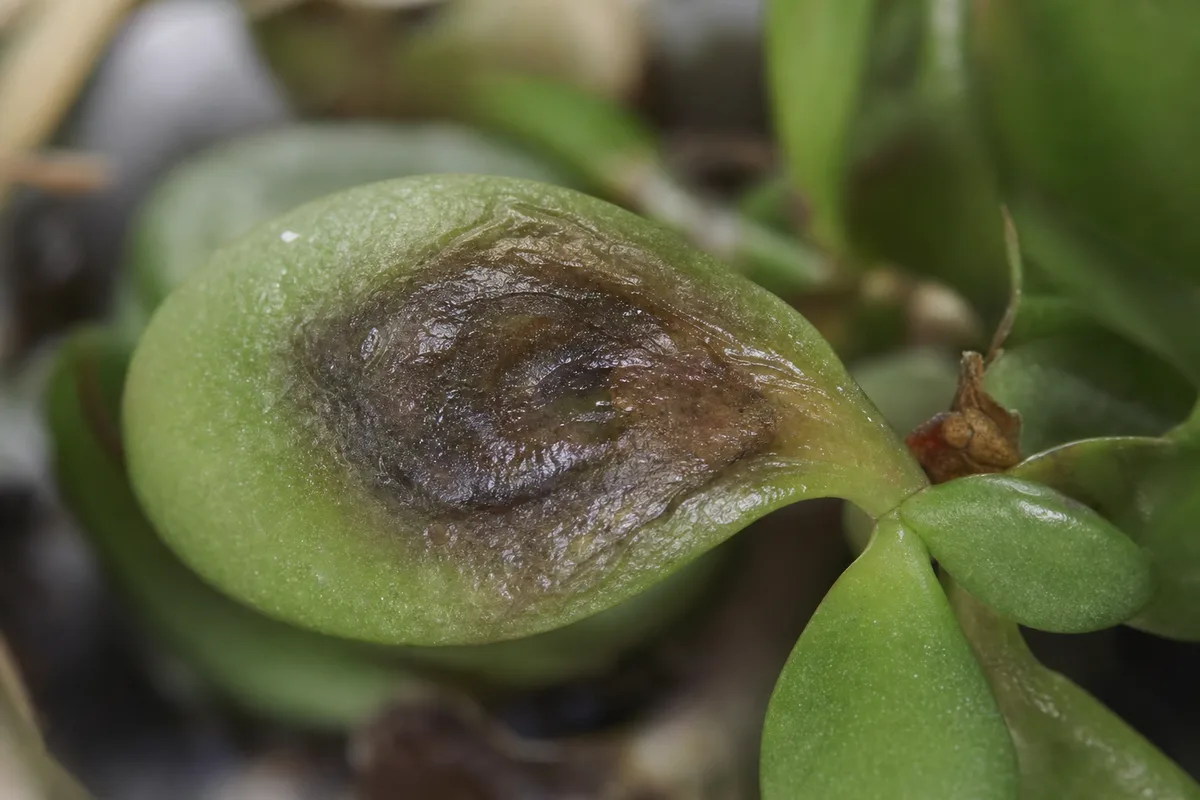
Bacterial Wilt symptoms on Jade Plant - compare with healthy tissue on the same plant.
Early signs
- Water-soaked spots on leaves or young stems - areas look wet, translucent, or darker than surrounding tissue before they turn mushy (UC IPM)
- Small lesions enlarging into sunken soft patches; spots may show yellowish margins as they expand
- Leaves or branch tips collapsing while soil is damp or was recently watered - unlike drought wrinkle
Advanced signs
- Brown to black mushy tissue on stems, often starting near a wound, broken leaf scar, or soil line
- Interior stem rot - outer bark on older jade wood may look normal while the inside is spongy; pinch or slice lightly to check
- Unpleasant odor from affected tissue - bacterial breakdown smell, not just sour wet soil
- Branch wilt and hang as inner tissue liquefies; plant may look thirsty but water worsens collapse
- Slow growth then sudden collapse of stems as noted in jade disease references
What it does not look like
- Dry wrinkled leaves with a light pot → underwatering / drought wilt, not bacteria
- Corky raised blisters on leaf undersides → edema from irregular watering, tissue stays firm
- White dusty coating → powdery mildew (fungal), not Erwinia - PSU lists separate Crassula entry
Why jade gets bacterial soft rot - not just overwatering
Erwinia and related soft-rot bacteria need moist tissue and an entry point. They do not attack perfectly dry, intact jade skin the way they explode through wet wounds.
1. Wounds and contaminated tools (most common entry)
Bacteria commonly infect through wounds - fresh pruning cuts, snapped branches, insect damage, or Jade Plant repotting guide nicks on fleshy stems. Jade’s thick leaves snap cleanly; each break is a door for Erwinia if the tissue stays wet. Using unsterilized shears between plants moves bacteria across a succulent collection faster than you notice.
2. Wet foliage and splashing water
Overhead watering, late-day misting, or leaves sitting wet overnight keep surfaces hospitable. Avoid overhead irrigation and keep foliage dry with good air circulation - standard UC IPM prevention that matters on crowded jade shelves.
3. Overwatering and poor drainage (enabler, not the whole story)
Jade evolved for rocky, fast-draining habitat. Indoors, plants are intolerant of moist, poorly drained soils and overwatering will cause leaves to drop and the stem to rot. Constant wetness softens tissue and favors both fungal root rot and bacterial soft rot - but the bacterial form adds water-soaked spotting, interior mush, and characteristic odor. Overwatering alone without Erwinia usually gives mushy roots first; see overwatering and root rot guides for that branch.
4. Warm, stagnant indoor conditions
Soft-rot bacteria are most active under warm, damp conditions on soft tissue. A jade in a warm kitchen window with wet leaves and poor airflow checks every box. Winter overwatering in a cool dim room causes different damage - slow fungal root decline - but summer wet-wound combos trigger Erwinia fast.
5. Infected stock, soil, or pots
Reusing contaminated mix, keeping a sick jade beside healthy ones, or propagating from a cutting that had early water-soaked spots spreads disease. Discard infected plants rather than composting tissue indoors.
Bacterial soft rot vs. root rot vs. drought wilt vs. stem rot
Use this table before you cut, water, or repot. Jade collapses look alike from above; the interior stem check and smell separate Erwinia from the others.
| Problem | Key visual clues | Smell | Interior stem / root check | First action |
|---|---|---|---|---|
| Erwinia bacterial soft rot (this page) | Water-soaked spots → black mush; branch collapse with wet soil | Foul rot from tissue | Stem interior mushy brown/black | Isolate; prune only if localized; else discard |
| Root rot (overwatering / oomycetes) | Yellow droop, wet heavy pot, soft base late | Sour soil | Mushy brown roots; trunk may stay firm early | Stop water; unpot; trim roots; dry repot |
| Wilting (dry or wet) | Limp leaves; dry = wrinkled firm leaves | Usually none | Firm stem; roots firm or mushy depending on branch | Confirm pot weight first |
| Overwatering (cultural) | Soft translucent leaves, black stem base | Sour mix | Roots fail before distinct water-soaked leaf spots | Stop water; fix drainage |
| Stem rot (fungal / overwatering climb) | Base softening climbing trunk | Sour to musty | Stem base mush; may overlap bacterial signs | Overlap page - confirm odor and water-soaked lesions |
Critical distinction: Root rot salvage depends on a firm main trunk after root trim. Erwinia inside the trunk with odor means Penn State recommends discarding the plant, not another round of dry-down watering. PNW Handbooks note overwatering as the primary jade rot cause with yellowing and mushy roots - that is the overwatering pathway, not the Erwinia lesion pattern.
How to confirm the cause - numbered workflow
Work through these steps in order. Stop when one branch clearly fits.
- Isolate - Move the jade away from other succulents before you touch wet tissue.
- Pot weight and moisture - Heavy wet pot with collapsing stems points away from simple drought. Light dry pot with wrinkled firm leaves → wilting dry branch, not bacterial wilt.
- Lesion inspection - Look for water-soaked, enlarging spots on leaves or stems. Angular black patches coalescing on foliage support bacterial soft rot over generic stress.
- Smell test - Sniff stem lesions and soil. Foul tissue odor confirms bacterial breakdown; sour soil alone suggests overwatering / root rot.
- Interior stem squeeze or shallow slice - On a suspect branch, press the stem or cut a thin window: firm green tissue = rot not yet systemic in that zone; hollow spongy cream-to-black interior = Erwinia soft rot confirmed (UC IPM).
- Root check if still uncertain - Unpot only if trunk is firm but plant wilted with wet soil. Mushy roots without water-soaked leaf lesions → root rot branch. Both mushy roots and water-soaked stem spots with odor → bacterial infection likely advanced; salvage odds drop sharply.
- Recent history - Fresh pruning, repotting injury, overhead water, or a new jade from a big-box bench narrows to wound + moisture entry.
If steps 4–5 confirm mushy interior tissue with smell, treat as bacterial soft rot even if some roots also look bad - management differs from root-trim-only protocols.
First fix for jade (isolate, prune, or discard)
Make one primary decision before stacking repotting, fertilizer, or fungicide sprays. Pesticide sprays are not effective on systemic bacterial disease because pathogens sit deep in tissue - do not reach for copper or neem as a first fix.
Branch A - Localized infection on one stem (early catch)
When only one branch shows water-soaked rot and the main trunk is firm inside:
- Isolate the plant in Jade Plant light guide with no watering until you finish surgery.
- Sterilize pruners (10% bleach, flame, or fresh alcohol wipe) before each cut.
- Cut the branch at least 2 inches (5 cm) above visible mush into firm green tissue.
- Let cut surfaces callus dry 3–7 days - jade heals open succulent wounds best dry, not wet.
- Watch the cut daily for new water-soaked darkening. If it spreads downward, escalate to Branch B.
- Do not propagate that cutting unless the removed segment was entirely firm above the lesion and you callused it dry weeks with no new spots.
Branch B - Main trunk spongy, odor present, or rapid spread
When interior trunk tissue is mushy, multiple branches collapse, or spots enlarge daily:
- Discard the plant per Penn State Extension Crassula guidance - bag stems and leaves for trash, not compost.
- Discard the potting mix from that container; do not reuse in other succulents.
- Sterilize the pot with 10% bleach solution if you plan to reuse it.
- Quarantine neighboring jades for two weeks; inspect for early water-soaked spots.
- Salvage only from separate firm branches that never showed lesions - and only after callusing dry, never from the infected base.
Branch C - Looks like rot but trunk firm; roots mushy only
Redirect to root rot protocol: stop water, unpot, trim mushy roots, dry repot. Revisit bacterial diagnosis if water-soaked leaf spots or stem odor appear during recovery.
The single costliest mistake: watering or misting a collapsing jade because leaves look thirsty. Erwinia and wet-root failure both worsen with added moisture - but bacterial odor and interior mush mean discard or aggressive sterile prune, not another soak.
Recovery timeline and realistic outcomes
Set expectations by branch:
Early localized prune (Branch A): Stop active spread within 3–7 days if new cuts stay dry and firm. Allow 2–4 weeks before normal dry-down watering resumes. Success = no new water-soaked spots and firm new growth at nodes above the cut. Old damaged leaves never re-green.
Root rot misread as bacterial (Branch C): After root trim and dry repot, 2–6 weeks to see firm new leaves - timeline matches root rot recovery, not overnight bounce.
Systemic Erwinia (Branch B): No recovery timeline - discard. Attempting months of rescue on a mushy trunk spreads bacteria to pots, tools, and neighbors.
Dry wilt misread as bacterial: If you skipped pot weight and withheld water from a dry plant, one deep watering firms leaves within hours to 2 days - proof you were on the wrong page.
Judge recovery by firm new growth and clean cut surfaces, not by old blemished leaves. Any return of water-soaked enlarging spots means escalate to discard.
What not to do
Do not water or mist a jade with mushy stems, foul odor, or water-soaked lesions - moisture accelerates Erwinia.
Do not propagate from infected tissue or fallen mushy leaves - bacteria ride invisibly in apparently firm zones above rot.
Do not compost infected jade indoors; bag and trash tissue.
Do not use fungicide alone - bacterial soft rot is not a fungal leaf spot; sprays do not reach systemic bacteria (UC IPM houseplant problems).
Do not stack repot, prune, and fertilizer the same day - finish sterile removal first, wait for callus, then consider repot only if roots were disturbed.
Do not assume stem rot and bacterial wilt are identical - stem rot on this site covers broader fungal and overwatering trunk decay; this page is for Erwinia water-soaked soft rot with interior mush and discard thresholds.
Wear gloves when cutting - jade plant is toxic to cats and dogs.
How to prevent bacterial soft rot next time
Prevention targets dry leaves, intact tissue, and clean tools:
- Water at soil level on dry-down per the jade watering guide - allow soil to dry between deep waterings
- Never leave leaves wet overnight; wipe accidental splashes on crowded shelves
- Sterilize pruners between plants when pruning jade collections
- Callus cuttings dry 3–7 days before soil contact - jade propagates easily but wet fresh cuts invite rot
- Use fast-draining succulent mix in terracotta - extremely good fast drainage limits the wet-tissue conditions bacteria need
- Quarantine new jades two weeks before placing beside mature plants
- Inspect weekly during routine care on the jade overview hub - catch water-soaked spots before trunk involvement
Good airflow between pots matters as much as watering discipline. A dry jade with wounded wet leaf is still vulnerable for 24–48 hours.
When to worry
Treat bacterial soft rot as urgent when:
- Foul odor comes from stem tissue, not just soil
- Interior trunk squeeze feels hollow or spongy
- Water-soaked spots enlarge daily or jump to a second branch within a week
- Collapse continues after you stopped watering 5–7 days
- Multiple succulents in the same tray show similar lesions - collection outbreak
Lower urgency when a single small leaf spot dries and does not spread after you fixed splashing water - but watch 72 hours; Erwinia can accelerate fast in summer warmth.
If main trunk interior is mushy through more than half the diameter, salvage is unrealistic - discard and sterilize before repotting the collection.
Related jade problems
Cross-check these sibling guides so you land on the right fix:
- Wilting - dry vs. wet pot paradox before you assume disease
- Root rot - mushy roots, sour soil, trunk still firm early
- Overwatering - cultural cause that enables rot pathogens
- Stem rot - trunk base decay from overwatering; differentiate odor and water-soaked lesions
- Jade plant overview - placement, watering rhythm, and collection care
When to use this page vs other Jade Plant guides
- Jade Plant watering guide - Use for routine moisture checks before assuming bacterial wilt is the main issue.
- Jade Plant problems hub - Browse all 49 common issues on this species.