Stem Rot on Zinnia: Causes, Checks & Fixes
Quick answer
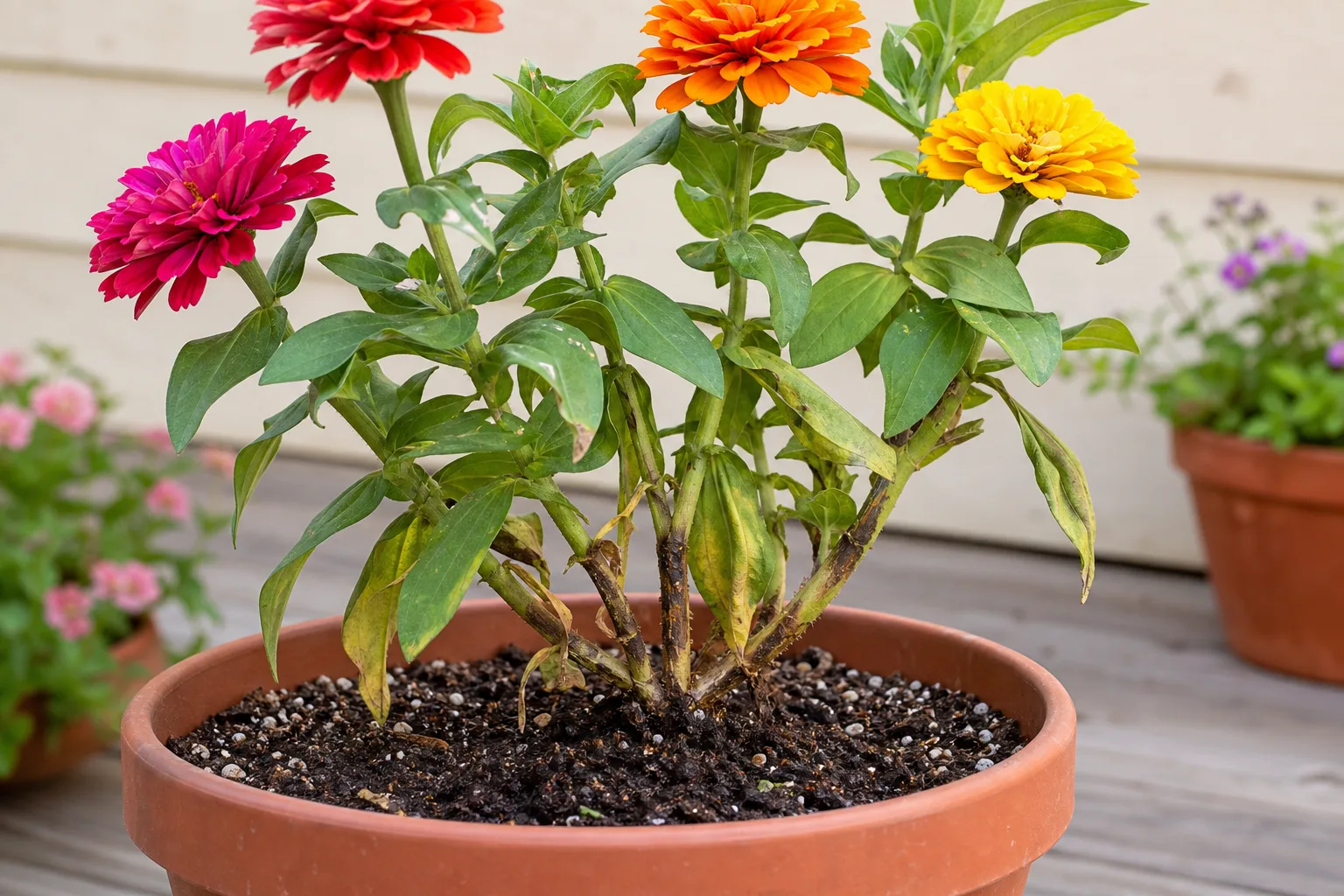
Stem rot on Zinnia shows as soft brown tissue at the soil line, often with wet mix or dark sunken cankers after rain. First step: stop watering and pinch the stem base-if it collapses while soil stays soggy, improve drainage and remove affected plants before spores spread.
Stem Rot on Zinnia: Causes, Checks & Fixes
This guide covers stem rot on Zinnia. See also the general Stem Rot guide, watering, and light pages for this plant.
Stem Rot on Zinnia: Causes, Checks & Fixes
Quick answer
Soft, brown stems at the soil line on Zinnia usually trace to one of three problems: chronic overwatering on Zinnia in poorly drained containers, Alternaria zinniae basal cankers after wet humid weather, or seedling damping-off in soggy seed-starting mix. All three look alarming, but the first fix is the same diagnostic step.
Stop watering and gently pinch the stem at the soil line. If the base collapses between your fingers while mix stays wet for days, you have rot-not afternoon drought wilt. Improve drainage, let the pot dry, and remove plants with mushy stems before fungal spores splash to healthy neighbors.
Why Zinnia gets stem rot
Zinnia elegans is a fast-growing sun annual that drinks heavily in peak heat but still needs oxygen at the roots. It performs best in well-drained, moderately fertile soil with water applied at the base when the top few centimeters dry-not on a rigid calendar that ignores rain or cool spells.
Several distinct problems produce rotten-looking stems on zinnias:
Overwatering and poor drainage are the most common triggers in containers. Saucers holding runoff, blocked drainage holes, and heavy peaty mix keep roots anaerobic. The crown and lower stem soften first because tissue at the soil line sits in the wettest zone. LeafyPixels plant data lists stem rot at the base alongside grey mould on flowers and yellow lower leaves as classic overwatering signs on zinnias.
Alternaria blight (Alternaria zinniae) is the headline fungal disease on garden zinnias. Warm, wet, or humid weather favors it. Small reddish-brown leaf spots spread to stems, where dark brown sunken cankers form near the soil line. Lesions can girdle the stem, causing the upper plant to wilt even before the canker fully encircles the tissue. Infected roots may turn dark grey and slough off, which mimics cultural rot but follows a disease pattern across multiple plants in a row.
Damping-off hits zinnia seedlings-not mature plants-in cool, constantly wet seed trays. Pythium, Rhizoctonia, and related pathogens collapse stems at the soil line within days of emergence. Wisconsin Extension documents lower stem collapse on zinnia seedlings as a classic damping-off presentation.
Botrytis grey mould can also cause stem cankers on wet zinnias, especially when spent flowers and dense foliage stay moist overnight. Texas Plant Disease Handbook lists Botrytis cinerea stem canker among other zinnia diseases that follow prolonged leaf wetness.
Zinnias in Zinnia light guide garden beds rarely rot from drainage alone unless soil compacts or plants sit in a low spot that holds water after monsoon rains. Container zinnias on shaded porches and overcrowded nursery flats are the highest-risk setups.
What stem rot looks like on Zinnia
Cultural rot from overwatering:
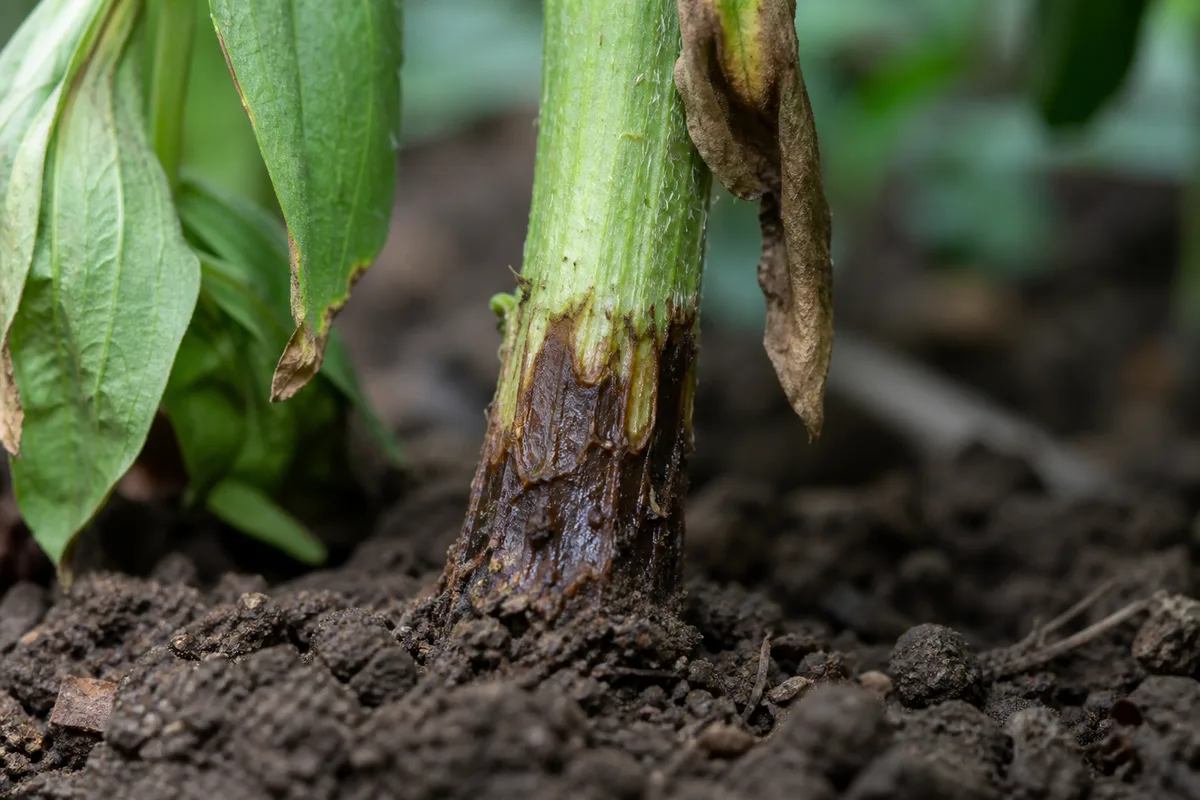
Stem Rot symptoms on Zinnia - compare with healthy tissue on the same plant.
- Soft, water-soaked brown tissue at the soil line, sometimes spreading a few centimeters up the stem
- Wilting on a heavy, wet pot despite moist mix (roots cannot function in anaerobic soil)
- Yellow lower leaves and grey mould on spent flower heads
- Fungus gnats hovering over constantly wet mix
- Often isolated to one overwatered container rather than an entire row failing at once
Alternaria basal cankers:
- Dark brown to black sunken lesions at or just above the soil line, sometimes with a defined canker edge
- Reddish-brown circular spots on leaves and petals with grayish-white centers
- Rapid browning of foliage and flowers on the same plant after rain or overhead watering
- Multiple plants in a crowded bed showing matching basal damage within days
- Wilting of the top growth even when you first notice the stem issue
Damping-off on seedlings:
- Healthy-looking zinnia sprouts that suddenly pinching and topple at the soil line
- Thin, brown, collapsed lower stem on seedlings only days after germination
- Outbreak in a flat where mix stays constantly wet and cool
- Unaffected seedlings nearby still firm if you fix airflow and moisture quickly
Botrytis on wet stems:
- Grey fuzzy mould on flowers or injured stem tissue after prolonged humidity
- Brown mushy patches at stem nodes or where a spent bloom attaches
- More common when plants are crowded and watered overhead in evening
How to confirm the cause
Work through these checks in order:
- Moisture test - Stick a finger or skewer 5–8 cm into mix near the stem base. Cultural rot pairs with wet core soil even if the surface feels dry. Drought wilt pairs with light, dry mix throughout.
- Pinch test - Gently squeeze the stem at the soil line between thumb and finger. Uniform mush confirms rot. Firm green tissue beneath a small surface spot suggests less advanced damage.
- Pattern across plants - One soggy container points to watering or drainage. Several plants in a row failing after rain points to Alternaria or splash-spread pathogens.
- Leaf and flower clues - Reddish spots with gray centers on leaves and petals alongside basal cankers strongly suggest Alternaria zinniae. Yellow lower leaves alone without leaf spots fit overwatering better.
- Plant age - Seedlings in trays collapsing at the soil line within days of sprouting are damping-off candidates, not mature stem rot.
- Drainage check - Pour water through the pot and confirm it exits freely. Saucers holding standing water for hours extend wet crown conditions.
- Smell - Sour, anaerobic soil odor supports chronic overwatering rot rather than a dry-season fungal canker alone.
If the stem is firm, mix is appropriately dry, and wilting happens only in afternoon heat, suspect underwatering on Zinnia or heat stress-not stem rot.
First fix for Zinnia
Stop watering immediately and pinch the stem at the soil line to confirm whether tissue is mushy.
Do not add more water hoping wilt resolves. Do not fertilize a rotting plant. Do not spray fungicide before you know whether the problem is cultural saturation or Alternaria blight.
Once you confirm soft basal tissue:
- Empty saucers and move the pot to full sun and open air if it was shaded or crowded
- Let mix dry until the top 3 cm feels dry before the next deep base watering
- Pull and discard any plant whose stem collapses on pinching-do not compost infected zinnias in the home garden
- On mild cases with firm core tissue, remove only the softest outer stem tissue if it is above soil level and keep foliage dry going forward
For seedlings with damping-off, remove collapsed sprouts immediately and reduce tray moisture rather than waiting for recovery.
Step-by-step recovery
After the initial stop-water and remove step:
- Improve drainage - Repot survivors into airy mix with coarse sand or perlite if the current blend stays waterlogged for days. Confirm drainage holes are open.
- Switch to base watering - Apply water at soil level in morning so stems and flowers dry the same day. Never wet foliage on a plant already showing basal damage.
- Increase spacing - Thin crowded rows to 20–30 cm so air moves between plants and leaves dry faster after rain.
- Remove infected debris - Strip spotted lower leaves and spent blooms that harbor Alternaria spores. Bag and trash material; do not leave it on bed surfaces.
- Monitor neighbors - Inspect plants on either side in the row daily for the first week. Early basal spots on adjacent zinnias mean pull those plants too before girdling spreads.
- Seedling flats - Bottom-water only, add a small fan for airflow, use sterile mix, and germinate at warm temperatures so zinnias grow past the damping-off window quickly.
Do not repot on day one unless drainage is clearly failing or roots smell sour. Let excessively wet mix begin drying first.
Recovery timeline
Plants with firm stems after one week of corrected watering may push new side shoots or buds within two weeks. Yellow lower leaves from overwatering often drop and are replaced by clean growth once roots breathe again.
Mushy stems do not regenerate-once the base collapses, the annual is finished. Alternaria-girdled plants rarely recover enough to bloom well even if top growth lingers briefly. Seedlings that damping-off has collapsed do not come back; save neighbors by fixing the tray environment within days.
Judge success by firm new stem tissue above the soil line and clean buds-not by whether old brown stem skin turns green again.
Lookalike symptoms to rule out
Afternoon drought wilt - Zinnias in full sun wilt when mix dries completely, but stems stay firm and plants perk up within hours of deep base watering. Dry mix throughout confirms this, not rot.
Alternaria leaf spot without basal rot - Spots on leaves and flowers alone may precede stem cankers. Treat spacing and watering early; basal checks still matter.
Powdery mildew - White flour-like coating on leaves and stems, not mushy brown tissue. Mildew weakens plants but does not typically collapse the stem base unless combined with other stress.
Bacterial wilt - Texas Plant Disease Handbook notes Pseudomonas solanacearum wilt on zinnias in Florida, but this is regional and rare compared with Alternaria and overwatering. Whole-plant wilt with no obvious wet-soil cause in an otherwise well-drained bed may warrant expert diagnosis.
Physical stem breakage - Tall zinnia varieties snap in wind. Broken stems are dry and clean at the snap point, not soft and brown at the soil line.
Mistakes to avoid
Do not keep watering a wilting zinnia without checking stem firmness first-overwatering rot and drought wilt both cause droop but need opposite responses.
Do not overhead irrigate in evening on plants with any basal discoloration. Wet foliage overnight fuels Alternaria and Botrytis.
Do not compost rotted zinnias or blighted debris near next season’s zinnia bed. Alternaria survives on seed and in soil debris for extended periods.
Do not crowd seedlings under domes after germination. Damping-off spreads fast in stagnant wet flats.
Do not assume fungicide alone fixes soggy containers. Cultural rot needs drying and drainage, not spray.
Do not transplant stressed rotting zinnias into fresh mix without removing soft tissue-spores and anaerobic roots carry over.
How to prevent stem rot next time
Water zinnias at the base when the top 3 cm dries, adjusting for heat and rain rather than a fixed schedule. In peak Indian summer containers may need water every two to three days; cool spells need less.
Plant in full sun with well-drained soil. Zinnias tolerate heat and dry spells once established but suffer when crowns sit wet in shade or saucers.
Space plants for airflow-20–30 cm in beds, fewer seedlings per cell in trays. Good spacing lets leaves dry within hours of watering or rain.
Direct-sow or transplant carefully. Zinnias dislike root disturbance; stressed transplants in wet mix rot faster. Harden off seedlings before placing them in garden beds.
For seed starting, use sterile pasteurized mix, clean trays, bottom heat near 22°C, and a fan after emergence. Wisconsin Extension recommends high germination temperatures so seedlings quickly outgrow damping-off susceptibility.
Rotate zinnia beds after Alternaria outbreaks and remove plant debris at season end. Illinois Extension notes the fungus overwinters on seed and in soil.
Choose resistant cultivars where available and avoid saving seed from blighted plants. Texas handbook recommends hot-water seed treatment for Alternaria carryover on saved seed-follow extension timing carefully because older seed injures more easily.
When to worry
Treat as urgent when multiple zinnias in one planting collapse within days after wet weather, when dark cankers climb stems above the soil line, or when grey mould coats flowers alongside soft basal tissue. Alternaria spreads by splashing water and can take down an entire row in warm humid conditions.
Seedling flats where more than a few sprouts pinching at the soil line need immediate moisture reduction and airflow-the remaining seedlings have only a short window before they too collapse.
Replace severely rotted container plants rather than nursing them through the season. Zinnias bloom within six to eight weeks from seed; starting fresh is often faster than fighting advanced basal rot.
Firm stems, appropriately dry mix, and isolated damage on one overwatered pot are manageable-not emergencies-once you stop watering and improve drainage.
Conclusion
Stem rot on zinnias is usually readable once you pinch the base and read the soil. Wet mushy crowns in heavy pots mean stop watering and fix drainage. Dark sunken cankers with spotted leaves after rain mean remove infected plants and keep foliage dry going forward. Seedling collapse in wet flats means sanitation and airflow-not more misting. That short diagnostic path saves healthy zinnias from unnecessary spray and stops basal rot before it marches down the row.
When to use this page vs other Zinnia guides
- Zinnia watering guide - Use for routine moisture checks before assuming stem rot is the main issue.
- Zinnia problems hub - Browse all 38 common issues on this species.