Overwatering on Zinnia: Causes, Checks & Fixes
Quick answer
Overwatering on Zinnia causes stem rot at the base, grey mould on flowers, and yellow lower leaves. Stop watering until the top 3 cm dries, empty saucers, and water at the base only-never wet foliage or blooms.
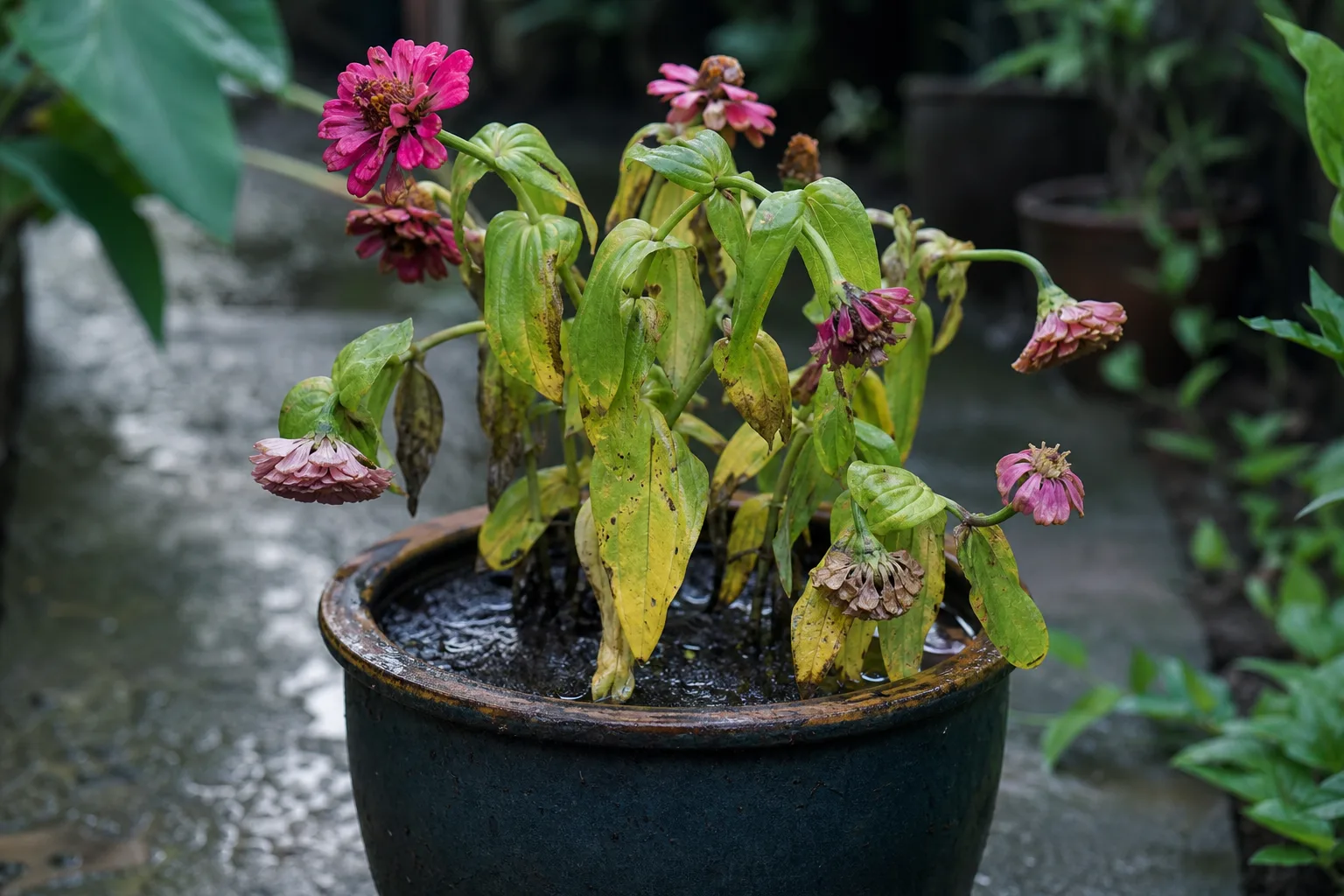
Overwatering on Zinnia: Causes, Checks & Fixes
This guide covers overwatering on Zinnia. See also the general Overwatering guide, watering, and light pages for this plant.
Overwatering on Zinnia: Causes, Checks & Fixes
Quick answer
Overwatered zinnias tell you through the stem base and the flowers before the whole plant collapses. Yellow lower leaves, grey fuzzy mould on spent blooms, and soft tissue at the soil line mean roots have sat too long in saturated mix-often made worse by wet foliage from overhead watering.
First step: stop watering until the top 3 cm of mix feels dry, and empty any saucer holding runoff. Zinnias want evenly moist, well-drained soil in full sun-not a pot that stays heavy for days. Once the mix dries appropriately, resume deep base watering only.
Why Zinnia gets overwatered
Zinnia elegans is a fast-growing sun annual that drinks heavily in heat-but only when roots can breathe between drinks. The mismatch happens when gardeners treat zinnias like moisture-loving houseplants and water on a calendar regardless of pot weight, weather, or growth stage.
Several habits push zinnias into chronic wetness:
Calendar watering in cool or cloudy weather. Zinnias use less water when nights cool and growth slows in autumn. Continuing every-two-day summer watering into mild weather keeps mix soggy while the plant is not pulling moisture.
Overhead watering and wet blooms. Botrytis cinerea colonizes wet flower petals and wounded tissue, spreading grey mould across spent blooms and onto stems. Sprinklers that soak zinnia heads in humid beds are a common trigger-Texas extension notes stem canker from Botrytis among zinnia diseases linked to wet conditions.
Poor drainage in containers. Saucers left full, blocked holes, or dense peaty mix without coarse amendment trap water at the root zone. Missouri Botanical Garden lists zinnias as susceptible to root rots when drainage fails-even though the species is not fussy about soil when air moves freely through it.
Dense planting plus monsoon humidity. Crowded zinnia beds hold moisture in the leaf canopy. High humidity alone does not overwater roots, but it slows evaporation from saturated soil and keeps petals wet longer after rain or sprinklers-raising Botrytis and blight pressure alongside root stress.
Mistaking afternoon wilt for thirst. Zinnias in full sun can droop on blazing afternoons even when soil is moist at depth. Adding water without checking traps roots in a wet-dry-wet cycle that damages uptake-the plant wilts on wet mix, which looks like underwatering on Zinnia but is root stress from saturation.
What overwatering looks like on Zinnia
Overwatering on zinnias produces a pattern distinct from drought or pest damage:
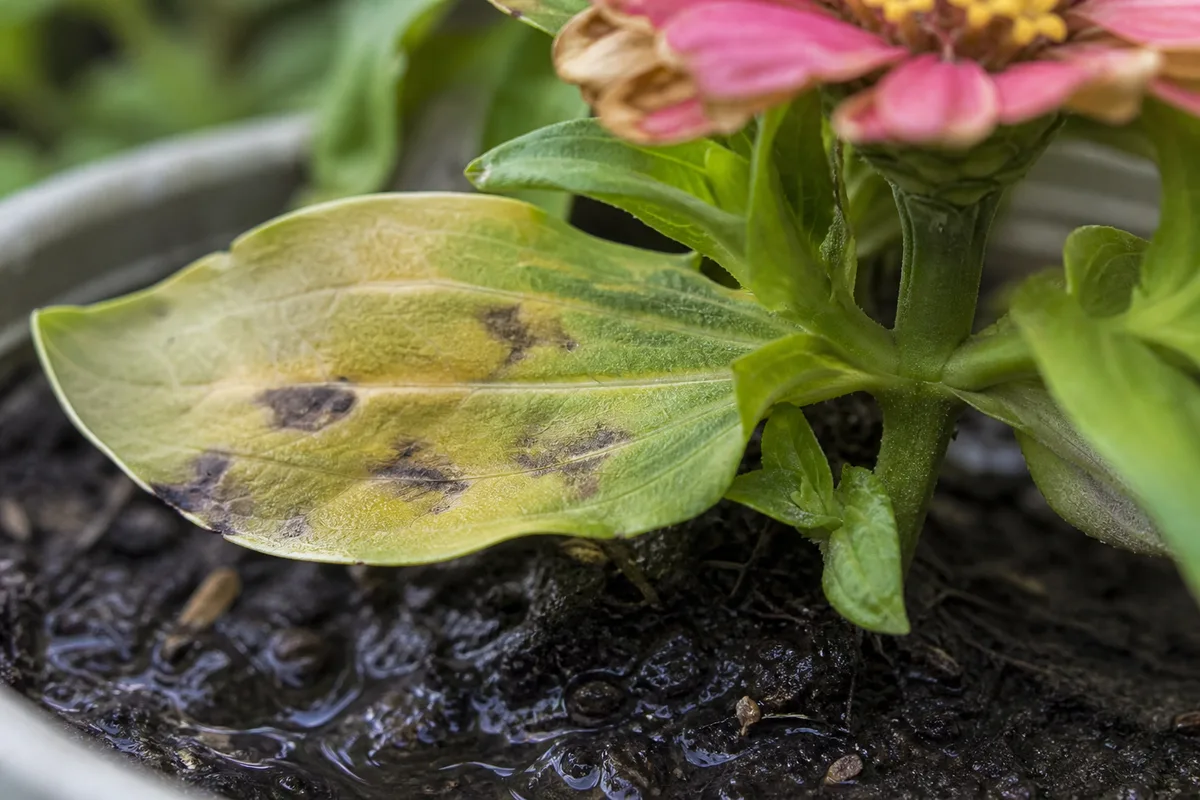
Overwatering symptoms on Zinnia - compare with healthy tissue on the same plant.
Early signs:
- Lower leaves turn yellow while soil stays wet and the pot feels heavy
- Spent flower heads develop tan water-soaked spots or fuzzy grey mould
- Soil surface stays dark and clings to your finger days after the last watering
- Small fungus gnats hover near the pot rim
Progressive damage:
- Stems soften and darken at the soil line-the classic zinnia overwatering signature
- Entire plant wilts despite moist mix because damaged roots cannot absorb water
- New buds abort before opening while lower foliage looks waterlogged
- White or grey cottony growth on stems in humid conditions (Botrytis or, in cool wet beds, Sclerotinia stem rot)
Seed-starting flats:
- Overwatered zinnia seedlings yellow, then collapse at the soil line-early damping-off from Pythium or Rhizoctonia in cool wet mix. This overlaps with the damping-off problem page but starts from the same root cause: too much moisture too often.
Yellowing lower leaves on an otherwise blooming zinnia can also be natural aging-remove those leaves only after you confirm the stem base is firm and soil dries normally between waterings.
How to confirm the cause
Work through these checks before Zinnia repotting guide or spraying:
- Soil moisture at depth - Probe 3 cm into the mix. If it is wet while lower leaves yellow, overwatering is likely. If bone dry with crispy wilt, see the underwatering guide instead.
- Pot weight and drainage - Lift the container. Heavy pots days after watering confirm slow drainage. Tip the pot and confirm water flows from holes; check saucers for standing water.
- Stem base firmness - Pinch the stem just above soil line. Firm green tissue suggests recovery is possible. Mushy brown tissue means crown damage-annuals rarely rebound from that point.
- Flower inspection - Look for grey fuzzy mould on spent petals or water-soaked brown blotches on open blooms. Botrytis blossom blight follows extended moisture on petals.
- Morning versus afternoon wilt - If plants perk up overnight but droop in afternoon heat on dry soil, drought is the issue. Wilt that persists on wet soil points to root damage from overwatering.
- Smell and gnats - Sour anaerobic smell from the mix or persistent fungus gnats confirm chronic saturation.
If stems are firm, soil dries within two to three days in summer, and only one or two lower leaves yellow, you may be seeing normal aging-not a watering crisis. Adjust only when the pattern matches wet soil plus spreading symptoms.
First fix for Zinnia
Pause all watering until the top 3 cm of mix feels dry, and empty saucers immediately.
This single step breaks the saturation cycle without shocking roots further. Do not “compensate” with fertilizer, repotting, or fungicide on day one if you have not confirmed how wet the root zone is.
After the surface dries:
- Resume deep watering at the base only until water runs from drainage holes, then discard saucer runoff within 30 minutes
- Never wet leaves or open blooms-Iowa State extension notes gray mold thrives when free moisture sits on plant tissue during cool or humid periods
- Move shaded containers into full sun if they were tucked in a corner where mix dried too slowly
- Remove spent blooms with grey mould to reduce Botrytis spore load-do not compost infected petals
Do not repot on day one unless the mix smells sour and stems are still mostly firm. Letting the pot dry slightly often stabilizes mild cases faster than disturbing roots in wet soil.
Step-by-step recovery
Once watering pauses and the first dry cycle completes:
- Trim yellow lower leaves that are fully yellow and pull away easily. Leave green tissue intact.
- Improve airflow - Space container zinnias or thin crowded bed plants so foliage dries after rain.
- Repot only if needed - If soil stays wet more than four days in summer despite correct watering, move the plant into fresh well-draining mix with coarse sand or perlite. Trim mushy roots with clean scissors; hold fertilizer until new growth appears.
- Remove collapsed plants - Soft stems at the base on an annual zinnia usually mean replace, not rescue. Direct-sow or transplant a replacement rather than fighting crown rot on one plant.
- Adjust seed-tray routine - For seedlings, switch to bottom-watering and let the surface dry slightly between drinks. Add a small fan for airflow per Wisconsin damping-off prevention guidance.
- Monitor for 10–14 days - Track pot weight and new leaf color. One change at a time makes it clear what helped.
Recovery timeline
Mild overwatering with firm stems often shows cleaner new growth within seven to fourteen days after you correct the Zinnia watering guide. Yellow lower leaves already present will not green up-they age off as new foliage replaces them.
Grey-mould-covered petals do not recover cosmetically; deadhead them and watch whether new buds open clean. If stems soften at the base within a week of soggy conditions, recovery is unlikely-replace the plant and fix drainage for neighbors.
Seedlings that collapse at the soil line do not recover individually; save untouched tray mates by drying the environment within days.
Lookalike symptoms to rule out
Underwatering wilt - Dry soil, light pot weight, and dramatic afternoon droop that revives within hours of deep watering. The leaves may crisp at edges rather than yellow while wet.
Alternaria blight - Reddish-brown leaf spots with grey centers and dark stem cankers in warm wet weather. Spots are dry and patterned, not a uniform soggy yellowing from root stress. Overhead watering worsens both, but Alternaria needs fungicide and spacing-not just drying out.
Powdery mildew - White dry powder on leaf surfaces in humid crowded beds. It is not grey mould on petals and does not start from saturated roots, though poor airflow overlaps with overwatering setups.
Transplant shock - Wilting after moving zinnia seedlings, which prefer direct sowing. Soil may be appropriately moist; roots were disturbed rather than drowned. Harden off and shade lightly rather than withholding all water.
Natural lower-leaf yellowing - Older bottom leaves on a vigorously blooming zinnia in firm soil with normal dry cycles. Remove the leaf and continue monitoring without changing the whole routine.
Mistakes to avoid
Do not water because leaves look sad at 3 p.m. without checking soil first-afternoon wilt on wet mix makes overwatering worse.
Do not mist zinnia foliage or blooms hoping to refresh them. Wet petals invite Botrytis; zinnias prefer dry leaves in full sun.
Do not repot into a much larger pot to “fix” drainage. Extra soil volume holds more water and slows drying.
Do not increase nitrogen fertilizer on a stressed overwatered plant. Tender leafy growth in wet mix invites more disease and does not repair damaged roots.
Do not confuse grey mould on spent blooms with powdery mildew on leaves-they need different cultural fixes, though both improve with spacing and dry foliage.
Do not compost stems or petals with active grey mould near garden zinnias. Botrytis survives in debris.
Zinnia care cross-check
Overwatering fixes stick only when baseline care supports fast drying:
- Light - Full sun (6+ hours direct) helps pots and beds dry predictably. Shaded zinnias use less water but stay wet longer relative to their needs.
- Soil - Well-draining, moderately fertile mix; a practical container blend is 60% potting mix, 20% compost, and 20% coarse sand.
- Watering rhythm - Deep base watering when the top 3 cm dries; roughly every 2–3 days in Indian summer heat, every 4–5 days in cooler weather.
- Spacing - 20–30 cm between plants reduces canopy humidity and Botrytis spread after rain.
How to prevent overwatering next time
Water when the pot tells you, not the calendar. Lift containers to learn dry weight versus wet weight. In ground beds, check 3 cm down before adding more during cloudy stretches.
Always use drainage holes and empty saucers. If a decorative cache pot has no holes, use it as a sleeve only-never as the primary root zone.
Water at the base in the morning so foliage and blooms dry in sun the same day. Avoid overhead sprinklers on zinnia flowers during humid or cool spells.
In seed starting, use sterile mix, bottom-water, and provide bottom heat near 22°C so zinnias germinate quickly and outgrow the damping-off window. Do not overwater seed trays-damping-off fungi are more active in wet soils.
Choose disease-resistant zinnia varieties for hot humid climates when available. Missouri Botanical Garden recommends them for areas like St. Louis where mildew and leaf diseases pressure summer beds.
Deadhead spent blooms every two to three days during peak flowering. Removing old petals before grey mould develops cuts Botrytis inoculum.
When to worry
Treat as urgent when stems collapse at the soil line, grey mould jumps from one plant to several in a wet row within days, or a whole seedling flat fails after staying constantly moist. University of Minnesota extension lists root rot and gray mold among causes of zinnia wilt-both escalate quickly in saturated conditions.
Mild yellowing on one or two lower leaves with firm stems and soil that dries in two to three days is not urgent. Adjust watering and watch new growth before escalating to repotting or fungicides.
Annual zinnias are inexpensive to replace. If the crown is soft and the plant has stopped producing buds, starting fresh with corrected drainage is often faster than a long recovery attempt on a single specimen.
Conclusion
Overwatering on zinnias is a cultural problem before it becomes a disease problem. Yellow lower leaves, grey mould on blooms, and soft stem bases all trace back to soil and petals staying wet too long-usually fixable by pausing water, drying the top 3 cm, and switching permanently to base watering in full sun. Confirm wet soil before you act, distinguish drought wilt from root-damage wilt, and judge recovery by firm stems and clean new buds-not by old yellow leaves turning green again.
When to use this page vs other Zinnia guides
- Zinnia watering guide - Use for routine moisture checks before assuming overwatering is the main issue.
- Zinnia problems hub - Browse all 38 common issues on this species.
- Yellow Leaves on Zinnia - Different entry point when symptoms overlap with overwatering.
- Wilting on Zinnia - Different entry point when symptoms overlap with overwatering.
- Drooping Leaves on Zinnia - Different entry point when symptoms overlap with overwatering.