Wilting on Zinnia: Causes, Checks & Fixes
Quick answer
Wilting on Zinnia usually means dry soil in peak heat or damaged roots in wet mix. First step: stick your finger 5–8 cm into soil at the base-water deeply if dry, stop watering and check stem firmness if soggy.
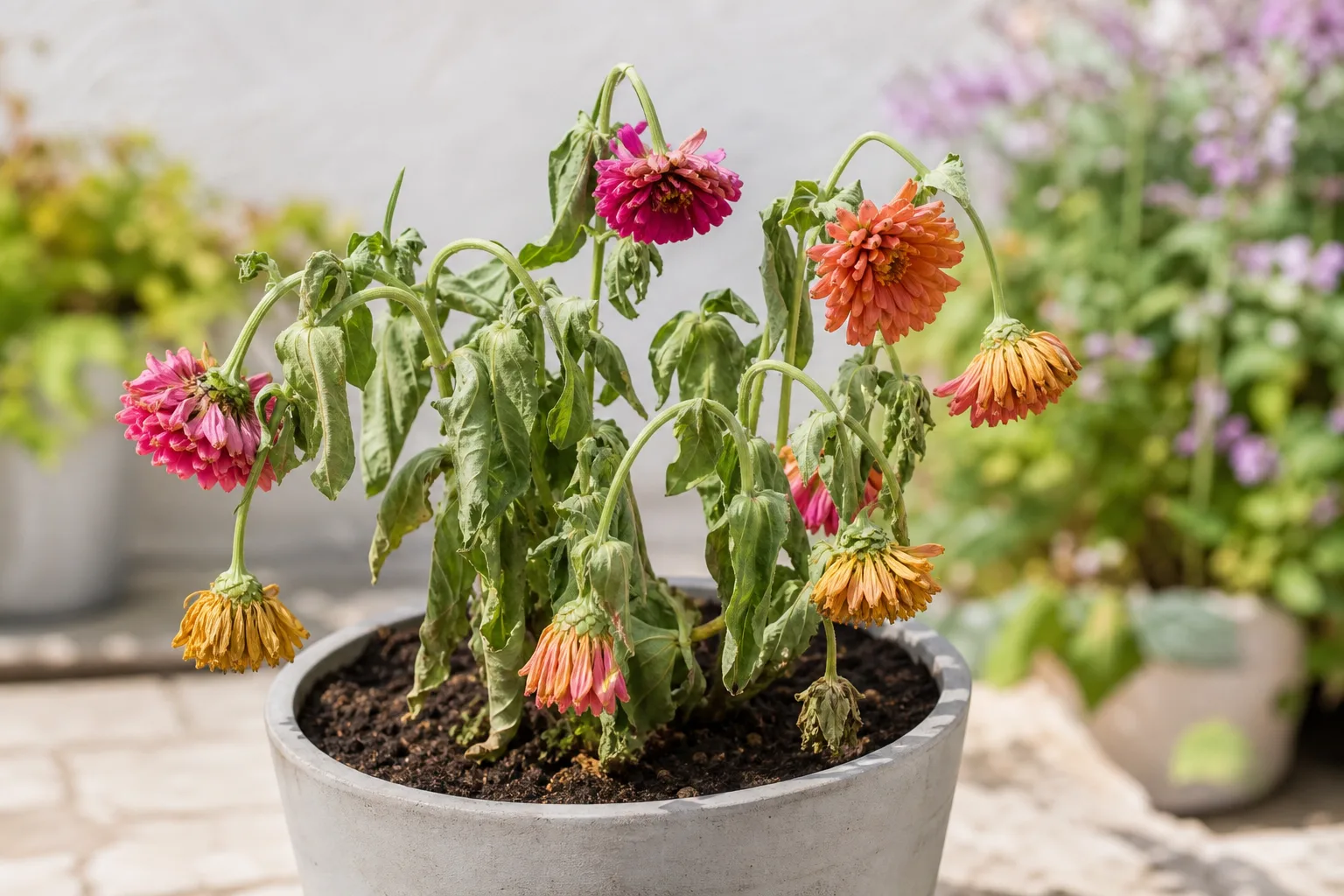
Wilting on Zinnia: Causes, Checks & Fixes
This guide covers wilting on Zinnia. See also the general Wilting guide, watering, and light pages for this plant.
Wilting on Zinnia: Causes, Checks & Fixes
Quick answer
Wilting on Zinnia (Zinnia elegans) is one of the fastest stress signals this sun-loving annual gives you-but the same limp look can mean opposite problems. A zinnia in a blazing container may wilt every afternoon when the top few centimeters of mix go dry, then stand upright again after a deep drink. The plant right beside it can wilt on soggy soil because roots are rotting and cannot move water upward.
First step: check soil moisture 5–8 cm deep at the stem base before you touch the hose. If mix is dry and the pot feels light, water deeply at soil level until water runs from drainage holes or bed soil is moist well below the surface. If mix is wet and the stem base feels soft, stop watering, improve drainage, and inspect for rot or stem cankers-not more water because leaves look tired.
What wilting looks like on Zinnia
Zinnias are upright, fast-growing daisy-family annuals with stiff stems when healthy. Wilting shows as loss of turgor-the plant cannot hold internal water pressure, so tissue goes limp.
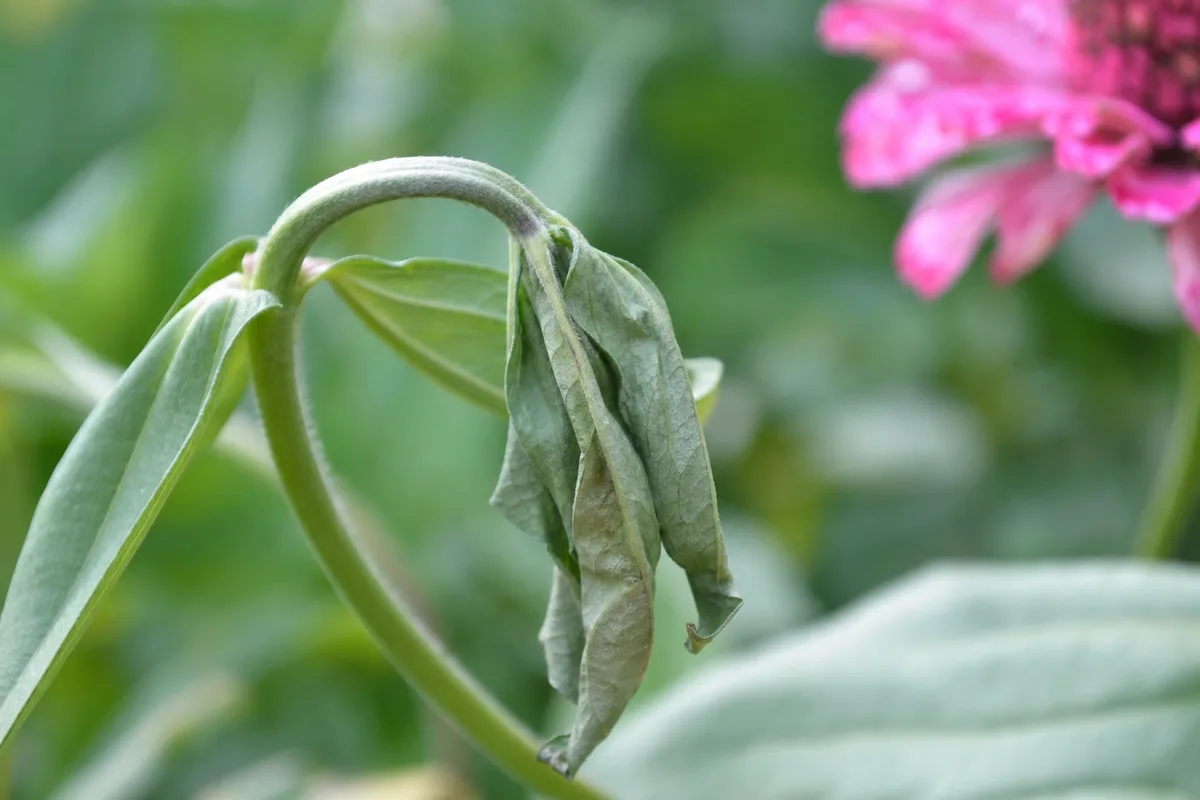
Wilting symptoms on Zinnia - compare with healthy tissue on the same plant.
Typical drought or heat wilt:
- Dramatic afternoon droop, especially on container zinnias in Zinnia light guide
- Flower heads hanging lower than usual
- Leaves soft and flexible but stems still firm when pinched
- Pot or bed soil dry several centimeters down
- Recovery within hours after deep base watering, often overnight
Wilt from wet roots or stem disease:
- Limp foliage even in morning, not just peak heat
- Heavy, waterlogged mix that stays wet for days
- Soft, brown, or water-soaked tissue at the soil line
- Yellow lower leaves on the same plant
- Reddish-brown leaf spots with grayish centers alongside basal damage (Alternaria blight pattern)
- Grey mould on spent flowers when overwatering on Zinnia or Botrytis is involved
Transplant shock wilt:
- Wilting within hours of moving seedlings from packs into beds or larger pots
- Stalled buds for several days after root disturbance
- Neighbors direct-sown in the same bed look fine
Seedling collapse (damping-off):
- Young zinnia sprouts that pinching and topple at the soil line within days of emergence
- Outbreak in flats where mix stays constantly wet and cool
Vascular wilt (less common but serious):
- Whole plant stays limp despite soil moisture that seems adequate
- One-sided stem darkening or black streaks in vascular tissue on older plants
- No recovery after corrective watering; decline spreads over days
Knowing which pattern you see matters because drought wilt wants water, while wet-soil wilt gets worse when you add more.
Why Zinnia gets wilting
Zinnias evolved for warm, sunny conditions with seasonal rainfall-not constant moisture around the crown. They drink heavily when blooming in full sun but still need oxygen at the roots. Several distinct problems produce wilt on Zinnia overview.
underwatering on Zinnia and afternoon heat stress are the most common causes in Indian summers and on sunny balconies. Zinnias in six-plus hours of direct sun transpire fast. When the top 3 cm of mix dries and roots cannot resupply water as quickly as leaves lose it, stems and flower heads droop-often worst between noon and late afternoon. This is reversible if soil was genuinely dry.
Temporary heat wilt on moist soil also happens. Well-hydrated plants sometimes wilt during the hottest part of the day as a protective response that limits water loss through leaves. If soil is moist several centimeters down and the plant recovers by evening without extra water, heat-not drought-was the trigger. Overwatering in that situation makes things worse.
Overwatering, stem rot, and poor drainage produce wilt on wet soil. Saturated mix suffocates roots, so the plant cannot uptake water even though the pot feels heavy. LeafyPixels plant data lists wilting alongside stem rot at the base, grey mould on flowers, and yellow lower leaves as classic overwatering signs on zinnias. Container zinnias on shaded porches with saucers holding runoff are especially vulnerable.
Alternaria blight (Alternaria zinniae) girdles stems with dark sunken cankers near the soil line after warm, wet, or humid weather. Spots on leaves and flowers spread to stems; when cankers restrict water flow, the top of the plant wilts even before the stem fully collapses. The Texas Plant Disease Handbook and Missouri Botanical Garden document Alternaria as the most conspicuous zinnia disease in many climates.
Transplant shock hits zinnias hard because they dislike root disturbance. Moving blooming plants from nursery packs into beds breaks fine feeder roots; wilting within hours of planting is common unless you harden off and water immediately at the base. Direct sowing avoids much of this stress.
Damping-off collapses zinnia seedlings at the soil line in cool, constantly wet seed trays-not mature garden plants. Wisconsin Extension documents lower stem collapse on seedlings as classic damping-off; Pythium and Rhizoctonia kill tissue before roots establish.
Fusarium wilt and bacterial wilt are regional, soilborne vascular diseases that block water movement. Fusarium wilt causes regular wilting before plant death, with dark vascular streaks and reduced roots. Bacterial wilt from Pseudomonas solanacearum has been reported on zinnias in Florida. These are rare compared with drought and cultural rot but do not recover with watering alone.
How to confirm the cause
Work through these checks in order-do not skip the moisture test:
- Time of day - Afternoon-only wilt on an otherwise healthy plant suggests heat or drought. All-day limp on wet soil suggests uptake failure.
- Deep moisture - Stick a finger or dry skewer 5–8 cm into mix near the stem. Dry throughout confirms drought stress. Wet core with a limp plant confirms root or stem problems-not thirst.
- Stem firmness at soil line - Pinch the base gently. Firm green tissue on dry soil points to underwatering. Mushy brown tissue on wet soil points to rot or blight.
- Recovery test - Water deeply once at the base if soil is dry. If turgor returns within hours, drought or heat stress was likely. If the plant stays limp on wet soil, do not water again-inspect roots and stem lesions.
- Leaf and flower pattern - Reddish spots with gray centers on leaves and petals plus basal stem damage suggest Alternaria. Yellow lower leaves alone without spots fit overwatering.
- Plant age and context - Seedlings collapsing in wet flats are damping-off candidates. Wilting hours after transplanting fits shock. Multiple plants in a row failing after rain fits splash-borne disease.
- Pot weight and drainage - Light, dry containers need water. Heavy pots with blocked holes or full saucers need drying and drainage fixes first.
If soil is dry, stems are firm, and wilt happens only in afternoon heat, you are treating reversible water stress-not vascular disease.
First fix for Zinnia
Check soil moisture 5–8 cm deep at the stem base and respond to what you find-not to how limp the leaves look.
If mix is dry and the pot feels light, water deeply at soil level until water runs freely from drainage holes or bed soil is moist well below the surface. Let foliage dry in sun the same day. Do not mist leaves or overhead sprinkle.
If mix is wet and the stem base feels soft, stop all watering, empty saucers, move the pot to full sun and open air, and pinch the stem to confirm mushy tissue. Remove plants that collapse on pinching. Do not fertilize, repot, or spray until you know whether you are drying out cultural rot or removing blighted plants.
If plants wilted immediately after transplanting on dry soil, water deeply once at the base and provide light afternoon shade for three to five days only during extreme heat-then leave them alone.
This single diagnostic step prevents the most costly mistake on zinnias: drowning a wilted plant that already sits in soggy mix.
Step-by-step recovery
After the first moisture check, follow the path that matches your diagnosis.
For dry-soil wilt:
- Water deeply at the base in morning or early evening-not a shallow sprinkle.
- Mulch container surfaces or bed soil to slow evaporation during heat waves.
- Check pots daily in peak summer; zinnias in full sun containers may need water every two to three days in Indian summer, less in cool weather.
- Deadhead spent blooms once turgor returns so energy goes to new flowers, not seed on stressed stems.
- Hold fertilizer until the plant looks firm for several days-salt on drought-stressed roots slows recovery.
For wet-soil wilt and basal rot:
- Stop watering until the top 3 cm dries.
- Improve drainage-open blocked holes, empty saucers, repot into airier mix if soil stays waterlogged for days.
- Remove plants with mushy stems; do not compost them in the home garden.
- Switch permanently to base watering in morning; never wet foliage on damaged plants.
- Inspect neighboring zinnias daily for early basal spots or soft stems.
For Alternaria-related wilt:
- Pull infected plants showing basal cankers and spotted leaves.
- Increase spacing to 20–30 cm so leaves dry within hours after rain.
- Remove spotted lower leaves and spent blooms that harbor spores.
- Avoid evening overhead irrigation during humid weather.
- Rotate zinnia beds next season and do not save seed from blighted plants.
For transplant shock:
- Water deeply once at planting, then maintain evenly moist-not saturated-soil.
- Shade lightly only during extreme midday heat for the first few days.
- Do not fertilize until new growth appears.
- Avoid repeated handling or root teasing while plants settle-usually three to seven days.
For seedling damping-off:
- Remove collapsed sprouts immediately.
- Reduce tray moisture, bottom-water only, add airflow with a small fan, and use sterile mix with bottom heat near 22°C for faster growth past the vulnerable window.
Do not stack Zinnia repotting guide, pruning, and fertilizer on the same day as a wilt crisis.
Recovery timeline
Heat and drought wilt often clears within hours after deep watering; badly scorched leaf edges remain until new growth replaces them over one to two weeks.
Temporary heat wilt on moist soil needs no extra water-plants recover by evening when temperatures drop. If wilting persists into the next morning on moist mix, investigate roots.
Transplant shock typically settles within three to seven days when base moisture stays steady and roots are not disturbed again.
Overwatering rot may stabilize in one to two weeks if stems stay firm after drying and drainage improves. Mushy stems do not regenerate-those plants are finished.
Alternaria-girdled or vascular wilt plants rarely recover enough to bloom well. Remove them promptly to protect neighbors.
Judge success by firm stems, upright new growth, and clean buds-not by whether every old wilted leaf becomes perfect again.
Lookalike symptoms to rule out
Leggy shade growth - Tall weak stems in too little sun may flop but stems stay firm and soil moisture is unrelated. Move to full sun; wilting from shade is structural, not turgor loss from water pathology.
Wind damage - Tall zinnia varieties snap in strong wind. Breaks are dry and clean at the snap point, not soft and brown at the soil line.
Powdery mildew - White flour-like coating weakens plants but does not typically collapse the stem base unless combined with other stress.
Aphid-heavy tips - Heavy feeding can curl and distort new growth; check undersides for insects before assuming wilt is purely water-related.
Normal end-of-day droop on moist soil - Not a problem if the plant is firm by morning and soil is appropriately moist below the surface.
Mistakes to avoid
Do not water every wilted zinnia automatically-wet-soil wilt worsens with more water.
Do not overhead irrigate in evening on plants showing any basal discoloration or after humid rain. Wet foliage overnight fuels Alternaria and Botrytis.
Do not transplant, repot, and fertilize on the same day a plant collapses. Fix moisture and stem condition first.
Do not assume drought tolerance means zinnias never need water during bloom season. They tolerate heat once established but still wilt when containers dry completely in one afternoon.
Do not compost rotted or blighted zinnias near next season’s bed. Pathogens survive in debris and on seed.
Do not crowd seedlings under domes after germination-damping-off spreads in stagnant wet flats.
How to prevent wilting on Zinnia
Water at the base when the top 3 cm dries, adjusting for heat, container size, and rain-not a fixed calendar. In peak summer, check pots daily; in cooler weather, stretch intervals.
Plant in full sun with well-drained, moderately fertile soil. Zinnias perform best with six or more hours of direct light and evenly moist-not constantly wet-conditions during active growth.
Direct-sow after last frost when possible. Missouri Botanical Garden recommends sowing seed directly in the ground for season-long bloom and notes that zinnias are easily grown in humusy, evenly moist, well-drained soils in full sun.
Space plants 20–30 cm in beds for airflow so leaves dry quickly after watering or monsoon rain. Good spacing reduces Alternaria pressure that leads to stem girdling and wilt.
Mulch containers and beds in heat waves to keep roots cooler and slow surface drying. Morning base watering gives moisture before peak transpiration.
For seed starting, use sterile mix, bottom heat near 22°C, bottom-watering, and a fan after emergence to pass the damping-off window quickly.
Choose disease-resistant cultivars in hot humid climates and rotate beds after blight outbreaks. Remove spent plant debris at season end.
When to worry
Treat as urgent when multiple zinnias in one row stay limp on wet soil after rain, when stems soften and collapse at the base, when dark cankers climb stems with spotted leaves, or when seedlings in a flat pinching at the soil line fail one after another.
Vascular wilt suspects-whole plants declining without recovery after corrected watering, with stem streaking or one-sided collapse-should be removed rather than nursed. They do not respond to deep watering.
Afternoon wilt on dry soil in a single container that perks up after one deep drink is manageable-not an emergency-once you adjust your Zinnia watering guide for heat.
Conclusion
Wilting on zinnias is readable once you pair limp leaves with soil moisture and stem firmness at the base. Dry, light pots with firm stems want deep base water. Wet, heavy pots with soft stems want drying, drainage, and often removal-not another round from the hose. Afternoon flop that recovers on its own on moist soil is heat, not drought. That short diagnostic path saves fast-growing annuals from drowning, catches blight before it marches down the row, and gets blooms back on track within days when the cause was simply a dry pot in full sun.
When to use this page vs other Zinnia guides
- Zinnia watering guide - Use for routine moisture checks before assuming wilting is the main issue.
- Zinnia problems hub - Browse all 38 common issues on this species.
- Underwatering on Zinnia - Different entry point when symptoms overlap with wilting.
- Overwatering on Zinnia - Different entry point when symptoms overlap with wilting.
- Drooping Leaves on Zinnia - Different entry point when symptoms overlap with wilting.