Zinnia Light Requirements: Full Sun, Shade Limits, and Grow
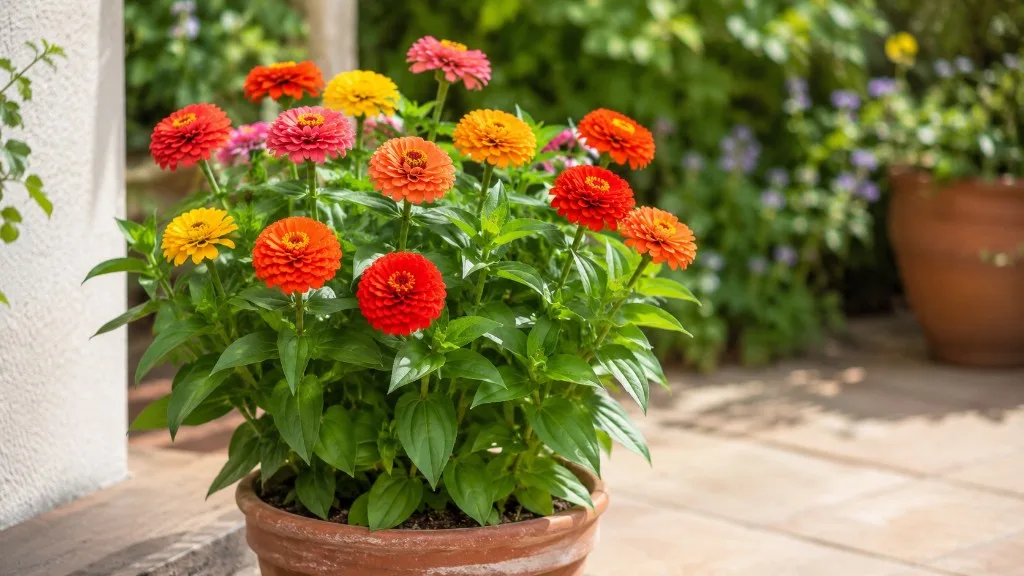
Zinnia Light Requirements: Full Sun, Shade Limits, and Grow Lights
Zinnia Light Requirements: Full Sun, Shade Limits, and Grow Lights
Zinnias are one of the easiest annual flowers to grow from seed and one of the least forgiving plants you can place in the wrong light. Zinnia elegans will germinate with enthusiasm, push up cheerful cotyledons, and then quietly betray you with spindly stems, washed-out color, and a handful of blooms if the site is too dim. Light is not a fine-tuning detail for zinnias. It is the variable that decides whether you get a cutting-garden workhorse full of butterflies or a tall, floppy plant that mildew finishes off by midsummer.
The practical goal is simple: give zinnias full sun outdoors for strong stems and continuous flowering, and give indoor seedlings bright, close, consistent overhead light so they never stretch before transplant day. Clemson Cooperative Extension lists zinnias under warm-season annuals that need full sun (6+ hours). The Old Farmer’s Almanac recommends at least 6 to 8 hours of direct sunlight daily, noting that more sun produces stronger stems and more abundant blooms. (Clemson HGIC) (The Old Farmer’s Almanac)
This guide covers the decisions that matter from seed tray to garden bed: how much sun zinnias actually need, what shade does to them, how to light seedlings indoors without leggy growth, and how to read the plant’s warning signs before you waste a season on the wrong spot.
How Much Light Zinnias Actually Need
Zinnias are full-sun annuals native to bright, warm regions of Mexico and the southwestern United States. They did not evolve for woodland edges or north-facing porches. They evolved for open ground with intense daily light, warm soil, and fast seasonal growth. That history is why zinnias are often marketed as beginner-friendly - because in a genuinely sunny bed they are - and why they fail so predictably when gardeners treat them like shade-tolerant ornamentals.
Outdoors, full sun means the leaves receive unobstructed direct sunlight for most of the day, not just a bright-looking area that never actually catches a sunbeam. For zinnias, the widely cited minimum is 6 hours of direct sun per day, with 7 to 8 hours producing noticeably sturdier plants and heavier bloom sets in most climates. Indoors, the conversation is different. Mature zinnias are poor long-term houseplants because typical rooms cannot deliver the daily light totals they need. The realistic indoor light task is seed starting: giving seedlings enough intensity and duration to stay stocky until they move outside.
You do not need a light meter to succeed. You need a placement standard and a growth check. Within two to three weeks of correct light, new zinnia growth should be upright, deep green, and short between leaf nodes. If stems lengthen and lean, the daily light total is still too low.
The Full-Sun Baseline for Strong Blooms
For garden and container zinnias, treat 6 to 8 hours of direct sun as the baseline, not an aspirational maximum. Clemson HGIC specifies at least six hours of full sun for fertile, well-drained plantings. The Old Farmer’s Almanac goes further, tying bloom quality directly to sun exposure and warning that partial shade leads to stretching and weaker flowering. (Clemson HGIC) (The Old Farmer’s Almanac)
Strong light does three jobs at once. It fuels the photosynthesis that drives rapid shoot growth. It promotes compact internodes, which is what keeps cutting stems stiff and upright. It helps foliage dry quickly after rain or irrigation, which reduces the humidity microclimate that encourages powdery mildew - a disease zinnias in shade know too well.
Open beds, south-facing borders, and patio pots with no overhang outperform partially shaded foundation plantings every time. If you are choosing between a spot that is convenient to the hose and a spot that is inconvenient but blasted with sun, zinnias want the sun. Watering is easier to adjust. Light is not.
Why Six Hours Is the Floor, Not the Target
Six hours is the threshold where zinnias usually survive and flower at all. It is not the threshold where they look like the photos on the seed packet. In practice, many gardeners who report “my zinnias bloomed fine in part sun” are still giving morning plus early-afternoon direct light, often totaling more than they estimate. Shade estimates are optimistic. Sun estimates are pessimistic. Count real sunbeams on the planting area at mid-morning, noon, and mid-afternoon on a clear day before you commit.
If your site tops out near six hours, expect taller, thinner plants and fewer side branches unless you pinch and space well. If your site exceeds eight hours with good airflow, expect the stocky, saturated-color blooms zinnias are famous for. In hot climates (USDA zones 9–11 and similar), intense afternoon heat can stress young transplants or container plants on dark pavement. That is a heat-management problem, not permission to move zinnias into shade. The fix is often afternoon shade after the plant has received strong morning-to-early-afternoon sun, or better spacing and base watering - not a hosta border.
What Happens When Zinnias Grow in Shade
Shade is not a minor setback for zinnias. It is a structural failure mode. When direct light drops below what the plant needs, zinnias do not simply grow slower the way some foliage houseplants might. They reallocate growth toward height, searching for a brighter source. The result is the familiar leggy look: long, weak stems; small leaves; delayed flowering; and a plant that collapses in the first hard rain.
This response is called etiolation. It is a physiological strategy for escaping low light, not a cosmetic issue you can permanently prune away. Pinching a leggy zinnia without improving light produces a leggy plant with more branches.
Leggy Growth and Weak Stems
Leggy zinnias show long internodes - wide gaps between leaves along the stem - and stems that bend or lodge under the weight of the first flower heads. Cut-flower growers care about this because stem strength determines whether a zinnia is usable in a vase or only in the compost. Home gardeners should care for the same reason: weak stems mean fewer display-quality blooms and more flopping into mud.
Seedlings are even more sensitive than mature plants. A zinnia seedling on a sunny windowsill often becomes tall and thread-like within days because window light is directional, weak overhead, and inconsistent with weather and season. The seedling stretches toward the glass. By transplant time it may look green but structurally hopeless. That is why reputable growers start zinnias under overhead grow lights, not windows alone. Iowa State University Extension emphasizes abundant light for indoor seedlings and positions fixtures close enough to keep plants compact. (Iowa State University Extension)
If your garden zinnias are leggy after transplant, suspect neighbor shade from taller plants, a fence or tree line that grew in since spring, or a bed that receives direct sun for only part of the day. Fix placement for next sowing, pinch current plants only after light improves, and space wider so each plant receives its own sun.
Fewer Blooms and Higher Disease Risk
Light affects zinnia health beyond stem shape. Low light reduces the energy available for flower production, so shaded plants produce fewer blooms and often open color that looks less saturated. You may wait the full 6 to 8 weeks from seed to first flower - zinnias’ typical pace in warm conditions - and still get a disappointing show if the site is dim.
Shade also changes the leaf environment. Zinnia foliage in crowded, shaded, or high-humidity conditions is more vulnerable to powdery mildew, a white fungal coating that weakens leaves and shortens the bloom window (NC State Extension). Clemson HGIC notes that proper spacing improves air circulation to help leaves dry and prevent mildew. Shade and overcrowding work against that drying process. You cannot fungicide your way out of a fundamentally too-dark site.
The honest rule: if a bed receives less than six hours of direct sun, zinnias are the wrong plant for that bed. Choose shade-tolerant annuals instead and put zinnias where the sun is rude.
Outdoor Sun Exposure for Garden Zinnias
Outdoor zinnias are the default and the easiest light scenario. The sun delivers intensity no indoor fixture fully matches, and zinnias repay that intensity with fast growth and long bloom seasons from summer to frost in many climates.
Choose an open location with 6 to 8 hours of direct sunlight, well-drained soil, and enough room to space plants for airflow. Clemson HGIC recommends spacing from 8 to 24 inches depending on cultivar height, with rows about a foot apart, precisely because crowded shaded interiors of a dense planting invite disease. (Clemson HGIC)
Zinnias are commonly direct-sown after soil warms and frost danger passes, which avoids transplant shock and often produces the sturdiest plants. The Old Farmer’s Almanac notes that zinnias germinate quickly in warm soil - often in 4 to 7 days - and that direct sowing is the simplest strong method for home gardens. If you start indoors, treat transplanting as a careful handoff into full sun, not a casual move from dim shelf to blazing bed. (The Old Farmer’s Almanac)
Site Selection and Plant Spacing
Site selection is a light decision disguised as a layout decision. Before sowing or transplanting, watch the candidate bed across a clear day. Mark when direct sun first hits the soil and when shade from trees, fences, or buildings cuts it off. Afternoon shade from a west fence is not the same as all-day dappled shade under a tree canopy.
Taller zinnia cultivars need more spacing and more uninterrupted sky exposure. Dwarf types tolerate slightly tighter plantings but not deeper shade. In mixed borders, keep zinnias on the sunward edge, not behind peonies, tall tomatoes, or late-summer perennials that will tower over them by July.
Containers follow the same rules. A pot on a partly shaded patio will produce partly shaded results. Move containers to the sunniest available surface - often a driveway edge, open deck, or south-facing railing - and expect to water more often because bright sun increases evaporation from both soil and leaves.
When Afternoon Shade Helps Without Replacing Sun
Zinnias are not delicate about bright light in most garden beds. They are delicate about sudden unacclimated jumps in intensity and about leaf heat on reflective surfaces. In hot-summer regions, young transplants or container plants on dark stone or metal may wilt on moist soil at midday because roots and leaves heat faster than the plant can regulate.
In those cases, afternoon shade after strong morning sun can reduce stress without turning zinnias into shade plants. Use a sheer curtain on a balcony, shift a container from west concrete to east pavement, or provide temporary shade cloth during a heat wave. Do not use afternoon shade to rescue a site that never received enough total daily sun. Morning sun plus afternoon shade can work. All-day shade will not.
Indoor Zinnias and Windowsill Reality
Let’s separate two indoor scenarios that get conflated: starting seeds indoors and trying to grow flowering zinnias as houseplants. The first is standard practice in short-season climates. The second usually fails.
Zinnias want high daily light totals, warm temperatures, and free airflow. A living room with a north window provides none of those reliably. If you have a zinnia in a pot indoors and it is stretching, the plant is not being dramatic. It is asking to go outside.
For seed starting, the windowsill myth is the biggest light mistake. A south window looks bright to human eyes, but seedlings experience low overhead intensity, long gaps on cloudy days, and uneven directionality that makes them lean and stretch. Minnesota Extension and multiple Master Gardener programs recommend supplemental lighting for indoor seedlings rather than relying on windows alone. Even the best window is inconsistent compared with a timed grow light. (University of Minnesota Extension)
Why Most Indoor Setups Fall Short
Three structural reasons windows fail seedlings. Distance and angle: light intensity drops sharply as seedlings sit even a few inches below the sill line, and glass directs light horizontally rather than from above. Photoperiod: indoor seedlings need 14 to 16 hours of bright light daily for compact growth, and winter day length alone does not deliver that total. Weather variability: a week of storms during the cotyledon stage produces a week of stretch that no later sun fully corrects.
If you insist on using a window, treat it as supplemental to a grow light, not the primary engine. Place trays as close to the glass as temperature allows, rotate trays daily, and still run an LED or fluorescent fixture overhead on a timer. For zinnias destined to live outdoors, the seedling phase is about building stem strength, not aesthetic indoor display.
Grow Lights for Zinnia Seed Starting
When you start zinnias indoors - typically 4 to 6 weeks before the last frost in many climates - a full-spectrum grow light is the difference between stocky transplants and leggy accidents. Iowa State University Extension states that abundant light is essential for high-quality seedlings and recommends plug-in shop fluorescent or LED fixtures with adjustable height. (Iowa State University Extension)
For fluorescents, including high-output T5 or “daylight” shop lights, extension guidance commonly places seedlings 4 to 6 inches (10 to 15 cm) below the tubes. For LED fixtures, 8 to 12 inches (20 to 30 cm) is a typical starting distance because LEDs can run brighter per watt. Hang lights from chains or use adjustable stands so you can raise fixtures as seedlings grow. If seedlings stretch, the light is too far or too weak - lower the fixture incrementally rather than accepting tall seedlings as normal. (Iowa State University Extension)
Zinnias do not need exotic spectra for seedling work. A full-spectrum white LED or daylight fluorescent rated for seed starting is sufficient. You are aiming for even coverage across the tray, not a single hot spot in the center.
Fixture Choice, Height, and Photoperiod
Fixture choice: A simple shop-light LED or fluorescent unit covering the full tray width beats a single small bulb that leaves tray edges in dimness. Look for horticultural or seed-starting labels, or fluorescent tubes described as cool white / daylight with high output. LEDs should list sufficient lumens for the coverage area; dim decorative bulbs are not seed lights.
Height: Start with extension distances, then read the plants. Compact seedlings with short stems and deep green cotyledons and true leaves mean distance is roughly correct. Visible stretching within 48 to 72 hours after emergence means lower the light 1 to 2 inches (2.5 to 5 cm) or increase brightness. Bleaching or curled leaves under intense LEDs mean raise the fixture slightly.
Photoperiod: Run lights 14 to 16 hours per day on a timer. Ask Extension guidance for winter seed starting recommends this range for annual flowers and vegetables, with 8 to 10 hours of darkness overnight so plants can respire normally. Do not run lights 24 hours; continuous light disrupts plant metabolism and does not produce better zinnias. (Ask Extension)
Keep air moving gently around trays if fixtures add heat. Seed-starting heat mats and light heat are useful for germination but can stress tender tissue if trays bake under covered domes in direct fixture heat.
A Simple Seedling Schedule That Prevents Stretching
Here is a practical schedule you can copy for zinnia seed starting indoors.
At sowing: Zinnia seeds need warmth more than light to germinate. Soil temperature near 70°F (21°C) supports germination in roughly 4 to 7 days under moist conditions. Light becomes critical the moment cotyledons emerge.
Days 1 to 3 after emergence: Turn on the grow light immediately. Begin at the upper end of the distance range if using bright LEDs, then lower based on stretch.
Daily routine: Timer on 14 to 16 hours at the same clock times daily. Consistency matters more than heroic weekend light bursts.
Weeks 2 to 4: Raise fixtures as seedlings grow to maintain the target gap. Brush trays gently with your hand or use a fan on low for air movement, which further strengthens stems.
Before transplant: Reduce reliance on artificial light only by hardening off outdoors over 7 to 14 days, gradually increasing direct sun exposure. Moving from a perfect light shelf to full garden sun in one afternoon will scorch leaves even if the garden spot is “correct.”
Hardening Off and Moving Zinnias Into Full Sun
Indoor light - even excellent grow lights - does not prepare zinnia leaves for outdoor UV intensity and wind. Hardening off is the bridge. Start by placing trays in bright shade or very brief morning sun for an hour or two, then increase direct exposure daily over one to two weeks until plants sit in their final full-sun location without scorch.
Watch the newest leaves during hardening. Older indoor leaves may bleach or crisp; what matters is whether new growth after transplant looks firm and properly colored. If seedlings wilt on moist soil at midday, sun or heat came too fast. Pull back to morning sun, then retry tomorrow.
For direct-sown garden zinnias, hardening off is unnecessary because they emerge into natural light gradually. That is one reason direct sowing produces robust plants in warm climates. For indoor starts, hardening off is as important as the grow-light schedule itself.
Warning Signs Your Zinnia Light Is Wrong
Zinnias report light problems on new tissue first. Old stretched stems will not shorten. Old bleached leaves will not green up. Read the youngest leaves, the next node after pinching, and the direction of active growth.
Make one light change, then wait 10 to 14 days before also changing watering, fertilizer, or pot size. Light stress and water stress look similar; changing everything at once turns diagnosis into guesswork.
Symptoms of Too Little Light
Leggy stems with long gaps between leaves are the clearest under-lighting signal indoors and out. Leaning hard toward windows, gaps in tray rows, or a single bright direction shows directional starvation. Pale or yellow-green new foliage suggests insufficient energy for normal chlorophyll development. Delayed flowering beyond the expected warm-season pace - often 8 to 12 weeks from direct sowing depending on cultivar and climate per Clemson HGIC - can indicate chronic low light if weather otherwise cooperates. Small flower heads on tall weak stems are the harvest version of the same problem. Powdery mildew appearing early on lower and interior leaves often accompanies shaded, crowded placements.
Fixes: move to a sunnier bed or container site next season; for current plants, open spacing, prune neighboring shade sources if possible, and pinch after light improves. For seedlings, lower the grow light, extend photoperiod toward 16 hours, and never rely on windows alone.
Symptoms of Too Much Light or Heat
Zinnias in open garden sun rarely suffer from “too much light” in the photosynthetic sense. Problems usually involve heat, reflection, or acclimation failure. Bleached white or tan patches on sun-facing leaves after a sudden move outdoors indicate unacclimated exposure. Crisp leaf edges on young transplants in midday heat point to leaf temperature stress. Wilting on moist soil in afternoon sun on dark containers suggests root-zone heat, not drought. Sudden collapse after moving from dim indoors to full patio sun is classic transplant shock from light intensity, not a watering failure.
Fixes: harden off gradually; water at the base in morning; use lighter-colored containers; provide temporary afternoon shade during heat spikes; and avoid transplanting at noon. Established garden zinnias seldom need shade cloth except in extreme heat events with reflected surfaces.
Conclusion
Zinnias are not ambiguous about light. Outdoors, plan for 6 to 8 hours of direct sun, spacing and airflow that keep foliage dry, and a site where neighboring plants will not steal afternoon brightness by midsummer. In shade, zinnias do not politely underperform - they stretch, bloom less, and invite mildew. That is not a cultivar quirk. It is how a full-sun Mexican annual responds when you ask it to live like a hosta.
Indoors, the only light setup that consistently works is seed starting under close, timed grow lights for 14 to 16 hours daily, with fluorescent tubes roughly 4 to 6 inches above seedlings or LEDs around 8 to 12 inches, adjusted by reading stem length daily. Windowsills alone produce the leggy seedlings that give seed-starting a bad reputation. Before transplant, harden off into real sun over 7 to 14 days so leaves adapt without scorch.
The plant will tell you the truth faster than any seed-packet icon. Short internodes, deep green new leaves, stiff upright stems, and continuous blooms mean your light plan is working. Long stems, leaning growth, pale foliage, and early mildew mean the current spot is survival mode, not display mode. Fix light first, watch new growth for two weeks, then adjust water and feeding to match the brighter reality. That sequence is how zinnias become the easy, blazing summer flowers they are supposed to be.
When to use this page vs other Zinnia guides
- Zinnia overview - Start here for whole-plant context before deep-diving this topic.
- Zinnia problems hub - Jump to symptom-specific fix guides when this care topic does not resolve the issue.
- Not Enough Light on Zinnia - Escalate here when light adjustments are not enough.
- Leggy Growth on Zinnia - Escalate here when light adjustments are not enough.
Related Zinnia guides
- Zinnia overview
- Zinnia watering
- Zinnia soil
- Zinnia propagation
- Zinnia fertilizer
- Zinnia repotting
- Not Enough Light on Zinnia
- Leggy Growth on Zinnia
- Zinnia problems
Related tool
Try the Plant Problem Diagnosis Tool with zinnia pre-selected to estimate needs for your setup.