Leggy Growth on Zinnia: Causes, Checks & Fixes
Quick answer
Leggy zinnias have stretched stems, wide leaf gaps, and sparse flowers-usually from too little direct sun or excess nitrogen. First step: move the plant to a spot with at least six hours of full sun, or add grow lights 2–3 inches above indoor seedlings.
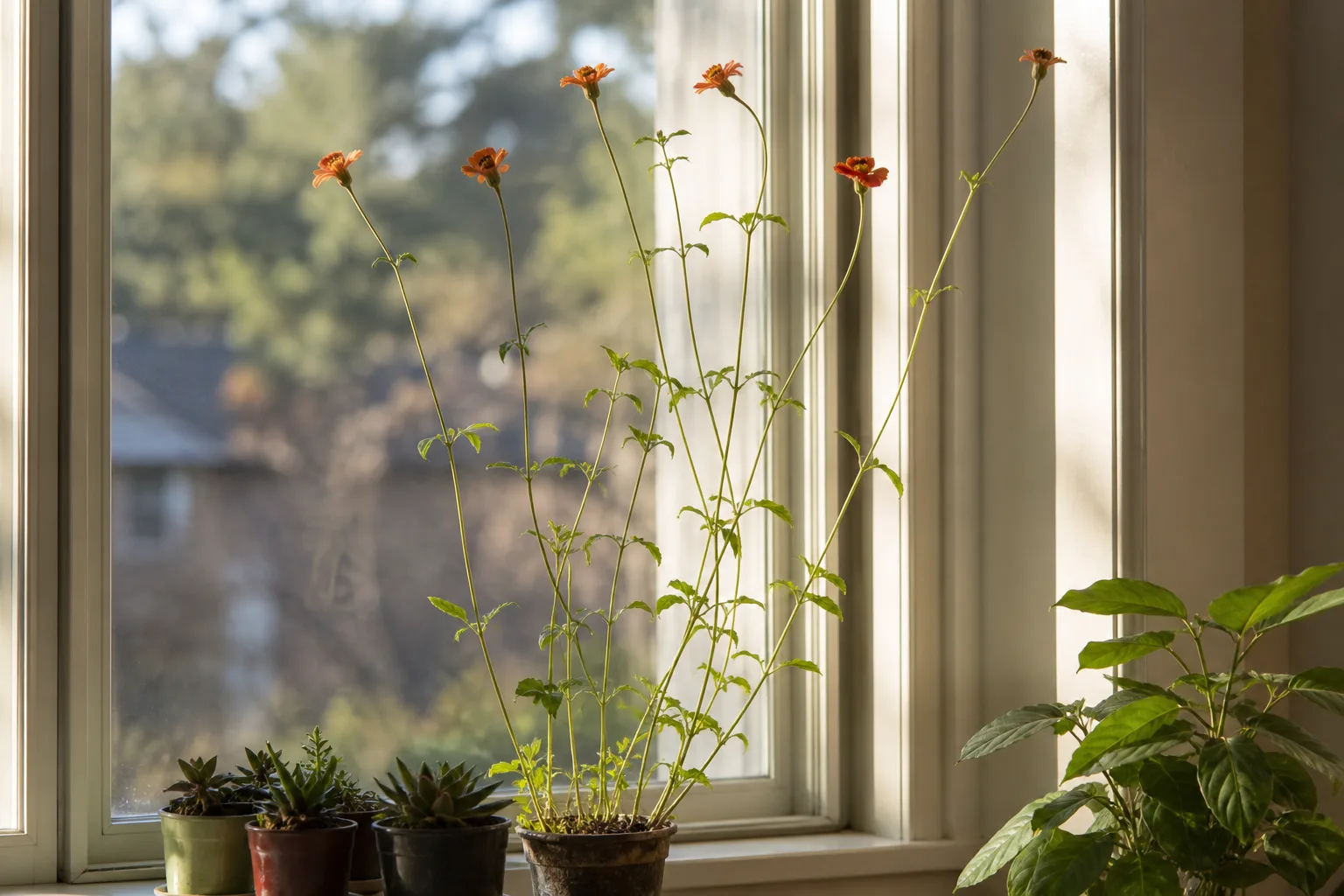
Leggy Growth on Zinnia: Causes, Checks & Fixes
This guide covers leggy growth on Zinnia. See also the general Leggy Growth guide, watering, and light pages for this plant.
Leggy Growth on Zinnia: Causes, Checks & Fixes
Quick answer
Leggy zinnias stretch toward light instead of building stocky stems. You see long gaps between opposite leaves, thin hairy stems that lean or flop, and fewer of the daisy-like blooms zinnias are grown for. On Zinnia elegans, this almost always traces back to insufficient direct sun-whether that is a shaded garden bed, a bright-but-not-sunny windowsill, or crowded seedling trays competing for light. Excess nitrogen fertilizer is the other common driver: the plant pushes leafy height with fewer flowers.
First step: move the plant to Zinnia light guide with at least six hours of direct light daily. For indoor seedlings, that means supplemental grow lights positioned 2–3 inches above the tops, not a south window alone. Do not repot, fertilize, or spray on day one until you confirm light is adequate.
What leggy growth looks like on Zinnia
Healthy zinnias are upright, branching annuals with opposite lance-shaped leaves clasping hairy stems. In good light they look bushy even before peak bloom. Leggy plants tell a different story:
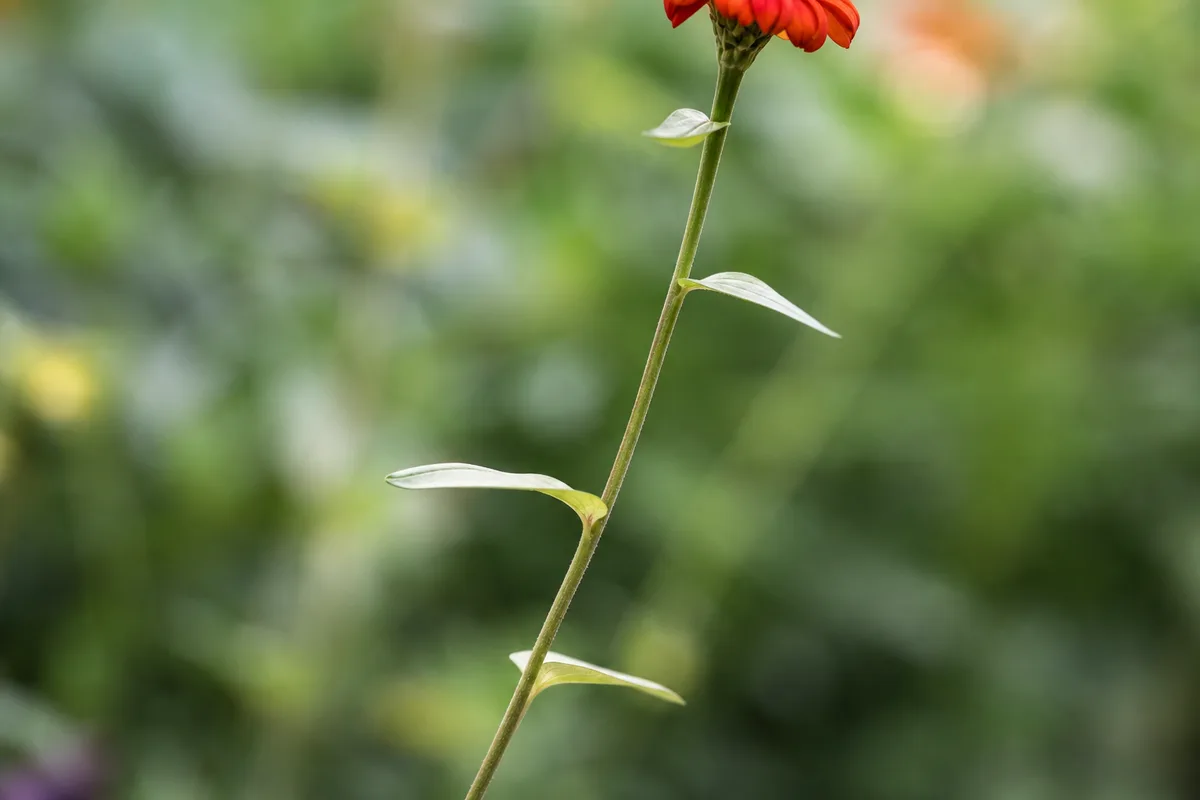
Leggy Growth symptoms on Zinnia - compare with healthy tissue on the same plant.
- Long internodes - obvious empty space between leaf pairs along the stem
- Thin, weak stems - wiry rather than sturdy; tall varieties may lodge flat after rain
- Small or pale new leaves - smaller than lower leaves when light is the limiting factor
- Directional lean - stems bend toward windows, gaps in tree cover, or grow-light centers
- Few buds relative to height - plenty of green stem, not enough flower heads
- Floppy seedlings - indoor starts that reach 10–15 cm tall with only two or three true leaves
Leggy zinnias are not diseased by default. Leaves are usually green without spots, powder, or sticky residue. That distinction matters because fungal problems like powdery mildew need spacing and airflow fixes-not just more light-whereas pure etiolation clears up once sun intensity improves.
Seedling legginess often appears within the first two weeks after germination if trays sit on a kitchen counter or crowded shelf. Mature garden plants go leggy when a tree canopy fills in, a taller neighbor blocks afternoon sun, or containers sit on a shaded porch that looks bright to human eyes but delivers far less than full sun.
Why Zinnia gets leggy
Zinnias evolved as sun-loving Mexican annuals. They do not tolerate shade the way impatiens or coleus do. Missouri Botanical Garden lists zinnias as requiring full sun, and a Missouri Botanic Garden annuals guide notes that most flowering annuals need six to eight hours of full sun. When light falls short, stems elongate-a response called etiolation-as the plant reaches for photons. University of Maryland Extension describes indoor plants becoming spindly or leggy as they stretch for more light, with diminished flowering as a companion symptom. Zinnias show this fast because they grow quickly from seed.
Indoor seed starting is the most frequent trigger. Oregon State Extension advises that zinnia seedlings do best under grow lights placed 2–3 inches from the plants, with tray rotation to prevent leggy growth. A sunny window rarely delivers the intensity zinnias need for compact seedlings, especially in late winter when day length is short.
Shaded garden placement causes the same stretch outdoors. Zinnias planted along north-facing walls, under mature trees, or in beds that receive only morning sun often grow tall and flower poorly. LeafyPixels plant data flags shade as a poor fit for zinnias; flowers reveal the problem even when foliage still looks alive.
Crowding amplifies light competition. Seedlings sown too thickly or transplants spaced closer than 20–30 cm shade one another. Lower leaves yellow and drop, leaving bare stem sections while upper shoots race upward seeking light.
Excess nitrogen produces a different but overlapping leggy look. Clemson HGIC notes that too much nitrogen causes plants to produce primarily leaves and stems with few or no flowers. University of Maryland Extension warns that an excess of nitrogen promotes lush vegetative growth and fewer flowers on annuals. UMass Amherst adds that excessive nitrogen stimulates green leafy growth at the expense of flower production. On zinnias, this often follows lawn fertilizer, fresh manure, or repeated high-nitrogen liquid feeds during early growth.
Forced nursery transplants can arrive pre-stretched. Garden centers sometimes sell tall zinnias already blooming in small cells. Missouri Botanical Garden recommends choosing small plants that have not yet flowered-short, stocky six-packs rather than leggy color bowls pushed for instant display.
How to confirm the cause
Work through these checks before pinching or feeding:
- Sun hours - Track direct sun on the spot from mid-morning through afternoon. Fewer than six hours strongly points to light as the primary cause. Dappled shade all day counts as insufficient for zinnias.
- Seedling setup - Measure distance from grow-light tubes or LED panels to seedling tops. Lights more than 6–8 inches above flats, or only ambient room light, confirm etiolation risk.
- Lean direction - Stems bending toward one window or sky gap support a light diagnosis. Uniform height with no lean suggests crowding or nitrogen instead.
- Spacing - Look straight down into the bed. Overlapping leaves between plants mean competition for light even in an otherwise sunny border.
- Fertilizer history - Review what was applied in the last month. High first number (nitrogen) products, fresh compost-heavy top-dressing, or lawn runoff into beds suggest nitrogen-driven stretch.
- Bloom ratio - Tall stems with almost no buds after six or more weeks in warm weather fits nitrogen or shade. Tall stems with buds only at the very top often mean lower branches were shaded out.
- Root and stem health - Soft brown stems at the soil line point to damping-off or overwatering on Zinnia, not simple legginess. Firm green stems with long internodes stay in the light-stress category.
If light is adequate, spacing is correct, and nitrogen has not been overapplied, legginess is uncommon on established garden zinnias. Re-check whether afternoon sun is blocked by something seasonal-a structure, hedge, or monsoon cloud cover pattern that still leaves the bed technically “sunny” only in morning.
First fix for Zinnia
Move the plant to the sunniest available location with at least six hours of direct sun, or lower supplemental grow lights to 2–3 inches above seedling tops.
For garden plants, that may mean relocating containers, thinning an overstory branch, or accepting that a shaded bed is the wrong site for zinnias this season. For seedlings still indoors, install or adjust a full-spectrum grow light and run it 14–16 hours daily. Oregon State Extension’s guidance to keep lights 2–3 inches from zinnia seedlings is the practical target.
Do not jump to fertilizer, fungicide, or Zinnia repotting guide first. Zinnias dislike root disturbance, and feeding a light-starved plant adds soft tissue without fixing the cause. Do not move seedlings from a dim windowsill straight into harsh midday sun without hardening off-introduce stronger light over several days to avoid scorch.
Once light is corrected, pinching comes next-not before. Missouri Botanical Garden advises pinching young plants to promote compact, bushy form. The annuals factsheet adds that nearly all annuals benefit from pinching when plants have become too stretched or leggy, cutting back to a leaf node once they are two to four inches tall or after relocation.
Step-by-step recovery
After improving light:
- Harden off indoor seedlings - Gradually expose them to outdoor sun over five to seven days before planting out after frost danger passes. Zinnias need warm soil; cold, wet planting worsens stress.
- Pinch growing tips - Snip the top inch above a leaf pair on young plants. This forces side branches and redirects energy from height to bushiness.
- Space correctly - Thin direct-sown rows or set transplants 20–30 cm apart so lower leaves receive light and airflow.
- Stake only if needed - Tall cultivars like ‘Benary’s Giant’ may need a single stake until new side shoots stiffen. Staking without fixing light just props up weak stems.
- Adjust fertilizer - If nitrogen was heavy, pause feeding for two weeks, then switch to a balanced or phosphorus-forward formula at half label strength. Missouri IPM notes that applying excess nitrogen to flowering annuals produces lush vegetative growth and poor, delayed flowering.
- Remove worst stems on mature plants - Cut back severely stretched leaders by one-third to one-half once side buds are visible. Leave enough foliage for photosynthesis.
- Direct-sow replacements if needed - Zinnias germinate in five to seven days at warm temperatures. A late June sowing can still bloom before frost in many climates when an early planting failed in shade.
Skip repotting unless roots are clearly bound in a tiny cell and the plant is still pre-bloom. Disturbing roots on flowering zinnias often causes temporary wilt without fixing stretch.
Recovery timeline
Light correction shows in new growth within one to two weeks during warm weather. Pinched plants typically push visible side shoots in seven to ten days. Old elongated internodes remain on lower stems for the life of the plant-they do not shorten.
Expect the first round of blooms from corrected seedlings roughly eight to twelve weeks after sowing, depending on cultivar. Nitrogen-related legginess resolves more slowly: after switching fertilizer, allow two to three weeks before judging flower count.
If stems stay pale and continue stretching after two weeks in verified full sun, the site still is not bright enough or plants remain too crowded. Move again or thin neighbors rather than feeding harder.
Lookalike symptoms to rule out
Damping-off on seedlings collapses stems at the soil line with wilting, not just height. Wisconsin Horticulture documents lower stem collapse on zinnia seedlings from Pythium and Rhizoctonia in cool wet mix. Leggy seedlings may be more vulnerable, but the stem base should stay firm if damping-off is absent.
Powdery mildew adds white powder on leaves and stems in humid crowded beds. It often follows dense spacing but causes spotting and distortion, not clean elongated internodes.
Aphid damage curls new tips and coats foliage with sticky honeydew. Stems may look distorted rather than evenly stretched.
Heat wilt from drought droops leaves in afternoon sun without lengthening internodes. Water deeply at the base when the top 3 cm of soil is dry; wilting should recover overnight if roots are healthy.
Normal tall cultivars - Some zinnia varieties legitimately reach 90 cm or more in full sun. Check the seed packet. Legginess is about weak spacing between leaves and poor bloom, not absolute height alone.
Mistakes to avoid
Do not assume fast vertical growth equals health on zinnias. Stretching is the plant compensating for deficit, not vigorous performance.
Do not pinch hard without improving light first. Removing the growing tip on a dim windowsill seedling leaves less surface area to capture photons and can stall growth entirely.
Do not buy tall zinnias already in full bloom in small packs unless you have no alternative. They rarely transplant into compact plants.
Do not apply high-nitrogen fertilizer hoping to “green up” a pale leggy zinnia. That deepens leafy stretch and delays buds.
Do not transplant zinnias repeatedly trying to fix legginess. Root disturbance sets back recovery; direct sowing or one careful move after hardening off works better.
Do not place indoor seedlings outdoors in full sun without acclimation. Sun scorch on already weak tissue looks like brown crispy patches, a separate problem from etiolation.
How to prevent leggy growth next time
Site for full sun from the start. Choose beds and containers that receive unblocked sun most of the day. Zinnias suit open butterfly borders and sunny balconies-not tree understories or north-facing courtyards.
Start seeds under proper light. Plan grow lights before sowing indoors four to six weeks before last frost, as Missouri Botanical Garden recommends for early bloom. Keep tubes or panels close and on a timer for 14–16 hours.
Direct-sow when climate allows. Zinnias germinate quickly in warm soil and avoid transplant shock. Succession sow every two to three weeks until midsummer for continuous bloom.
Pinch early. When seedlings reach two to four inches with two or three true leaf pairs, pinch once to set branching structure before stems harden.
Feed for flowers, not foliage. Use complete fertilizers where nitrogen is equal to or lower than phosphorus for bloom-heavy annuals, following UMass guidance. Apply at half label strength unless a soil test says otherwise.
Space for airflow and light penetration. Thin seedlings and set transplants 20–30 cm apart. Good spacing also reduces powdery mildew pressure in humid monsoon weather.
Scout for new shade. A bed that was sunny in April may be partially shaded by June when surrounding perennials fill in. Container zinnias can be moved; in-ground plantings may need a different rotation next year.
When to worry
Leggy growth itself is a corrective-care issue, not a death sentence. Treat it as urgent when:
- Seedlings lean onto wet soil and stems contact damping-off-prone mix
- Stems lodge across paths or beds where fungal spores splash onto foliage
- Plants are within two weeks of intended bloom time and still have no visible buds despite warm weather and corrected light
- Multiple stretched seedlings fail simultaneously in the same flat-check for damping-off at the collar, not just light
You cannot fully salvage a zinnia forced into bloom on a six-inch stem in a four-inch pot. Starting fresh seed is often faster than rehabbing severely pre-stretched nursery stock. Zinnias are inexpensive annuals; a new sowing in a sunny spot beats weeks of staking weak stems.
If corrected light, pinching, and proper spacing still produce tall leaf-heavy plants with no flowers by midseason, stop nitrogen entirely and verify the bed truly receives direct sun, not reflected brightness alone.
Conclusion
Leggy zinnias are telling you the light budget is wrong-or that nitrogen pushed leaves instead of blooms. Move to full sun or fix seedling lighting first, pinch for branching second, and adjust feed only when a nitrogen excess is confirmed. Old stretched stem sections will not revert, but new growth can be compact and floriferous once zinnias get the direct sun they were bred for.
When to use this page vs other Zinnia guides
- Zinnia watering guide - Use for routine moisture checks before assuming leggy growth is the main issue.
- Zinnia problems hub - Browse all 38 common issues on this species.
- Not Enough Light on Zinnia - Different entry point when symptoms overlap with leggy growth.
- Yellow Leaves on Zinnia - Different entry point when symptoms overlap with leggy growth.