Yellow Leaves on Zinnia: Causes, Checks & Fixes
Quick answer
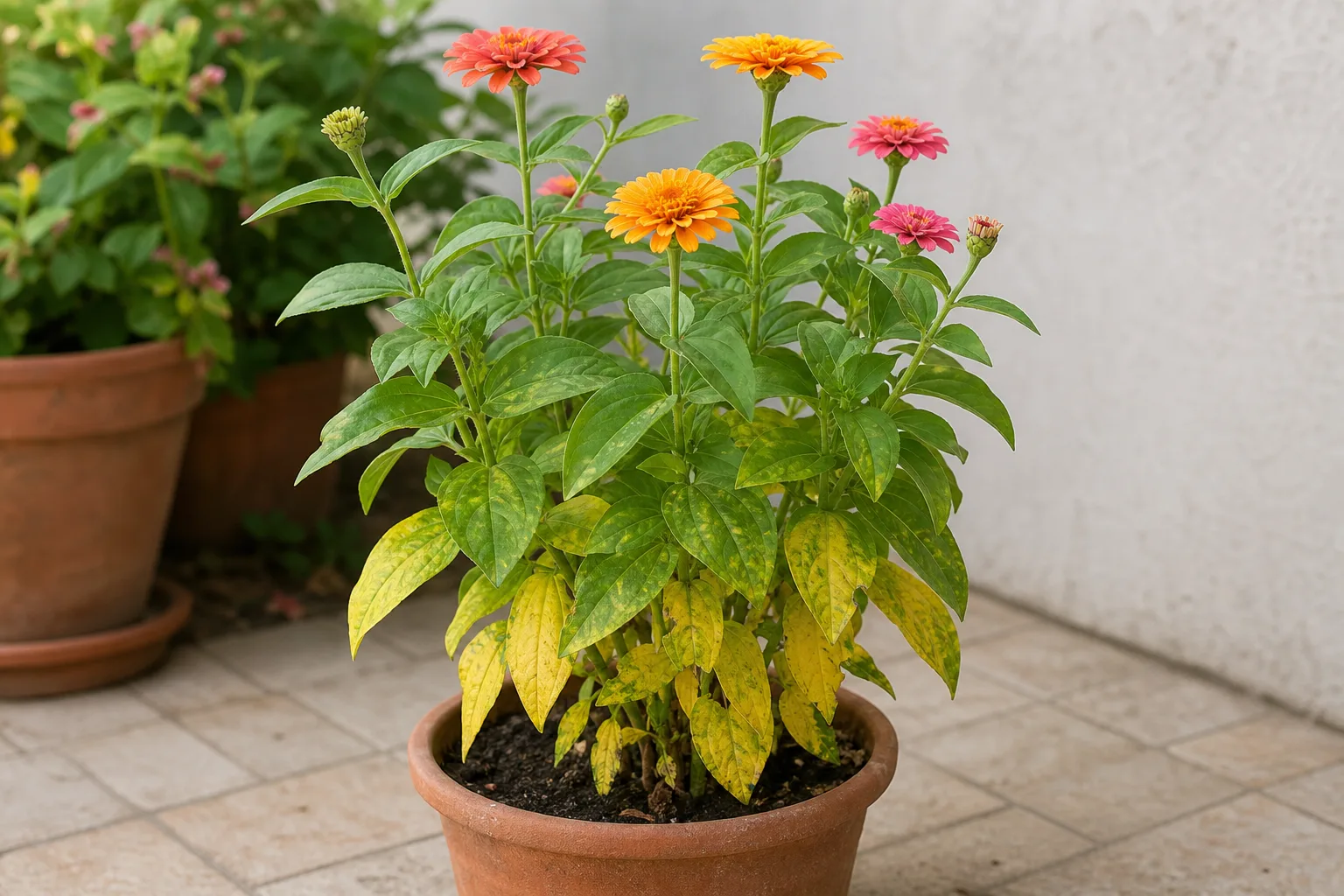
On a blooming zinnia, one or two yellow bottom leaves with firm stems and dry top 3 cm soil is often normal aging-not a crisis. Widespread yellowing on wet, heavy pots, grey mould on spent blooms, or white powder on inner leaves needs a different fix. First step: probe 3 cm into the mix and lift the pot before you water or feed.
Yellow Leaves on Zinnia: Causes, Checks & Fixes
This guide covers yellow leaves on Zinnia. See also the general Yellow Leaves guide, watering, and light pages for this plant.
Yellow Leaves on Zinnia: Causes, Checks & Fixes
Quick answer
A patio zinnia covered in blooms but showing one yellow leaf near the soil line is a different problem than a whole row fading from the base up on soggy ground. Zinnia elegans is a fast-growing warm-season annual that naturally sheds older lower leaves while tips keep producing buds-but widespread yellowing on wet, heavy pots, grey fuzzy mould on spent flowers, or white powder on inner leaves signals stress you need to correct.
First step: stick your finger 3 cm into the mix at the pot edge and lift the container to feel its weight. Firm green stems with dry top soil and only one or two yellow bottom leaves usually mean normal aging-remove those leaves and keep monitoring. Heavy wet pots with yellow lower foliage, afternoon wilt that does not clear after the mix dries slightly, or lower leaves dying beneath a white coating point to overwatering, root stress, or powdery mildew-not a fertilizer shortage on day one.
Do not feed yellow zinnias until you confirm soil moisture, stem firmness, and whether coating or mould is present. Stressed roots on a sun annual cannot use nutrients until the cultural problem is fixed.
What yellow leaves look like on Zinnia
Yellowing on zinnias follows distinct patterns. Match what you see before you change watering, spray, or repot.
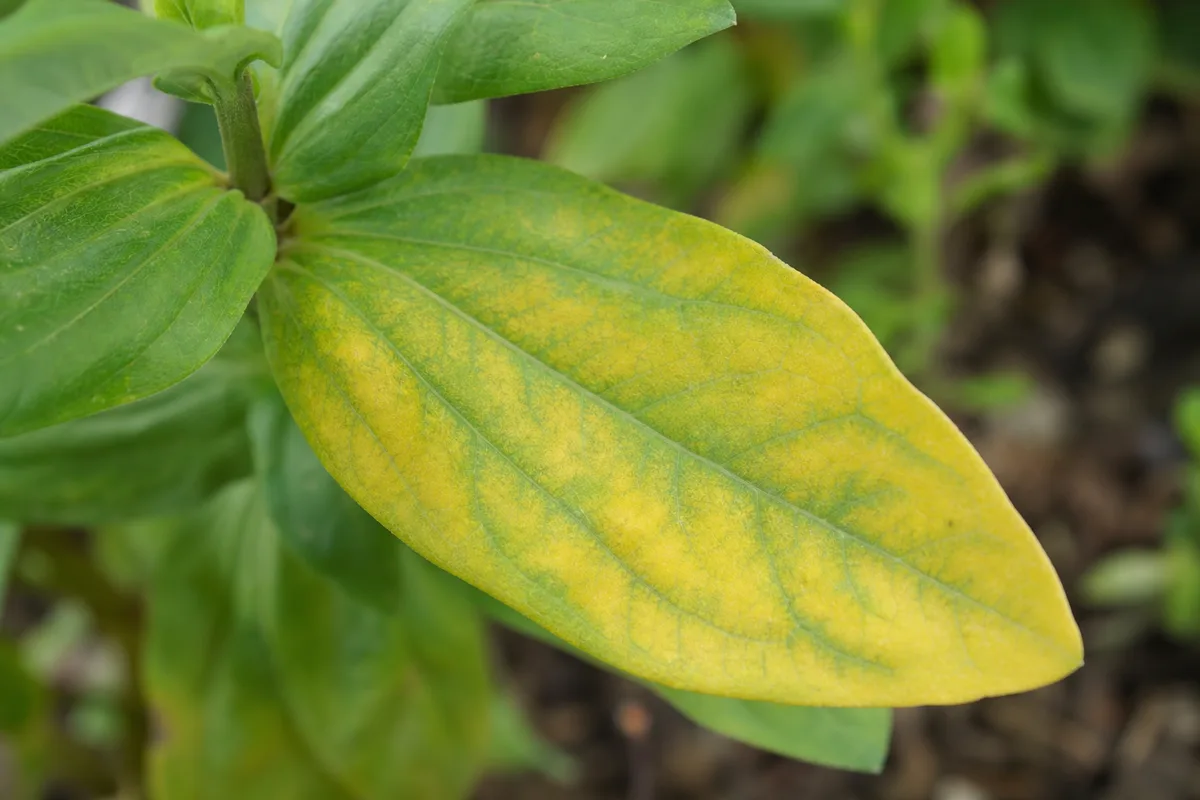
Yellow Leaves symptoms on Zinnia - compare with healthy tissue on the same plant.
Normal lower-leaf aging on blooming plants
- One to three oldest bottom leaves turn evenly yellow while upper stems stay green and buds keep opening
- Yellow leaves feel papery and pull away easily; stem base above soil line stays firm
- Soil dries normally between waterings-the top 3 cm feels dry within two to three days in summer heat
- No white powder, grey mould, or water-soaked spots on petals
This pattern is common on vigorously blooming zinnias in full sun with well-drained soil. Remove faded leaves for airflow and continue your rhythm.
Overwatering and root-stress pattern
- Lower leaves yellow while soil stays wet and the pot feels heavy days after watering
- Spent blooms develop tan water-soaked spots or fuzzy grey mould
- Stems may soften at the soil line as saturation continues
- Afternoon wilt on blazing patios even when mix is moist at depth-the classic wet-soil trap that looks like thirst
Chronic saturation starves roots of oxygen. Clemson HGIC warns that overwatering can lead to root rot on zinnias and recommends watering when the top 1 to 2 inches of soil feel dry at the base of the plant. See the full overwatering guide when wet soil plus spreading yellowing match this pattern.
Powdery mildew canopy loss
- Dry white flour-like coating on upper leaf surfaces, often starting on inner shaded leaves
- Lower leaves yellow and brown from the base of the plant upward beneath heavy coating
- New growth may stunt or produce smaller leaves while blooms abort on severely affected stems
- Coating smears when rubbed-unlike mineral dust that wipes off once
Mildew is one of the most common zinnia disease problems in humid crowded beds. It does not start from saturated roots alone, though tight spacing and overhead watering overlap with overwatering setups.
Drought and heat stress pattern
- Light pot weight, dry soil 3 cm down, and dramatic afternoon droop that revives within hours of deep base watering
- Leaf edges may crisp or bronze before uniform yellowing spreads
- Common on new transplants before roots establish, or container zinnias on hot reflective patios
Established zinnias tolerate brief dry spells, but NC State Extension notes zinnias need full sun and good drainage in freely draining soil during active growth. See underwatering or heat stress when dry soil drives the pattern.
Pale new growth in insufficient light
- Newest leaves open pale yellow-green while lower foliage may stay darker
- Stems stretch toward the brightest window or lean across the pot rim
- Soil moisture may be appropriate-roots are not drowned, but photosynthesis is weak
Zinnias are full-sun annuals that underperform in shade. Pale new growth in a shaded corner is a light problem before it is a feed problem. Check the not enough light guide before adding fertilizer.
Why Zinnia gets yellow leaves
Zinnia elegans pushes dense foliage and continuous blooms in heat. That fast growth sheds older leaves at the base while new tissue expands above-a normal annual lifecycle, not a disease by itself.
Several zinnia-specific habits turn yellow leaves from a background signal into a real problem:
Calendar watering through cool or cloudy weather. Zinnias use less water when nights cool and autumn growth slows. Continuing peak-summer frequency into mild weather keeps mix soggy while the plant is not pulling moisture-yellow lower leaves follow.
The afternoon wilt trap on wet mix. Zinnias in full sun can droop at 3 p.m. even when soil is moist at depth. Adding water without checking traps roots in a wet-dry-wet cycle that damages uptake. The plant wilts on wet soil, which looks like underwatering but is root stress from saturation.
Wet blooms and grey mould. Botrytis colonizes wet flower petals and wounded tissue, spreading grey mould across spent blooms. Overhead sprinklers on zinnia heads in humid beds trigger this alongside yellow lower foliage on chronically wet roots.
Crowded humid beds. Zinnias direct-sown in tight blocks trap stagnant air between stems. Clemson HGIC emphasizes proper spacing so air circulation dries leaves and discourages fungal diseases-powdery mildew lower-leaf dieback often starts where sun and breeze are weakest.
Assuming yellow means feed. Light green or yellow foliage can signal nutrient need in hungry annuals-but only after drainage and watering rhythm are sound. Fertilizing a waterlogged zinnia pushes tender growth into wet mix and invites more disease.
Lookalike symptoms to rule out
| Pattern | Leaf look | Soil / pot | Stem base | First branch |
|---|---|---|---|---|
| Normal aging | 1–3 yellow bottom leaves only | Dries in 2–3 days summer | Firm | Remove leaf; no routine change |
| Overwatering | Yellow lowers on wet mix | Heavy, wet 3 cm down | May soften | Pause water; see overwatering |
| Root rot (advanced) | Yellow + wilt on wet soil | Sour smell, gnats | Mushy crown | Inspect roots; see root rot |
| Drought | Crisp edges, afternoon wilt | Light, dry 3 cm down | Firm | Deep base soak; see underwatering |
| Powdery mildew | White coating; yellow from base up | May be normal moisture | Firm early | Thin plants; see powdery mildew |
| Too little light | Pale new growth, leggy stems | Normal cycles | Firm | Move to full sun; see not enough light |
| Pest stippling | Yellow speckles, fine webbing | Variable | Firm | Tap-test leaves; see spider mites |
How to confirm the cause
Work through these checks in order before repotting, feeding, or spraying:
- Bloom status - Is the plant actively opening buds on firm upper stems? One or two yellow bottom leaves on a heavy bloomer often means aging, not crisis.
- Soil moisture at 3 cm - Probe the mix at the pot edge or bed surface. Wet soil with yellow lower leaves points to overwatering. Bone-dry soil with crispy wilt points to drought instead.
- Pot weight and drainage - Lift containers. Heavy pots days after watering confirm slow drainage. Tip the pot and confirm water flows from holes; empty saucers holding runoff.
- Stem base firmness - Pinch the stem just above the soil line. Firm green tissue suggests recovery is possible. Mushy brown tissue on an annual often means replace, not repot.
- Coating and mould check - Rub a suspect leaf. White powder that smears suggests mildew. Grey fuzzy growth on spent petals suggests Botrytis from wet blooms-not the same fix as drought.
- Morning versus afternoon wilt - Plants that perk overnight but droop in afternoon heat on dry soil need water. Wilt that persists on wet soil points to root damage from overwatering.
- Light exposure - Pale stretched new growth in a shaded porch corner is a light deficit. Uniform lower-leaf yellow on wet soil in full sun is not.
If stems are firm, soil dries within two to three days in summer, and only one or two lower leaves yellow, you are likely seeing normal senescence. Escalate when yellowing spreads up the stem on wet mix, coating covers inner leaves, or several plants fail together in a soggy row.
First fix for Zinnia
Match your first action to what you confirmed-not to every yellow leaf at once.
When soil is wet and the pot is heavy: Pause all watering until the top 3 cm of mix feels dry, and empty saucers immediately. This breaks the saturation cycle without shocking roots further. Do not fertilize, repot, or spray fungicide on day one if you have not finished the moisture checks. Resume deep base watering only after the surface dries-see the watering guide for the dry-down rhythm.
When only one or two bottom leaves yellow on a blooming plant with firm stems and normal dry cycles: Remove the yellow leaves that pull away easily. No watering change, no feed, no spray. Monitor new growth for ten to fourteen days.
When white powder coats inner leaves in a crowded bed: Thin overcrowded plants and remove the heaviest coated leaves to open airflow before any spray. Mildew-resistant Profusion and Zahara series cultivars help humid climates; tall heirloom doubles need more vigilance.
When soil is dry and pots are light with afternoon wilt: Water deeply at the base until runoff flows from drainage holes, then discard saucer water within thirty minutes. Never wet foliage or open blooms.
When newest leaves are pale and stems stretch toward light: Move containers into full sun (six or more hours direct) before reaching for fertilizer.
Step-by-step recovery
Once the first fix matches your confirmed cause:
- Trim yellow tissue - Remove fully yellow lower leaves and spent blooms with grey mould. Leave green tissue intact.
- Improve airflow - Space container zinnias or thin crowded bed plants so foliage dries after rain. Clemson recommends 8–12 inches between dwarf cultivars and about a foot for taller types.
- Adjust watering rhythm - Water at the base when the top 3 cm dries, not on a calendar. Lift pots to learn dry weight versus wet weight.
- Repot only if needed - If soil stays wet more than four days in summer despite correct watering, move the plant into fresh well-draining mix. Trim mushy roots with clean scissors; hold fertilizer until new growth appears.
- Replace collapsed annuals - Soft stems at the base on a mid-season zinnia usually mean direct-sow or transplant a replacement rather than a long rescue attempt. Fast annuals are inexpensive to restart.
- Monitor for 10–14 days - Track pot weight, new leaf color, and bud formation. One change at a time clarifies what helped.
Recovery timeline
Fully yellow leaves will not turn green again-they age off as new foliage replaces them. On mild overwatering with firm stems, cleaner new growth often appears within seven to fourteen days after you correct the watering rhythm.
Grey-mould-covered petals do not recover cosmetically; deadhead them and watch whether new buds open clean. Mildew-coated lower leaves brown and drop; judge recovery by clean new shoots, not by old tissue re-greening.
If stems soften at the base within a week of soggy conditions, recovery is unlikely on that plant-replace it and fix drainage for neighbors. Seedling flats that yellow and collapse at the soil line need tray drying and airflow, not another top soak.
Mistakes to avoid
Do not fertilize yellow zinnias on day one when soil is wet. Tender leafy growth in saturated mix invites more disease and does not repair damaged roots.
Do not water because leaves look sad at 3 p.m. without checking soil first-afternoon wilt on wet mix deepens overwatering damage.
Do not assume all yellow leaves need fungicide. Confirm powdery mildew versus root stress before spraying; cultural fixes often outperform chemicals on annuals.
Do not mist zinnia foliage or blooms hoping to refresh them. Wet petals invite Botrytis; zinnias prefer dry leaves in full sun.
Do not repot into a much larger pot to “fix” drainage. Extra soil volume holds more water and slows drying.
Do not fight crown rot on a single cheap annual mid-season when direct-sowing a replacement with corrected drainage is faster.
How to prevent yellow leaves on Zinnia
Water when the pot tells you, not the calendar. In ground beds, check 3 cm down before adding more during cloudy stretches-matching the rhythm in the zinnia watering guide.
Always use drainage holes and empty saucers. Water at the base in the morning so foliage and blooms dry the same day. Avoid overhead sprinklers on zinnia flowers during humid or cool spells.
Space plants for airflow-roughly 20–30 cm between stems in mixed beds, tighter only for compact mildew-resistant lines. Choose Profusion, Zahara, or other resistant cultivars for hot humid climates when available.
Deadhead spent blooms every two to three days during peak flowering. Removing old petals before grey mould develops cuts Botrytis inoculum.
Scout weekly from midsummer when heat and humidity rise together. Yellow lower leaves plus white inner coating need spacing fixes before the canopy collapses.
When to worry
Act quickly when stems collapse at the soil line, grey mould jumps from one plant to several in a wet row within days, lower leaves die rapidly beneath spreading white powder, or several seedlings fail in the same soggy flat. University of Minnesota extension lists root rot and gray mold among causes of zinnia wilt-both escalate fast in saturated conditions.
Mild yellowing on one or two lower leaves with firm stems and soil that dries in two to three days is not urgent. Adjust watering and watch new growth before escalating to repotting or fungicides.
Zinnia care cross-check
Yellow-leaf fixes stick only when baseline care supports fast drying:
- Light - Full sun (6+ hours direct) helps pots and beds dry predictably; see the zinnia light guide.
- Soil - Well-draining, moderately fertile mix per the zinnia soil guide.
- Watering rhythm - Deep base watering when the top 3 cm dries; containers often need attention every one to two days in peak heat, less in cool autumn weather.
- Spacing - 20–30 cm between plants reduces canopy humidity and mildew spread after rain.
Related Zinnia guides
- Zinnia overview - care hub for this sun annual
- Zinnia watering guide - dry-down rhythm, container checks, and establishment watering
- Overwatering on Zinnia - wet-soil yellowing, grey mould on blooms, and afternoon-wilt trap
- Powdery mildew on Zinnia - white coating and lower-leaf dieback from the base up
- Root rot on Zinnia - mushy roots and sour mix on wilted plants
- Not enough light on Zinnia - pale new growth and leggy stems in shade
- Underwatering on Zinnia - drought wilt and crisp edges in dry heat
Conclusion
Yellow leaves on zinnias are usually a check soil, check stems, check coating problem on a fast annual-not a reason to panic over every faded bottom leaf. One or two yellow lowers on a vigorously blooming plant with firm stems and normal dry cycles means remove the leaf and keep monitoring. Widespread yellowing on wet heavy pots, grey mould on spent blooms, or white powder on inner leaves needs the matching branch guide-not fertilizer on day one. Judge success by firm stems and clean new buds, not by old yellow tissue turning green again.