Underwatering on Zinnia: Causes, Checks & Fixes
Quick answer
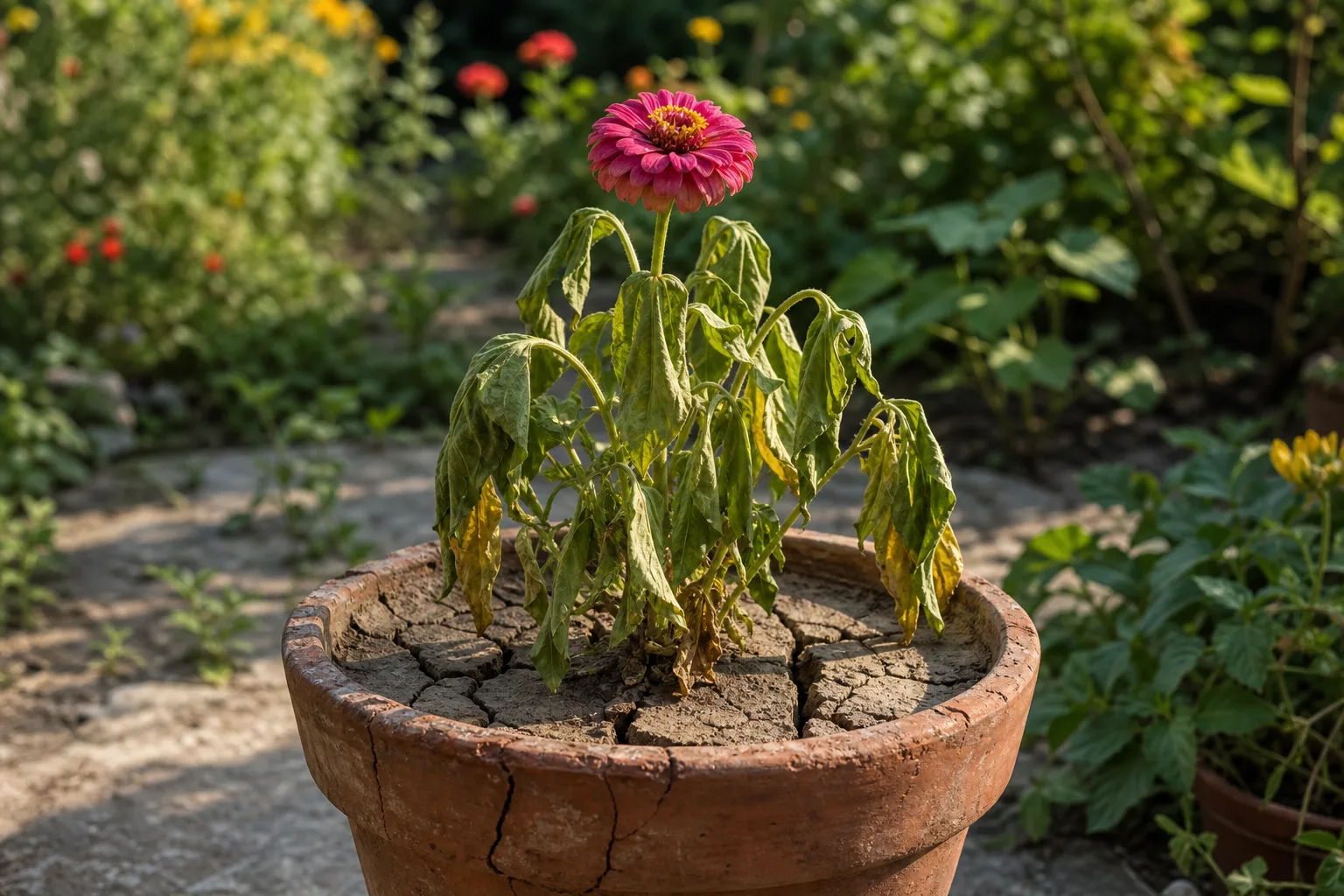
Underwatering on Zinnia shows as dramatic afternoon wilt, drooping flower heads, and dry soil pulling from pot edges. First step: water deeply at the base when the top 3 cm of soil is dry-zinnias in full sun use water fast during bloom season.
Underwatering on Zinnia: Causes, Checks & Fixes
This guide covers underwatering on Zinnia. See also the general Underwatering guide, watering, and light pages for this plant.
Underwatering on Zinnia: Causes, Checks & Fixes
Quick answer
Underwatering on Zinnia shows as dramatic afternoon wilt, drooping flower heads, and dry soil pulling from pot edges. First step: water deeply at the base when the top 3 cm of soil is dry.
Zinnias are heat- and drought-tolerant once roots are established, but they still need steady moisture while pushing flowers in full sun. A blazing afternoon can collapse stems in hours if a container or raised bed dries out-even though the same plant looked fine at breakfast.
Why Zinnia gets underwatered
The mismatch usually comes from how fast zinnias use water versus how often they get it.
Full-sun bloom demand. Zinnia elegans grows best in humusy, evenly moist, well-drained soils in full sun. During peak summer, a mature plant in bloom transpires heavily. Shade-grown zinnias use less water; sun-baked containers on a balcony can go from moist to dry in a single day.
Calendar watering instead of soil checks. Many growers water on a fixed weekly schedule. Clemson Extension recommends watering when the top 1 to 2 inches of soil feels dry and applying about 1 inch of water per week-but hot, windy, container-grown zinnias often need more frequent deep soaks than that baseline.
Small pots and fast drainage. Zinnias work in containers, but a 25–30 cm pot in six hours of direct sun dries faster than an in-ground bed. Coarse mixes with extra sand drain well-which zinnias prefer-but they also hold less reserve moisture between waterings.
Vacation gaps and missed beds. Sprinklers that skim foliage without soaking roots, or beds at the far end of a garden that get skipped on busy weeks, leave root zones dry while the surface briefly looks damp after a light shower.
Misreading drought tolerance. UF/IFAS lists zinnias as highly drought tolerant and tolerant of all but wet soils. That means established plants survive dry spells better than thirsty ferns-not that they bloom well with chronically dry roots. Prolonged deficit shrinks flower size, aborts buds, and makes foliage crisp at the edges.
What underwatering looks like on Zinnia
Typical drought stress on zinnias:
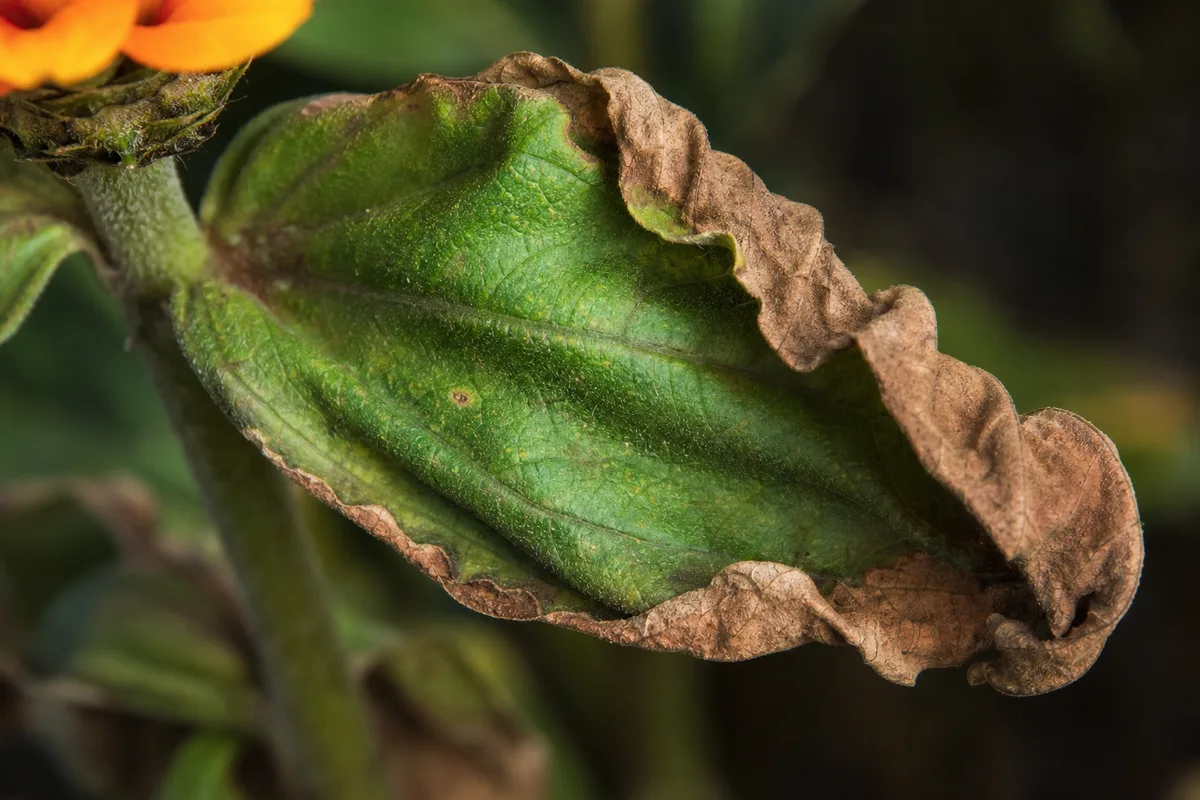
Underwatering symptoms on Zinnia - compare with healthy tissue on the same plant.
- Dramatic droop of leaves and flower heads in mid-afternoon, especially on the hottest days
- Stems that feel limp but not mushy when you pinch them
- Dry, lightweight pots; soil pulling slightly away from plastic or terracotta edges
- Crispy brown margins on lower or outer leaves after repeated dry cycles
- Buds that shrink, bleach, or drop before fully opening
- Soil dry well below the surface-not just a dusty top crust
What underwatering usually does not look like:
- Soft, darkened stem bases on wet soil-that pattern points to overwatering on Zinnia or stem rot, not drought
- Reddish-brown spots with yellow halos spreading on leaves-more consistent with Alternaria leaf spot or blight
- White powdery patches on foliage-powdery mildew, not moisture deficit
- Wilt that never improves after a thorough soak-even overnight-suggesting damaged roots or vascular disease
Afternoon wilt alone is not always underwatering. Zinnias in hot sun may droop slightly at peak heat and recover by evening when soil moisture is adequate. The problem is confirmed when wilt is severe, soil is dry at the root zone, or recovery after watering is slow or incomplete.
How to confirm the cause
Work through these checks before you change your whole routine:
- Soil moisture at the base - Insert a finger 3 cm deep near the stem, or use a moisture meter in the root zone. Dusty, hard, or warm dry soil supports drought stress. Cool, clinging wet soil does not.
- Pot weight test - Lift the container. A light pot with a drooping plant strongly suggests dry roots.
- Water response test - Apply a slow, deep soak at the base until water runs from drainage holes (containers) or the top 3 cm turns evenly dark (beds). If turgor returns within two to four hours and stems stiffen, drought was the main issue.
- Timing pattern - Note whether wilt appears only in late afternoon on hot days versus all day. All-day limp stems on dry soil need water now; afternoon-only droop on moist soil may be heat strain without chronic underwatering.
- Root-zone smell and stem firmness - Sour smell, black mushy roots, or soft stem bases on wet mix rule out simple underwatering. Alternaria blight can also wilt zinnias through stem cankers even when you have been watering-look for lesions, not just dry soil.
- Recent care changes - Newly moved seedlings, a sudden heat wave, or a switch from daily misting to once-weekly splashes can all create deficit without a obvious “I forgot to water” moment.
If soil is dry and the plant revives after one deep soak, treat it as underwatering and adjust your schedule. If soil stays wet and the plant stays limp, stop adding water and investigate root problems instead.
First fix for Zinnia
Water deeply at the base until the root zone is fully moist-then let excess drain away.
For containers, water slowly at soil level until you see runoff from drainage holes. For in-ground plantings, soak the root zone so moisture penetrates at least 15 cm deep rather than wetting only the surface crust. Clemson Extension advises watering at the base of plants and avoiding overhead sprays that wet foliage without reliably hydrating roots.
Do not sprinkle leaves. Do not fertilize a drought-stressed zinnia on day one-rehydrate first. Do not repot unless the mix has gone hydrophobic and water runs straight through without soaking the root ball.
After the soak, wait until the top 3 cm dries before the next full watering. Your goal is an even rhythm of moist-then-dry, not constant sogginess or repeated bone-dry cycles.
Step-by-step recovery
Once the first deep soak is done, follow this order:
- Move severely wilted container zinnias out of direct afternoon sun for 24 hours if stems have not firmed up after watering. Full sun is correct long term, but a day of bright shade helps stressed tissue recover without extra transpiration loss.
- Repeat slow base watering if the first pass ran through cracked, dry mix without absorbing. Bottom-watering the container for 30–45 minutes can rewet a root ball that surface watering skipped.
- Trim only fully crisp, brown leaf edges if they are unsightly-optional cosmetic pruning. Leave green tissue even if it looks tired; it can still photosynthesize once hydrated.
- Deadhead limp, spent blooms so the plant redirects energy to new buds rather than holding shriveled flower heads. Deadheading spent flowers encourages continued bloom once water stress eases.
- Apply mulch around in-ground zinnias or on container surfaces (without burying stems) to slow evaporation during heat waves.
- Adjust schedule to the pot, not the calendar - In Indian summer conditions, many container zinnias need water every two to three days; cooler weather may stretch to four or five days. Always check the top 3 cm first.
Hold fertilizer until stems are firm and new growth looks normal for at least a week. Nitrogen pushes soft shoots when roots are still recovering from repeated dry cycles.
Recovery timeline
Mild afternoon wilt from a single missed watering often clears within two to four hours after a deep soak. Stems should feel noticeably firmer by the next morning.
Repeated dry cycles over one to two weeks may leave crispy leaf margins permanently; new leaves and buds tell you recovery is working even if old damage stays visible.
If a zinnia has gone limp for multiple days on dry soil, expect one to two weeks of steady moisture before bloom count returns to normal. Buds aborted during severe stress will not reopen-you need fresh buds from side shoots.
When stems stay limp more than 24 hours after a confirmed deep watering on previously dry soil, suspect root damage, disease, or chronic overwatering-not simple thirst.
Lookalike symptoms to rule out
Overwatering and root rot - Wilt on wet soil, yellow lower leaves, grey mould on flowers, or soft stem bases. Adding more water makes this worse.
Heat droop without drought - Slight afternoon sag on evenly moist soil that recovers by evening without extra watering. Monitor; do not drown the plant reflexively.
Alternaria blight or stem cankers - Brown lesions on stems and leaves, often after wet weather or overhead watering. Wilt may not respond fully to soaking because vascular tissue is damaged.
Transplant shock - Recently moved zinnia seedlings wilt even when soil is moist because roots were disturbed. Missouri Botanical Garden notes zinnias are easily grown from direct-sown seed precisely because they dislike root disturbance; transplants need steady base moisture and brief shade, not just more drought diagnosis.
Spider mites in hot dry air - Stippled, dusty-looking leaves with fine webbing; soil may actually be too dry, but the primary issue is pest pressure that worsens in drought-stressed plants.
Mistakes to avoid
Do not assume every drooping zinnia needs water-check soil first. Wet-root wilt is common in heavy soil and overwatered containers.
Do not mist foliage instead of soaking roots. Zinnias need moisture in the root zone; leaf misting does not replace a deep base soak and can spread foliar disease when humidity is high.
Do not water on a fixed weekday schedule through monsoon cool-down or heat-wave spikes. Read the pot.
Do not interpret “drought tolerant” as “never water during bloom.” Heat tolerance and bloom-stage moisture needs are different things.
Do not fertilize dry roots hoping to push flowers back. Rehydrate first, then feed lightly once growth stabilizes.
Do not overhead-water to “cool” the plant during midday wilt. Water at the base to reduce leaf spot disease risk and soak roots where uptake happens.
How to prevent underwatering on Zinnia
Build a routine around soil dryness, sun exposure, and container size:
- Check the top 3 cm daily during peak bloom and heat; water at the base when it dries.
- Mulch beds and top-dress containers to reduce evaporation without smothering crowns.
- Use larger pots or grouped plantings for balcony zinnias so roots have more moisture reserve.
- Water in the morning so plants enter the hottest hours with a hydrated root zone.
- Space plants 20–30 cm apart for airflow; crowded canopies dry unevenly and hide wilt on inner stems.
- Direct-sow when possible to avoid transplant shock that mimics drought wilt on moist soil.
- Deadhead every two to three days during heavy bloom so the plant is not maintaining spent flowers while roots are stressed.
Zinnias are non-toxic to cats and dogs, so consistent watering in pet-accessible beds is safe-just keep pesticide-free if pets browse foliage.
When to worry
Treat same-day underwatering as urgent when:
- Wilt does not improve overnight after a confirmed deep soak on dry soil
- Flower buds abort in clusters during a dry spell you did not catch
- Lower stems turn woody and stop producing new side shoots
- Crisping spreads up the plant over several days despite adjusted watering-rule out mites, blight, or root failure
Zinnias are fast annuals; losing two weeks of bloom to chronic drought is often the main “damage”-the plant may survive but the season’s show does not fully recover. Replace severely stunted container plants if bloom has stopped and stems remain brittle after two weeks of correct watering.
Conclusion
Underwatering on zinnias is usually a timing problem, not a mystery disease. Full sun and heavy bloom pull water quickly from pots and raised beds; drought tolerance helps plants survive dry spells but does not replace steady base watering while flowers are forming. Check soil at the stem base, soak deeply when the top 3 cm is dry, and judge success by firm stems and new buds-not by old crispy leaf edges. When wilt persists on wet soil, switch diagnosis and fix drainage or disease instead of adding more water.
When to use this page vs other Zinnia guides
- Zinnia watering guide - Use for routine moisture checks before assuming underwatering is the main issue.
- Zinnia problems hub - Browse all 38 common issues on this species.
- Wilting on Zinnia - Different entry point when symptoms overlap with underwatering.
- Yellow Leaves on Zinnia - Different entry point when symptoms overlap with underwatering.
- Overwatering on Zinnia - Different entry point when symptoms overlap with underwatering.