Zinnia Care Guide: Sun, Water, Deadheading
Zinnia elegans
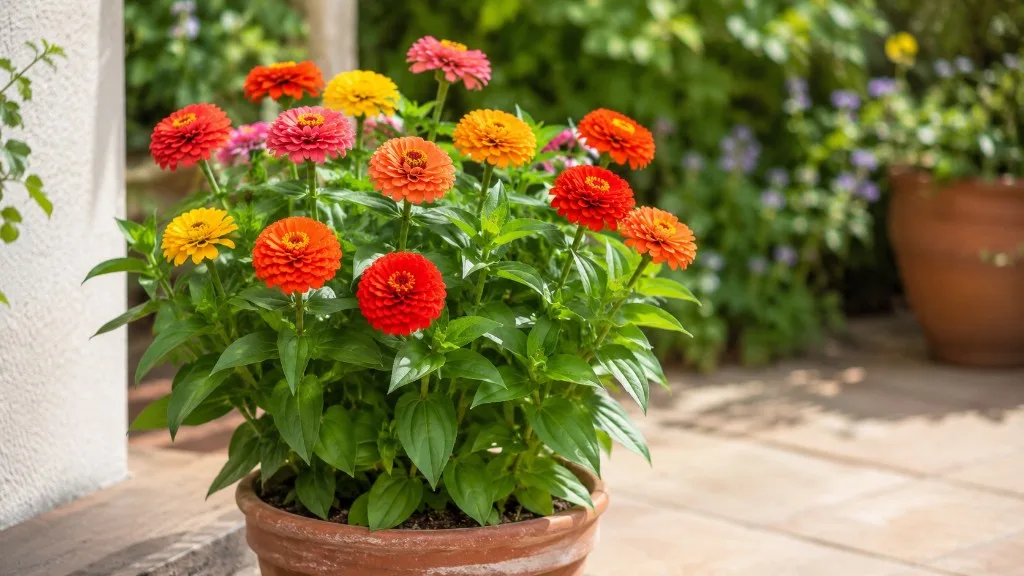
Zinnias are among the easiest sun-loving annuals for warm climates - direct-sow in well-draining soil, deadhead spent blooms, and enjoy continuous colour from summer through autumn.
Zinnia Care Guide: Sun, Water, Deadheading
Start with wateringThe most common care mistake for ZinniaWatering guide →Zinnia care essentials
Light
full sun - 6+ hours of direct sunlight for continuous flowering
Water
Water deeply at the base when the top 3 cm dries; avoid wetting foliage and flowers.
Soil
Well-draining, moderately fertile soil; zinnias are not fussy.
Humidity
Low to moderate; high humidity promotes powdery mildew on foliage
Temperature
22°C to 35°C (72–95°F)
Fertilizer
Use balanced liquid fertilizer; phosphorus encourages more flowers and stop if the plant is stressed, newly repotted, or not actively growing.
About Zinnia
Zinnia is native to Mexico, typically reaches 30–90 cm tall; 30–40 cm wide indoors, with very fast - flowers in 6–8 weeks from seed growth. Zinnia has a upright growth habit and part of the Asteraceae family. It is also known as Common Zinnia and Youth-and-Old-Age.
| Detail | Information |
|---|---|
| Also known as | Common Zinnia, Youth-and-Old-Age |
| Native region | Mexico |
| Mature size | 30–90 cm tall; 30–40 cm wide |
| Growth rate | Very fast - flowers in 6–8 weeks from seed |
| Growth habit | Upright |
| Scientific name | Zinnia elegans |
| Family | Asteraceae |
Zinnia Care Guide: Sun, Water, Deadheading
What Is Zinnia?
Zinnia is one of the most reliable warm-season annual flowers for gardeners who want bold color from midsummer through the first frost without a complicated care routine. The species most people picture - tall stems topped with daisy-like blooms in nearly every color except true blue - is Zinnia elegans, a member of the Asteraceae (daisy) family native to Mexico and the southwestern United States. In cultivation, zinnias typically reach 12 to 36 inches (30 to 90 cm) tall and spread 12 to 16 inches (30 to 40 cm) wide, though dwarf bedding types stay shorter and spreading types like Zinnia angustifolia form wider, lower mounds.
Zinnias are built for Zinnia light guide, heat, and fast growth. Seedlings often flower within six to eight weeks of germination when sown in warm soil, which is why they remain a default choice for beginner gardeners, butterfly borders, cutting gardens, and large container displays. The honest summary before you buy a flat of transplants or a packet of seed: zinnias reward six or more hours of direct sun, well-drained soil, base-level watering, and regular deadheading - and they punish shade, soggy roots, overhead irrigation, and crowded spacing, especially in humid late summer when powdery mildew appears.
Unlike tender perennials that need overwintering plans, zinnias are true annuals in virtually every climate. They complete their life cycle in one season, set seed if you allow spent flowers to mature, and die with hard frost. That simplicity is a feature: you can redesign color schemes every year, direct-sow after soil warms, and pull diseased plants at season’s end without guilt. For pet owners, zinnias are also among the safer ornamental choices - the ASPCA lists Zinnia species as non-toxic to dogs, cats, and horses, though eating large amounts of any plant material can still cause mild digestive upset.
Botanical Background and Common Species
Understanding which zinnia you are growing matters because disease resistance, height, and bloom form vary sharply between species and modern hybrid series. Zinnia elegans is the classic garden zinnia with single, semi-double, and fully double flowers on upright stems - ideal for cutting and bold bedding displays, but often the most powdery-mildew-prone in humid regions. Zinnia angustifolia (narrow-leaf zinnia) produces smaller single flowers on compact, spreading plants with excellent heat tolerance and strong resistance to powdery mildew; cultivars such as the Crystal and Star series remain workhorses for edging and containers. Zinnia marylandica and interspecific hybrids such as the Zahara and Profusion series combine larger blooms with documented mildew and leaf-spot resistance, making them the smart default when your summers turn steamy.
Botanical naming in garden centers can blur these lines because retailers group everything under “zinnia.” Read the tag or seed packet for series names - Profusion, Zahara, Oklahoma, Benary’s Giant, State Fair - and match them to your goal. Want armloads of cut flowers? Taller Z. elegans selections with long stems are worth the extra mildew vigilance. Want low-maintenance color through humid August? Lean on Z. angustifolia, Z. marylandica, or Profusion-type hybrids. The family connection to Asteraceae also explains a recurring pattern: most zinnia problems start with wet foliage, poor airflow, or stressed roots, not mysterious random failure.
Why Zinnias Earn Their Spot in Summer Gardens
Zinnias punch above their price because they combine speed, color density, and pollinator value in one package. A well-grown planting produces continuous blooms for months when you remove spent flowers, and the nectar-rich centers attract butterflies, bees, and hummingbirds throughout the hottest weeks when many spring annuals have already faded. University of Minnesota Extension notes that zinnias are highly attractive to pollinators, particularly butterflies, which makes them a natural anchor for wildlife-friendly beds.
They also tolerate heat and short dry spells better than many bedding annuals once established - a trait rooted in their native dry-season rhythm. That does not mean you can ignore water all summer; bloom size and stem strength drop when plants stay drought-stressed for weeks. It does mean zinnias recover more gracefully from a missed watering than impatiens or lobelia, provided drainage is good and roots are not sitting in saturated soil. For cutting gardens, zinnias are hard to beat: stems are stiff, colors are saturated, and new buds keep forming behind every deadheaded stalk. Clemson HGIC emphasizes that deadheading spent blooms encourages a long blooming season by preventing the plant from shifting energy into seed production.
For related Zinnia care, see Cold Damage on Zinnia, Damping Off on Zinnia, Distorted Leaves on Zinnia.
Best Growing Conditions for Zinnia
Zinnias perform best when your site approximates their native warm-season rhythm: bright sun, warm soil, free drainage, and steady but not excessive moisture. The four variables that decide almost every outcome are light, water, soil, and spacing/airflow. Align those and feeding, deadheading, and harvest become routine. Misalign any one - especially light or drainage - and no amount of fertilizer will rescue a leggy, mildew-covered, or bloom-shy planting.
Light Requirements
Zinnias need full sun - at least six to eight hours of direct sunlight daily for the strongest stems and heaviest bloom set. The Old Farmer’s Almanac is direct on this point: the more sun zinnias receive, the stronger the stems and the more abundant the flowers. Eight or more hours is ideal in northern latitudes with cooler summers; six hours may suffice in the hottest regions if afternoon light is intense and air circulation is good. Partial shade is a common reason for tall, floppy plants with fewer and smaller flowers - zinnias will survive dimmer sites briefly, but they will not deliver the nonstop summer show that makes them worth planting.
The fastest diagnostic for incorrect light is new growth and bud formation, not older lower leaves. Compact internodes, upright stems, and steady bud production mean the plant is probably receiving enough energy. Stretching between leaves, thin stems that flop under flower weight, and sparse bud set mean the site is too shaded - move containers or plan next year’s bed farther from tree lines and building shadows. Reflected heat from light-colored walls and pavement can supplement light in urban gardens, but it also increases water use, so pair brighter exposures with consistent base watering rather than overhead sprayers.
Temperature, Heat, and Humidity
Zinnias are warm-season annuals that stall in cold soil and cold air. For transplants, University of Minnesota Extension recommends planting once soil warms to about 60°F (16°C). For direct seeding, aim for 70°F (21°C) soil before sowing - cold, wet seed beds are a primary cause of rotting seed and weak seedlings. Air temperatures between roughly 70 and 95°F (21 and 35°C) suit active growth; zinnias tolerate high heat when roots have access to moisture, which is why they remain productive through midsummer when cool-season annuals quit.
Humidity is the trade-off. Zinnias handle dry heat well, but humid heat in late summer creates ideal conditions for powdery mildew - a white, talcum-like fungal coating on leaves that reduces photosynthesis and can stunt new growth according to Illinois Extension. Heat tolerance and mildew susceptibility are separate traits: a zinnia can thrive in August temperatures while still developing mildew if nights stay warm and humid, foliage stays wet, and plants are crowded. Plan spacing and cultivar choice with your local humidity in mind, not just your daytime heat index.
Soil and Drainage
Zinnias prefer moist, well-drained soil rich in organic matter with a slightly acidic to neutral pH around 5.5 to 7.5 per UMN Extension guidance. The principle matters more than a single branded recipe: roots need steady moisture without days of saturation, and enough organic content to support rapid summer growth. In heavy clay beds, incorporate compost and coarse sand before planting to improve drainage; in very sandy soils, compost raises water-holding capacity so you are not irrigating twice daily at peak bloom.
Raised beds and containers succeed with zinnias when drainage holes are open and mix is not dominated by water-retentive peat without perlite or bark. Compacted, sour-smelling soil that puddles after rain is the fastest route to root rot and stunted bloom - zinnias tolerate brief dryness better than chronic wet feet. A light incorporation of balanced slow-release or organic fertilizer at planting in poor native soil gives seedlings a fair start; heavy pre-plant feeding in already-rich garden loam is unnecessary and can produce lush foliage at the expense of stable stems.
How to Water Zinnia
The general rule for zinnias is water deeply at the base when the top 1 to 2 inches of soil feel dry, targeting about one inch of water per week from rain and irrigation combined according to Clemson HGIC. More precisely, your calendar should remind you to check soil moisture, not dictate automatic watering regardless of weather. Hot, windy weeks with full sun may require supplemental water every two to three days in containers; cool, overcast stretches may need nothing beyond natural rainfall for a week at a time.
Always water at soil level using a soaker hose, drip line, or hose wand directed at the root zone. Overhead sprinklers that soak foliage and flowers increase powdery mildew, leaf spot, and botrytis risk - UMN Extension explicitly recommends watering the base when possible and avoiding overwatering on Zinnia that keeps soil soggy. Morning irrigation gives any incidental splashes time to dry before evening humidity rises; if you must use sprinklers, run them early and accept that disease pressure may rise compared with base delivery.
Zinnia watering guide and Drought Tolerance
During active bloom, zinnias use water predictably when sun and heat are steady. The goal is a consistent moisture band in the root zone: soil should feel like a wrung-out sponge at depth, not mud and not dust. Established plants tolerate short dry spells - a trait often described as drought tolerance in extension literature - but prolonged drought reduces flower size, shortens stem length, and weakens the next flush of buds. If you want cutting stems and dense border color, treat drought tolerance as survival insurance, not a license to skip watering through August.
Container zinnias outpace in-ground plantings in water use because pot volume is limited and roots cannot reach deeper moisture reserves. A 12-inch pot in full afternoon sun may need daily checks at midsummer, while an in-ground row with mulched soil may need deep soaking twice weekly. Mulch 2 to 3 inches of shredded bark or straw around in-ground plants - kept slightly away from stems - reduces evaporation and buffers soil temperature without trapping excessive moisture against crowns.
Common Watering Mistakes
The most damaging mistake is overwatering heavy soil or pots without drainage, which produces yellowing lower leaves, stunted growth, and root rot even while you think you are being attentive. The second is shallow daily sprinkles that wet only the surface while the root ball stays dry - plants look wilted in midday heat, you water again, and the cycle never builds deep roots. The third is evening overhead watering that leaves foliage wet through the night, inviting mildew on susceptible cultivars.
People also misread wilt. Midday wilting on hot, dry soil often recovers by evening after a deep drink. Wilting on wet soil signals root damage - adding more water makes it worse. Always check moisture at finger depth before responding. If stems turn mushy at the base and soil smells sour, pull affected plants promptly in dense plantings to limit spread of secondary rots.
How to Feed Zinnia
Zinnias are moderate feeders during active growth, not heavy nitrogen consumers. In average garden soil amended with compost, many plantings need little supplemental fertilizer beyond planting. In containers or sandy beds, a monthly application of fertilizer with higher phosphorus than nitrogen supports continued blooming without pushing excessive leafy growth - UMN Extension recommends monthly feeding with a bloom-oriented analysis after planting. A balanced water-soluble formula such as 10-10-10 or 5-10-5 at half the label rate, applied to moist soil, is a safe container strategy from first bud set through early fall.
Avoid high-nitrogen feeds late in season, which produce tall, soft foliage more vulnerable to lodging and mildew. Hold fertilizer on newly transplanted seedlings for two to three weeks while roots establish, and pause feeding on mildew-stressed or drought-shocked plants until they recover - salts on drought-stressed roots burn more easily. Organic options such as compost tea or fish emulsion diluted per label directions work when you prefer slow, gentle delivery; the key is steady, modest nutrition through the bloom window rather than a single heavy dose at planting.
Deadheading for Continuous Summer Blooms
Deadheading - removing spent flowers before they form seed - is the single most important maintenance habit for zinnias if you want prolific blooms all summer. Each mature flower head that stays on the plant sends a hormonal signal to shift energy toward seed development. Snip or pinch those heads and the plant redirects resources into new buds on branching stems, producing the layered, continuous color that defines a well-managed zinnia patch. Clemson HGIC notes that deadheading prevents the plant from using too much energy on seed and encourages a long blooming season.
Deadheading also keeps beds looking intentional. Spent zinnia heads brown and persist on stiff stems; removing them exposes fresh color and improves airflow through the canopy. If you want volunteer seedlings next year, leave a few late-season flowers on your healthiest plant to mature and dry - but accept that open-pollinated mixes may not come true to color. For cutting gardens, harvest stems just as buds are fully colored and before pollen sheds heavily; that harvest doubles as deadheading.
When and How to Deadhead
Start deadheading as soon as petals fade and the central disk begins to dry. Follow the stem down to the first strong leaf node or side branch and cut just above it with clean snips. On tall cutting types, removing only the flower head while leaving a long bare stem looks awkward and can slow regrowth - take the stem back to a lateral bud or main branch junction. Check plantings every three to five days at peak bloom; daily passes are worthwhile for formal beds and cutting rows.
For overgrown leggy plants, pinch or cut back the top third early in the season - before heavy bud load - to force bushier side branching. Once stems are tall and top-heavy with buds, major cutting risks delaying bloom. Japanese beetles and other chewers sometimes damage petals; treat damaged heads as deadheads even if the disk is not fully spent. Keep snips clean when mildew is present - Illinois Extension recommends disinfecting tools with a one-part bleach to four-parts water solution between plants when removing infected tissue.
Powdery Mildew Prevention and Control
Powdery mildew is the defining disease challenge for zinnias in many regions - a fungal issue that appears as white dusty patches on leaves, often spreading in late summer when humidity rises even though the fungus does not require free water on leaves to infect. Illinois Extension explains that mildew compromises photosynthesis, leading to smaller leaves and weaker stems over time. Prevention beats cure: once a susceptible Z. elegans planting is heavily coated, you can treat symptomatically, but cultivar choice, spacing, and irrigation method determine whether mildew stays a minor cosmetic issue or ends the season early.
Your prevention hierarchy should look like this: choose resistant cultivars in humid climates, space plants for airflow, water at the base in the morning, avoid excess nitrogen, and remove heavily infected plants before spores spread on wind to neighbors. Sanitation matters at season’s end - discard infected debris rather than composting it, because the fungus can overwinter on plant material according to Illinois Extension guidance.
Resistant Cultivars and Spacing Strategy
When mildew history repeats every August, stop defaulting to tall, susceptible cut-flower types without a backup plan. University of Illinois Extension HortAnswers recommends Zinnia angustifolia cultivars such as Crystal White, Crystal Orange, Star Orange, and Star White for dependable, low-maintenance plantings with strong mildew resistance. Interspecific Profusion (Zinnia x hybrida) and Zahara (Zinnia marylandica) series offer larger blooms with bred-in resistance to mildew and leaf spot, extending useful life into fall when older elegans plantings collapse.
Spacing is equally critical. Clemson HGIC advises 8 to 9 inches for dwarf cultivars and about 12 inches for taller 2- to 3-foot varieties, with 12 to 18 inches between rows so air can move through the planting. Overcrowding - whether from sowing too thickly or placing transplants too close for instant fill - creates a humid microclimate that mildew exploits within weeks. Thin direct-sown seedlings ruthlessly when they reach a few inches tall; fewer, well-spaced plants produce more usable flowers than a congested mat of stunted stems.
If mildew appears on a few lower leaves of otherwise healthy resistant cultivars, remove affected leaves early and consider potassium bicarbonate, horticultural oil, or neem oil sprays labeled for powdery mildew on ornamentals - reapply per label through conditions that favor spread. Rotate chemical classes if you spray repeatedly in commercial-scale plantings; home gardeners usually succeed by combining resistant genetics with spacing before reaching for fungicides.
Container and Garden Growing Tips
Zinnias work in both garden beds and containers, but the trade-offs differ. In-ground plantings offer deeper root runs, more stable moisture, and easier spacing for airflow - UMN Extension notes that zinnias perform well in garden beds and can be direct-seeded once soil warms. Containers let you move plants to the sunniest patio, control soil quality precisely, and swap color schemes on a balcony, but they demand more frequent watering and larger pots than beginners expect.
Choose containers at least 12 inches deep and wide for one tall zinnia, or 18 to 24 inches across for mixed plantings of shorter series. Every pot needs a drainage hole; saucers should be emptied after watering. Use quality potting mix with perlite or bark - not garden soil alone, which compacts and suffocates roots in pots. Grouping containers with air space between them reduces mildew compared with a solid wall of touching foliage.
In garden beds, rotate zinnia planting sites year to year within your annual rotation if leaf spot or bacterial issues appeared previously - related Asteraceae crops such as marigolds and sunflowers can share some pathogens. Mulch paths, not crowns, and keep the soil surface free of rotting petals that harbor botrytis. For cutting gardens, stake or corral Benary’s Giant and other tall doubles before summer storms; stem length means little if plants lodge into mud.
Starting Zinnias from Seed
Zinnias are among the easiest annuals to grow from seed, which is why packets remain inexpensive compared with flats of transplants. Direct sow after soil reaches 70°F (21°C), planting seeds ¼ inch deep per UMN Extension - roughly one to two weeks after your last frost date in most temperate regions, once nights stay consistently mild. Keep seedbed moisture even until germination, usually five to ten days in warm soil. Thin seedlings to final spacing when they have two to four true leaves; crowding now guarantees mildew and weak stems later.
Indoors, start seeds four to six weeks before transplant date in bright light - leggy window seedlings make poor transplants. Use cells or small pots and grow cool enough to prevent excessive stretch while maintaining 60 to 70°F (16 to 21°C) soil. Harden off transplants for seven to ten days before planting out, gradually increasing sun and wind exposure so leaves do not scorch. Plant transplants at the same depth they grew in pots; burying zinnias too deep slows establishment.
Do not rush cold soil. Seeds sown in wet, 50°F soil often rot or produce weak plants that never catch up to a later direct sowing. A soil thermometer costs less than replacing a failed row - use it once and you will stop guessing.
Common Zinnia Problems
Most zinnia problems trace to environment and cultivar mismatch, not exotic pests. Yellow lower leaves on wet soil point to overwatering or poor drainage; bleached, sparse bloom on tall stems points to too little sun; white leaf coating in late summer is powdery mildew from humidity plus crowding; brown spots with yellow halos may indicate alternaria or bacterial leaf spot, worsened by wet foliage. Pull the worst affected plants in dense beds to protect neighbors, especially when infections are fungal.
Aphids cluster on tender tips and can be blasted off with water or treated with insecticidal soap if populations build. Japanese beetles chew petals and skeletonize leaves in eastern North America - hand-pick in morning hours or use labeled controls compatible with pollinator gardens. Spider mites appear in prolonged hot, dry spells, showing stippled leaves and fine webbing; increase base watering consistency and rinse undersides; severe cases may need horticultural oil. Bacterial wilt causes sudden collapse with sticky stem ooze - there is no cure; remove and discard plants and avoid planting susceptible Asteraceae in the same spot immediately.
For pet safety, zinnias are non-toxic to cats and dogs per the ASPCA, which makes them a strong choice for pet-accessible patios - still discourage habitual chewing because large ingestions can cause mild vomiting or diarrhea from fiber, not poison. When symptoms persist, contact your veterinarian with plant identification in hand.
Conclusion
The most useful thing to know about zinnia care is that these Mexican-native summer annuals are engineered by evolution - and amplified by modern breeding - for full sun, warm soil, deep base watering, and continuous deadheading. Give them six to eight hours of direct light, well-drained soil, generous spacing, and a mildew-aware cultivar choice, and they repay you with weeks of pollinator-friendly color from midsummer until frost. Skip deadheading, crowd plants for instant fill, or overhead-water every evening in a humid climate, and even tough zinnias will look tired by August.
Treat powdery mildew prevention as part of the plan from day one, not a rescue mission after white dust appears. Treat drought tolerance as a safety margin, not a substitute for steady moisture when you want large blooms and long stems. Whether you sow a row of Profusion Orange along a walkway or grow Benary’s Giant for vases, the rhythm is the same: sun first, drainage second, water at the base third, deadhead always. Master that sequence and zinnias remain one of the highest-return annuals you can grow.
When to use this page vs other Zinnia guides
- Zinnia overview - Canonical hub for this species - care topics and problems branch from here.
- Zinnia problems - Symptom-first path when you already know something is wrong.
Related Zinnia guides
How to care for Zinnia?
How much light does Zinnia need?
full sun - 6+ hours of direct sunlight for continuous flowering
- full sun - 6+ hours of direct sunlight for continuous flowering - full sun - 6+ hours of direct sunlight for continuous flowering.
When should you water Zinnia?
Water deeply at the base when the top 3 cm dries; avoid wetting foliage and flowers.
- Water when top 3 cm is dry - Water deeply at the base when the top 3 cm dries; avoid wetting foliage and flowers.
- Drain excess water - Water deeply at the base when the top 3 cm dries; avoid wetting foliage and flowers.
What soil works best for Zinnia?
Well-draining, moderately fertile soil; zinnias are not fussy.
- 60% potting mix
- 20% compost
- 20% coarse sand - Adds weight and drainage; use coarse horticultural sand rather than fine beach sand.
Grower notes for Zinnia
What matters most with Zinnia
Zinnia needs enough light and seasonal rhythm to bloom well. Leaves may stay alive in mediocre light, but flowers usually reveal whether the plant is truly getting what it needs. In practice, the care checkpoint is simple: full sun - 6+ hours of direct sunlight for continuous flowering. Pair that with well-draining, moderately fertile soil; zinnias are not fussy, and avoid changing water, pot size, and placement all at once.
Best placement in a real home
Zinnia belongs where full sun - 6+ hours of direct sunlight for continuous flowering is realistic for most of the day, not only where the pot looks good. Water deeply at the base when the top 3 cm dries; avoid wetting foliage and flowers. If the pot stays wet longer than expected, move the plant into better light or reassess the mix before watering again. Humidity target: Low to moderate; high humidity promotes powdery mildew on foliage. Temperature comfort zone: 22°C to 35°C (72–95°F).
Before you buy this plant
Choose Zinnia with firm new growth, clean leaf undersides, and soil that does not smell sour or feel compacted. Be cautious if you see white-spots, sticky residue, collapsed crowns, or a pot that is wet in poor light. Cosmetic old-leaf damage is less worrying than weak roots or active pests.
First month after bringing it home
Do not repot Zinnia on day one unless the mix is failing or pests are obvious. Quarantine it, learn how fast the pot dries, and keep care boring while it adjusts. Watch especially for white-spots, yellow-leaves, and wilting. If problems appear, correct the condition first rather than stacking fertilizer, repotting, and pruning together.
Pet-aware note for Zinnia
Zinnia is a better choice for pet-aware homes than toxic ornamentals, but pet safe does not mean the plant should be chewed. Use hanging, shelf, or room placement if pets dig in soil or shred leaves, and choose sturdier plants for high-traffic pet zones.
How to tell Zinnia is settling in
Also sold as Common Zinnia and Youth-and-Old-Age, this plant should be judged by stable new growth rather than label names alone. If you plan to multiply it later, common methods include Seeds (direct sow). Repot only when you see N/A. If yellow-leaves shows up early, inspect light, watering, and roots before assuming the plant is permanently weak.
Is it pet safe?
Zinnia is generally considered pet safe.
Watering Zinnia
For Zinnia, water when top 3 cm is dry and water every 2–3 days in Indian summer; every 4–5 days in cooler weather. Water generously in hot summer; reduce in autumn cool-down.
| Detail | Information |
|---|---|
| How often | Every 2–3 days in Indian summer; every 4–5 days in cooler weather |
| How to check | Water when top 3 cm is dry |
| Seasonal changes | Water generously in hot summer; reduce in autumn cool-down |
Signs of overwatering
- stem rot at base
- grey mould on flowers
- yellowing lower leaves
Signs of underwatering
- wilting in peak afternoon heat
- flower heads drooping
Soil & potting for Zinnia
Use a mix of 60% potting mix, 20% compost, 20% coarse sand for Zinnia. Good drainage essential in containers. Target soil pH around 5.5–7.0. Repot annual - grown as direct-sown seasonal flowering plant, ideally in sow February–March and June–July in North India; September–October in warm regions.
| Detail | Information |
|---|---|
| Recommended mix | 60% potting mix, 20% compost, 20% coarse sand |
| Drainage | Good drainage essential in containers |
| Soil pH | 5.5–7.0 |
| Repotting frequency | Annual - grown as direct-sown seasonal flowering plant |
| Best season to repot | Sow February–March and June–July in North India; September–October in warm regions |
Signs it needs repotting
- N/A
Humidity & temperature for Zinnia
Zinnia prefers low to moderate; high humidity promotes powdery mildew on foliage, though normal home humidity is usually fine. Keep temperatures around 22°C to 35°C (72–95°F).
| Detail | Information |
|---|---|
| Humidity | Low to moderate; high humidity promotes powdery mildew on foliage - normal home humidity is fine. |
| Ideal temperature | 22°C to 35°C (72–95°F) |
Fertilizer & pruning for Zinnia
Use use balanced liquid fertilizer; phosphorus encourages more flowers and stop if the plant is stressed, newly repotted, or not actively growing. for Zinnia.
| Detail | Information |
|---|---|
| Fertilizer type | Use balanced liquid fertilizer; phosphorus encourages more flowers and stop if the plant is stressed, newly repotted, or not actively growing. |
Common problems on Zinnia
Aphids
MediumLikely cause: Aphids cluster on zinnia tips, curling leaves and coating them with sticky honeydew.
Quick fix: Blast with water or spray insecticidal soap every 4–5 days until clear.
Full fix guide →Black Spots
MediumLikely cause: Alternaria blight produces dark lesions that merge on zinnia leaves and stems.
Quick fix: Remove infected tissue; apply protectant fungicide and improve spacing.
Full fix guide →Blight
HighLikely cause: Alternaria zinniae blight causes reddish-brown spots and rapid zinnia dieback in warm wet weather.
Quick fix: Remove infected plants; water at base only and apply protectant fungicide early.
Full fix guide →Bud Drop
MediumLikely cause: Heat stress or overwatering aborts developing zinnia buds before opening.
Quick fix: Maintain even moisture; provide afternoon shade during extreme heat waves.
Full fix guide →Caterpillars
HighLikely cause: Caterpillars including armyworms and loopers chew holes in zinnia leaves and flower buds.
Quick fix: Hand-pick at dusk or apply Bt (Bacillus thuringiensis) to foliage in late evening.
Full fix guide →Cold Damage
HighLikely cause: Zinnia elegans is frost-tender; temperatures below 10°C blacken and kill tissue.
Quick fix: Plant after last frost; cover containers if a late cold snap is forecast.
Full fix guide →Damping Off
HighLikely cause: Pythium and Rhizoctonia kill zinnia seedlings in cool wet seed-starting mix.
Quick fix: Use sterile mix, bottom-water only, and provide heat mat for rapid germination.
Full fix guide →Distorted Leaves
MediumLikely cause: Aphids and mosaic virus distort zinnia leaf shape and stunt new growth.
Quick fix: Control aphids with insecticidal soap; remove virus-infected plants.
Full fix guide →Drooping Leaves
MediumLikely cause: Underwatering in afternoon heat or overwatered root stress droops zinnia foliage.
Quick fix: Water at base when top 3 cm is dry; check drainage if soil stays wet.
Full fix guide →Likely cause: Natural aging plus heat stress fade zinnia blooms before deadheading.
Quick fix: Deadhead spent flowers every 2–3 days; keep soil evenly moist in hot weather.
Full fix guide →Flowers Turning Brown
MediumLikely cause: Alternaria blight and Botrytis infect wet zinnia petals, causing brown water-soaked flowers.
Quick fix: Remove brown flowers; stop overhead watering and increase plant spacing.
Full fix guide →Heat Stress
MediumLikely cause: Peak afternoon heat wilts zinnias when soil dries too quickly in containers.
Quick fix: Water deeply at the base when top 3 cm is dry; mulch containers in extreme heat.
Full fix guide →High Humidity
MediumLikely cause: High humidity in monsoon or crowded beds promotes powdery mildew on zinnias.
Quick fix: Space plants 20–30 cm apart; water at base and grow in open breezy spots.
Full fix guide →Holes in Leaves
MediumLikely cause: Caterpillars, slugs, and beetles chew irregular holes in zinnia foliage overnight.
Quick fix: Inspect at dusk; hand-pick pests or apply Bt for caterpillars.
Full fix guide →Likely cause: Cercospora zinniae and Alternaria zinniae cause named leaf spot diseases on Zinnia elegans.
Quick fix: Remove spotted leaves; apply copper or chlorothalonil protectant fungicide.
Full fix guide →Leggy Growth
MediumLikely cause: Shade or excess nitrogen produces tall weak zinnia stems with few flowers.
Quick fix: Move to full sun (6+ hours); avoid high-nitrogen fertilizer.
Full fix guide →Leggy Seedlings
MediumLikely cause: Insufficient light during seed starting produces thin stretched zinnia seedlings.
Quick fix: Provide grow lights 2–3 cm above seedlings for 14–16 hours daily.
Full fix guide →Mosaic Virus
HighLikely cause: Cucumber mosaic virus causes mottled distorted leaves on zinnias spread by aphids.
Quick fix: Remove and destroy infected plants; control aphids to limit spread.
Full fix guide →No Flowers
MediumLikely cause: Insufficient sun or excess nitrogen produces leafy zinnia plants with few blooms.
Quick fix: Ensure 6+ hours direct sun; use phosphorus-rich bloom fertilizer.
Full fix guide →Not Enough Light
HighLikely cause: Zinnias require full sun; shade causes weak stems and minimal flowering.
Quick fix: Relocate to a spot with at least 6 hours of direct sunlight daily.
Full fix guide →Overfertilization
MediumLikely cause: Excess nitrogen produces tall leafy zinnias with fewer and smaller flowers.
Quick fix: Switch to balanced or phosphorus-heavy fertilizer at half strength every 3–4 weeks.
Full fix guide →Overwatering
MediumLikely cause: Wet foliage and soggy soil promote stem rot and grey mould on zinnia flowers.
Quick fix: Water at the base when top 3 cm dries; avoid wetting leaves and flowers.
Full fix guide →Powdery Mildew
HighLikely cause: Erysiphe cichoracearum coats zinnia leaves with white powder in humid crowded plantings.
Quick fix: Improve spacing; spray neem oil or potassium bicarbonate at first sign.
Full fix guide →Likely cause: Damping-off fungi cause zinnia seedling stems to collapse at the soil line.
Quick fix: Use sterile mix, reduce watering, and increase airflow with a fan.
Full fix guide →Seeds Not Germinating
MediumLikely cause: Cool wet soil or pre-emergence damping-off prevents zinnia seeds from sprouting.
Quick fix: Sow at 22°C+ with sterile mix; bottom-water and use a heat mat.
Full fix guide →Slugs and Snails
MediumLikely cause: Slugs chew ragged holes in zinnia leaves overnight, leaving slime trails.
Quick fix: Hand-pick at night; use iron phosphate bait or copper tape barriers.
Full fix guide →Likely cause: Insufficient sun or phosphorus limits zinnia flower size in crowded shade.
Quick fix: Ensure full sun and use bloom fertilizer with extra phosphorus.
Full fix guide →Spider Mites
MediumLikely cause: Spider mites stipple zinnia leaves in hot dry conditions, spreading in crowded beds.
Quick fix: Blast with water every 2–3 days; apply insecticidal soap if stippling persists.
Full fix guide →Stem Rot
HighLikely cause: Overwatering causes stem rot at the zinnia base in poorly drained containers.
Quick fix: Improve drainage; water at base only and remove affected plants.
Full fix guide →Thrips
MediumLikely cause: Thrips scar zinnia petals and leaves, distorting flowers in hot dry weather.
Quick fix: Apply spinosad or insecticidal soap; remove heavily damaged blooms.
Full fix guide →Transplant Shock
MediumLikely cause: Zinnia elegans dislikes root disturbance; transplanting causes wilting and stunted growth.
Quick fix: Direct-sow in final location; if transplanting, harden off and water immediately.
Full fix guide →Underwatering
MediumLikely cause: Drought in peak heat wilts zinnias and droops flower heads in afternoon sun.
Quick fix: Water deeply at the base when top 3 cm is dry.
Full fix guide →Water Stress
MediumLikely cause: Both drought and overwatering stress zinnia roots, causing wilt and poor flowering.
Quick fix: Water deeply at base when top 3 cm dries; never wet foliage.
Full fix guide →White Spots
HighLikely cause: Powdery mildew appears as white flour-like spots on zinnia leaves and stems.
Quick fix: Improve spacing; spray neem oil or baking soda solution weekly at first sign.
Full fix guide →Wilting
MediumLikely cause: Zinnias wilt from afternoon heat drought or from stem rot in overwatered soil.
Quick fix: Check soil moisture; water deeply if dry or improve drainage if soggy.
Full fix guide →Wind Damage
LowLikely cause: Strong wind snaps tall zinnia stems and damages open flower heads.
Quick fix: Stake tall varieties; plant in sheltered sunny spots with windbreak.
Full fix guide →Likely cause: Natural lower-leaf aging, overwatering, or poor drainage yellows zinnia foliage.
Quick fix: Remove yellow lower leaves; check drainage and reduce watering frequency.
Full fix guide →Yellow Seedlings
MediumLikely cause: Overwatered or nutrient-poor seed-starting mix causes yellow zinnia seedlings.
Quick fix: Reduce watering; ensure sterile mix and adequate bottom heat for fast growth.
Full fix guide →Brown Tips
MediumLikely cause: Brown tips on zinnia leaf margins usually mean underwatering in hot sun, fertilizer salt buildup in containers, or heat and wind scorch-not fungal disease. First step: check soil moisture at the root
Quick fix: See plant-specific guide for step-by-step fixes.
Full fix guide →Fungus Gnats
MediumLikely cause: Fungus gnats on Zinnia mean soil stays too wet-most common on indoor seed flats and overwatered patio pots. First step: let the top 2–3 cm dry completely and place yellow sticky traps at tray level.
Quick fix: See plant-specific guide for step-by-step fixes.
Full fix guide →Low Humidity
MediumLikely cause: Low humidity rarely limits outdoor zinnias in full sun-it more often affects indoor starts near heating vents and favors spider mites. For garden plants, focus on base watering rather than misting fol
Quick fix: See plant-specific guide for step-by-step fixes.
Full fix guide →Mealybugs
MediumLikely cause: Mealybugs on Zinnia show as white cottony tufts tucked into leaf axils and stem joints-most often on greenhouse-started or indoor seedlings, not mature outdoor beds in full sun. First step: isolate af
Quick fix: See plant-specific guide for step-by-step fixes.
Full fix guide →Mold on Soil
MediumLikely cause: Mold on soil on Zinnia is usually harmless white or green fuzz on a damp peat surface-most common on indoor seed flats kept wet after germination. First step: scrape the top 1–2 cm, remove humidity do
Quick fix: See plant-specific guide for step-by-step fixes.
Full fix guide →Root Rot
MediumLikely cause: Root rot on Zinnia follows chronically wet soil-common in overwatered patio pots and peaty seed trays, rare in full-sun beds with good drainage. First step: stop watering, check whether the top 1–2 in
Quick fix: See plant-specific guide for step-by-step fixes.
Full fix guide →Slow Growth
MediumLikely cause: Slow growth on zinnia is unusual for this fast annual-usually cold soil, too much shade, root-bound containers, powdery mildew, or chronically wet roots. First step: confirm soil temperature above 21°
Quick fix: See plant-specific guide for step-by-step fixes.
Full fix guide →