Caterpillars on Zinnia: Causes, Checks & Fixes
Quick answer
Caterpillars on zinnias chew irregular holes in leaves and flower petals, often overnight on tender seedlings. Armyworms and cabbage loopers are common culprits. First step: scout at dusk and hand-pick larvae before spraying anything.
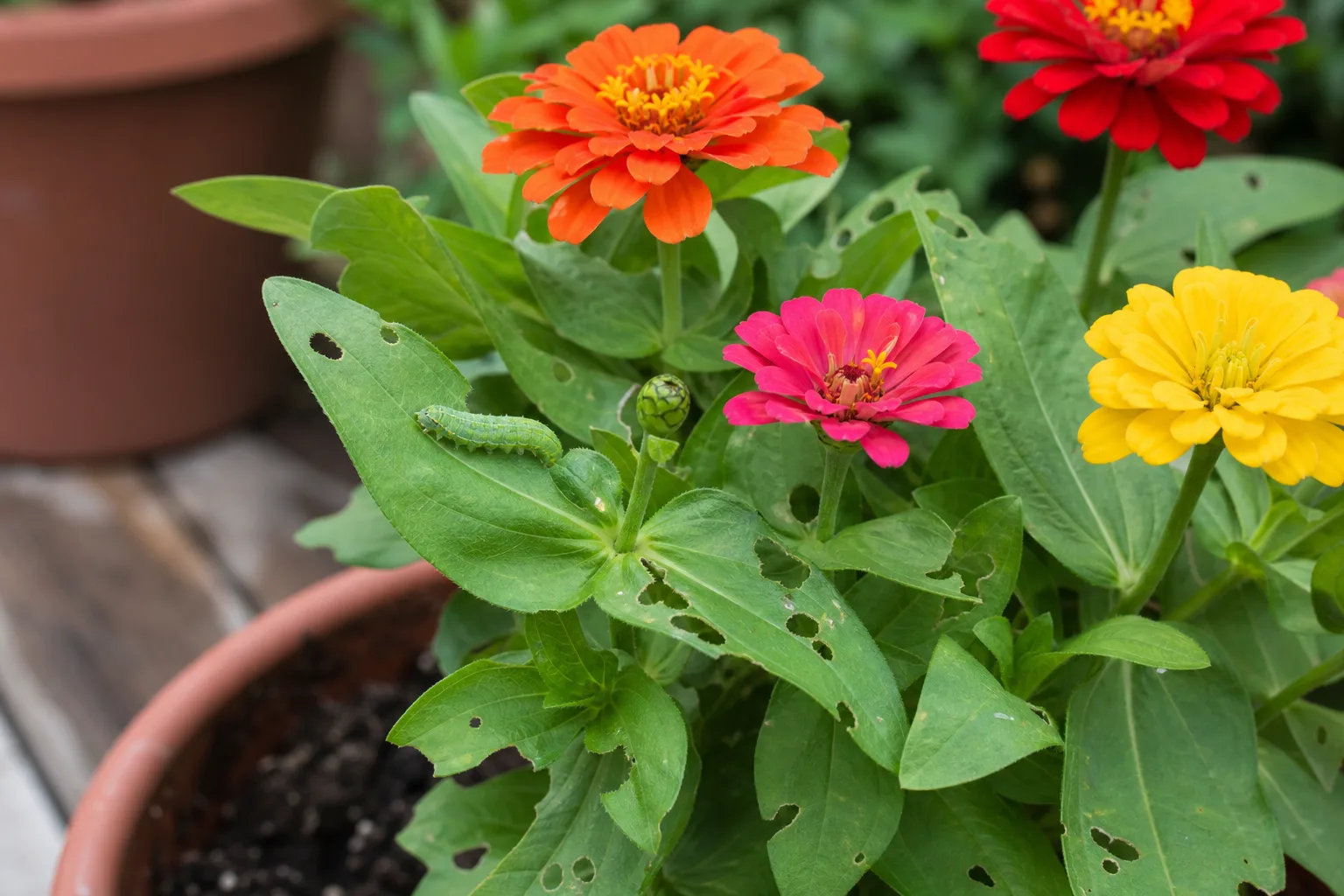
Caterpillars on Zinnia: Causes, Checks & Fixes
This guide covers caterpillars on Zinnia. See also the general Caterpillars guide, watering, and light pages for this plant.
Caterpillars on Zinnia: Causes, Checks & Fixes
Quick answer
Caterpillars on zinnias chew irregular holes in leaves and flower petals, usually overnight. Armyworms and cabbage loopers are the most common culprits on outdoor beds and seedling trays. Damage shows up as ragged foliage, black frass pellets, and sometimes shredded petals on buds that never fully open.
First step: scout at dusk and hand-pick any larvae you find. Zinnia elegans grows fast, but seedlings with only one or two true leaves can lose most of their photosynthetic tissue in a single night. Established plants usually outgrow light chewing if you stop feeding early.
Why Zinnia gets caterpillars
Zinnias are soft, fast-growing annuals that push tender new leaves constantly through summer bloom season. That steady flush of foliage makes them easy targets for generalist caterpillars that also feed on other garden flowers and weeds.
Armyworms are a frequent problem on zinnias. Maryland Extension identifies caterpillars pulled daily from zinnia beds as a type of armyworm that chews leaves and cuts off petals before blooms open. Moths lay eggs on nearby vegetation; larvae march into sunny flower beds where zinnias sit in full sun-the placement zinnias need for continuous flowering.
Cabbage loopers and other nocturnal caterpillars cause similar damage. They feed at night and tuck themselves along stems or under leaf edges by day, which is why many gardeners notice holes in the morning without ever seeing the culprit.
Seedlings are especially vulnerable. Harris County Extension notes that early caterpillar stages often feed on zinnia seedling leaves at night, leaving holes while plants are still at the cotyledon or first true-leaf stage. A tray of mixed-stage seedlings can look fine one afternoon and ragged the next morning.
Weedy bed edges and unmowed grass nearby give armyworm moths places to lay eggs. Zinnias planted in open sunny beds with good spacing recover faster than crowded seedlings in damp shade, but no amount of perfect culture eliminates caterpillars entirely-they are a normal outdoor pest, not a sign you failed at care.
What caterpillars look like on Zinnia
Leaf damage:
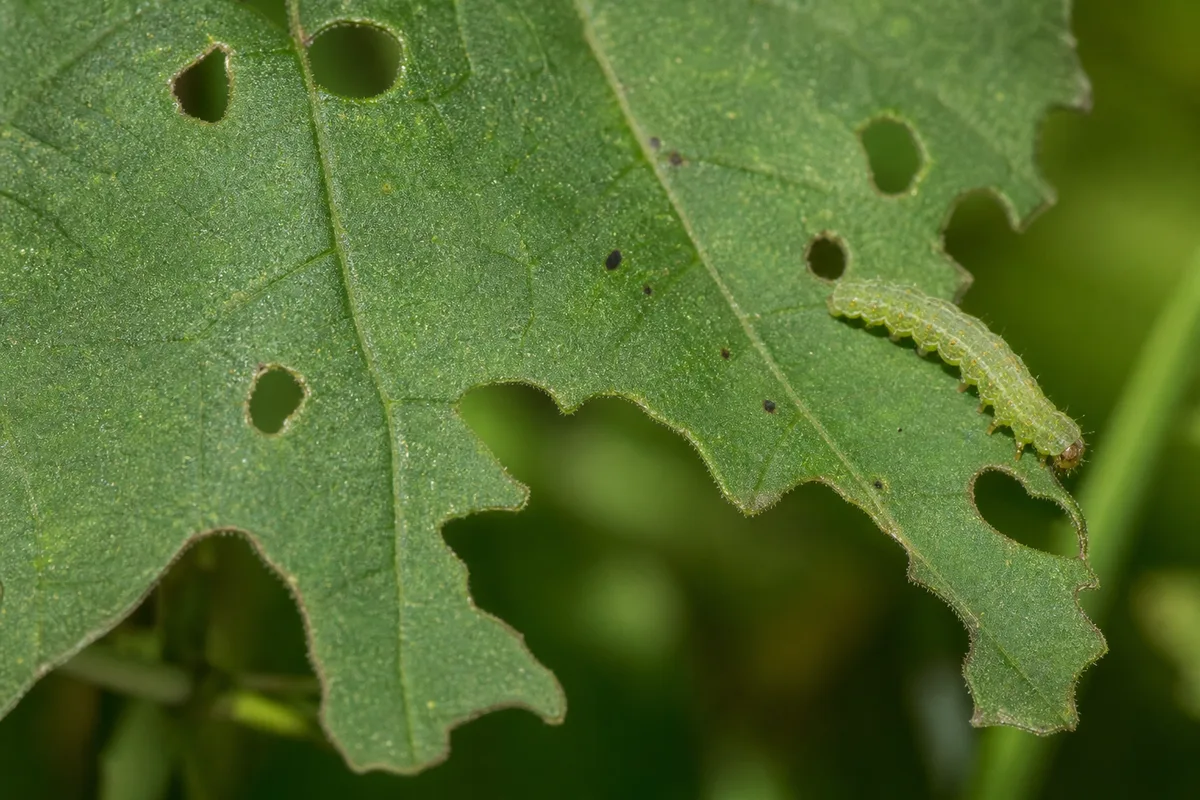
Caterpillars symptoms on Zinnia - compare with healthy tissue on the same plant.
- Irregular holes chewed through leaf blades, often starting on outer or lower leaves
- Ragged edges rather than neat circular holes
- Dark frass pellets stuck to leaves or clustered in leaf axils
- Skeletonized patches where only leaf veins remain on heavy infestations
Flower and bud damage:
- Petals chewed or cut off before buds open fully
- Ragged holes in open ray flowers by morning
- Buds that look nibbled or fail to open symmetrically
The caterpillars themselves:
- Green, brown, or striped larvae from a few millimetres to several centimetres long
- Loopers move with a looping gait and may be pale green
- Armyworms often hide at the base of plants or under spent petals during the day
- Most feed actively at dusk and through the night
Missouri Botanical Garden lists caterpillars among common zinnia pests alongside aphids, thrips, and Japanese beetles. On zinnias, chewing damage with frass points to caterpillars rather than those sucking insects.
How to confirm the cause
Work through these checks before treating:
- Timing - Did holes appear overnight? Caterpillar feeding is usually nocturnal. Damage that spreads slowly over days may be a different problem.
- Frass search - Look for dark pellet-shaped droppings on leaves and stems. Frass plus chewing holes strongly confirms caterpillars.
- Dusk inspection - Check plants with a flashlight after sunset. Larvae feed actively when temperatures cool and birds are less active.
- Stem and bud check - Peel back outer petals on damaged buds gently. Small caterpillars often hide inside or along the stem just below the flower head.
- Slime trail test - Slugs and snails leave silvery mucus trails on leaves and soil. No slime with ragged holes points to caterpillars or beetles, not slugs.
- Insect type check - Aphids and thrips distort growth and cause stippling; they do not chew large ragged holes through mature zinnia leaves. If you see soft-bodied clusters on tips with sticky residue, you may have aphids in addition to-not instead of-caterpillar damage.
Ask Extension diagnosed holes in zinnia seedling leaves as early caterpillar feeding that likely occurred at night. If you find live larvae on the damaged tissue, you have confirmation-no need to wait for more symptoms.
First fix for Zinnia
Hand-pick caterpillars at dusk, starting with the most damaged plants.
This is the safest first response on blooming zinnias where bees and butterflies visit open flowers. Maryland Extension recommends checking plants at night, removing armyworms by hand, and discarding them or placing them where birds can feed-rather than spraying pesticides on open blooms.
How to hand-pick effectively:
- Inspect at dusk or with a flashlight after dark
- Check leaf undersides, stem joints, and inside damaged buds
- Drop larvae into soapy water or relocate them away from the zinnia bed
- Remove heavily frass-coated leaves to make the next night’s search easier
If hand-picking cannot keep up or seedlings are losing most of their foliage, move to Bacillus thuringiensis (Bt) as a secondary step-not a simultaneous spray-and-pick blitz on day one.
Apply Bt to foliage in late evening when caterpillars are actively feeding. Bt is a microbial insecticide that kills caterpillars only after they eat treated leaf tissue-it does not work on contact alone. Colorado State Extension notes that Bt breaks down rapidly in sunlight, so late-day application improves effectiveness. Coat leaf tops and undersides where larvae feed; repeat per product label until new damage stops.
Avoid spraying open zinnia flowers in midday when pollinators are active. Zinnias attract butterflies and bees; even selective products like Bt harm caterpillars broadly, so target foliage-not open blooms-whenever possible.
What not to do
Do not spray broad-spectrum insecticides on flowering zinnias as a first response. Many products harm bees and beneficial predators that help keep other zinnia pests in check.
Do not assume holes mean aphids or disease without finding larvae or frass. Treating for the wrong pest wastes time while caterpillars keep feeding.
Do not ignore seedling trays outdoors. A few caterpillars on a mature zinnia bush are cosmetic; the same count on a two-leaf seedling can stall growth for weeks.
Do not harvest zinnia leaves for any edible use after pesticide application until any label re-entry or harvest interval has passed. Most people grow zinnias for cut flowers, but the same caution applies if children or pets routinely contact treated foliage.
Recovery timeline
Chewed leaves and shredded petals do not heal. Judge recovery by what happens next, not by old damage disappearing.
Within three to seven days after you stop active feeding, you should see no new holes on the newest leaves. On fast-growing zinnias in warm sun, clean replacement foliage often appears within one to two weeks. Badly chewed buds usually will not open into perfect blooms-snip them off so the plant pushes side branches and new flower heads.
Seedlings that retain at least one intact true leaf and a healthy stem typically recover fully once caterpillars are removed. Seedlings stripped to stubs may survive but often lag behind undamaged tray mates for the rest of the season.
Established bed plantings outgrow moderate leaf chewing quickly. Petal damage on open flowers is cosmetic unless armyworms are cutting buds before they open-in that case, treat promptly or you may lose weeks of bloom.
Lookalike symptoms to rule out
Slugs and snails - Ragged holes similar to caterpillars, but slugs leave shiny slime trails on leaves and soil. Hand-pick slugs at night; caterpillar control methods differ.
Japanese beetles - Chew lace-like patterns in zinnia foliage and flowers during the day. You will see metallic green beetles on the plant, not hidden larvae.
Alternaria blight and leaf spots - Brown or black lesions with yellow halos spread gradually and follow wet-weather patterns. Fungal spots do not produce frass pellets.
Aphids - Curl tender new growth and coat stems with sticky honeydew. They rarely chew large holes through mature zinnia leaves.
If you find frass and a live caterpillar on damaged tissue, lookalikes are ruled out regardless of other pests present elsewhere on the plant.
How to prevent caterpillars on Zinnia
Prevention on zinnias is mostly about early detection and reducing moth habitat-not eliminating caterpillars entirely from an outdoor garden.
Scout seedlings and bed plantings weekly from spring through autumn. A two-minute dusk check catches larvae when populations are small and hand-picking still works.
Keep bed edges and nearby grass mowed. Armyworm moths lay eggs on weedy vegetation; larvae then move into flower beds.
Space zinnias for airflow. Missouri Botanical Garden recommends good air circulation to reduce fungal problems; spaced plants also make caterpillars easier to spot during inspection.
Deadhead spent blooms regularly. MSU Extension notes that deadheading promotes continuous zinnia flowering-and removing old flower heads eliminates hiding spots where caterpillars tuck themselves during the day.
Direct-sow zinnias in their final bed location when possible. Zinnia elegans dislikes root disturbance; direct-sown plants establish quickly with less transplant stress, though seedlings still need protection outdoors until stems toughen.
Consider row cover on young seedlings for the first few weeks after germination if your area has heavy armyworm pressure. Remove cover once plants flower so pollinators can reach blooms.
When to worry
Treat promptly when:
- Seedlings lose more than half their leaf area in one or two nights
- Armyworms cut petals off buds before they open, stopping bloom on that stem
- New holes appear daily despite hand-picking
- Damage spreads across an entire tray or bed section while larvae are still visible
You can wait and monitor when:
- A few holes appear on lower leaves of an established plant with strong new growth
- You find one or two larvae and remove them successfully
- New leaves emerging at the top look clean and damage is limited to older tissue
Zinnias are generally pet-safe ornamentals, but urgency here is about saving bloom and seedling survival-not toxicity. The main risk of delayed treatment is lost flowers and stunted young plants, not permanent harm to a healthy mature zinnia from moderate leaf chewing.
When to use this page vs other Zinnia guides
- Zinnia watering guide - Use for routine moisture checks before assuming caterpillars is the main issue.
- Zinnia problems hub - Browse all 38 common issues on this species.