Blight on Zinnia: Causes, Checks & Fixes
Quick answer
Blight on zinnias is almost always Alternaria zinniae-a fungal disease that causes reddish-brown leaf spots and rapid dieback after wet weather. First step: pull and destroy severely infected plants, then switch to base-only watering.
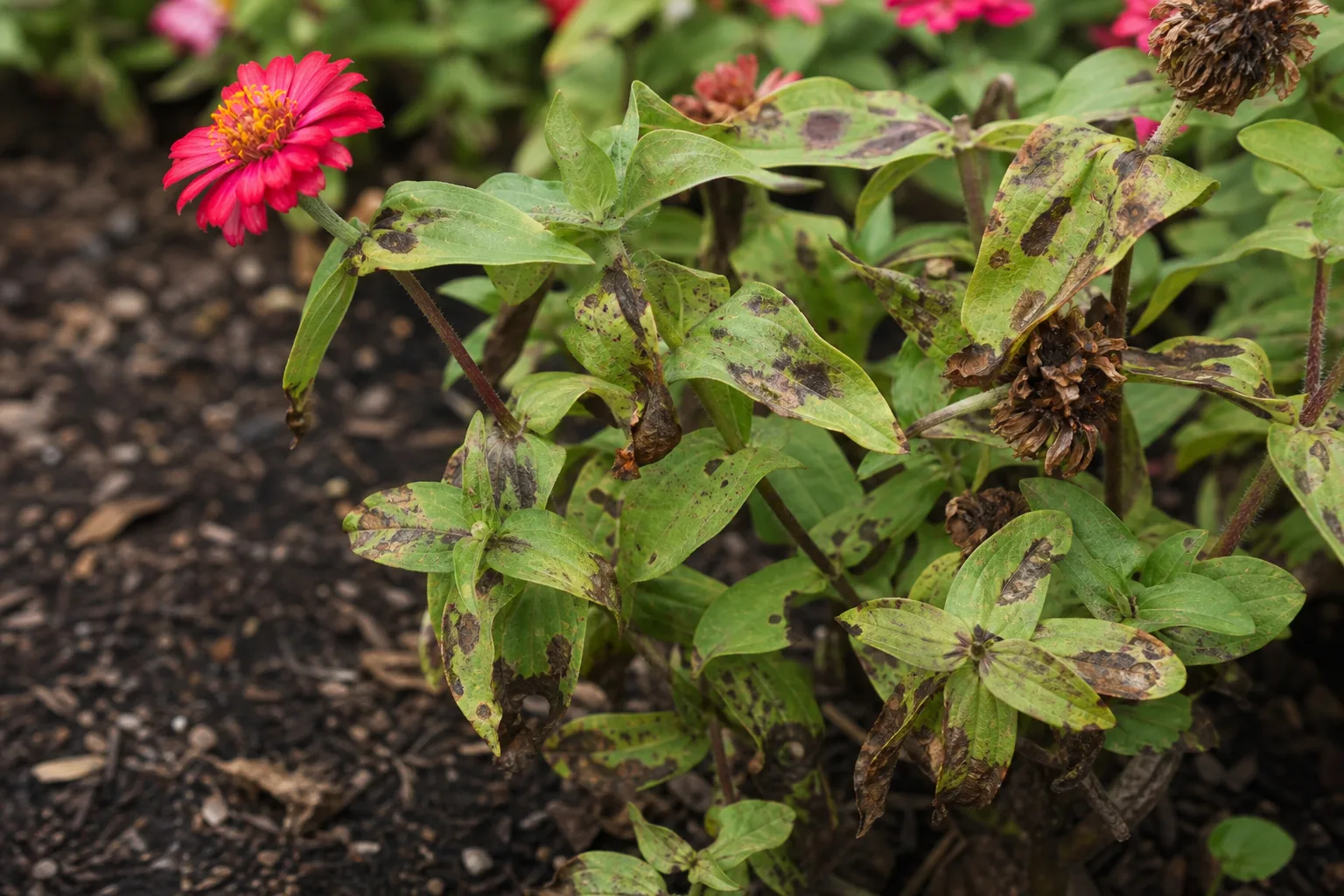
Blight on Zinnia: Causes, Checks & Fixes
This guide covers blight on Zinnia. See also the general Blight guide, watering, and light pages for this plant.
Blight on Zinnia: Causes, Checks & Fixes
Quick answer
Blight on zinnias (Zinnia elegans) is almost always Alternaria blight caused by the fungus Alternaria zinniae. Missouri Botanical Garden notes it is the most common and conspicuous zinnia disease-along with powdery mildew, it is one of only two diseases that routinely trouble this annual in the garden.
The signature is reddish-brown spots with grayish-white centers on leaves, stems, and ray flowers that spread fast when foliage stays wet. Warm humid nights after overhead watering or monsoon rain trigger outbreaks; midsummer and early fall are typical peak windows.
First step: pull and destroy severely infected plants. Do not compost blighted zinnias-the fungus survives on seed and in soil debris for years. Once the worst plants are out, switch permanently to base watering so leaves and petals dry the same day.
What blight looks like on Zinnia
Alternaria blight hits zinnias on every above-ground part, which helps separate it from lookalikes.
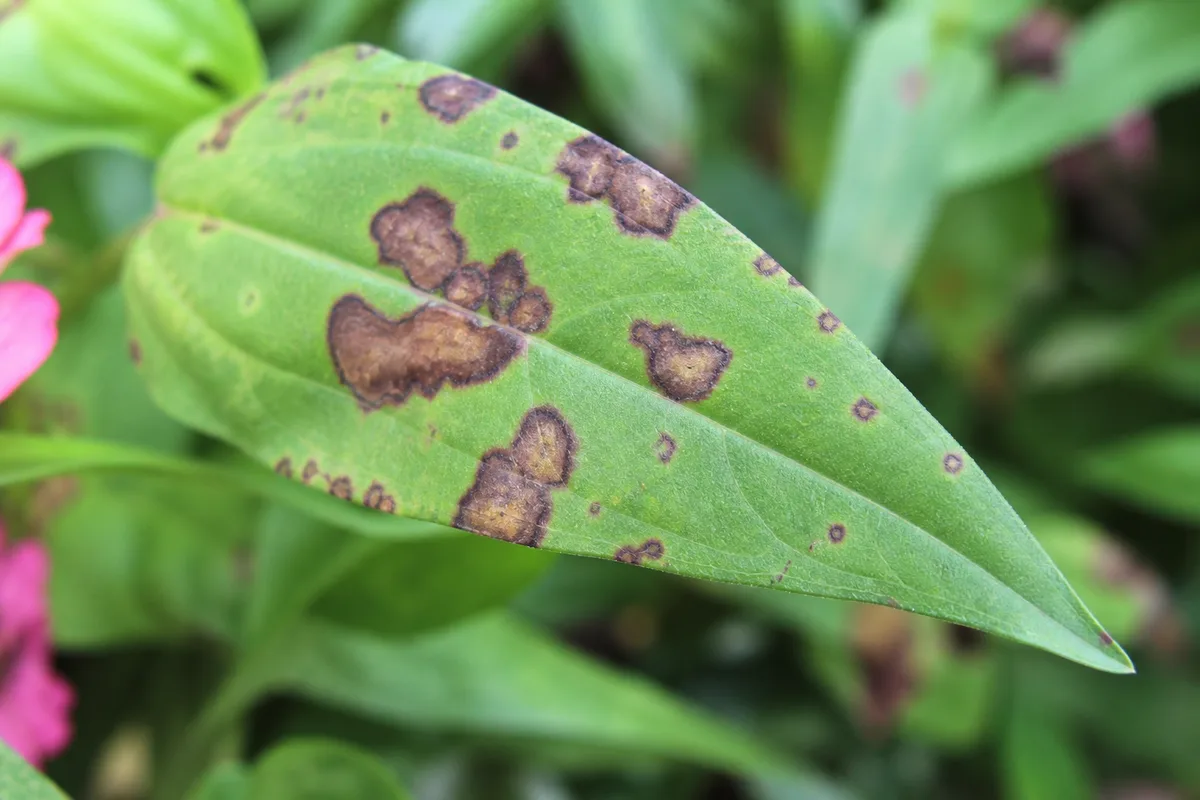
Blight symptoms on Zinnia - compare with healthy tissue on the same plant.
On leaves: Spots start circular, then turn irregular as they merge. Individual lesions are reddish brown with grayish-white centers on the upper leaf surface, roughly 2–10 mm across. As spot count rises, leaves brown, dry, and crumble-whole lower tiers can fail while upper growth still looks green for a few days.
On flowers: Brown spots 1–2 mm wide with pale centers appear on ray petals. Affected blossoms darken and wither, ruining the display long before natural aging. This flower involvement is a strong blight clue; drought stress browns petal edges evenly without gray-centered spots.
On stems: Small reddish spots on internodes may stay superficial, but lesions at nodes often girdle the stem and kill everything above. Dark brown to black sunken cankers at the soil line are common on advanced cases. Entire plants may wilt even when the basal canker has not fully encircled the stem.
On seedlings: The same fungus can cause damping-off-collapsed stems at the soil line in cool wet seed-starting mix. That pattern overlaps with Pythium damping-off, but Alternaria also produces the characteristic leaf spots once cotyledons expand.
Zinnias push soft new growth constantly in Zinnia light guide. That tender tissue is exactly where Alternaria lands after splashing rain or sprinkler mist, which is why blight often races through a dense row in a week while isolated container plants stay clean.
Why Zinnia gets blight
Alternaria zinniae needs free moisture on plant surfaces to infect. Pacific Northwest extension notes that weather or irrigation keeping leaves wet for extended periods favors the disease. Zinnias are built for dry, sunny beds-they want water at the root zone, not films on foliage. Overhead sprinklers, evening hose sessions, and crowded monsoon plantings all extend leaf wetness past the few hours this fungus requires.
The pathogen persists on infected seed and crop debris. It can remain in seeds for up to seven years and in plant debris for about two years. Saving seed from a blighted patch, composting infected stems in the same bed, or replanting zinnias in last year’s spot reintroduces spores before new leaves even open.
Zinnia culture often accidentally amplifies risk:
- Dense spacing - Direct-sown rows thinned late, or nursery packs planted too close, trap humidity inside the canopy. Zinnias want 20–30 cm between mature plants for airflow.
- Wet flowers and leaves - Your care routine says water at the base when the top 3 cm dries; blight appears when that rule breaks during heat waves or automatic sprinklers.
- High humidity seasons - Monsoon and late-summer dew keep petals wet at dawn even without overhead watering.
- Low nitrogen stress - Extension sources link low fertility to heavier Alternaria pressure, though excess nitrogen causes its own problems on zinnias.
Alternaria is not a random indoor-houseplant mildew. It is a field disease of sun-loving annuals that becomes severe when wet foliage meets warm nights-the exact pattern zinnia beds see in Indian summer after thunderstorm weeks.
How to confirm the cause
Work through these checks before spraying fungicide:
- Spot pattern - Reddish-brown with gray-white centers on upper leaves? Alternaria. Angular reddish spots with bright yellow halos suggest bacterial leaf spot (Xanthomonas) instead-no fungicide fixes that.
- Flower involvement - Spotted ray petals after wet weather strongly favor Alternaria over drought tip-browning.
- Timing - Did spots explode within days after rain or sprinkler use? Blight spreads fast with moisture. Static holes with slime trails are slugs; white dry powder is powdery mildew.
- Row pattern - Multiple plants in a crowded line failing together fits splash-dispersed Alternaria. Single wilted plant in dry soil may be underwatering on Zinnia or root damage-press the stem base; soft sunken cankers confirm blight.
- Stem inspection - Peel back lower leaves and look for internode spots or basal cankers. Girdling at a node explains sudden wilt on an otherwise green top.
- Seed and history - Did you save seed from diseased plants or replant the same bed without cleanup? That history supports Alternaria even when only a few spots show so far.
If leaves show white powder without sunken brown tissue, read powdery mildew guidance instead. If only lower leaves yellow in soggy soil without spots, check overwatering on Zinnia before treating blight.
First fix for Zinnia
Remove and destroy every severely infected plant-roots, flowers, and fallen leaves included.
Bag the material for trash or burn where allowed. Do not leave blighted petals on soil or toss stems into a home compost pile that will return to the garden. This single sanitation step cuts the spore load more than any spray on a plant that is already mostly brown.
For mild cases with spotting confined to a few lower leaves, you may pull only those leaves and the worst stems-but once cankers hit the base or flowers are heavily spotted, the whole plant should go. Zinnias are fast, inexpensive annuals; saving a blighted specimen rarely beats starting clean neighbors.
After removal, stop all overhead watering. Irrigate at the base in morning so foliage and ray flowers dry within hours.
Do not reach for fungicide until infected tissue is gone and you have committed to dry-leaf culture. Spraying over rotting leaves wastes product and delays the cultural fix that actually matters.
Step-by-step recovery
Once the worst plants are out:
- Strip remaining lower leaves that show active spots on mildly affected plants. Disinfect pruners between cuts with rubbing alcohol.
- Increase spacing by thinning crowded seedlings or removing weak duplicates. Air movement through zinnia rows shortens leaf wetness.
- Water at soil level only when the top 3 cm is dry-morning is best. Avoid misting foliage or wetting open blooms.
- Apply protectant fungicide if wet weather continues and you still have valuable plants with early spots. Missouri Botanical Garden lists chlorothalonil, copper, and mancozeb as protectant options for seedlings and young plants-follow label rates for ornamentals and reapply per label through humid spells. These products protect new tissue; they do not resurrect dead leaves.
- Hold nitrogen-heavy fertilizer until new growth looks clean for two weeks. Balanced feeding supports recovery; pushing lush shoots during active disease adds vulnerable tissue.
- Scout daily during rainy weeks. Remove the first spotted leaves or flowers you see before spores spread to the rest of the row.
If more than a third of a planting shows stem cankers or basal wilt, pull the entire block and replant later in a different spot rather than fighting a losing spray cycle.
Recovery timeline
Alternaria-damaged leaves and petals do not heal cosmetically. Brown tissue stays brown; success means the spot count stops rising and new leaves and buds open clean.
With dry foliage and sanitation, mild lower-leaf spotting may stabilize within one to two weeks. Plants that lost only a few leaves can still bloom if stems remain firm and new growth stays spot-free.
Heavily blighted plants with girdled stems or basal cankers rarely produce a normal flower display again-expect two to four weeks before you know whether lightly trimmed neighbors will recover, and be honest when cankers have already reached the soil line.
Seedlings with damping-off collapse within days; do not wait for recovery-discard trays and restart with clean mix.
Lookalike symptoms to rule out
Powdery mildew coats leaves with dry white powder on upper surfaces. No gray-centered brown spots, no stem cankers, and flowers stay unaffected early.
Bacterial leaf spot shows angular reddish-brown lesions with prominent yellow halos. Penn State Extension notes no effective spray-remove infected plants and fix watering.
Cercospora leaf spot also causes zinnia leaf spots but is a separate fungus; management overlaps (dry leaves, sanitation, protectant sprays). Alternaria is the more conspicuous blight on Z. elegans in most home gardens.
Botrytis on wet flowers browns mushy petals in humid shade but lacks the sharp gray-centered leaf spots of Alternaria.
Drought wilt droops entire plants in afternoon heat when soil is dry; stems stay firm without cankers, and spots are absent.
Caterpillar or slug holes are irregular with clean edges or slime trails-not expanding brown lesions with pale centers.
Mistakes to avoid
Do not compost blighted zinnia debris near future zinnia beds-the fungus survives in plant material.
Do not overhead-water “to cool plants” during heat waves; wet leaves at night invite exactly the outbreak you are trying to stop.
Do not save seed from diseased plants without hot-water treatment at 125°F (52°C) for 30 minutes-and expect some germination loss on older seed.
Do not rely on curative sprays alone while infected tissue remains on the plant or soil surface.
Do not crowd zinnias for instant fill; dense canopies in monsoon season are a blight factory.
Do not confuse bacterial spots (yellow halos) with Alternaria and waste fungicide on a bacterial problem.
How to prevent blight next time
Start clean. Buy reputable seed or treat saved seed with hot water before sowing. Texas Plant Disease Handbook recommends the 125°F soak because the fungus can ride on seed.
Direct-sow in full sun with final spacing of 20–30 cm. Zinnias dislike transplant shock and crowded roots; open rows dry faster after rain.
Water at the base in morning when the top 3 cm dries-never wet foliage on a schedule.
Remove spent plants at season end. Bury or discard debris; Alternaria can persist in debris for about two years. Rotate beds for two to three years if blight was severe.
Consider resistant types for problem sites. Narrow-leaf Zinnia angustifolia and some cultivars show partial resistance, though no Z. elegans cultivar is fully immune.
Apply protectant fungicide early only when prolonged wet weather is forecast and you grow zinnias for cut flowers or exhibition-spray seedlings and young plants before spots appear, per label.
Scout weekly in humid months. One removed leaf costs less than a lost row.
When to worry
Treat as urgent when stem girdling, basal cankers, or whole-plant collapse appears after wet nights-Alternaria at the soil line kills fast. Seedling trays with damping-off should be discarded immediately.
Also escalate when most of a row shows petal spotting within a week; splash spread will not self-limit in crowded plantings.
A few lower-leaf spots on otherwise firm plants during dry weather is manageable with sanitation and base watering-not an emergency if you act before flowers spot.
If ray flowers show spots during a wedding or show week, remove affected blooms daily and run protectant sprays on label intervals; cosmetic recovery on those petals is not realistic.
Conclusion
Blight on zinnia is Alternaria-not mysterious wilt and not mildew. Wet leaves and petals after warm rain or overhead watering start it; infected debris and seed carry it forward. Pull severely affected plants first, keep foliage dry, space rows for air, and treat seed or seedlings before wet seasons if blight has hit your garden before. Zinnias are forgiving annuals when culture matches their sun-and-drainage needs; they fail quickly when spores get the humid nights they crave.
When to use this page vs other Zinnia guides
- Zinnia watering guide - Use for routine moisture checks before assuming blight is the main issue.
- Zinnia problems hub - Browse all 38 common issues on this species.