Black Spots on Zinnia: Causes, Checks & Fixes
Quick answer
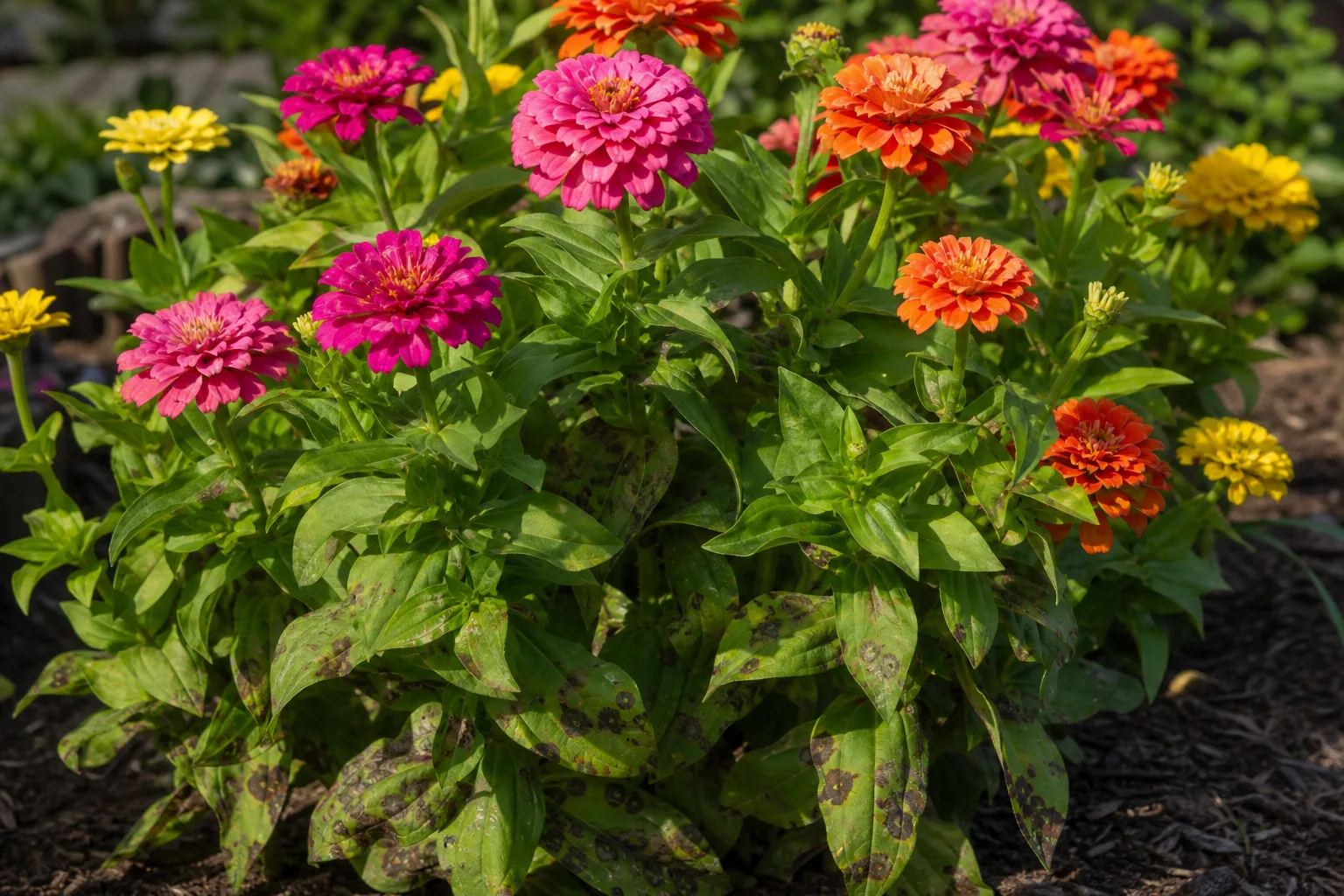
Black spots on zinnias are usually fungal leaf spot—Alternaria zinniae or Cercospora zinniae—showing as dark reddish-brown lesions with gray centers on lower leaves after wet weather. First step: pick off the worst spotted leaves and bag them before you change watering or spray anything.
Black Spots on Zinnia: Causes, Checks & Fixes
This guide covers black spots on Zinnia. See also the general Black Spots guide, watering, and light pages for this plant.
Black Spots on Zinnia: Causes, Checks & Fixes
Quick answer
Scope: This page diagnoses black spots on zinnia foliage—whatever the cause. Growers often use “black spots” for any dark necrotic lesion on leaves or petals. On Zinnia elegans, those marks are almost always fungal leaf spot from Alternaria zinniae or Cercospora zinniae, not a separate mystery disease. For full pathogen tables and spray intervals, see leaf spot disease on Zinnia. When spots escalate to stem girdling, petal blight, and row-wide collapse, jump to blight on Zinnia.
Black spots on zinnia leaves typically start as reddish-brown to dark purple lesions with grayish-white centers, often on lower foliage after rain, overhead watering, or humid nights. As spots age, necrotic tissue darkens and can look nearly black—especially on heavily infected leaves that brown and dry from the bottom up.
First step: pick off the worst spotted leaves and bag them before you change watering or spray anything. Fungal spores release from necrotic tissue and spread when water splashes. Removing that source immediately slows the outbreak more reliably than reaching for fungicide on day one.
Black spots on zinnia: leading causes at a glance
| What you see | Most likely cause | Urgency | First action |
|---|---|---|---|
| Round to irregular dark spots with gray centers on lower leaves | Alternaria or Cercospora leaf spot | Manage now; escalate if stems spot | Bag and remove worst leaves; switch to base watering |
| Same spots on ray petals and stem nodes; basal cankers | Alternaria blight | High—act same week | See blight on Zinnia |
| Angular brown-to-black spots with yellow halos | Bacterial leaf spot (Xanthomonas) | Medium-high in warm wet weather | Remove affected plants; improve spacing and dry foliage |
| Dry white flour-like coating, not sunken spots | Powdery mildew | Medium | See powdery mildew on Zinnia |
| Ragged holes without defined gray centers | Caterpillars or slugs | Medium | See holes in leaves or caterpillars |
| Mottled distortion, no discrete necrotic spots | Mosaic virus | High—remove plant | See mosaic virus on Zinnia |
What black spots look like on Zinnia
Zinnias push dense foliage quickly in full sun, which makes black or dark spots easy to miss until lower leaves are heavily marked. The symptom language matters: growers say “black spots” when necrotic tissue darkens, but fresh lesions are often reddish-brown or purple with a pale center—not jet black from day one.
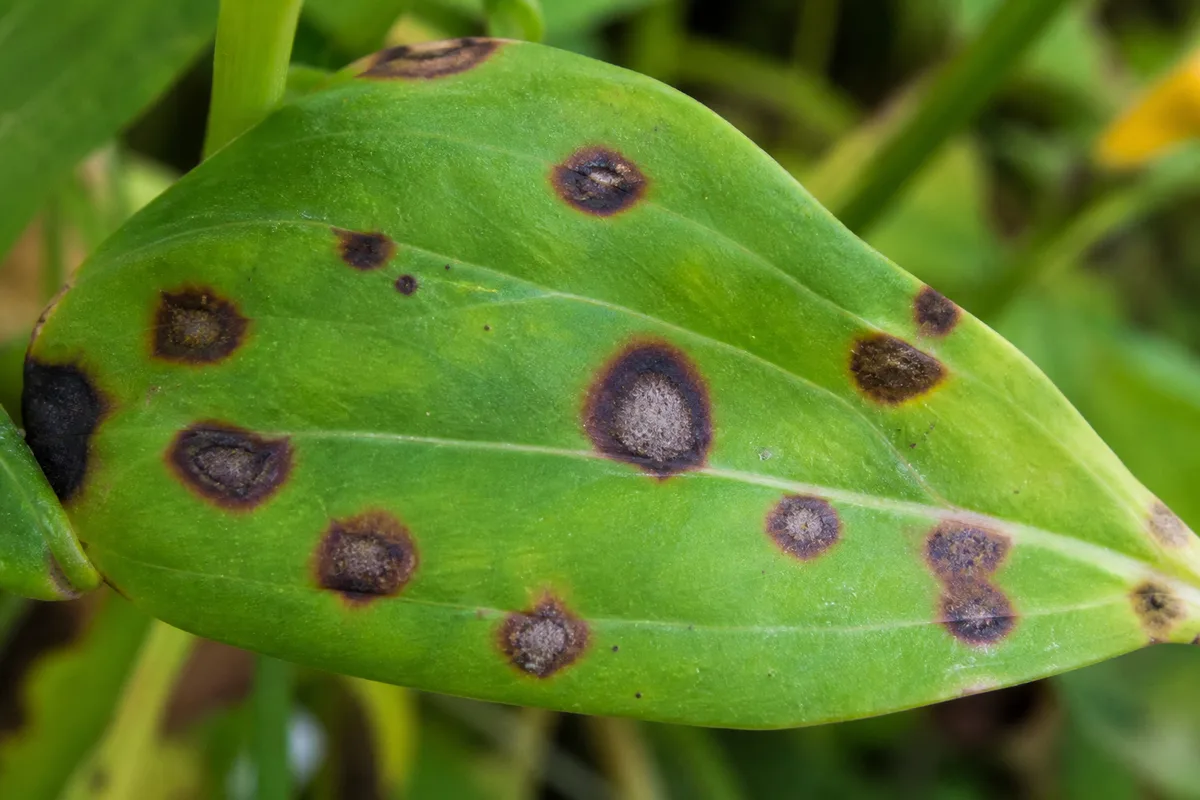
Black Spots symptoms on Zinnia - compare with healthy tissue on the same plant.
Fungal leaf spot (most common “black spot” search):
- Nearly round to irregular reddish-brown or dark purple spots with white or light gray centers on upper leaf surfaces
- Centers of older spots may fall out, leaving a shot-hole look before tissue fully darkens
- Spots merge on heavily infected leaves; foliage browns and dries from the bottom up
- Lower, older leaves spot first; infection moves upward when humidity persists
Alternaria when it spreads beyond leaves:
- Small brown spots with gray centers on ray-flower petals
- Reddish spots on stems; dark sunken cankers near the soil line can cause wilting even when the stem is not fully girdled
- When stem and flower involvement dominates, follow the blight on Zinnia protocol instead of nursing through the season here
Bacterial leaf spot (Xanthomonas campestris pv. zinniae):
- Smaller angular brown to black spots surrounded by yellow halos—not perfectly round
- Starts on lower leaves and progresses upward; petals can show reddish circular spots
- Spreads fast when foliage stays wet in warm weather; limited value from protectant sprays alone
What black spots are not:
- Dry white powder on leaf faces—powdery mildew, not necrotic spotting
- Uniform brown margins from drought or heat—see brown tips or heat stress
- Yellowing on wet soil without discrete lesions—overwatering or root stress
- Mottled distortion without expanding brown spots—mosaic virus
Both major fungal pathogens produce symptoms so similar that microscopic identification may be needed to tell them apart. For home gardeners, the cultural and sanitation response is the same; what matters is confirming you have discrete necrotic spots—not powder, holes from insects, or uniform yellowing.
Why Zinnia gets black spots
Zinnia elegans is a warm-season annual built for full sun and fast growth. That growth habit creates a canopy of overlapping leaves in crowded beds, and the same humid monsoon stretches that keep zinnias blooming also favor the fungi behind black-looking leaf spots.
Wet foliage is the main trigger. Alternaria and Cercospora both thrive in warm weather with high humidity. Overhead sprinklers, evening watering, and rain that keeps leaves wet for hours give spores time to germinate and penetrate tissue. Zinnias are often watered at the base in advice guides—but many balcony and garden setups still wet leaves accidentally.
Crowded spacing traps moisture. Zinnias sown too thickly or planted closer than 20–30 cm develop a dense lower canopy with poor airflow. Lower leaves stay damp longer and show the first dark spots. Tall cutting varieties packed against a wall or in mixed containers suffer the same way—even in “full sun,” a wall-hugging row blocks breeze and traps humidity between stems.
Inoculum carries over. Alternaria zinniae can persist on seed and plant debris for several seasons. Reusing pots without cleaning, composting infected zinnia clippings near next year’s bed, or planting downwind from last year’s diseased patch reintroduces spores to healthy seedlings.
Stress opens the door. Drought-stressed zinnias in afternoon heat are not immune—leaf spot is primarily moisture-driven—but plants recovering from transplant shock or sitting in soggy mix are more vulnerable to secondary infection at wounds and leaf edges.
How to confirm the cause
Work through these checks in order before you treat:
- Spot shape and color - Round to irregular dark lesions with gray or white centers point to Alternaria or Cercospora. Angular spots with yellow halos suggest bacterial leaf spot. Dry white powder on leaf surfaces is powdery mildew, not black spots.
- Location on the plant - Fungal leaf spot typically starts on lower, older leaves and progresses upward. Basal stem cankers and spotted petals strongly suggest Alternaria blight—see blight on Zinnia when stem and flower involvement dominates.
- Timing vs weather - Did spots appear or spread within days after rain, overhead irrigation, or a humid spell? Leaf spot outbreaks track moisture; static brown tips from drought do not spread spot-to-spot.
- Stem and flower check - Lift lower foliage and inspect stems at nodes and near the soil line. Alternaria produces stem spots and basal cankers; Cercospora is mostly foliar. Dark sunken basal tissue plus soggy mix may overlap with stem rot on Zinnia—pinch the stem base to separate cultural rot from Alternaria cankers.
- Margin check on dry tissue - On a fully dry leaf, fungal spots show crisp reddish margins around gray necrotic centers that darken with age. Bacterial lesions often look more angular with a yellow halo at the edge. Do not mist spotted leaves to test—wetting tissue can splash spores or bacteria to healthy foliage.
- Exclude lookalikes - Caterpillar holes are ragged with chewing damage, not circular necrotic centers. Spider mite stippling is fine yellow speckling without gray-centered spots. Mosaic virus causes mottled distortion, not expanding brown spots with gray centers.
If lower leaves show classic dark lesions with gray centers after wet weather and upper growth is still clean, you have enough evidence to act on sanitation and drying foliage—even without a lab diagnosis.
First fix for Zinnia
Remove all heavily spotted leaves and any brown, infected flower heads; bag the tissue and discard it—do not compost.
This single step cuts the spore load immediately. Spores release from necrotic tissue and spread when water splashes. Stripping the worst leaves from the bottom third of the plant opens airflow to the remaining foliage and stops the easiest source of reinfection.
Use clean scissors or pinch with fingers, then wash hands and tools before touching healthy plants. Work when foliage is dry so you are not smearing spores across wet leaves.
Do not spray fungicide before cleanup—protectant products work on healthy tissue, not as a substitute for removing active inoculum. Do not increase fertilizer on a diseased zinnia hoping to push new growth; tender leaves in a humid bed become new infection sites.
Step-by-step recovery
After the initial cleanup:
- Switch to base watering only - Water at soil level in the morning so leaves dry within a few hours. Never wet zinnia foliage and flowers on a schedule; wet conditions drive zinnia leaf diseases.
- Thin crowded plants - Remove entire weak stems at the base if spacing is tighter than 20–30 cm. Air movement through the bed matters more than saving every stem on an annual.
- Apply a protectant fungicide if spots keep appearing on new leaves - Copper, chlorothalonil, or mancozeb used as protectants can slow spread when applied to healthy tissue per label directions. Start after cleanup, not instead of it. Reapply at the interval listed on the product through humid weather.
- Remove newly spotted leaves weekly - Scout lower leaves every few days during rainy stretches. One infected leaf left in the canopy can reseed the whole plant.
- Pull plants with basal cankers or widespread blight - Alternaria at the stem base often causes wilting that sanitation cannot reverse. Follow the full blight on Zinnia protocol when stem girdling and flower blight dominate—zinnias are inexpensive to replace; removing a reservoir plant protects neighbors.
- Avoid working wet plants - Pruning or deadheading when leaves are wet moves spores. Wait until morning dew has dried.
For bacterial angular spots with yellow halos spreading rapidly on petals and leaves, removing affected plants may protect neighbors better than repeated spray cycles—especially in mixed cutting gardens.
Recovery timeline
Sanitation shows results within a few days when the outbreak is caught early—new spots should stop appearing on upper leaves once the lower inoculum is gone and foliage stays dry. Existing necrotic spots do not heal; those leaves remain blemished until they senesce or you remove them.
Expect clean new growth from upper nodes within one to two weeks if weather turns dry and spacing improves. During ongoing humid monsoon conditions, weekly scouting and repeat protectant sprays may be necessary until the season dries out.
Plants with basal cankers or blighted flowers rarely return to full vigor. Because zinnias bloom within six to eight weeks from seed, replacing severely affected plants is often faster than nursing them through a wet season—especially when Alternaria blight has already reached petals and stem nodes.
Lookalike symptoms to rule out
Powdery mildew coats leaves and stems with a dry white powder. It spreads in humid crowded beds too, but spots are not reddish-brown with gray necrotic centers. Full protocol on powdery mildew on Zinnia.
Leaf spot disease hub - If you need the full Alternaria vs. Cercospora vs. Xanthomonas comparison table, spray product detail, and seed hot-water treatment steps, use the dedicated leaf spot disease on Zinnia guide. This black-spots page is the symptom entry; that page is the pathogen reference.
Caterpillar and slug damage produces irregular holes and ragged edges, not circular lesions with defined gray centers. Check for slime trails, frass, or chewing at night.
Sun scorch or drought tip burn browns leaf margins and tips uniformly. It does not produce scattered round spots that enlarge and merge.
Mosaic virus causes mottled distortion and stunted growth spread by aphids, not expanding brown leaf spots with gray centers. Virus-infected zinnias should be removed entirely.
Mistakes to avoid
Do not overhead water zinnias to “cool them off” during heat—wet leaves in humid evenings accelerate leaf spot more than midday drought stress.
Do not compost infected zinnia leaves or spent plants at the end of season. Spores overwinter in debris and re-infect next year’s bed.
Do not rely on fungicide alone without removing spotted tissue first. Protectants prevent new infection; they do not cure necrotic leaves already loaded with spores.
Do not crowd seedlings hoping for a fuller look. Dense direct-sown rows are the most common reason lower zinnia leaves spot out before the first flush of bloom.
Do not mist spotted leaves to “test” whether spots are fungal—work dry and bag tissue instead.
Do not assume every dark mark is the same disease. Angular yellow-haloed spots need different escalation than round gray-centered fungal lesions.
How to prevent black spots on Zinnia
Space for airflow. Sow or transplant zinnias with at least 20–30 cm between mature plants in full sun. Open beds dry faster than wall-hugging rows or overstuffed containers.
Water at the base in morning. Follow the zinnia watering rhythm of deep watering when the top 3 cm dries, but keep foliage and flowers dry. Drip lines, soaker hoses, or careful hand watering at soil level all work.
Rotate planting sites. Do not sow zinnias where last year’s diseased zinnias or sunflowers grew. Alternaria zinniae also infects sunflower and other composites; a three-year rotation reduces inoculum.
Clean end-of-season debris. Pull and discard all zinnia stems and leaves after frost or when plants finish blooming. Spores survive on surface litter.
Scout lower leaves weekly during humid weather. Removing one spotted leaf early prevents a bed-wide outbreak two weeks later.
Choose resistant varieties when available. Zinnia angustifolia is highly resistant to Alternaria zinniae, and modern Zinnia marylandica hybrids such as Profusion and Zahara lines inherit that resistance while keeping zinnia flower form.
When to worry
Treat as urgent when dark spots cover most lower leaves within a week, brown lesions appear on open flowers, or basal stem cankers coincide with sudden wilting. Alternaria blight can collapse entire plants in warm wet weather once stems are girdled at nodes or the base.
Replace rather than rescue when more than half the foliage is necrotic, multiple plants in a row fail together, or wilting persists after you improve drainage and remove infected tissue. Zinnias are fast, inexpensive annuals—starting a fresh sowing in a new spot often costs less than repeated fungicide cycles on advanced blight.
Bacterial leaf spot with angular yellow-haloed lesions spreading rapidly on petals and leaves may warrant removing affected plants to limit splash spread to neighbors, especially in mixed cutting gardens.
Early lower-leaf spotting on an otherwise blooming plant is manageable. Basal cankers, flower blight, and rapid defoliation are not—route to blight or stem rot guides as symptoms dictate.
When to use this page vs other Zinnia guides
- This page (black spots) - You searched “black spots on zinnia” or see dark necrotic lesions on leaves and need a first fix and cause triage.
- Leaf spot disease on Zinnia - You want the full Alternaria vs. Cercospora vs. Xanthomonas table, seed treatment detail, and spray intervals.
- Blight on Zinnia - Spots have reached petals, stem nodes, or basal cankers with row-wide dieback.
- Powdery mildew on Zinnia - White dry coating, not sunken dark lesions.
- Zinnia watering guide - Routine moisture checks and base-watering rhythm after cleanup.
Related Zinnia guides
- Zinnia overview - care hub for this sun annual
- Leaf spot disease on Zinnia - full pathogen comparison and recovery detail
- Blight on Zinnia - advanced Alternaria dieback, petal spotting, and seedling damping-off
- Powdery mildew on Zinnia - white coating vs. gray-centered necrotic spots
- Stem rot on Zinnia - basal collapse with wet mix or Alternaria cankers
- Mosaic virus on Zinnia - mottled leaves without fungal spot pattern
- Zinnia watering guide - base watering and dry-foliage rhythm
- High humidity on Zinnia - monsoon bed culture and airflow
- All Zinnia problems