Holes in Leaves on Zinnia: Causes, Checks & Fixes
Quick answer
Holes in zinnia leaves almost always mean something is chewing-caterpillars, slugs, Japanese beetles, and earwigs are the usual suspects on Zinnia elegans. First step: inspect damaged plants at dusk with a flashlight and identify the pest before you spray.
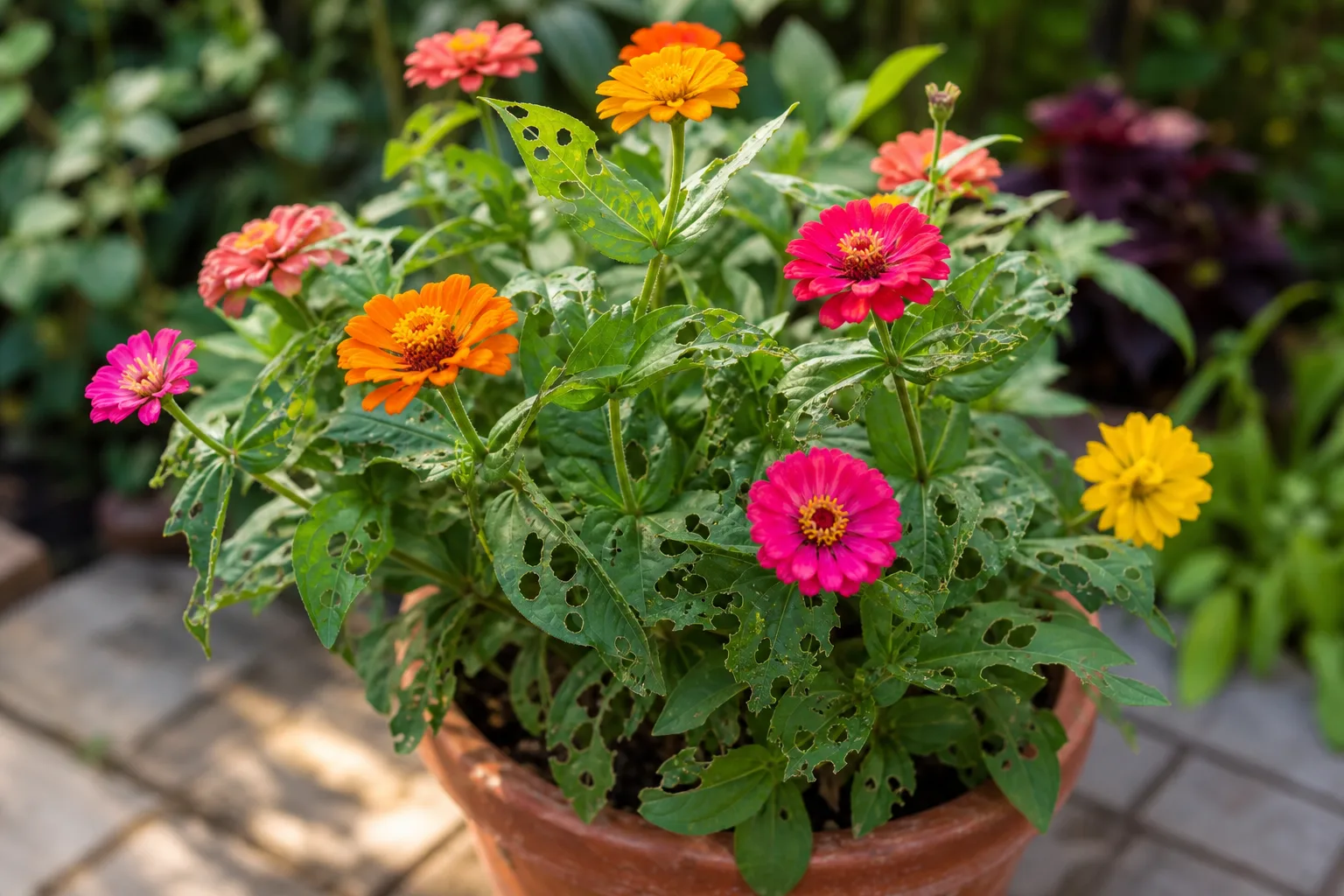
Holes in Leaves on Zinnia: Causes, Checks & Fixes
This guide covers holes in leaves on Zinnia. See also the general Holes in Leaves guide, watering, and light pages for this plant.
Holes in Leaves on Zinnia: Causes, Checks & Fixes
Quick answer
Holes in zinnia leaves mean something is chewing-not a nutrient shortage or a watering mistake. On Zinnia elegans, the most common chewers are caterpillars, slugs, Japanese beetles, and earwigs. Seedlings and soft new growth get hit hardest; mature plants often keep blooming through moderate hole damage if you stop the feeder quickly.
First step: inspect damaged plants at dusk with a flashlight and look for the pest itself-slime trails, frass pellets, metallic green beetles, or pincer-tailed earwigs-before you reach for any spray. Treating the wrong chewer wastes time and can harm pollinators on open zinnia blooms.
Ask Extension confirms early caterpillar feeding as a common cause of holes on zinnia seedling leaves, often occurring overnight while plants look fine by morning.
Why Zinnia gets holes in leaves
Zinnias are fast-growing sun annuals with tender foliage that many generalist feeders target. Unlike fungal diseases that create spots on the leaf surface, chewing pests remove tissue outright-leaving ragged holes, notched edges, or skeletonized veins.
Several factors make zinnias vulnerable:
- Soft seedling leaves - Young zinnias started from seed outdoors or in trays have thin tissue that caterpillars and slugs can consume in a single night.
- Full-sun beds with damp edges - Zinnias want six or more hours of direct sun, but mulch pockets, container saucers, and weedy bed margins stay moist enough for slugs and earwigs to hide nearby.
- Continuous new growth during bloom season - Zinnias push fresh leaves and buds for months in warm weather, giving chewers a steady food supply.
- Open flowers attracting beetles - Japanese beetles feed on zinnia blossoms from late June through August in northern gardens, then move to foliage.
- Night feeding habits - Caterpillars, slugs, and earwigs do most damage after dark, so holes appear suddenly even when you checked plants in afternoon sun.
Holes are a pest or wildlife problem-not a sign that zinnias need fertilizer. Stressed plants attract pests faster, but the fix starts with identifying the chewer, not feeding the plant.
What holes look like on Zinnia
Chewing damage on zinnias varies by pest. Use the pattern to narrow the cause:
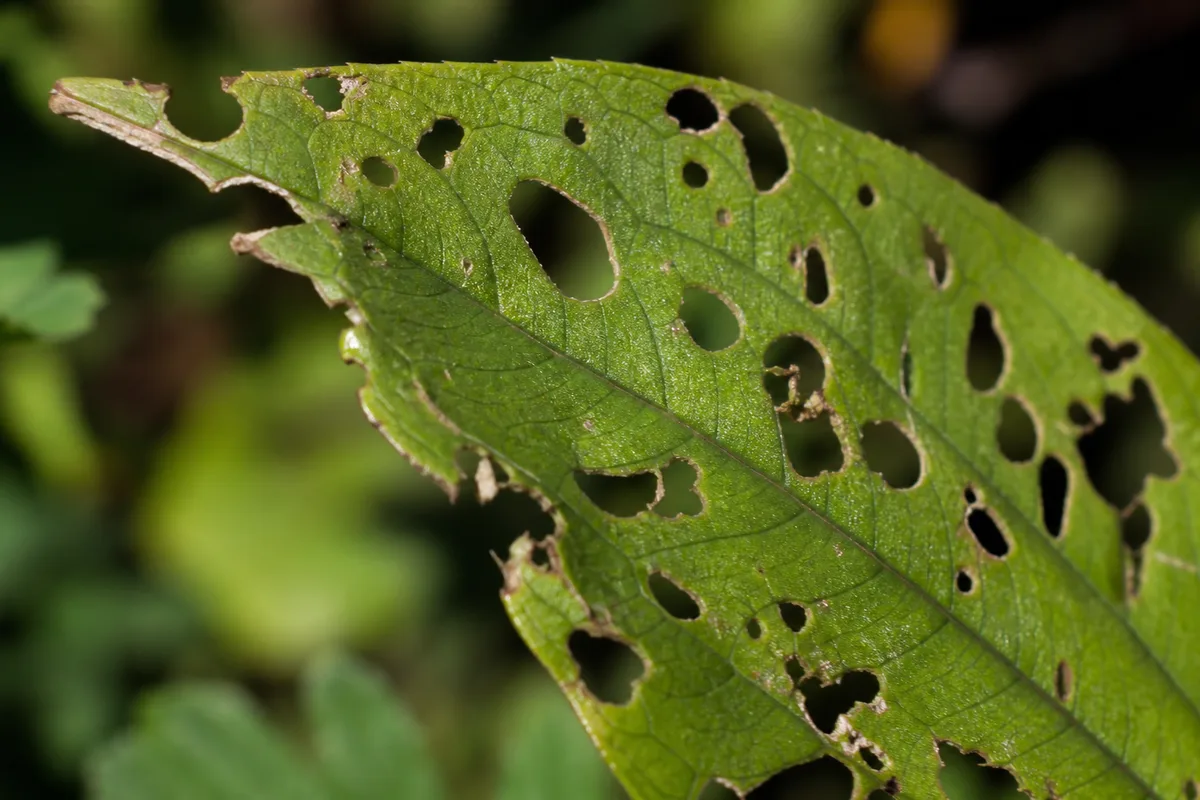
Holes in Leaves symptoms on Zinnia - compare with healthy tissue on the same plant.
- Irregular ragged holes crossing veins - Typical of slugs, caterpillars, and earwigs; often on lower leaves and seedlings first
- Shiny slime trails on leaves or soil - Slugs and snails; damage appears overnight in cool damp weather
- Dark pellet frass on foliage near holes - Caterpillars; larvae often hide along stems and leaf undersides by day
- Lace-like skeletonized leaves with veins intact - Japanese beetles chewing tissue between veins; metallic green adults visible on blooms in mid-summer
- Large sections of leaf missing with clean angled cuts - Rabbits; ragged torn sections suggest deer-both remove whole leaf sections, not small interior holes
- Notched outer leaf margins - Beetles and grasshoppers; grasshoppers feed in daylight during hot dry periods
What chewed leaves cannot do: Holes do not seal shut. Recovery means new foliage and buds emerge clean-not that old damaged tissue repairs itself.
How to confirm the cause
Work through these checks in order before treating:
- Timing - Did damage appear overnight? Night feeders (caterpillars, slugs, earwigs) fit this pattern. Midday damage with insects visible suggests grasshoppers or beetles.
- Slime trail test - Rub a finger along a damaged leaf or nearby soil. Slugs leave silvery winding trails. No slime with frass pellets points to caterpillars.
- Frass check - Dark pellet droppings on leaves near holes confirm caterpillar feeding. Ask Extension recommends Bt when caterpillar feeding continues on zinnia seedlings.
- Dusk inspection - Check leaf undersides, stem joints, and soil surface with a flashlight after sunset. Caterpillars and earwigs feed actively then.
- Beetle scan - Look for metallic green Japanese beetles on open zinnia flowers during late June through August. Skeletonized leaves with intact veins strongly implicate them.
- Earwig search - Lift pots, mulch, and damp debris. European earwigs chew irregular holes in leaves and blossoms and hide in cool moist spots by day.
- Rule out disease - Alternaria blight and leaf spot cause brown lesions with defined margins-they do not punch clean ragged holes through healthy green tissue overnight.
- Rule out sap feeders - Aphids distort and curl new growth rather than chewing large holes. Spider mites cause stippling, not ragged chewing.
If you cannot find a pest but holes keep appearing nightly, set a damp cardboard trap at bed edges and check underneath at dawn for earwigs and slugs.
First fix for Zinnia
Go out at dusk with a flashlight, identify the chewer on damaged plants, and hand-pick whatever you find into soapy water.
This single step confirms the diagnosis and stops immediate feeding without spraying open zinnia flowers where bees work during the day. Hand-picking works for caterpillars, slugs, snails, earwigs, and Japanese beetles when populations are moderate.
Repeat three nights in a row on the same plants. If you find caterpillars and feeding continues, apply Bacillus thuringiensis (Bt) on leaf undersides in late evening-Bt targets caterpillar larvae through ingestion and does not control slugs or beetles.
Do not spray broad insecticides on day one before you know the pest. Do not apply Bt when slime trails confirm slugs-it will not help mollusks.
Step-by-step recovery
After the first identification and hand-picking round, match treatment to the confirmed pest:
- Caterpillars - Spray Bt in late evening when larvae feed. Repeat per label until new leaves stay intact. Remove heavily chewed lower leaves if they shade new growth.
- Slugs and snails - Continue hand-picking at night. Clear mulch from stem bases, reduce surface moisture, and apply iron phosphate bait on soil near bed edges-not on foliage.
- Japanese beetles - Knock adults into soapy water in early morning when they are sluggish on blooms. Avoid spraying open flowers during peak bee activity.
- Earwigs - Reduce thick mulch and groundcover shelter. Use damp cardboard traps at bed edges; empty traps each morning.
- Grasshoppers - Hand-pick in daylight or use row cover on seedlings until stems toughen. Grasshopper damage increases in hot dry outdoor beds.
- Protect seedlings - Move vulnerable trays to elevated benches or cover with vented row cover until plants have several sets of true leaves.
Water zinnias at the base when the top 3 cm of soil dries. Overhead watering late in the day keeps foliage wet overnight-which encourages both slug activity and powdery mildew on zinnias.
Recovery timeline
Hand-picking shows results the next morning when new damage stops appearing. Caterpillar Bt courses typically take one to two weeks with label-interval repeats. Slug control may need several nights of picking plus shelter cleanup before slime trails disappear.
Expect clean new zinnia leaves and buds within one to two weeks once feeding ends. Old holey foliage remains cosmetically damaged until it ages out or you trim it. Judge recovery by intact new growth and continuing bloom-not by perfect older leaves.
Seedlings eaten below the growing point may not recover. Mature zinnias with scattered lower-leaf holes usually keep flowering through the season.
Lookalike symptoms to rule out
Alternaria blight and Cercospora leaf spot produce brown spots and lesions with halos-not ragged chewing holes that appear overnight on green tissue.
Powdery mildew coats leaves with white powder; it does not remove leaf sections.
Aphids and thrips cause curling, scarring, and distortion. Aphids are visible as soft clusters on new tips; thrips scar petals in hot dry weather.
Sun scorch browns leaf edges in extreme heat without the irregular interior holes chewers leave.
Rabbit and deer damage removes large leaf sections or entire tops overnight. Look for footprints, droppings, or clean angled cuts characteristic of rabbit browsing.
Mistakes to avoid
Do not treat every hole with the same product. Bt ignores slugs; slug bait ignores caterpillars; neither controls Japanese beetles on blooms.
Do not spray insecticide on open zinnia flowers during midday when pollinators are active. Treat in late evening and target undersides where caterpillars feed.
Do not pile damp mulch against zinnia stems. Moist mulch against crowns feeds slugs and earwigs while keeping foliage wet.
Do not assume one hand-picking session solves the problem. Night feeders hide nearby and return until shelter and population pressure drop.
Do not fertilize a chewed plant hoping for faster recovery. Zinnias under pest stress need the chewer controlled first-not extra nitrogen that pushes soft new tissue pests prefer.
Zinnia care cross-check
While stopping chewers, confirm these basics are not making the problem worse:
- Sun - Weak shaded zinnias recover slowly from any damage. Zinnia light guide keeps growth vigorous.
- Spacing - Crowded beds trap humidity. Space plants 20–30 cm apart for airflow.
- Watering - Water at the base when the top 3 cm dries; avoid evening overhead sprays.
- Deadheading - Remove spent blooms regularly so dense moist clusters do not trap humidity against stems where pests climb.
How to prevent holes in Zinnia leaves
Prevention combines scouting with habitat management:
- Scout seedlings weekly at dusk during spring and early summer when caterpillars and slugs are most active on tender tissue.
- Clear debris from bed edges, under containers, and around irrigation boxes before sowing.
- Pull mulch back from seedling stems until plants are well established.
- Space rows for airflow so leaf surfaces dry quickly after rain-reducing both slug habitat and fungal pressure.
- Hand-pick Japanese beetles daily during their mid-summer flight window before populations build on blooms.
- Use row cover on seedlings until stems toughen if your garden has recurring caterpillar or grasshopper pressure.
- Elevate seedling trays with copper tape on rims when slugs are a known problem in your beds.
Deadheading spent zinnia blooms keeps plants tidy and reduces dense pockets in the canopy where earwigs and slugs can hide while climbing toward new buds.
When to worry
Treat as urgent when:
- Seedlings lose most foliage overnight and you cannot identify or reach the pest-one slug or cutworm can destroy an entire tray sowing.
- New buds disappear before opening on display plants you need for peak bloom.
- Damage spreads to multiple plants nightly despite three nights of hand-picking.
- Skeletonization spreads up the plant during Japanese beetle season and beetles cover open flowers daily.
Lower priority: a few scattered holes on mature lower leaves with clean new growth and no fresh damage for several days. Scout first; escalate treatment only when holes keep appearing.
Conclusion
Holes in zinnia leaves are a chewing problem-caterpillars, slugs, beetles, and earwigs top the list on Zinnia elegans. Confirm the pest at dusk before you spray, hand-pick when you can, and match the treatment to the chewer you actually find. Fast-growing zinnias recover quickly once feeding stops; protecting seedlings and identifying the right pest matters more than fighting every old holey leaf.
When to use this page vs other Zinnia guides
- Zinnia watering guide - Use for routine moisture checks before assuming holes in leaves is the main issue.
- Zinnia problems hub - Browse all 38 common issues on this species.