High Humidity on Zinnia: Causes, Checks & Fixes
Quick answer
High humidity on zinnias does not wilt leaves directly-it creates a stagnant, moisture-trapping canopy that fuels powdery mildew and Alternaria blight in crowded beds. First step: thin overcrowded plants and open airflow before changing watering or spraying fungicide.
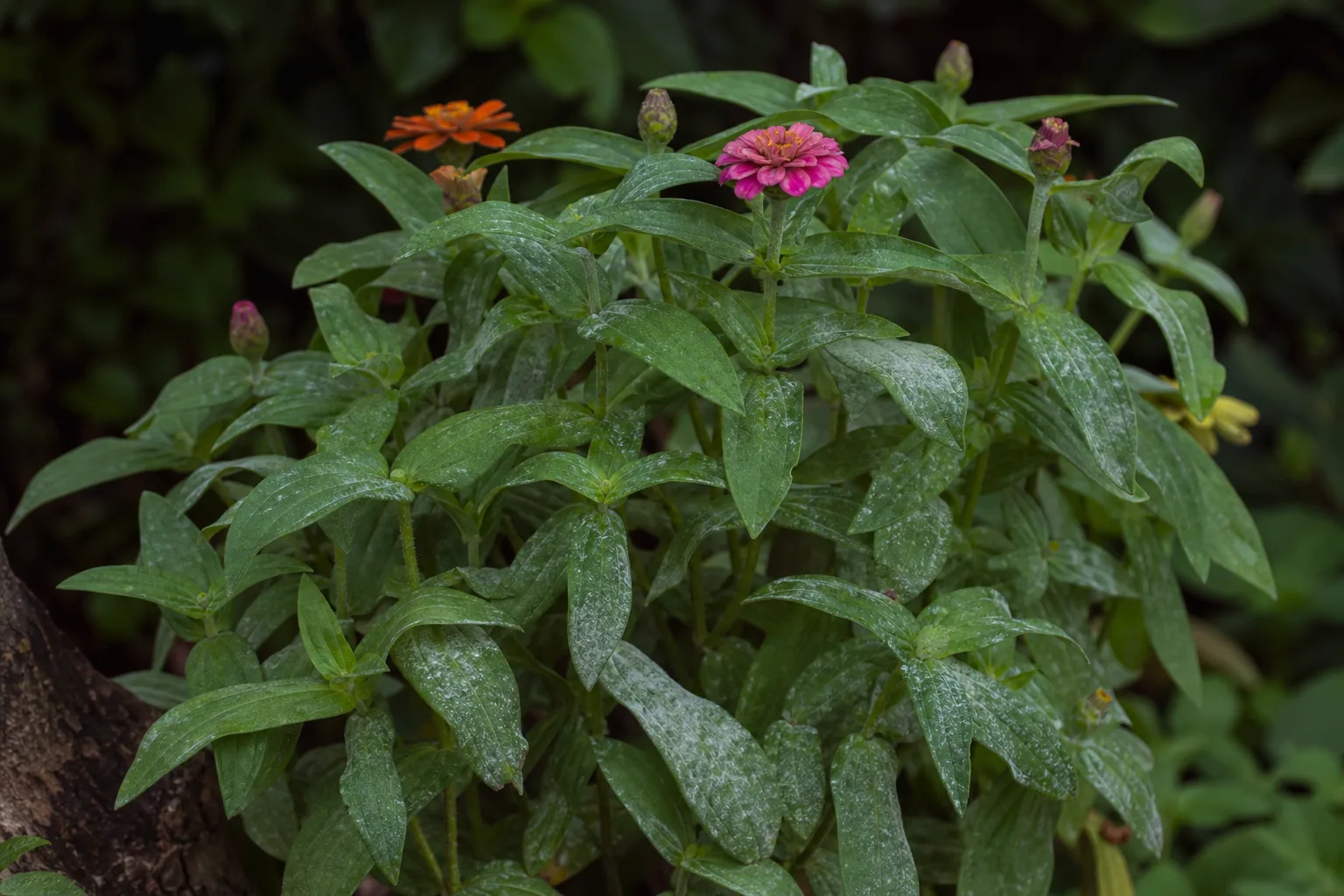
High Humidity on Zinnia: Causes, Checks & Fixes
This guide covers high humidity on Zinnia. See also the general High Humidity guide, watering, and light pages for this plant.
High Humidity on Zinnia: Causes, Checks & Fixes
Quick answer
High humidity on zinnias rarely shows up as a single obvious leaf symptom the way underwatering on Zinnia causes midday wilt. Instead, humid stagnant air around crowded stems creates the conditions where powdery mildew and Alternaria blight thrive-the two diseases that routinely trouble Zinnia elegans in the garden.
Monsoon weeks, tightly packed rows, greenhouse corners, and overhead evening watering all trap moisture between leaves long after the soil surface dries. Zinnias are sun-loving annuals built for open beds; they tolerate heat well but suffer when humid air cannot move through the canopy.
First step: thin overcrowded plants and open airflow through the bed or container. Pull excess seedlings, widen spacing to at least 20–30 cm between mature stems, and remove the worst affected lower leaves so breezes can reach inner foliage. Only after airflow improves should you adjust watering habits or consider protectant sprays.
Why high humidity hurts Zinnia
Zinnias prefer low to moderate ambient humidity with plenty of direct sun and fast leaf drying. Their dense, fast-growing foliage is an asset in dry summer beds-and a liability when humid air stagnates between stems.
Several zinnia-specific factors turn high humidity from background weather into an active problem:
Crowded plantings trap moisture. Direct-sown zinnia rows often germinate thickly. When seedlings are not thinned, or nursery packs are planted too close, leaves overlap and create a microclimate where dew and irrigation mist persist for hours. Mississippi State Extension notes that poor air circulation encourages powdery mildew, and recommends spacing that allows airflow rather than packing stems for a single flush of bloom.
Monsoon and late-summer humidity. Warm days followed by humid nights-common in Indian summer and Gulf Coast climates-slow leaf drying even without rain. Alternaria blight is worse in warm, wet, or very humid weather, and midsummer through early fall is the normal outbreak window for zinnias.
Overhead watering extends leaf wetness. Sprinklers and hose spray that wet zinnia leaves and ray flowers in late afternoon keep tissue damp overnight-the exact window when fungal spores germinate. Texas A&M recommends against overhead irrigation on zinnias because it splashes soil onto foliage, spots petals, and promotes disease spread.
Sheltered microclimates. Beds tucked against walls, dense hedges, or covered porches block wind that would otherwise dry zinnia foliage. Greenhouse and polytunnel growers see the same pattern: still humid air in enclosed spaces favors powdery mildew development until plants move outside with better circulation.
Susceptible genetics in humid zones. Large double-flowered Zinnia elegans heirlooms carry more foliage surface area and tighter petal clusters than compact resistant lines. Illinois Extension highlights Zahara and Profusion series for longer-lasting performance when humidity rises late in the season.
High humidity does not mean zinnias need a dehumidifier. It means the local environment around the leaves stays moist too long-and zinnias respond with fungal disease, not with the crisp leaf edges you see on tropical houseplants in dry winter air.
What high humidity damage looks like on Zinnia
Humidity stress on zinnias shows up through the diseases and rots it enables, not through a uniform “humid leaf” appearance.
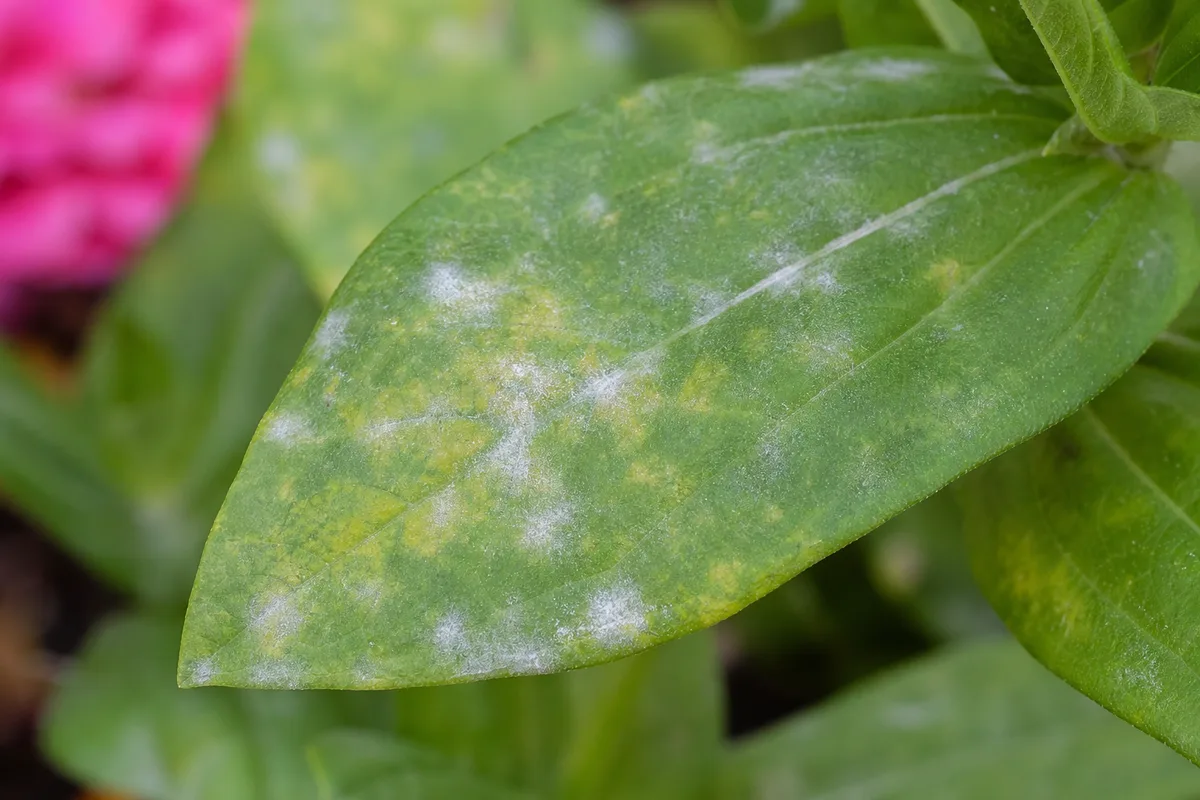
High Humidity symptoms on Zinnia - compare with healthy tissue on the same plant.
Powdery mildew from stagnant air:
- White flour-like film on upper leaf surfaces, often starting on shaded inner leaves
- Fine white dusting on petioles and young stems that smears when rubbed
- Yellowing and browning lower leaves as coating spreads upward
- Stunted new growth and smaller blooms when infection is heavy
Alternaria blight after humid wet nights:
- Reddish-brown spots with grayish-white centers on leaves and ray petals
- Brown, water-soaked flowers that fail before fully opening
- Stem spots at nodes that can girdle shoots and kill tops
- Dark sunken cankers at the stem base with sudden wilt
Grey mould and flower rot:
- Fuzzy grey growth on spent blooms and wet petals during prolonged humidity
- Soft brown flowers that collapse rather than drying naturally
- Often follows overhead watering or rain on dense double-flowered cultivars
Canopy moisture clues (before disease appears):
- Inner leaves still damp at mid-morning while outer leaves are dry
- Condensation on foliage in greenhouse or porch corners
- Musty smell in a tightly packed row after several humid days
Lower inner leaves fail first in humid zinnia beds because they receive the least sun and the slowest airflow-the same zone where mildew and blight typically start. If only upper leaves look stressed while soil is dry, suspect heat drought rather than humidity alone.
How to confirm the cause
Work through these checks before you spray or repot:
- Mid-morning moisture test - Walk the bed around 10 a.m. after a humid night. If inner zinnia leaves are still wet or tacky while the soil surface is dry, humidity is trapped in the canopy.
- Spacing audit - Measure distance between mature stems. Dwarf zinnias need roughly 20–25 cm; tall cutting types need 30–45 cm. Tighter spacing in a humid week strongly supports a humidity-driven disease diagnosis.
- Disease pattern - White dry powder on upper leaves points to powdery mildew. Reddish-brown spots with gray centers on leaves and flowers point to Alternaria. Both surge after humid weather in crowded plantings-not from underwatering alone.
- Watering review - Confirm whether sprinklers or hose spray hit foliage after 4 p.m. Evening wetting plus high humidity is a common trigger stack on zinnias.
- Site exposure - Note wind shelter from hedges, walls, or porch overhangs. Full-sun open beds with breeze dry faster than corner plantings.
- Soil moisture check - Press a finger into the top 3 cm. Soggy soil with yellow lower leaves suggests overwatering on Zinnia compounding humidity stress; dry soil with midday wilt is drought, not humid air.
If spacing is tight, inner leaves stayed damp past morning, and mildew or blight appeared after a humid spell, you have enough to treat humidity culture-not just the fungus visible today.
First fix for Zinnia
Thin overcrowded plants and open airflow through the row or container.
This single step addresses the root cause zinnia growers control: too many stems sharing humid air in too little space. Pull excess seedlings, remove weak duplicates, cut back encroaching neighbors, or transplant container groupings so each plant has room for leaves to dry between watering cycles.
When thinning:
- Target final spacing of 20–30 cm for compact types, wider for tall cutting zinnias
- Remove the lowest heavily spotted or powdery leaves on remaining plants
- Bag and trash diseased tissue-do not compost it in home piles
Do not reach for fungicide on day one while plants remain packed tight. Chemicals protect green tissue but cannot substitute for airflow through a humid canopy. Do not increase watering “because it feels humid”-zinnias still want the top 3 cm to dry between deep drinks at the base.
Do not mist zinnia foliage hoping to “balance” humidity. Misting adds surface moisture zinnias do not need and worsens disease pressure.
Step-by-step recovery
After thinning and cleanup:
- Switch to base watering permanently - Irrigate at soil level in morning so leaves and ray flowers dry within hours. Missouri Botanical Garden advises watering at the base of plants and avoiding overhead irrigation during disease pressure.
- Relocate container zinnias if possible - Move pots from sheltered humid corners to open sun with breeze on all sides. Even a few feet of relocation can shorten leaf wetness.
- Remove spent blooms promptly - Deadheading reduces fungal footholds on aging petals and opens airflow around developing buds.
- Apply protectant fungicide only if disease keeps spreading after spacing and dry-leaf culture improve. Potassium bicarbonate or horticultural oil on remaining healthy tissue can slow powdery mildew; chlorothalonil or copper protectants help early Alternaria when wet weather continues. Follow label intervals and ornamental-flower restrictions.
- Scout weekly through humid spells - Pinch off new infected leaves or spotted flowers as soon as they appear, before patches merge across the row.
- Plan resistant replacements if the current variety collapses mid-season. Profusion, Zahara, and Oklahoma series zinnias carry meaningful mildew resistance for humid climates.
For greenhouse or polytunnel zinnias, moving plants outside improves air circulation and reduces humidity faster than any indoor humidity tweak.
Recovery timeline
Airflow and thinning show results within several days when outdoor humidity drops-inner leaves should dry by mid-morning within a week of proper spacing.
New growth should emerge without white coating or fresh brown spots within one to two weeks if leaf-drying culture holds. Old mildew-coated or blighted leaves stay damaged; judge success by clean new leaves and normal bud development, not by reversing tissue already colonized.
Late-season humid outbreaks on tall susceptible heirlooms may not recover enough blooms to justify repeated spray cycles. Zinnias are fast annuals with a finite flowering window-sometimes replacing a collapsed row with resistant transplants outperforms fighting through August humidity.
Lookalike symptoms to rule out
Underwatering wilt - Drooping flower heads and limp upper leaves in dry afternoon heat with powder-dry top soil. No white powder, no reddish-brown spots. Deep base watering fixes it within hours; humidity thinning does not.
Overwatering in humid weather - Soggy soil, yellow lower leaves, and grey mould on flowers can stack with high humidity. Check drainage and reduce watering frequency even when air feels moist.
Powdery mildew as the primary page topic - If white coating is already the main problem, cultural fixes overlap-but the mildew page focuses on disease management; this page focuses on the humid microclimate that triggered it.
Low humidity - Zinnias rarely suffer from dry air alone outdoors. Crisp leaf edges without fungal signs point elsewhere, not to this humidity problem.
Insect damage - Holes with slime trails (slugs), ragged chewing (caterpillars), or stippling (spider mites) lack the uniform humid-canopy pattern and fungal signatures described above.
Mistakes to avoid
Do not spray fungicide without improving spacing first-chemicals cannot ventilate a crowded humid row.
Do not overhead water in late afternoon during monsoon weeks or active mildew pressure.
Do not assume humidity problems require shade. Zinnia elegans needs full sun for continuous flowering; shade slows drying and keeps inner leaves vulnerable longer.
Do not compost heavily infected zinnia tops from a humid outbreak. Sanitize snips after cutting diseased tissue.
Do not pack more zinnias into a humid corner “because the first batch did well early in dry June.” Late-summer humidity punishes the same spacing.
Do not confuse greenhouse humidity with garden humidity. Enclosed zinnias need ventilation fans or outdoor relocation; garden beds need spacing and base watering.
How to prevent high-humidity problems on Zinnia
Thin at sowing and again after germination. Direct-sow zinnias, then ruthlessly thin to one strong seedling per 20–30 cm while plants are still small. Late thinning leaves overlapping leaves that already trapped humid air.
Plant in full sun with open airflow. Avoid hedge pockets and windless corners unless you accept higher disease risk or choose resistant cultivars.
Water at the base in morning. Match zinnia culture to dry foliage-wet flowers invite grey mould and Alternaria alongside mildew.
Choose resistant genetics for humid climates. Profusion, Zahara, and Oklahoma series outperform many large doubles when humidity increases late in the season.
Scout from midsummer onward. Heat plus humidity is the danger window. Catch white spots or brown leaf flecks when they still affect only inner leaves.
End-of-season cleanup. Rake out infected debris rather than composting it in the same bed. Powdery mildew overwintering structures persist in leaf debris; Alternaria survives on seed and soil-associated debris.
Rotate planting sites in small gardens when humid-season disease was severe. Do not sow the same susceptible cultivar in the same crowded corner every year.
When to worry
Treat as urgent when powdery coating covers most of the canopy, Alternaria spots spread through a crowded row within days of warm wet nights, or multiple plants collapse with basal stem cankers. Affected zinnias lose vigor and cease growth under heavy fungal pressure-on an annual grown for summer color, replacement may be smarter than endless sprays.
Pull and destroy severely stunted plants that stopped blooming to reduce spore load on neighbors. Zinnias are inexpensive to restart from resistant seed or transplants.
Early white spotting on a few inner leaves in an otherwise blooming row, or mild humidity after a single thunderstorm, is worth managing with thinning and base watering-but not a crisis if growth and flowering continue.
Conclusion
High humidity on zinnias is less about the number on a hygrometer and more about whether leaves dry fast enough between dew, rain, and watering. Open airflow first, keep foliage dry with base irrigation, choose resistant varieties when your climate delivers humid summers, and treat visible mildew or blight as the signal that humidity culture-not just weather-needs correction. Judge recovery by clean new growth, not by whitening old leaves, and plan next season’s spacing before you sow.
When to use this page vs other Zinnia guides
- Zinnia watering guide - Use for routine moisture checks before assuming high humidity is the main issue.
- Zinnia problems hub - Browse all 38 common issues on this species.