Powdery Mildew on Zinnia: Causes, Checks & Fixes
Quick answer
Powdery mildew on zinnias coats leaves and stems with a white flour-like film in humid, crowded beds-one of the most common zinnia diseases. First step: thin overcrowded plants and remove the worst coated leaves to open airflow before spraying anything.
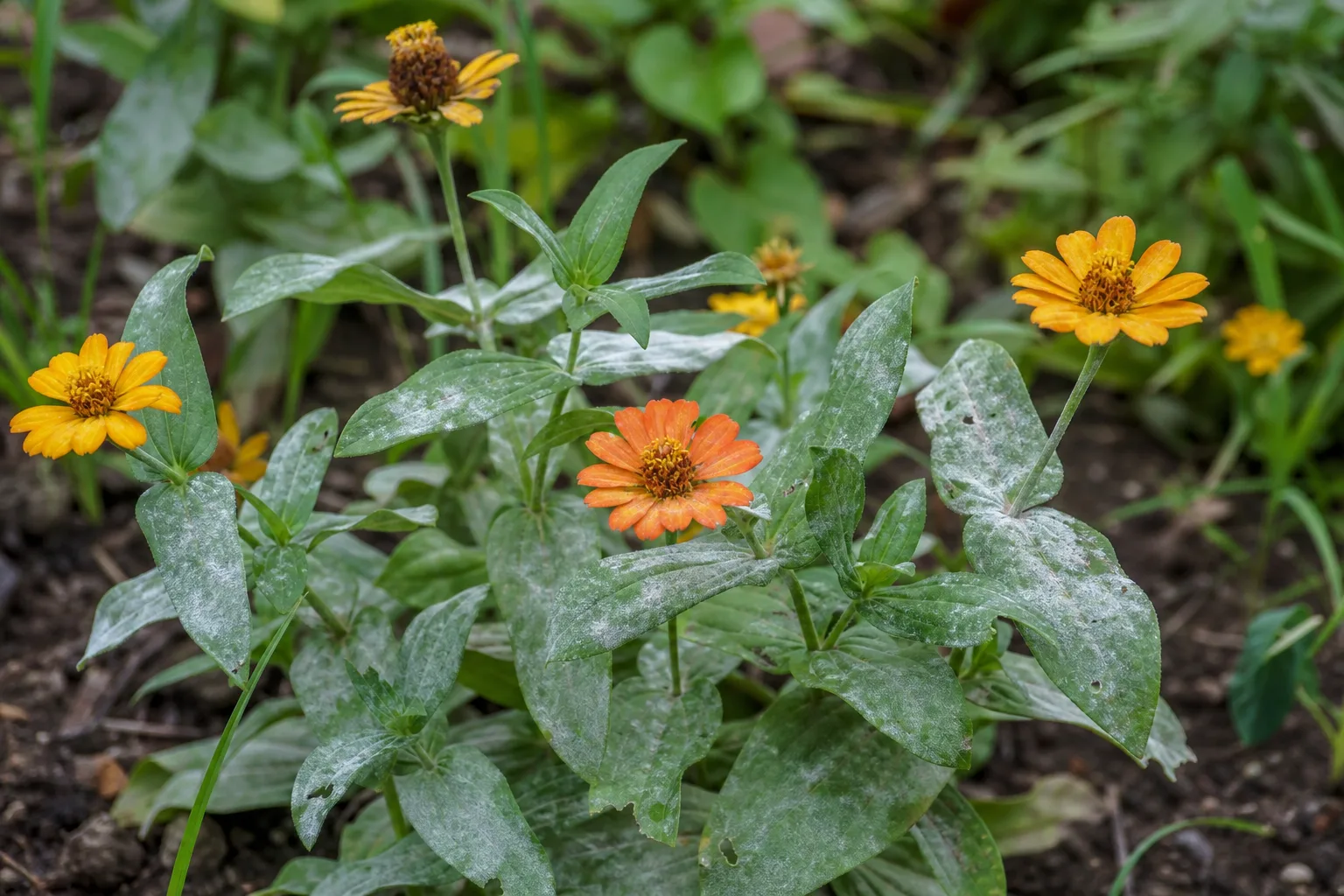
Powdery Mildew on Zinnia: Causes, Checks & Fixes
This guide covers powdery mildew on Zinnia. See also the general Powdery Mildew guide, watering, and light pages for this plant.
Powdery Mildew on Zinnia: Causes, Checks & Fixes
Quick answer
Powdery mildew on zinnias shows up as a dry white coating on leaves and stems-often described as if the plant were dusted with flour. It is one of the most common problems zinnia growers face, especially in humid summers when plants are packed tight in beds or containers.
First step: thin overcrowded plants and remove the heaviest powdery leaves to open airflow. Zinnias need sun and space; crowding traps stagnant humid air between stems and gives mildew a head start long before sprays can help. Only after spacing improves should you consider potassium bicarbonate or horticultural oil on remaining healthy tissue.
Why Zinnia gets powdery mildew
Zinnia elegans is a fast-growing summer annual that pushes dense foliage in Zinnia light guide. That growth habit works against it when spacing is tight. Texas A&M documents powdery mildew caused by Erysiphe cichoracearum as whitish growth on leaves and stems, with affected plants losing vigor and ceasing growth as lower leaves die from the base upward.
Several zinnia-specific factors stack the odds:
Crowded plantings. Zinnias are often direct-sown in blocks or planted in mixed cutting-garden rows. When seedlings are not thinned, or containers hold too many stems, humidity lingers between leaves. Illinois Extension notes poor air circulation encourages the white flour-like film that marks powdery mildew on zinnias.
Humid stagnant air. Zinnias tolerate heat well, but monsoon humidity, sheltered porch corners, and dense hedge backdrops slow leaf drying. Powdery mildew fungi can infect even when leaves feel dry to the touch-unlike downy mildew, which needs wet foliage.
Overhead watering habits. Wetting zinnia leaves and flowers overnight extends leaf wetness and stresses tissue. Base watering keeps the canopy drier and matches how zinnias are normally grown for continuous bloom.
Susceptible varieties. Large double-flowered Zinnia elegans cut-flower types are more prone than compact resistant lines. UC IPM lists Profusion and Zahara series zinnias among powdery-mildew-resistant options, while many heirloom tall cultivars need more vigilance.
Late-season pressure. Mildew often accelerates in late summer when plants are fullest and nights stay warm and humid. Partial shade at the back of a border can trigger earlier infection on inner leaves even when outer growth looks fine.
What powdery mildew looks like on Zinnia
Powdery mildew on zinnias is distinctive once you know what separates it from dust or spray residue.
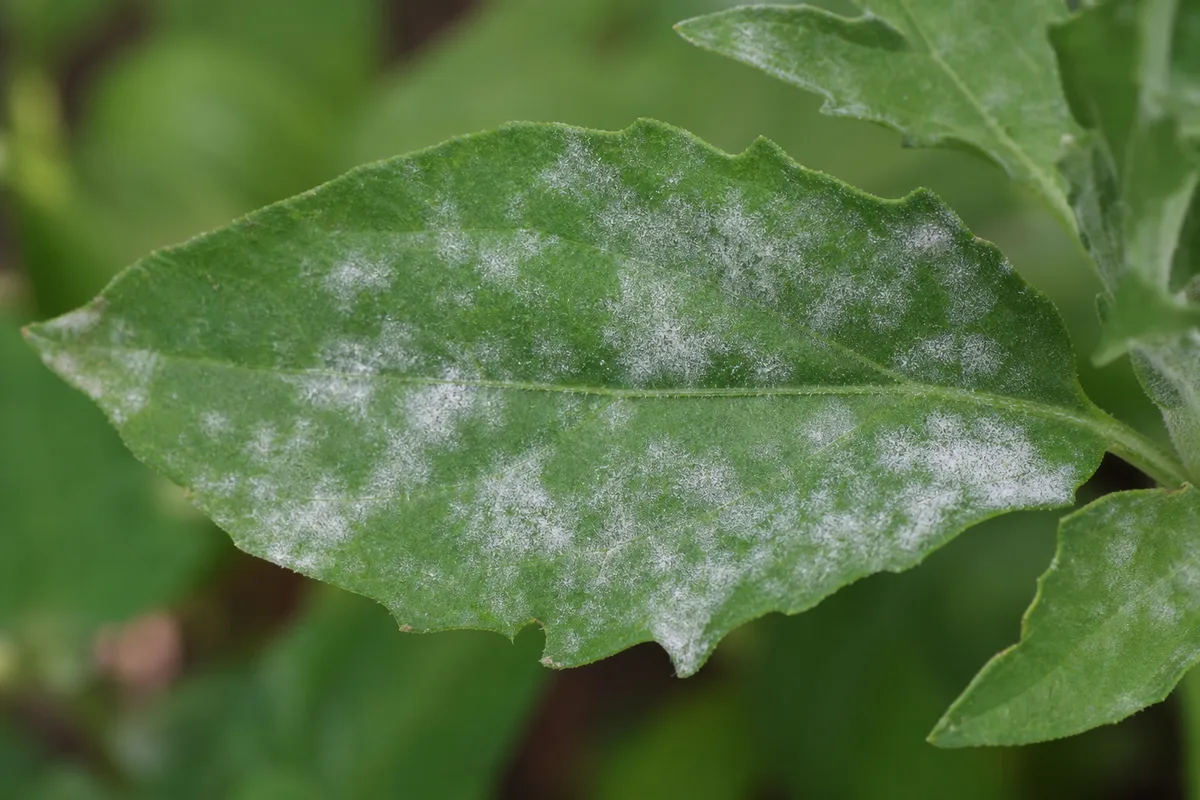
Powdery Mildew symptoms on Zinnia - compare with healthy tissue on the same plant.
Early signs:
- Small white circular spots on upper leaf surfaces, often starting on lower or inner leaves
- Fine white dusting on leaf edges, petioles, and young stems
- Spots that merge into solid white patches as the season progresses
Established infection:
- Thick white powdery fungal growth on leaves, flowers, or stems, especially in partially shaded spots within the planting
- Yellowing leaves beneath heavy coating as photosynthesis drops
- Lower leaves browning and dying from the base of the plant upward
- Stunted new growth and smaller leaves on severely affected stems
- Reduced bloom size or aborted buds when the fungus colonizes flower parts
What it does not look like:
- Brown water-soaked spots with halos-that pattern points to Alternaria blight or Cercospora leaf spot, not powdery mildew
- Orange-brown pustules on leaf undersides-rust, uncommon but different
- Uniform pale dust that wipes off once and never returns-likely mineral splash or pesticide dried on foliage
The powder smears when you rub it between fingers. That tactile test matters because zinnias in dusty garden paths or near lime-treated beds can pick up pale residue that mimics mildew from a distance.
How to confirm the cause
Work through these checks in order before you treat:
- Rub test - Lightly rub a coated leaf. Powdery mildew smears and leaves a faint residue on your finger. Mineral dust or dried spray wipes away cleanly without smearing fungal growth.
- Location pattern - Mildew usually starts on shaded inner leaves and spreads outward. Uniform coating across every leaf after a dusty wind event suggests debris, not fungus.
- Spacing audit - Measure distance between mature stems. Dwarf zinnias need roughly 20–25 cm; tall cutting types need 30–45 cm for adequate airflow. Tighter spacing strongly supports a mildew diagnosis in humid weather.
- Watering review - Confirm whether sprinkler or hose spray hits foliage in late afternoon. Wet leaves overnight increase stress but are not required for powdery mildew-still, base watering is part of the fix.
- Weather context - Warm days with cool humid nights favor spread. If coating appeared after a week of high humidity in a crowded bed, mildew is the leading suspect.
- Downy mildew check - Downy mildew shows grayish fuzz primarily on leaf undersides and needs wet conditions. Zinnia powdery mildew sits mostly on upper surfaces as dry white powder.
If the rub test smears white growth, spacing is tight, and inner leaves led the outbreak, you have enough to act on mildew without waiting for lab confirmation.
First fix for Zinnia
Thin overcrowded plants and remove the worst powdery-coated leaves to open airflow through the bed or container.
This single step addresses the condition zinnias most often create for themselves: too many stems competing in too little space. Pull out excess seedlings, cut back neighboring plants encroaching on your zinnias, or transplant container groupings so each plant has room for leaves to dry between watering cycles.
When removing leaves:
- Cut heavily coated lower leaves at the base with clean snips
- Bag and trash infected tissue-do not compost it in home piles where spores can survive
- Leave as much uncoated green tissue as possible for photosynthesis
Do not spray fungicide on day one if plants are still packed tight. University of Minnesota Extension notes fungicides will not cure existing powdery mildew infections-they protect healthy green tissue. Opening airflow first makes any later spray worthwhile.
Do not fertilize mildew-stressed zinnias hoping to push new growth. Stressed plants need cultural correction, not nitrogen that fuels soft susceptible shoots.
Step-by-step recovery
After thinning and cleanup:
- Switch to base watering - Water at soil level in morning so foliage dries quickly. Keep flowers and leaves as dry as practical during humid weeks.
- Apply potassium bicarbonate or horticultural oil on remaining healthy green tissue if coating is still spreading after spacing improves. PNW Handbooks lists bicarbonate-based products as supplements when mildew first appears, with thorough coverage essential. Follow label intervals-typically seven to ten days between applications.
- Consider neem oil or sulfur where labels allow on ornamentals and pollinator traffic is low. Apply early morning or late evening when bees are less active on zinnia blooms.
- Repeat scouting weekly - Pinch off new infected leaves as soon as you see spots, before patches merge across whole leaves.
- Deadhead spent blooms - Removing old flowers improves airflow around developing buds and reduces fungal footholds on aging tissue.
- Plan resistant replacements if the current variety collapses mid-season. Illinois Extension recommends Zahara, Profusion, and Oklahoma series for longer-lasting plants in humid climates.
For severe beds where most leaves are coated and growth has stopped, removing plants and replanting resistant stock often outperforms endless spray cycles on a spent annual.
Recovery timeline
Spacing and leaf removal show results within several days when humidity drops-new growth should emerge without white coating within one to two weeks if airflow holds.
Spray protection takes longer. Expect one to two weeks of label-interval applications before spread clearly slows. Old powdery leaves stay discolored or white; judge success by clean new leaves and normal bud development, not by reversing damage on mature foliage.
Late-season infections on tall heirlooms may never produce the flush of blooms you expected. Zinnias have a finite flowering window-mildew that dominates in August on a July-planted row may not recover enough to justify the water and space.
Lookalike symptoms to rule out
Alternaria blight causes reddish-brown spots with gray centers and dark stem cankers-not a dry white powder. It spreads in warm wet weather and can blight flowers. Fungicide choice and prevention differ from mildew management.
Cercospora leaf spot shows small roundish gray-centered spots that can merge and kill whole leaves. Spots are discrete lesions, not uniform flour-like dusting.
Mineral or pesticide residue wipes off once without smearing and does not spread to new leaves over successive days.
Downy mildew (rare on zinnias in many regions) produces grayish purple fuzz on undersides and needs prolonged leaf wetness. Upper-surface dry white powder points to powdery mildew instead.
Mistakes to avoid
Do not spray fungicide without improving spacing first-chemicals cannot compensate for a crowded humid microclimate.
Do not compost heavily infected zinnia tops. Illinois Extension advises against adding infected material to compost and recommends sanitizing snips after cutting coated tissue.
Do not overhead water in late afternoon during active mildew pressure.
Do not expect fungicides to erase white coating already on leaves. They protect new tissue; old infected leaves should be removed or tolerated if mild.
Do not replant the same susceptible tall cultivar in the same tight spacing next season and expect a different outcome.
Do not ignore early spots on inner leaves. UMN Extension recommends pinching infected leaves when first observed and beginning protectant sprays before the majority of foliage is coated.
How to prevent powdery mildew on Zinnia
Choose resistant genetics for humid climates. Profusion, Zahara, and Oklahoma series zinnias carry meaningful mildew resistance compared with many large double heirlooms. Read seed packets and plant labels for powdery-mildew resistance claims.
Space at sowing and after germination. Thin direct-sown rows to one strong seedling per 20–30 cm for dwarfs, wider for tall cutting types. In containers, one vigorous plant per 25–30 cm pot outperforms three crowded stems.
Water at the base in morning. Match zinnia culture to dry foliage habits-wet flowers invite other diseases too, including grey mould on spent blooms.
Plant in full sun with open airflow. Zinnia elegans performs best in full sun; shade slows drying and keeps inner leaves vulnerable longer.
Scout weekly from midsummer onward. Heat plus humidity is the danger window. Catch white spots when they are still pinhead-sized.
End-of-season sanitation. Rake out infected plant debris at season end. UAEX recommends cleaning up zinnia remains so overwintering spores do not carry into the next planting cycle.
Rotate planting sites in small gardens when possible. Do not sow susceptible zinnias in exactly the same crowded corner year after year.
When to worry
Treat as urgent when white coating covers most of the plant, lower leaves are yellowing and dying in sequence from the soil line up, or new buds fail while mildew spreads to flower stems. Affected zinnias lose vigor and cease growth under heavy infection-on an annual grown for summer color, that may mean replacing the planting rather than fighting through August.
Pull and destroy severely stunted plants that stopped blooming to reduce spore load on neighboring flowers. Zinnias are inexpensive to restart from seed or resistant transplants.
Low-level white spotting on a few inner leaves in an otherwise blooming row is worth managing but not a crisis. Thin, remove spotted leaves, and monitor-tolerance is reasonable when growth and flowering continue normally.
Conclusion
Powdery mildew on zinnias is common, visible, and manageable when you catch it early-but it punishes crowded humid plantings hardest. Open airflow first, remove coated debris, protect clean tissue with labeled sprays only if spread continues, and choose resistant varieties when your climate delivers hot humid summers. Judge recovery by new leaves and buds, not by whitening old ones, and plan next season’s spacing before you sow.
When to use this page vs other Zinnia guides
- Zinnia watering guide - Use for routine moisture checks before assuming powdery mildew is the main issue.
- Zinnia problems hub - Browse all 38 common issues on this species.
- White Spots on Zinnia - Different entry point when symptoms overlap with powdery mildew.