Mosaic Virus on Zinnia: Causes, Checks & Fixes
Quick answer
Mosaic virus on zinnias causes light-and-dark mottling with distorted, stunted leaves and small flowers-spread by aphids and other sucking insects. First step: pull and destroy infected plants immediately; there is no cure.
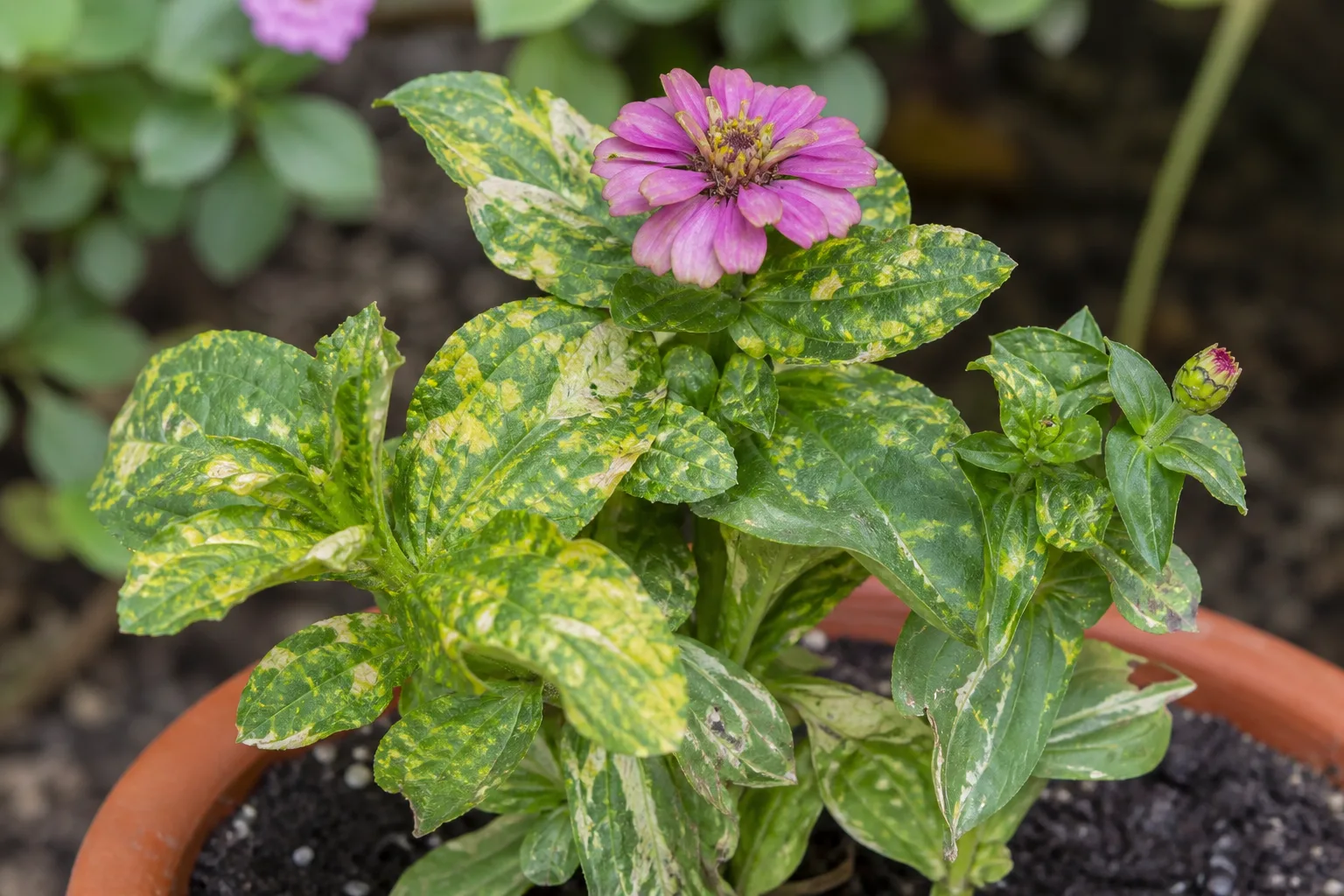
Mosaic Virus on Zinnia: Causes, Checks & Fixes
This guide covers mosaic virus on Zinnia. See also the general Mosaic Virus guide, watering, and light pages for this plant.
Mosaic Virus on Zinnia: Causes, Checks & Fixes
Quick answer
Mosaic virus on zinnias shows up as irregular light-and-dark green mottling on leaves, often paired with cupped, puckered, or narrow distorted new growth. On Zinnia elegans, the most common mosaic culprit is cucumber mosaic virus (CMV), which aphids pick up from infected plants or weed hosts and carry to healthy zinnias as they feed.
First step: pull and destroy any zinnia showing confirmed mosaic symptoms immediately. There is no cure once a plant is infected. Removing the plant stops it from acting as a virus reservoir while you address aphids on neighboring flowers.
Why Zinnia gets mosaic virus
Zinnias sit in a high-risk zone for CMV because of how they are grown and what feeds on them.
Aphids transmit the virus in minutes. CMV spreads in a non-persistent manner-aphids can acquire the virus during a brief feed and transmit it to the next plant almost immediately. That makes reactive spraying after mottling appears too late to save the infected zinnia, though it still matters for protecting clean neighbors.
Fast soft growth attracts aphids. Zinnia elegans is a very fast-growing summer annual that constantly produces tender tips, swelling buds, and new leaves in Zinnia light guide. Aphids prefer that soft tissue, which is why virus outbreaks often trace back to colonies on stem tops before mottling spreads downward.
Crowded beds concentrate both pests and spread. Zinnias direct-sown in dense blocks or packed into mixed cutting-garden rows give aphids short hops between plants. Tight spacing also slows drying and makes weekly scouting harder-small colonies on inner stems go unnoticed until mosaic symptoms appear on several plants at once.
Weeds and nearby crops harbor CMV. CMV has an extremely wide host range. Weeds such as lambsquarters, chickweed, pokeweed, and milkweed can carry the virus, as can many vegetables and other ornamentals. A zinnia row beside an infested vegetable patch or weedy fence line faces higher aphid traffic.
Other viruses affect zinnias too. Texas A&M documents curly top virus and tomato spotted wilt virus on zinnias in addition to CMV mosaic. Symptoms overlap-mottling, distortion, stunting-so the practical response is the same: remove infected plants and control the insect vectors listed for your region.
What mosaic virus looks like on Zinnia
Mosaic on zinnias is a pattern disease. The tell is how discoloration is distributed, not a single spot or edge burn.
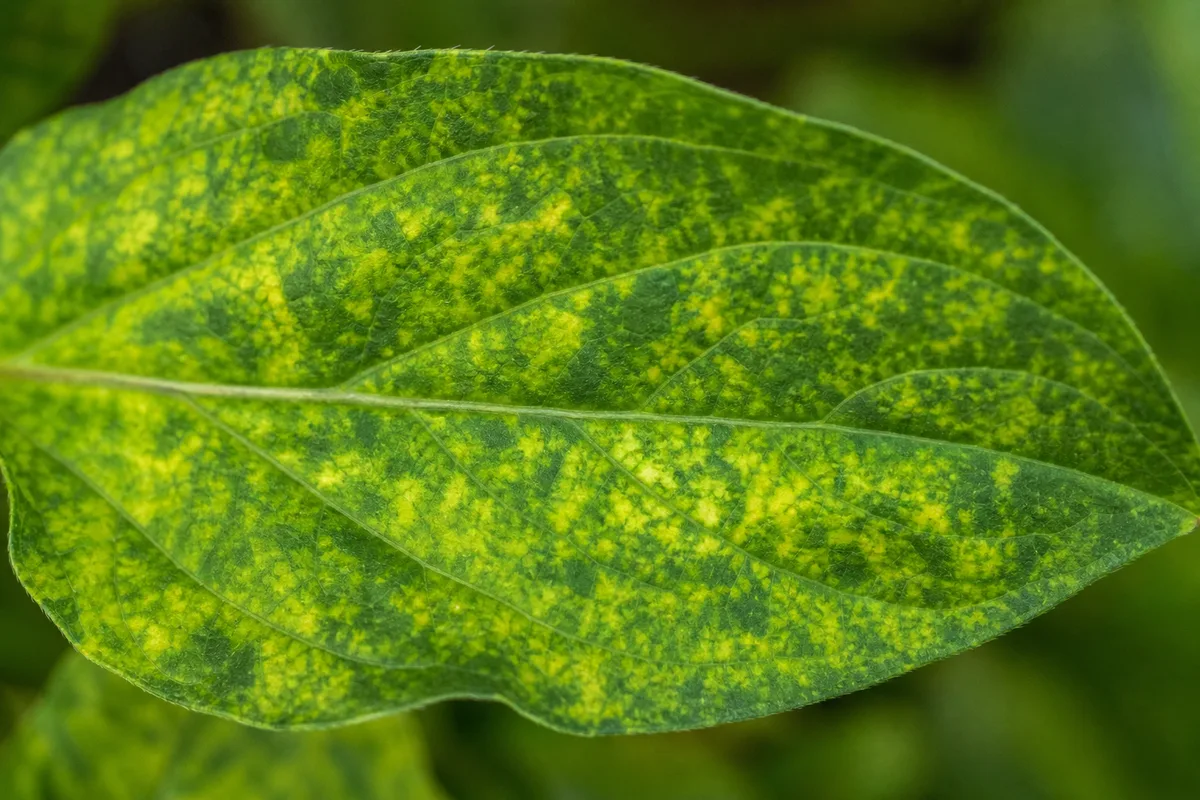
Mosaic Virus symptoms on Zinnia - compare with healthy tissue on the same plant.
Early signs:
- Irregular yellow, pale green, or light green patches mixed with normal green on leaves-classic mosaic mottling
- Slight cupping, puckering, or waviness along leaf margins on newest leaves
- Newest leaves smaller than older leaves on the same stem
- Aphids or honeydew on tips, sometimes with ants on stems below
Established infection:
- Distorted, narrow, or strap-like leaflets on new growth-sometimes called shoestring symptoms on CMV hosts
- Overall plant stunting compared with healthy zinnias in the same row
- Flower buds that stay small, open unevenly, or show color breaks and streaking
- Mottling spreading to additional leaves and stems over one to three weeks-not resolving after a single dry spell
What it does not look like:
- Uniform yellowing of lower leaves only-often natural aging, overwatering on Zinnia, or nitrogen shortage
- Dry white powder on leaf surfaces-powdery mildew
- Reddish-brown spots with gray centers-Alternaria blight or Cercospora leaf spot
- Ragged holes chewed overnight-caterpillars or slugs
- Crispy brown edges after one hot afternoon-sun or drought stress, usually temporary
The progression matters. Mosaic mottling on zinnias worsens on new leaves over successive weeks. A one-day pale streak after transplant shock or heat usually fades on the next flush of growth.
How to confirm the cause
Work through these checks before you treat neighboring plants or replant:
- Mottling pattern - Look for patchy light-and-dark green areas on multiple leaves, not uniform yellowing. CMV mosaic is blotchy and irregular; nutrient stress is often more even across the leaf surface.
- New growth test - Watch the top two to three leaves over seven to ten days. Virus-distorted new leaves stay small and warped. Aphid-free recovery after a stress event produces normal-sized clean leaves on the next cycle.
- Aphid and honeydew check - Inspect stem tips, buds, and leaf undersides with a hand lens. Colonies confirm active vector pressure. Absence of aphids does not rule out virus-they may have moved on after transmission.
- Row pattern - Virus often appears on one plant first, then adjacent zinnias within days as aphids feed sequentially. Random single-plant pale leaves in an otherwise healthy row suggest stress, not mosaic.
- Weed and garden context - Note weedy borders, nearby CMV-susceptible vegetables (cucurbits, peppers, tomatoes), or other ornamentals with mosaic symptoms. Shared aphid traffic supports a virus diagnosis.
- Rule out herbicide drift - Cupped distorted leaves also appear after auxin herbicide exposure. Drift usually hits multiple species in a swath on one side of the garden on the same date; virus spread is plant-to-plant through feeding over days.
Laboratory testing is the only way to confirm CMV with certainty, but for home zinnia beds the combination of persistent mosaic mottling, distorted new growth, aphid history, and spread to neighbors is enough to act.
First fix for Zinnia
Pull and destroy the infected zinnia immediately-roots, stems, leaves, and any attached buds.
Do not compost infected material in home piles. Bag it and trash it, burn where local ordinance allows, or bury deeply away from garden beds. The infected plant is a living virus source every day it remains in the row.
This single step is the entire cure for that plant. Sprays, fertilizer, pruning, and extra water will not clear mosaic from zinnia tissue once symptoms are established.
After removal:
- Inspect every neighboring zinnia within one meter for early mottling or tip distortion
- Check other summer annuals and vegetables in the same bed for aphids or mosaic signs
- Wash hands and clean snips before touching healthy plants
Do not replant a new zinnia in the exact same root hole on the same day without addressing aphids on surrounding plants-otherwise the replacement may be infected within days.
Step-by-step recovery
Once infected plants are out, focus on protecting clean stock:
- Scout neighbors daily for one week - Pinpoint any zinnias with faint mottling or distorted tips. Remove suspects early rather than waiting for full stunting.
- Reduce aphid pressure on remaining zinnias - Blast colonies off tips with a strong morning water spray every two to three days. Follow with insecticidal soap on label intervals if colonies persist, covering undersides of new leaves and buds.
- Pull weed hosts around the bed - Remove lambsquarters, chickweed, and other common CMV weeds near zinnia rows when feasible.
- Avoid excess nitrogen - Soft lush zinnia shoots attract aphids. Hold feeding until remaining plants are clearly aphid-free and blooming normally.
- Replant with clean seed or healthy transplants - Sow fresh zinnia seed or set out clean transplants after aphid activity drops. Space dwarfs 20–25 cm apart and tall cutting types 30–45 cm for airflow and easier scouting.
- Consider reflective mulch or row cover on replacements - In high-pressure gardens, reflective mulch can reduce aphid landing on young zinnias; floating row cover excludes aphids until plants flower, if pollination timing allows.
Do not rely on fungicides-mosaic is viral, not fungal. Do not expect pruning to save an infected zinnia; systemic virus remains in tissue above and below the cut.
Recovery timeline
Mosaic-infected zinnias do not recover. Mottled leaves stay mottled, and stunted stems rarely produce a normal late-season bloom flush worth keeping.
Neighboring clean plants protected after early removal may continue blooming normally through summer if aphid control holds. Expect one to two weeks of close scouting before you know whether the outbreak stopped with the removed plants.
Replacement zinnias sown from clean seed typically show normal growth within two to three weeks in warm soil. Judge success by unmarked new leaves and full-sized buds-not by trying to rehabilitate old infected tissue.
Lookalike symptoms to rule out
Aphid damage without virus - Curling and stunted tips from heavy aphid feeding can mimic early virus, but without the persistent mosaic mottling pattern. If aphids are controlled and the next leaf flush emerges clean and full-sized, virus was unlikely.
Nutrient deficiency - Nitrogen shortage yellows lower leaves evenly. Mosaic stays patchy on individual leaves and affects new growth disproportionately.
Powdery mildew - White dry powder on upper leaf surfaces, not green-yellow mottling. Different cause and different fix.
Alternaria blight and leaf spot - Discrete brown or gray-centered spots, not interwoven light and dark green patches across the leaf blade.
Transplant shock - Temporary wilt and pale new leaves for a few days after moving zinnia seedlings. Zinnia elegans dislikes root disturbance; direct-sown plants rarely show this. Shock clears on the next growth cycle without spreading plant to plant.
Herbicide drift - Strap-like twisted leaves on multiple species in a directional pattern after lawn or field spraying nearby.
Mistakes to avoid
Do not wait for an infected zinnia to outgrow mosaic-systemic virus does not clear.
Do not compost virus-infected zinnia tops or roots. Home compost rarely reaches temperatures that inactivate CMV in all tissue.
Do not spray fungicide on mottled leaves hoping for recovery. That wastes product and delays removal.
Do not apply broad-spectrum insecticides as the first response on every plant in the bed. They can kill aphid predators and sometimes push surviving aphids to feed more widely. Target colonies on tips first.
Do not take cuttings from a mottled zinnia to save it. Infected tissue carries virus into any propagation attempt.
Do not ignore a single mottled seedling in a dense row. Remove it before aphids bridge to neighbors.
How to prevent mosaic virus on Zinnia
Control aphids early and often. Scout zinnia tips weekly during warm bloom season. Water-blast small colonies before they spread honeydew and virus.
Space for airflow and visibility. Thin direct-sown rows to one strong seedling per 20–30 cm. Crowded zinnias hide aphids on inner stems until mosaic jumps several plants.
Manage weeds at bed edges. CMV overwintering and weed hosts near zinnia rows increase aphid traffic. Keep fence lines and path edges cleaned during the growing season.
Buy reputable seed and inspect transplants. Start with clean stock. Quarantine new zinnia transplants for several days before planting beside established beds.
Direct-sow when possible. Zinnias handle direct sowing well and avoid one transplant stress window where aphids often settle on soft regrowth.
Preserve beneficial insects. Lady beetles, lacewings, and parasitic wasps suppress aphids outdoors. Avoid unnecessary broad sprays that strip these allies from zinnia beds.
End-of-season cleanup. Remove spent zinnia debris at season end so infected plant material does not linger near next year’s sowing site.
When to worry
Treat as urgent when mottling appears on multiple zinnias in the same row within a week, when new buds stay distorted while aphids remain active on neighboring stems, or when more than one third of a planting shows stunting mid-season.
Remove severely affected plants without waiting-they will not produce a worthwhile bloom display and they feed aphid populations that threaten the rest of the bed.
A single zinnia with faint mottling on two leaves and no neighbors affected yet warrants removal of that plant and close monitoring, but is not a bed-wide crisis if aphids are controlled immediately.
Conclusion
Mosaic virus on zinnias is serious, visible, and untreatable once established-but the first action is simple. Remove infected plants, protect clean neighbors from aphids, and replant from clean seed rather than nursing mottled tissue through the season. On fast annuals grown for summer color, early removal beats every spray cycle. Judge success by healthy new zinnias with full-sized leaves and normal buds, not by waiting for mosaic-marked foliage to recover.
When to use this page vs other Zinnia guides
- Zinnia watering guide - Use for routine moisture checks before assuming mosaic virus is the main issue.
- Zinnia problems hub - Browse all 38 common issues on this species.