Heat Stress on Zinnia: Causes, Checks & Fixes
Quick answer
Heat stress on Zinnia shows as afternoon wilting when soil dries too fast in containers or blazing sun. First step: water deeply at the base when the top 3 cm is dry and mulch pots during extreme heat waves.
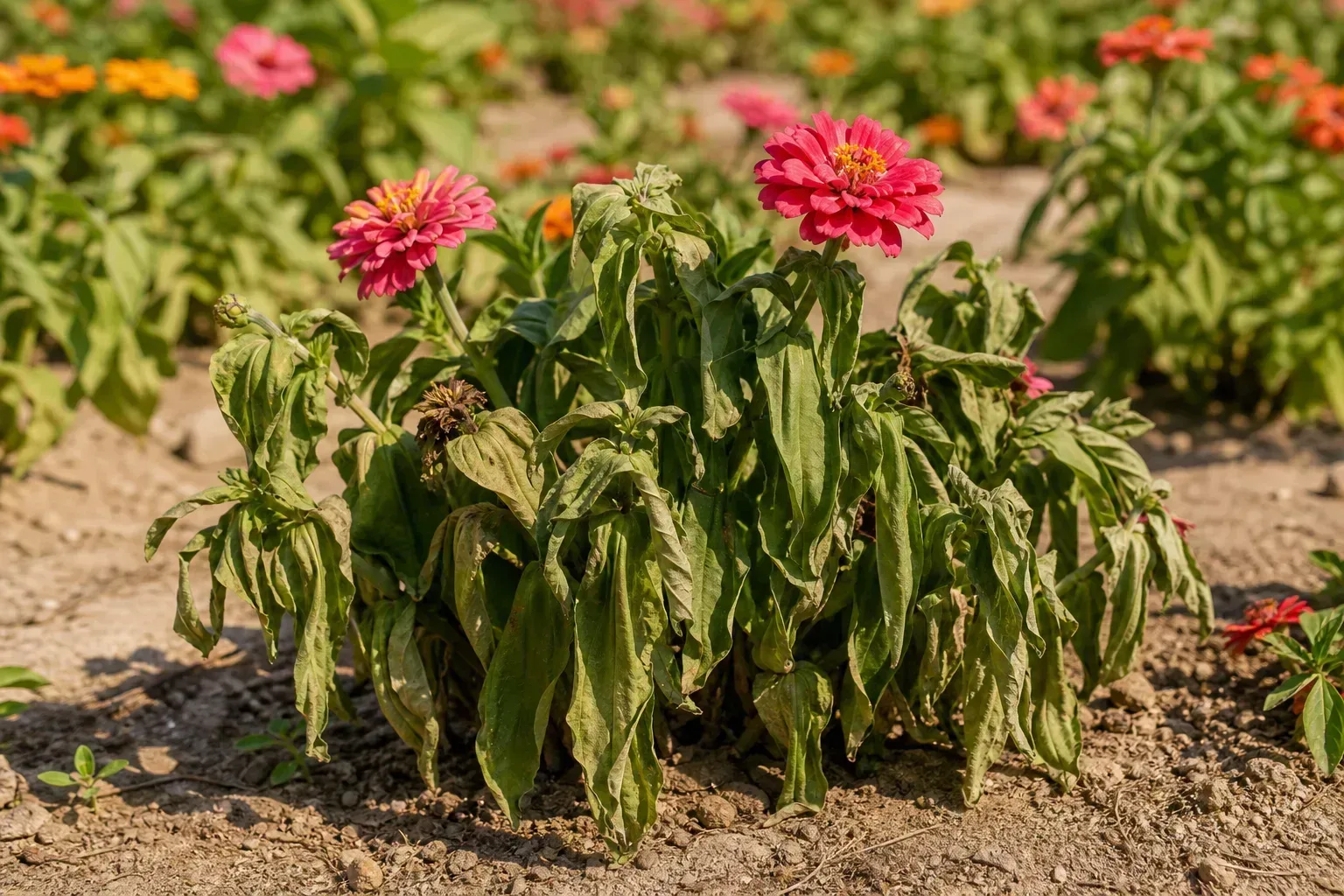
Heat Stress on Zinnia: Causes, Checks & Fixes
This guide covers heat stress on Zinnia. See also the general Heat Stress guide, watering, and light pages for this plant.
Heat Stress on Zinnia: Causes, Checks & Fixes
Quick answer
Heat stress on Zinnia (Zinnia elegans) is not the same as a plant that cannot handle sun. Zinnias are warm-season annuals built for full sun and summer heat-but they still lose the water race when blazing afternoon temperatures, small containers, and missed watering combine. The classic picture is dramatic afternoon flop: flower heads hang, leaves go soft, and the whole plant looks finished-then it stands upright again after a deep drink or once evening cools the air.
First step: water deeply at the base when the top 3 cm of soil is dry, and mulch container surfaces during extreme heat. Do not assume every wilted zinnia is thirsty; check moisture first. If soil is wet and stems feel soft at the base, you are dealing with overwatering on Zinnia or disease, not heat-and more water makes it worse.
What heat stress looks like on Zinnia
Zinnias push fast growth and heavy bloom in direct sun. When heat outpaces root uptake, turgor drops and the plant shows stress quickly.
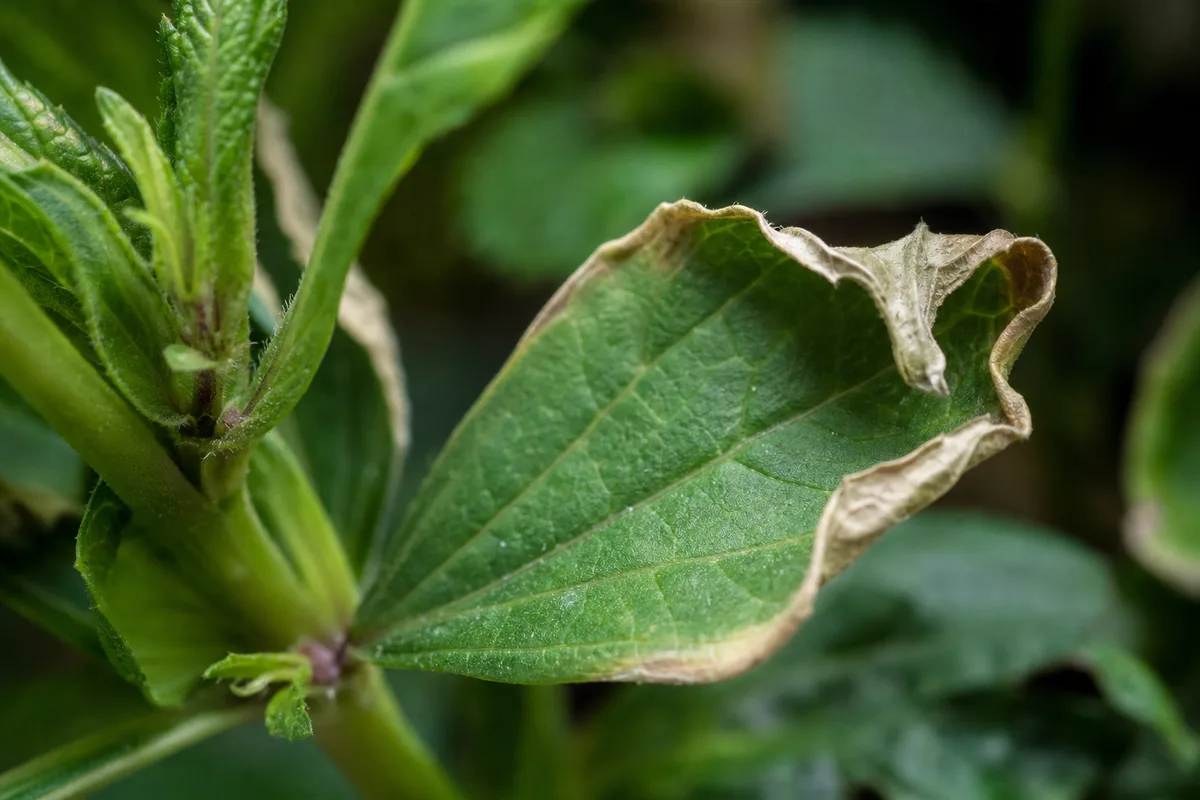
Heat Stress symptoms on Zinnia - compare with healthy tissue on the same plant.
Typical heat and drought stress:
- Dramatic afternoon droop, worst between noon and late afternoon on hot days
- Flower heads hanging lower than usual while stems still feel firm when pinched
- Dry, light containers or bed soil when you probe 5–8 cm near the stem
- Crispy brown edges on older lower leaves after repeated dry cycles
- Faded, shorter-lived blooms during sustained heat without steady moisture
- Small buds browning and dropping before they open when roots dry during bud swell
- Recovery within hours after deep base watering, or overnight when temperatures fall
Temporary heat wilt on moist soil:
- Same afternoon limp look, but soil is moist several centimeters down
- Plant firms up by evening or early morning without extra water
- Stems remain green and firm; no mushy tissue at the soil line
- Common when sustained temperatures climb above roughly 32–35°C even on well-watered plants
Heat compounded by environment:
- Containers on black plastic, metal rails, or south-facing walls that radiate stored heat
- Root-bound pots where the small soil volume dries in a single sunny afternoon
- Reflective gravel, concrete, or pavement raising air temperature around bed edges
- Crowded plantings where inner leaves trap heat and slow drying after overhead misting
Not heat stress-rule these out:
- All-day wilt on soggy soil with soft brown stems at the base (overwatering, stem rot)
- Reddish leaf spots with gray centers plus basal stem cankers (Alternaria blight)
- White powdery coating on leaves in humid crowded beds (powdery mildew)
- Wilting within hours of transplanting (transplant shock, not heat alone)
Heat stress on zinnias is usually reversible when stems stay firm and soil was genuinely dry. The damage you see is often water loss and tissue scorch-not infection.
Why Zinnia gets heat stress
Zinnias evolved for warm Mexican summers with seasonal rainfall, not for boom-bust watering in small pots on a hot balcony. They tolerate heat once established, but their fast transpiration in full sun means roots must resupply water as quickly as leaves lose it. When they cannot, stems and flower heads droop.
Container size and soil volume are the biggest drivers on patios and balconies. A blooming zinnia in a small pot may hold only a few liters of mix. In six-plus hours of direct sun during Indian summer or a North American heat wave, that volume can go from moist to dry in one afternoon. LeafyPixels plant data lists wilting in peak afternoon heat and drooping flower heads as classic underwatering on Zinnia signs on zinnias-the same visible pattern as heat stress when drought accompanies high temperature.
Missed or shallow watering makes heat stress worse. A quick sprinkle wets the surface but leaves the root zone dry below. Zinnias prefer evenly moist, well-drained soil during active growth-not alternating flood and drought. Boom-bust cycles scorch leaf margins and abort buds even when the plant survives.
Radiant heat from surfaces pushes stress beyond what air temperature alone suggests. Containers sitting on dark deck boards, asphalt, or metal shelving absorb heat. Bed edges beside paths and walls receive reflected warmth that dries soil faster than the open middle of a border.
Temporary midday wilt on moist soil is a different mechanism. When temperatures stay high, plants sometimes wilt during the hottest hours as moisture evaporates from leaves faster than roots replace it-even when soil moisture is adequate. University of Maryland Extension notes that short wilting periods on hot days do not necessarily harm plants if soil moisture is ample and turgor returns when temperatures drop. OSU Extension describes the same pattern: plants that wilt in the hottest part of the day and recover in evening are likely suffering from heat stress, not drought.
Heat plus other stressors compounds damage. Wind, reflected sun, and drought together increase scorch on blooms and leaf edges. Spider mites and thrips also surge in hot dry conditions on zinnias, adding stippling and distorted buds that mimic general decline-inspect leaf undersides if heat correction alone does not help.
Transplant timing matters. Moving root-bound seedlings into blazing beds during a heat wave forces wilt that looks like heat stress but starts from damaged feeder roots. Zinnias dislike root disturbance; direct sowing avoids much of this.
Zinnias are among the more heat-tolerant garden annuals, but tolerance is not immunity. They still need steady root-zone moisture during bloom season, especially in containers.
How to confirm the cause
Work through these checks in order. Heat stress and underwatering overlap, so confirmation depends on moisture, timing, and stem condition-not just how limp the plant looks.
- Time of day - Afternoon-only droop that improves by morning suggests heat or dry soil. All-day limp on wet soil points elsewhere.
- Deep moisture test - Stick a finger or dry skewer 5–8 cm into mix near the stem. Dry throughout confirms drought-driven heat stress. Moist core with evening recovery on its own fits temporary heat wilt-do not add water yet.
- Recovery after one deep drink - If soil was dry, water deeply at the base once. Turgor returning within hours confirms reversible water stress. No improvement on wet soil means stop watering and inspect stems.
- Stem firmness at soil line - Pinch the base gently. Firm green tissue on dry soil supports heat/drought diagnosis. Mushy brown tissue on wet soil is rot or blight-not heat.
- Pot weight and context - Light, dry pots on sunny rails fit container heat stress. Heavy pots with blocked drainage do not.
- Environmental scan - Note black containers, reflective paving, missed morning watering, and whether neighbors in the same row show the same afternoon pattern.
- Bud and bloom check - Bud drop after a dry spell supports heat stress. Spotted leaves with basal stem lesions do not.
If soil is dry, stems are firm, and wilt peaks in afternoon heat, you are treating heat-related water stress. If soil is moist and the plant recovers every evening without watering, provide shade during extreme heat rather than more water.
First fix for Zinnia
Water deeply at the base when the top 3 cm of soil is dry-until water runs from drainage holes or bed soil is moist well below the surface.
This single action addresses the most common heat stress scenario: a dry root zone in a hot container or bed edge. Water at soil level in morning when possible so moisture is available before peak transpiration. Let foliage dry in sun the same day; avoid overhead sprinkling in midday heat, which wastes water to evaporation and can worsen foliar disease when droplets linger on zinnia leaves and flowers.
If soil is already moist and the plant wilted only in afternoon heat, do not water again. Move the container to afternoon shade during extreme heat, mulch the surface, and recheck in the evening. Overwatering heat-stressed-looking plants on wet mix causes stem rot.
If soil was dry, after deep watering mulch the container surface with compost, straw, or shredded bark to slow evaporation during the next heat wave. Empty saucers so roots are not sitting in stagnant runoff.
Do not fertilize, repot, or transplant on the same day you rescue a heat-wilted zinnia. Salt and root disturbance on stressed tissue slow recovery.
Step-by-step recovery
After the first watering decision, follow the path that matches your diagnosis.
For dry-soil heat stress:
- Water deeply at the base once, then let the top 3 cm dry before the next drink-do not keep soil soggy.
- Mulch containers and bed edges to keep roots cooler and reduce surface evaporation.
- Check pots daily during heat waves; full-sun containers may need water every two to three days in peak summer, less in cooler weather.
- Group small containers so they shade one another’s pot walls slightly-without blocking airflow to foliage.
- Deadhead spent blooms once turgor returns so energy goes to new flowers rather than seed on stressed stems.
- Hold fertilizer until the plant looks firm for several days.
For temporary heat wilt on moist soil:
- Skip extra watering.
- Provide light afternoon shade during sustained extreme heat-30–40% shade cloth, a patio umbrella, or relocation to east-side morning sun with afternoon protection.
- Remove shade toward evening so plants still receive enough direct light for blooming; zinnias need six or more hours of sun for continuous flowers.
- Increase airflow around crowded pots; spacing reduces heat trapping between leaves.
For heat stress with bud drop:
- Restore even moisture at the base-buds abort when roots dry during swell.
- Avoid disturbing roots; do not transplant mid-heat-wave.
- Expect new buds within one to two weeks once moisture stays steady.
- Treat aphids or mites on tender buds if present; pests plus heat abort buds faster.
For scorched leaf edges after repeated dry cycles:
- Leave partially damaged leaves in place until new growth appears unless tissue is fully brown and crisp.
- Maintain steady moisture going forward; scorched margins do not green up.
- Trim fully dead lower leaves only after the plant stabilizes.
Do not stack Zinnia repotting guide, heavy pruning, and fertilizer on the same day as a heat crisis.
Recovery timeline
Dry-soil heat wilt often clears within hours after one deep base watering. Crispy leaf edges and faded blooms remain until new growth replaces them over one to two weeks.
Temporary heat wilt on moist soil needs no extra water-plants typically recover by evening when temperatures drop. If afternoon wilt persists into the next morning on moist mix, investigate roots, pests, or stem disease.
Bud drop from heat drought stops once moisture stays even; new buds form within one to two weeks on healthy stems.
Repeated heat cycles without correction cause cumulative scorch-lower leaves brown entirely, bloom size shrinks, and plants look tired even between wilting episodes. Recovery takes longer because you are waiting on fresh growth, not old tissue repair.
Judge success by firm stems, upright new growth, and clean developing buds-not by whether every heat-scorched leaf becomes perfect again.
Lookalike symptoms to rule out
General wilting from overwatering - Same limp look, but soil stays wet for days and stems soften at the base. Heat stress on dry soil has the opposite moisture picture.
Alternaria blight - Reddish-brown leaf spots with gray centers and dark sunken stem cankers near the soil line. Wilt from girdled stems does not recover with watering.
Transplant shock - Wilting within hours of moving seedlings, often with neighbors direct-sown in the same bed looking fine. Timing matches planting, not a gradual heat wave.
Powdery mildew - White flour-like coating on leaves in humid crowded plantings. Weakens plants but does not typically cause dramatic afternoon flop on dry soil alone.
Spider mites in hot dry weather - Fine stippling on upper leaves, sometimes with webbing. Blast with water and inspect undersides if heat correction alone fails.
Leggy shade growth - Tall weak stems in too little sun may flop structurally; move to full sun. This is not turgor loss from heat.
Mistakes to avoid
Do not water every wilted zinnia automatically at noon-check soil first. Wet-soil wilt worsens with more water.
Do not shallow-sprinkle containers during heat waves. Surface moisture masks dry roots below and trains you to water too often without reaching the root zone.
Do not overhead irrigate zinnias in evening during humid weather. Wet foliage overnight fuels Alternaria and powdery mildew. Base watering in morning is safer.
Do not transplant, repot, or fertilize during peak heat when plants are already stressed. Fix moisture and shade first.
Do not assume heat tolerance means zinnias never need water in bloom season. They handle warm weather well but still wilt when a small pot goes bone dry in one afternoon.
Do not leave containers on black surfaces without mulch or saucer drainage. Radiant heat and stagnant water both damage roots.
Do not provide full-day shade to fix heat stress-zinnias need direct sun to bloom. Temporary afternoon relief during extremes is enough.
How to prevent heat stress on Zinnia
Water at the base when the top 3 cm dries, adjusting for container size, heat, and rain-not a fixed calendar. In peak summer, check pots daily; in cooler weather, stretch intervals to every four or five days.
Plant in full sun with well-drained, moderately fertile soil. Zinnias perform best with six or more hours of direct light and evenly moist-not constantly wet-conditions during active growth.
Use larger containers than you think you need for balcony zinnias. More soil volume buffers one-afternoon dry-outs. Ensure drainage holes stay open and empty saucers after watering.
Mulch beds and container surfaces in heat waves. Organic mulch keeps roots cooler and slows evaporation-especially important beside reflective paths and walls.
Water in morning when possible so roots absorb moisture before peak transpiration. OSU Extension recommends deep watering over shallow sprinkles during high heat, and notes wilted plants should be watered as soon as reasonable to minimize time spent wilted-while still confirming soil was dry first.
Space plants 20–30 cm in beds for airflow so leaves dry quickly after rain or irrigation. Good spacing also reduces heat trapping and disease pressure in monsoon humidity.
Direct-sow after last frost when possible to avoid transplant shock during early heat. Missouri Botanical Garden notes zinnias are easily grown from seed sown directly in the ground.
During sustained extreme heat above roughly 35°C, provide light afternoon shade for containers only-remove it when the spell breaks so bloom count stays high.
Deadhead spent flowers every few days during bloom season. MSU Extension recommends deadheading to keep zinnias performing; on heat-stressed plants, removing spent blooms redirects energy once turgor returns.
When to worry
Treat as urgent when plants stay wilted into the next morning on dry soil despite deep watering-roots may be damaged, pot-bound, or diseased rather than simply dry.
Act quickly when several containers fail at once during a heat wave, when developing buds drop daily for more than a week, or when crispy scorch climbs stems while you are watering shallowly without checking depth.
Afternoon wilt on dry soil in one container that perks up after a single deep drink is manageable-not an emergency-once you adjust rhythm and mulch for heat.
Persistent limp on wet soil, soft stems at the base, or spotted leaves with cankers are not heat stress-remove affected plants and protect neighbors.
Conclusion
Heat stress on zinnias looks dramatic but is usually readable. Afternoon flop on dry soil with firm stems wants one deep drink at the base and mulch for the next hot spell. Afternoon flop on moist soil that recovers on its own wants afternoon shade during extremes-not more water. Confusing the two is how good annuals get drowned or scorched repeatedly. Zinnias are built for summer sun; they just need enough root-zone moisture and container volume to keep pace when the afternoon turns fierce.
When to use this page vs other Zinnia guides
- Zinnia watering guide - Use for routine moisture checks before assuming heat stress is the main issue.
- Zinnia problems hub - Browse all 38 common issues on this species.
- Wilting on Zinnia - Different entry point when symptoms overlap with heat stress.
- Drooping Leaves on Zinnia - Different entry point when symptoms overlap with heat stress.