Seedlings Falling Over on Zinnia: Causes, Checks & Fixes
Quick answer
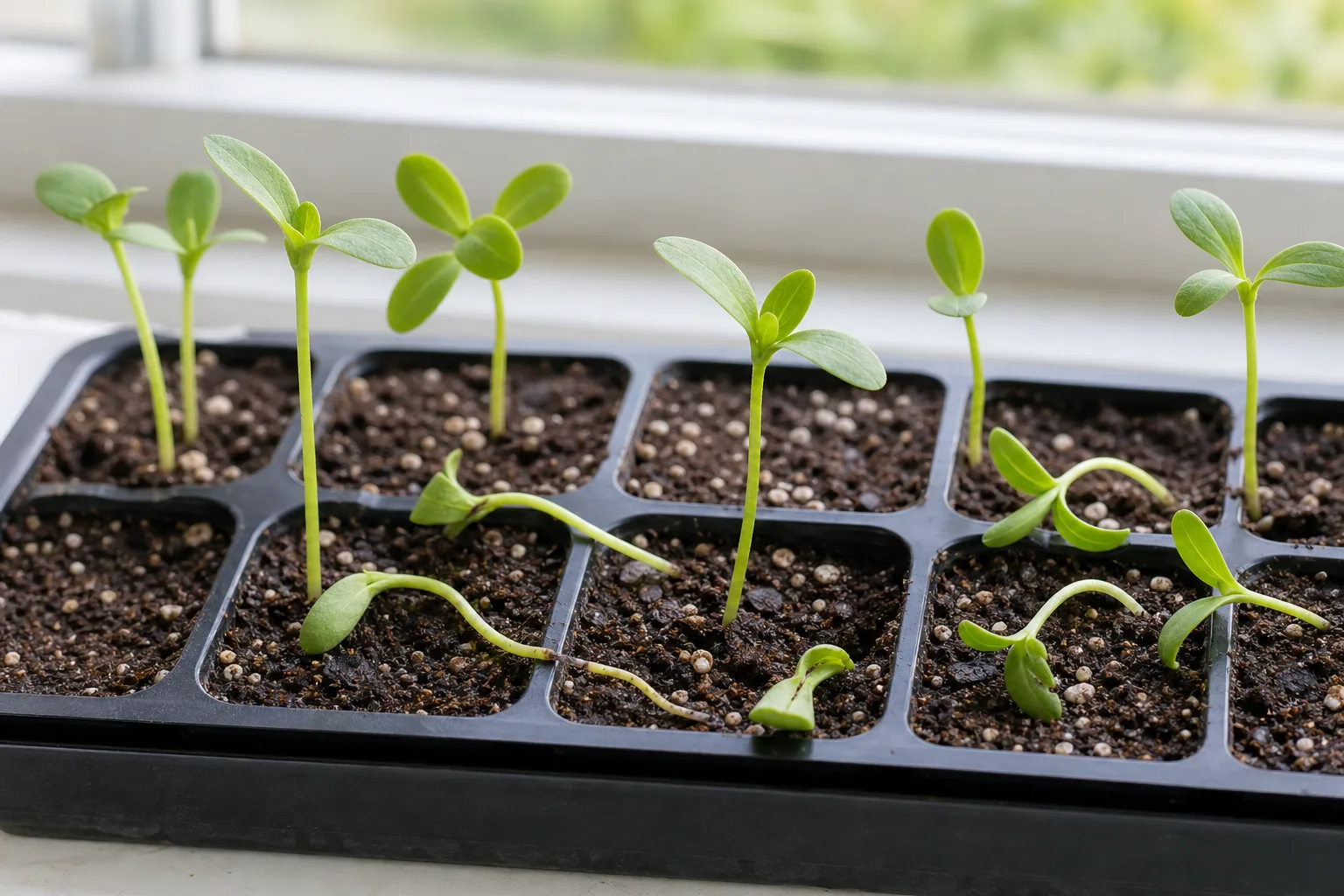
Zinnia seedlings that flop at the soil line in wet trays are usually damping-off-not a watering fix but a fungal collapse. First step: remove every fallen seedling immediately and stop overhead watering before adjusting light or airflow.
Seedlings Falling Over on Zinnia: Causes, Checks & Fixes
This guide covers seedlings falling over on Zinnia. See also the general Seedlings Falling Over guide, watering, and light pages for this plant.
Seedlings Falling Over on Zinnia: Causes, Checks & Fixes
Quick answer
When zinnia seedlings fall over, the cause is almost always one of two problems: damping-off (fungal stem collapse at the soil line in wet trays) or leggy weak growth (thin stretched stems that cannot support the shoot in low light). On Zinnia elegans, damping-off is the more common and more urgent failure indoors-especially when trays stay covered, watered from above, or germinated in cool soggy mix.
First step: remove every collapsed seedling and stop overhead watering today. Damping-off spreads through shared tray moisture and contaminated soil. You cannot revive seedlings whose stems have already pinched and rotted at the base; saving the still-upright neighbors depends on drying the environment fast.
What falling seedlings look like on Zinnia
Zinnia seedlings grow quickly once they emerge-often within five to seven days at warm soil temperatures-and that speed makes the early collapse pattern easy to spot when something goes wrong.
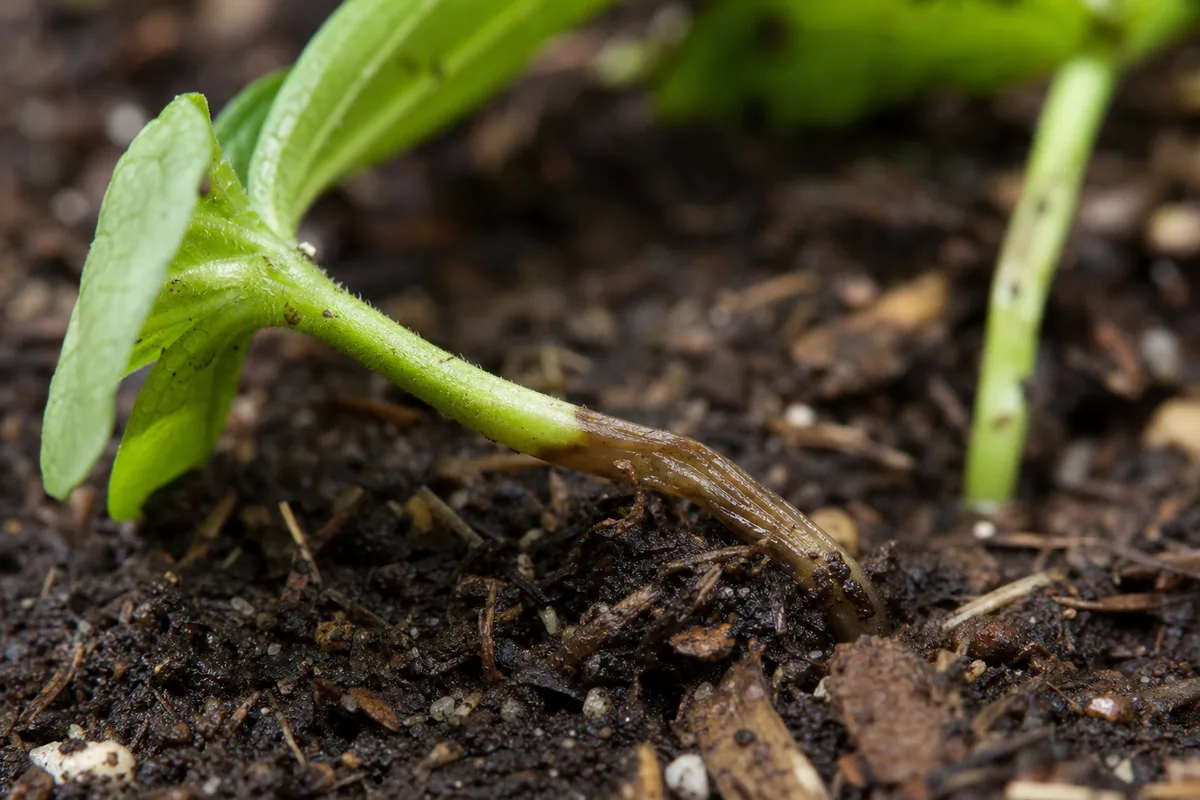
Seedlings Falling Over symptoms on Zinnia - compare with healthy tissue on the same plant.
Damping-off collapse:
- Seedlings look healthy at first, then wilt and topple right at the soil line
- Lower stems turn thin, water-soaked, brown, or thread-like where they enter the mix
- Affected seedlings often fall in patches across one tray, not uniformly across every cell
- White or gray fuzzy growth may appear on the soil surface in humid domed trays
- Cotyledons may yellow or gray before the whole shoot dies
Leggy flop (no stem rot):
- Seedlings are noticeably tall and pale, reaching toward the light source
- Stems are thin but still firm and green at the soil line when pressed
- Plants lean or bend rather than pinching off cleanly at the base
- Often affects an entire tray evenly when light is too weak or too far away
- No mushy stem tissue or rapid neighbor-to-neighbor die-off
Outdoor direct-sown zinnias can also fall over after cold wet weather at emergence, but the same stem-base inspection applies: rotten pinch at soil level means damping-off; firm lean means stretch or wind.
Why Zinnia seedlings fall over
Zinnias are fast, sun-loving annuals native to warm regions. They germinate best with warm soil and bright light, then race toward bloom in six to eight weeks. That fast early growth also means seedlings pass through a short vulnerable window right after emergence-exactly when damping-off fungi attack.
Damping-off in wet seed trays
Damping-off is caused by soil-borne fungi and water molds including Pythium, Rhizoctonia, and Fusarium. These pathogens thrive in cool, wet seed-starting mix and infect stems at or just below the soil line. Infected tissue cannot support the shoot; the seedling collapses and dies. Seedlings are only highly susceptible for a brief period after emergence-as they mature, resistance increases.
Zinnia trays fail this way indoors because:
- Overhead watering or misting keeps foliage and the soil surface constantly wet
- Humidity domes left on after germination trap stagnant moisture
- Non-sterile mix or reused trays carry pathogens from last season
- Cool soil slows growth so seedlings stay in the susceptible stage longer
- Crowded cells reduce airflow and keep the canopy humid
Leggy stretch from weak light
Zinnias are sun-loving annuals that need strong light from the day cotyledons open. Without adequate intensity, seedlings stretch toward the nearest window or bulb, producing thin weak stems that flop under their own weight or a light brush. A south window alone in late winter often is not enough without daily rotation; grow lights placed 2–3 inches above the canopy are the reliable fix.
Heat mats help germination but leaving seedlings on constant bottom heat after sprouting can accelerate weak upward stretch if light does not keep pace. Match warmth during germination with immediate strong light once green shows.
Other causes to keep in mind
overwatering on Zinnia without active rot yet can soften stems before fungi take hold-especially in peat-heavy mix that stays soggy for days. Crowded sowing forces competition for light and airflow. Sowing too early under short winter days increases legginess before outdoor transplant weather arrives.
Zinnias dislike root disturbance, so repeated handling of floppy seedlings during rescue attempts can add transplant stress on top of the original problem. Direct-sowing outdoors after frost avoids much of the indoor seedling stage entirely.
How to confirm the cause
Work through these checks in order before you change light, repot, or resow:
- Stem pinch test - Gently press the base of an upright seedling where it meets the soil. Mushy, thread-thin, or discolored tissue confirms damping-off. Firm green tissue points to legginess or water stress instead.
- Collapse pattern - Random patches or clusters dying in one tray suggest fungal damping-off. An entire flat leaning the same direction suggests insufficient light.
- Soil surface moisture - Scratch the top centimeter. If it never dries between waterings and algae or mold is visible, damping-off risk is high.
- Tray cover status - Domes still on after full emergence trap humidity and favor fungi. Remove them and reassess.
- Light distance and duration - Measure grow-light height. More than 3–4 inches above zinnia seedlings, or fewer than 14 hours of light daily, supports leggy flop.
- Germination conditions - Cool wet mix at sowing combined with fast zinnia emergence is a classic damping-off setup. Warm sterile mix with prompt light reduces risk.
- Neighbor spread - New collapses appearing daily in the same tray mean active damping-off. Static lean without new deaths suggests light correction may be enough.
If stems are firm and only the upper shoot bends, skip fungicide thoughts and fix light first. If stems pinch at the soil line, light alone will not save that seedling.
First fix for Zinnia
Remove every collapsed or mushy-base seedling and stop overhead watering immediately.
Place the tray where upright seedlings get bright light, let the soil surface dry slightly before the next drink, and switch to bottom-watering so leaves and stems stay dry. This single step limits pathogen spread and stops the wet conditions that kill remaining plants.
Do not mist trays, do not leave humidity domes on, and do not try to prop up seedlings whose stems have already rotted at the base-they cannot recover. Hold off on fertilizer, Zinnia repotting guide, or transplanting until you know whether neighbors are stable for several days.
Step-by-step recovery
Once collapsed seedlings are discarded and overhead water is stopped, protect the survivors in this order:
- Isolate the tray - Move healthy cells away from any tray with active collapse if space allows. Damping-off spreads through shared tools, splash, and contaminated surfaces.
- Dry the surface slightly - Wait until the top of the mix lightens in color before bottom-watering again. Peat trays should stay moist deeper down but not soggy on top.
- Bottom-water only - Set trays in a shallow reservoir for ten to fifteen minutes, then lift and drain completely. Pour off any standing water in the saucer.
- Add airflow - Run a small fan on low several hours daily. Gentle air movement strengthens stems and dries the canopy faster.
- Correct light immediately - Position grow lights 2–3 inches above seedling tops for 14–16 hours daily. Raise lights as plants grow to prevent heat scorch.
- Thin crowded cells - Keep one strong zinnia per cell so light and air reach each stem.
- Resow if losses are heavy - Zinnias germinate quickly in warm sterile mix. A fresh sowing with corrected culture often beats nursing a half-empty tray through the same conditions.
- Harden off before outdoor move - If survivors reach transplant size, acclimate gradually. Zinnias need consistent warmth above roughly 21°C and Zinnia light guide outdoors-cold wet garden soil after indoor collapse can trigger a second round of damping-off.
For leggy but firm seedlings, improving light and airflow is the priority. You can pinch the growing tip once plants reach 7–10 cm to encourage bushier regrowth, but do not bury zinnia stems deep like tomatoes-crown rot at the soil line is a real risk.
Recovery timeline
Damping-off collapsed seedlings: No recovery. Once the stem pinches at the soil line, that plant is done within a day or two.
Still-upright neighbors after environment fix: You should see no new collapses within three to five days. If toppling continues, discard the tray and resow with sterile mix rather than fighting active rot.
Leggy firm seedlings: Stronger stems often develop within one to two weeks under corrected light and gentle fan movement. New leaves should look darker green and closer together-not pale and widely spaced.
Resown zinnias: Expect visible sprouts in five to seven days at warm soil temperatures, then move immediately under close grow lights the day cotyledons open.
Lookalike symptoms
| What you see | Likely cause | Key difference |
|---|---|---|
| Pinch at soil line, brown thread stem | Damping-off | Base tissue is rotten, not just bent |
| Tall pale lean toward window | Leggy low light | Stem base firm when pressed |
| Whole tray wilted, mix waterlogged | Overwatering stress | May precede damping-off; stems soften but without rapid patch death |
| Holes in cotyledons, slime trails | Slug or caterpillar damage | Stem base still firm; pests visible on leaves |
| Blackened tissue after frost exposure | Cold damage | Follows a freeze; soil-line rot pattern differs from damping-off |
Mistakes to avoid
- Standing up collapsed seedlings with toothpicks - If the base is rotten, propping the top does not restore vascular tissue.
- Misting or spraying foliage - Wet stems and leaves favor fungi in enclosed trays.
- Leaving humidity domes on after emergence - Domes help germination; they hurt seedlings after green shows.
- Reusing old mix or uncleaned trays - Garden soil and dirty flats carry damping-off pathogens.
- Watering on a calendar - Check surface moisture; cool wet mix kills faster than brief dryness.
- Starting zinnias on a windowsill alone in February - Leggy stretch is nearly guaranteed without supplemental light.
- Transplanting floppy damping-off survivors - Weak infected stems fail in the garden; resow instead.
How to prevent seedlings falling over on Zinnia
Prevention is the only reliable control for damping-off-treatment after collapse rarely saves affected plants.
- Use sterile seed-starting mix for indoor sowing; never garden soil in trays.
- Clean or replace trays - Wash pots, soak in 10% bleach solution, rinse thoroughly, or use fresh containers.
- Sow at warm soil temperatures around 22°C so zinnias germinate fast and outgrow the susceptible stage quickly.
- Remove domes and heat mats once sprouts appear; shift effort to light, not extra bottom warmth.
- Bottom-water to keep stems and leaves dry.
- Provide grow lights 2–3 inches above seedlings for 14–16 hours daily; rotate trays if using windows.
- Run a gentle fan several hours daily to strengthen stems and reduce humidity.
- Thin to one seedling per cell and avoid overcrowding flats.
- Direct-sow outdoors after last frost when possible-zinnias perform best with minimal root disturbance and skip the riskiest indoor weeks entirely.
- Space garden plants 20–30 cm apart after transplant for airflow; zinnias in full sun with good drainage are less disease-prone than crowded damp trays indoors.
When to worry
Act the same day if:
- Multiple seedlings topple in one tray within 24–48 hours
- Stems look thread-thin or water-soaked at the soil line on otherwise healthy-looking tops
- White fuzzy growth spreads across the mix surface
- New collapses keep appearing after you reduced watering
- An entire flat dies uniformly with sour-smelling mix
You can wait a few days to adjust light if:
- Seedlings are leaning but stem bases stay firm and green
- No new deaths appear after you corrected watering
- Only stretch and paleness are present without stem pinch
Zinnia seed-starting cross-check
Zinnias are among the easiest summer annuals once they reach the garden in full sun, but the indoor seedling stage is where most collapse happens. Match your setup to how Zinnia overview actually grows: warm germination, immediate bright light, dry stems, fast transition outdoors.
If indoor starts fail repeatedly, direct-sowing zinnia seed 1 cm deep in a sunny bed after soil warms is often more reliable than fighting damping-off in peat trays on a cool windowsill. Blooms follow six to eight weeks later with far less intervention.
When to use this page vs other Zinnia guides
- Zinnia watering guide - Use for routine moisture checks before assuming seedlings falling over is the main issue.
- Zinnia problems hub - Browse all 38 common issues on this species.