Faded Flowers on Zinnia: Causes, Checks & Fixes
Quick answer
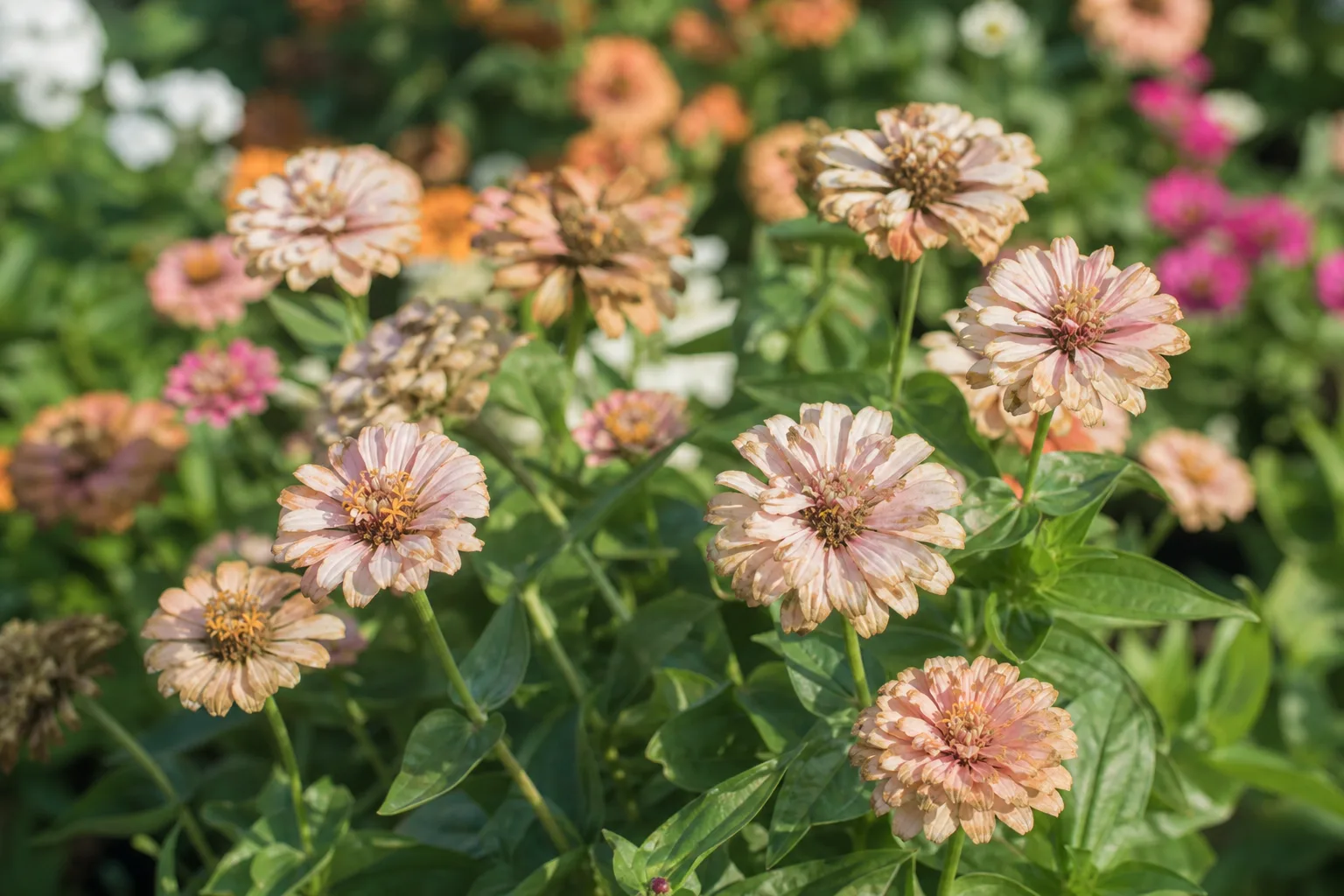
Faded flowers on Zinnia are usually normal bloom aging-each head opens bright, then bleaches over several days in heat and sun. First step: deadhead spent blooms back to the next leaf node so the plant redirects energy into fresh flowers instead of seed.
Faded Flowers on Zinnia: Causes, Checks & Fixes
This guide covers faded flowers on Zinnia. See also the general Faded Flowers guide, watering, and light pages for this plant.
Faded Flowers on Zinnia: Causes, Checks & Fixes
Quick answer
Faded flowers on Zinnia are usually normal bloom aging, not a crisis. Each zinnia head opens in vivid color, holds for several days, then bleaches, dries at the petal tips, or turns papery as the flower completes its cycle. That is expected on a plant bred to bloom continuously from early summer until frost.
First step: deadhead spent blooms back to the next leaf node or lateral bud. Removing faded heads stops the plant from pouring energy into seed and signals it to push new flowers. If only the oldest blooms look dull while new buds still open bright, deadheading is the right-and often the only-fix you need.
Why Zinnia flowers fade
Zinnias are prolific annual bloomers. Missouri Botanical Garden notes that Zinnia elegans produces continuous summer-to-fall flowers in cool-summer climates and may slow briefly at the peak of hot, humid weather. Individual blooms are short-lived by design-each head opens, attracts pollinators, fades, and makes way for the next wave. That turnover is how zinnias keep color in the bed for months.
Several factors speed up visible fading on zinnias:
Natural petal senescence. Once pollination and petal display finish, pigments break down and outer ray florets bleach or brown at the edges. In midsummer heat, a zinnia bloom can move from peak color to noticeably faded in just a few days.
Heat and UV exposure. Zinnias want full sun and tolerate summer heat, but intense afternoon sun and high temperatures accelerate petal aging on open flowers. This is cosmetic fading on otherwise healthy plants-not the same as drought wilt.
Rain and overhead watering. Wet petals bleach faster and may collapse. Splashing water on open blooms also invites fungal problems that make flowers look worse than simple aging.
Drought stress during bloom. Zinnias handle drier soil better than soggy mix, but chronic underwatering on Zinnia in containers or peak heat wilts flower heads and makes open blooms look dull and limp before their normal lifespan ends.
End-of-season plant fatigue. By late summer, older zinnia stands that have bloomed heavily since June produce fewer buds and fade faster. Succession sowings refresh color when the first planting tires.
Shade or weak growth. Zinnias in partial shade stretch toward light and produce fewer, paler blooms. New flowers that open faded from the start often trace back to insufficient sun-not normal aging of otherwise bright heads.
What faded flowers look like on Zinnia
Normal aging (most common):
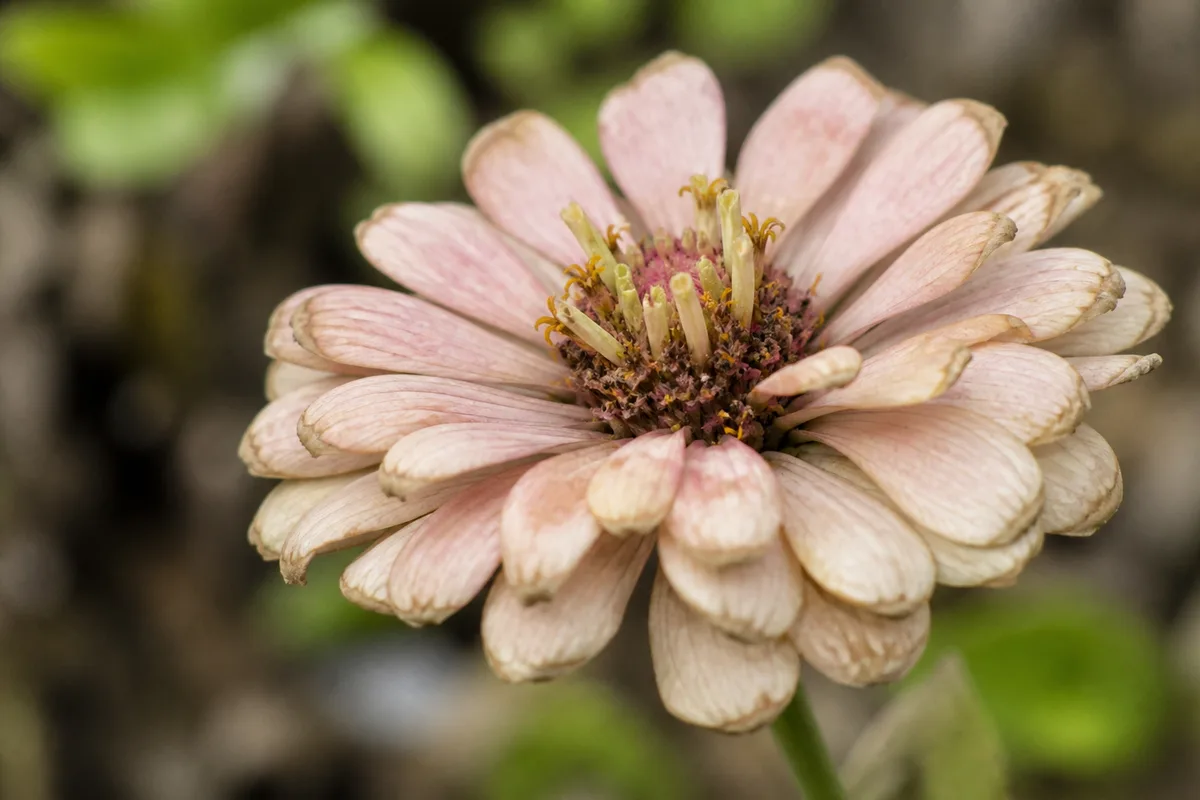
Faded Flowers symptoms on Zinnia - compare with healthy tissue on the same plant.
- Oldest blooms at the top of each stem bleach, dull, or dry at petal tips while lower buds still show full variety color
- Faded heads feel papery or crisp; stems remain green and firm
- Fading is gradual over several days, not an overnight brown collapse
- Plant continues producing new buds along branching stems
Stress-related dulling:
- Open flowers wilt or droop in afternoon heat when soil is dry
- New buds open smaller and paler than earlier waves on the same plant
- Lower leaves may yellow if watering has been uneven
Not the same as disease browning:
- Water-soaked brown spots on bright petals after rain or sprinklers suggest Alternaria blight or Botrytis-not routine fading
- Grey fuzzy mould on wet spent heads points to rot on flowers left too long in humid weather
- Powdery mildew white film on leaves weakens the whole plant and reduces bloom vigor, but the mildew itself sits on foliage more than petals
Knowing which pattern you see determines whether deadheading alone fixes the problem or you need to address water, spacing, or disease.
How to confirm the cause
Work through these checks in order:
- Bloom age pattern - Are only the oldest open flowers faded while newer buds on the same stem still show strong color? That pattern confirms normal senescence.
- Stem and bud health - Firm green stems with active side buds mean the plant is cycling normally. Soft stems at the base or buds dropping before open point to rot, blight, or severe stress instead.
- Soil moisture - Push a finger into soil near the base. Bone-dry mix at midday explains wilted, prematurely dull blooms on container zinnias. Soggy soil with yellow lower leaves suggests overwatering on Zinnia stress.
- Sun exposure - Count direct sun hours on the planting spot. Zinnias need full sun; beds with fewer than six hours often produce pale new blooms from the start.
- Weather timing - Did fading accelerate right after heavy rain or overhead watering? Wet-petal collapse differs from slow dry bleaching in dry weather.
- Leaf inspection - White powdery patches on leaves, reddish-brown leaf spots, or widespread yellowing mean a plant-level problem that will keep new flowers weak even after deadheading.
If checks one and two pass and new buds still open bright, treat faded heads as routine maintenance. If new blooms open dull, wilted, or spotted from the start, look past deadheading to light, water, or disease.
First fix for Zinnia
Snip each faded bloom back to the first set of healthy leaves or a visible lateral bud on the stem.
Use clean scissors, pruners, or a pinch between thumbnail and finger. Cut just above the leaf node-do not leave a long bare stem stub that can rot in humid weather. MSU Extension recommends deadheading zinnias to keep plants performing through the season; removing old blooms redirects energy from seed production into new flowers.
Do this on the oldest faded heads first. One thorough pass often clears enough spent tissue for the next bud wave to open within days. Do not wait until every flower on the plant is papery-regular removal keeps beds looking bright and improves airflow around dense double-flowered varieties.
Do not spray fungicide or fertilizer on day one if you have only confirmed normal aging. Do not overhead-water right after deadheading in humid weather; wet fresh cuts and nearby foliage invite mildew on a plant already susceptible to it.
Step-by-step recovery
After the initial deadheading pass:
- Repeat every two to three days during peak bloom (midsummer through early fall). Zinnias produce flowers quickly; a short gap lets too many heads go to seed and slows the next flush.
- Water at the base when the top 3 cm of soil feels dry. Deep morning watering helps container and bed plants hold blooms longer in heat without soaking petals.
- Remove any brown, water-soaked, or mouldy flower heads immediately-those are disease carriers, not normal fades. Bag and trash them rather than composting in humid climates.
- Thin crowded plants if inner blooms fade faster and leaves stay wet. Spacing of 20–30 cm improves airflow and slows powdery mildew that weakens overall flowering.
- Sow a fresh batch if the stand is leggy, mildew-heavy, or blooming weakly by late August. Succession plantings every two weeks through early July give you vigorous late-season color when the first sowing tires.
- Relocate or accept limits on shaded plantings. Zinnias will not hold vivid color in partial shade; move containers to a sunnier spot or plan that bed for shade-tolerant annuals next year.
Recovery timeline
On a healthy plant in full sun, new buds typically open in full color within three to seven days after a thorough deadheading pass. During extreme heat, individual blooms may still fade quickly-that is normal turnover, not failure, as long as new heads keep coming.
If you deadhead faithfully but new buds stay small, pale, or sparse for more than two weeks, the limiting factor is usually sun, drought, mildew, or an aging stand-not incomplete deadheading. Address those conditions before expecting a color rebound.
Spent petals you already removed will not brighten again. Judge recovery by the next generation of blooms, not by old tissue.
Lookalike symptoms to rule out
Flowers turning brown with water-soaked spots after rain or sprinklers point to Alternaria blight or Botrytis on wet petals-not gradual bleaching. Brown patches spread in humid weather and may carry dark margins. Remove those heads promptly and stop overhead watering.
Powdery mildew coats leaves and stems with white flour-like growth. It compromises photosynthesis and shrinks new growth, which makes overall flowering weaker. Faded petals from aging alone do not come with widespread white leaf film.
Bud drop before open means buds abort while still green-often from heat spikes, overwatering, or blight stress. Faded flowers, by definition, opened fully first.
Wilting in afternoon sun on dry soil is drought stress. The whole plant and flower head droop; petals may look dull but feel soft, not papery. Water deeply at the base and recheck the next morning.
Leggy pale plants in shade produce weak new blooms from the start. That is a placement problem, not spent-head aging on an otherwise vigorous plant.
Mistakes to avoid
Do not panic and spray chemicals when only oldest blooms are fading on an otherwise healthy zinnia. Routine deadheading solves most cases.
Do not leave spent heads on the plant for weeks. Seed formation diverts energy, clutters the bed, and traps humidity that encourages mould on dense double flowers.
Do not deadhead by yanking petals and leaving long naked stem stubs. Cut to a leaf node so the plant can branch cleanly.
Do not overhead-water during humid summer mornings when mildew risk is high. Wet foliage and flowers are a main driver of powdery mildew on zinnias.
Do not assume faded color means the plant needs nitrogen fertilizer. Excess nitrogen pushes leafy growth with fewer blooms on zinnias. Fix deadheading, sun, and even moisture first.
Do not compost heavily diseased or mouldy flower heads in climates where Alternaria and powdery mildew overwinter in debris.
How to prevent faded flowers from slowing your Zinnia display
Deadhead on a schedule-every two to three days in peak summer-not only when the bed looks tired. University of Minnesota Extension notes that removing old blooms promotes new flower production and that keeping the soil surface clean helps prevent disease carryover.
Keep plants in full sun with well-drained soil. Zinnias prefer evenly moist conditions but tolerate brief dryness better than constantly wet roots. Water at the base when the top 1–2 inches dry; avoid wetting leaves and open flowers when possible.
Space plants for airflow. Illinois Extension highlights that crowded zinnias with poor circulation are more vulnerable to powdery mildew, which weakens the plant and reduces bloom quality. Choose mildew-resistant series such as Zahara or Profusion in hot humid regions.
Plan succession sowings every two weeks from late spring through early July so fresh vigorous plants replace tired late-summer stands. MSU Extension uses this approach for showy color into late September.
Grow disease-resistant cultivars in humid summer climates. Missouri Botanical Garden recommends disease-resistant varieties where hot humid summers encourage fungal leaf problems that shorten the effective bloom window.
When to worry
Routine fading on the oldest blooms while new buds open bright is not urgent. Deadhead and continue.
Escalate when:
- Brown water-soaked spots spread on petals after wet weather
- Grey mould coats multiple spent and opening heads
- Powdery mildew covers most leaves and new buds stay small or distorted
- Buds drop before opening across much of the plant
- Stems soften at the base with yellowing-possible rot from overwatering
- Every new flower opens dull despite full sun and steady deadheading for two or more weeks
Those patterns mean disease, placement, or plant fatigue-not the normal color cycle of a healthy zinnia. Remove badly infected tissue, improve spacing and base watering, and consider replacing declining stands with a fresh sowing rather than fighting a exhausted planting through fall.
Conclusion
Faded zinnia flowers are usually the natural end of each bloom’s short show-not a sign your plant is failing. Scan the plant, confirm new buds still open bright, then deadhead back to the next leaf node as your first and most effective move. Keep that rhythm through summer, water at the base in heat, and give plants full sun with room to breathe. That path keeps zinnias doing what they do best: replacing yesterday’s faded head with tomorrow’s fresh color.
When to use this page vs other Zinnia guides
- Zinnia watering guide - Use for routine moisture checks before assuming faded flowers is the main issue.
- Zinnia problems hub - Browse all 38 common issues on this species.