Yellow Seedlings on Zinnia: Causes, Checks & Fixes
Quick answer
Yellow zinnia seedlings usually mean the seed-starting mix is too wet, too cool, or too low in nutrients once true leaves appear. First step: let the tray surface dry slightly and confirm stems are still firm before you add fertilizer or heat.
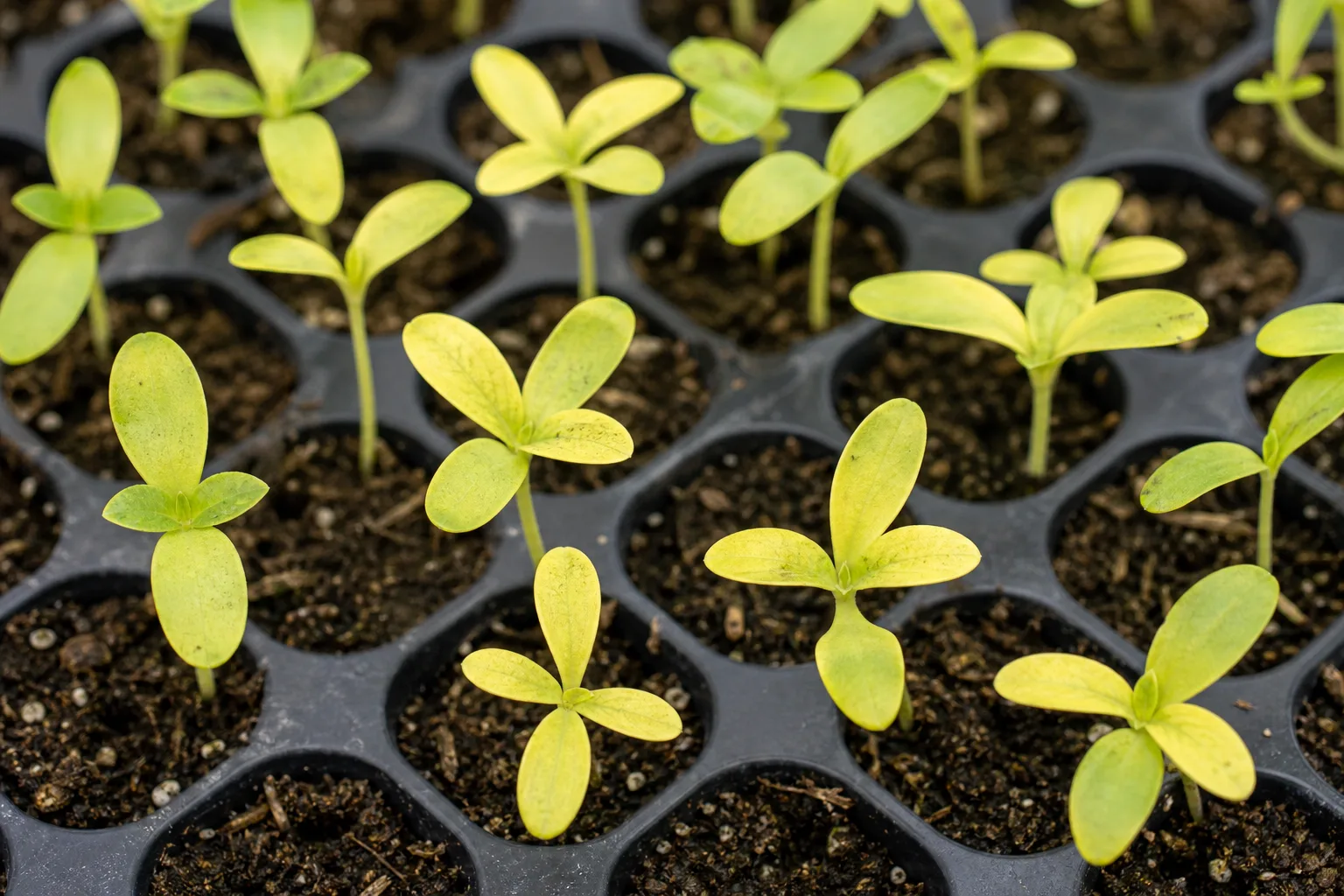
Yellow Seedlings on Zinnia: Causes, Checks & Fixes
This guide covers yellow seedlings on Zinnia. See also the general Yellow Seedlings guide, watering, and light pages for this plant.
Yellow Seedlings on Zinnia: Causes, Checks & Fixes
Quick answer
Yellow zinnia seedlings in indoor trays almost always trace to environment, not a mysterious bad seed batch. Zinnia elegans is a warm-season annual built to sprint once soil hits about 21°C (70°F)-germinating in 4 to 8 days at 70 to 75°F and growing fast toward summer bloom. When cotyledons or first true leaves turn pale yellow while mix stays wet and cool, roots cannot take up nitrogen efficiently and damping-off pathogens become more active in wet soils.
First step: let the tray surface dry slightly before the next watering, and confirm stems are still firm at the soil line. Soggy peat that never dries between drinks is the top indoor trigger. If stems are soft or pinched at the base, skip fertilizer and treat it as damping-off risk instead.
Why Zinnia seedlings turn yellow
Zinnias are not delicate houseplants-they are Mexican sun annuals that need full sun for 8+ hours once outdoors and prefer drier soil to soggy mix. Seedlings in trays face a narrow window where small root systems and sterile media amplify every mistake.
Overwatered seed-starting mix is the most common cause. Peat-based media holds water tightly. Overhead misting, domes left on after sprout, and trays sitting in standing water keep cells saturated. UMN Extension notes that damping-off fungi thrive in cool, wet conditions and that overwatering is directly linked to seedling failure. Oxygen-starved roots shut down nutrient uptake, and leaves yellow from the center outward or across whole flats uniformly.
Cool soil and air slow zinnia metabolism. After germination, zinnias grow best at 70 to 75°F during the day and 65 to 70°F at night. Trays on cold windowsills or unheated basements stay pale even when watered correctly. Cool water applied to seedlings further slows growth and increases infection opportunity.
Insufficient light produces pale, stretched seedlings that look yellow-green rather than rich green. UMN Extension recommends keeping lights within about 2 to 4 inches of seedling tops for 12 to 16 hours daily-window light alone in late winter rarely meets that bar for fast-growing zinnias started 3 to 4 weeks before transplant.
Low nutrients in sterile mix appears after true leaves develop. Seed-starting media is intentionally lean. Once several true leaves appear, seedlings benefit from water-soluble fertilizer at one-quarter strength about once a week. Feeding too early burns tender roots; waiting too long after true leaves leaves plants uniformly pale.
Crowded cells and stagnant air keep the surface wet longer than edge cells dry. Humidity domes that never come off trap moisture and encourage mold on the mix surface-often paired with yellowing before lower stem collapse from damping-off.
Lookalike stress from underwatering on Zinnia is less common indoors but shows as dull gray-green wilt rather than bright yellow in wet mix. Check moisture before assuming drought.
What yellow seedlings look like on Zinnia
Normal brief paleness:
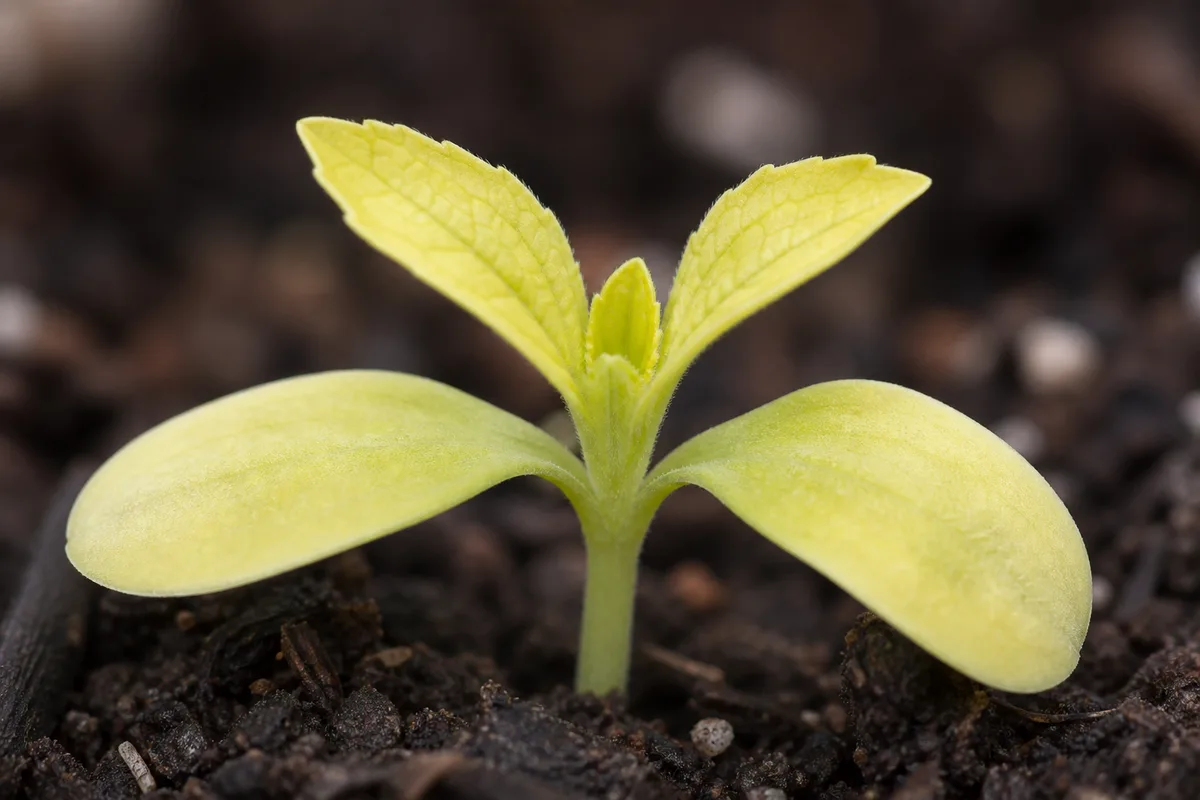
Yellow Seedlings symptoms on Zinnia - compare with healthy tissue on the same plant.
- Cotyledons slightly pale for a day or two right after emergence, then true leaves open greener
- Even color across the seed leaf pair without stem softening
- Mix damp but not dripping; tray not sitting in pooled water
Problem yellowing tied to wet, cool trays:
- Uniform yellow or lime-green color across most cells in the same flat
- True leaves yellow while cotyledons also stay pale-not just aging seed leaves
- Mix dark and wet on top for days; algae or green mold on the surface
- Fungus gnats hovering when you disturb the tray
- Stems still firm but thin and leaning toward the window or light source (light + moisture stress combined)
Yellow before collapse (damping-off warning):
- Lower stem looks pinched, water-soaked, or brown-gray at the soil line per Wisconsin damping-off guidance showing zinnia seedling stem collapse
- Seedlings still upright but color fading fast in the same wet flat where neighbors already fell
- Cotyledons gray-green to brown while base tissue turns mushy
Nutrient-related yellow:
- True leaves pale while stems stay sturdy and mix dries normally between waterings
- Appears one to two weeks after sprout when seed reserves are exhausted
- Often in every cell equally because the same sterile mix feeds the whole tray
Zinnia yellowing rarely shows as spotty mosaic on seedlings-that pattern on older plants points to virus and is a different problem page.
How to confirm the cause
Work through these checks in order before you change three variables at once:
- Moisture at the surface - Press the top centimeter of mix. If it feels wet and cold while seedlings are yellow, overwatering or poor drainage is the prime suspect. Lift the tray after watering; no standing water should remain in the saucer.
- Stem integrity at the soil line - Gently brush soil away from the base. Firm green stems suggest environmental yellowing you can correct. Soft, thread-like, or brown bases mean damping-off-remove affected plants immediately.
- Light setup - Measure distance from bulb to seedling tops. More than 10 cm with only window supplement produces pale stretch. Confirm 14 to 16 hours of artificial light if started indoors in March or April.
- Temperature - Soil below about 21°C (70°F) at cell depth slows zinnias even when room air feels warm. A heat mat under the tray should hold germination-range warmth per UMN zinnia propagation guidance.
- True leaf stage - If first true leaves are open and mix dries normally but color stays pale, nutrient lack in sterile media is likely. If only cotyledons are pale and true leaves are emerging green, wait before feeding.
- Pattern across the flat - Whole-tray yellow in wet conditions points to culture, not random disease. Single scattered cells may still be early rot-isolate and discard.
If stems are firm, mix is drying between drinks, light is close and long-duration, and soil is warm-but plants stay pale after true leaves appear-move to dilute feeding, not more water.
First fix for Zinnia
Stop overhead watering, pour off any tray runoff, and let the surface of the seed-starting mix dry slightly before the next drink.
This single step addresses the most common zinnia seedling yellowing trigger: saturated peat in cool trays. Bottom-water only by adding water to the tray until cells wick moisture upward, then discard excess after 15 to 20 minutes so roots are not submerged. UMN recommends letting media dry out slightly between waterings to avoid damping-off.
Do not fertilize on day one unless you have confirmed firm stems, proper dryness cycles, adequate light, and pale true leaves after a week of good culture. Do not crank up heat without matching light-that produces stretch, not green color.
Step-by-step recovery
After the initial dry-down:
- Remove collapsed or mushy-base seedlings so pathogens do not spread through shared tray water.
- Add a heat mat set to hold soil near 70–75°F if the tray was on a cold sill-warm soil speeds zinnias out of the damping-off-susceptible stage.
- Lower grow lights to 5–10 cm above tops and run them 14 to 16 hours daily; raise as plants grow.
- Remove humidity domes and run a small fan on low for airflow across the flat surface.
- Bottom-water on demand when the top centimeter lightens in color-never on a calendar schedule in cool weather.
- Feed at quarter strength once true leaves are well formed and the above steps hold for several days. Use a balanced water-soluble fertilizer weekly at that dilution per UMN indoor seed-starting guidance.
- Thin to one seedling per cell if crowded-competition for light worsens pale stretch in zinnia flats.
If more than half a tray collapses within days despite dry-down, discard the batch, sterilize trays, and resow with fresh sterile mix rather than nursing a failing flat into transplant season.
Recovery timeline
Firm seedlings with yellow color from overwatering often show greener new true leaves within 5 to 7 days after correct dryness, warmth, and light. Cotyledons may stay yellow until they age off-that is cosmetic. Stretch from prior low light does not shorten; new growth under proper lamps comes in tighter, but old internodes remain long until you pinch after hardening off.
Seedlings with damping-off at the stem base do not recover. Neighbors saved by fixing moisture and airflow within 48 hours may survive if stems stay firm. Plan 3 to 4 weeks from a healthy green start to outdoor transplant for zinnias started mid-April-yellow stressed trays rarely catch up to direct-sown plants in the same season.
Lookalike symptoms
Leggy pale seedlings without wet mix - Thin stems leaning toward light with firm bases are light deficiency, not root rot. Fix lamps before drying mix that is already appropriately moist.
Seedlings falling over with rotten stems - That is damping-off or advanced rot, not simple chlorosis. See the dedicated damping-off guide if bases are mushy.
Seeds never sprouted - Bare cells after two weeks are germination failure (temperature, depth, old seed)-not yellow seedlings.
Mature zinnia lower leaf yellow outdoors - Garden plants with yellow lower leaves in summer often trace to overwatering or natural aging on established plants-a different stage than tray seedlings.
Mistakes to avoid
- Leaving dome lids on after zinnias sprout, trapping humidity on a fast-growing warm-season crop
- Misting trays daily “to keep them happy” while the bottom of cells stays waterlogged
- Fertilizing cotyledon-only seedlings at full strength hoping for instant green
- Starting zinnias on a north window in February without supplemental light or heat
- Reusing last year’s peat trays without bleach sterilization after prior damping-off
- Holding yellow indoor starts eight weeks indoors-zinnias perform better direct-sown or transplanted young into warm garden beds
How to prevent yellow seedlings on Zinnia
Use commercial sterile seed-starting mix-not garden soil-and sow ¼ inch deep at 70 to 75°F. Bottom-water, discard tray runoff, and let the surface dry slightly between drinks from germination day forward.
Provide artificial light within a few inches of tops from emergence; do not rely on windowsills as primary light for zinnias in northern springs. Pair a heat mat with that light until outdoor planting nears.
Remove domes once seedlings touch plastic. Space one strong plant per cell. Feed only after true leaves develop, at quarter strength weekly.
When soil outdoors reaches 70°F at planting depth, consider direct sowing zinnias in the bed-Zinnia elegans grows quickly from seed in warm garden soil and skips the tray failure modes that cause yellow indoor starts.
When to worry
Escalate immediately if stems pinch at the soil line, fluffy mold covers seedlings, or multiple adjacent cells die within 48 hours in the same wet tray-switch to salvage mode for untouched neighbors only, not rescue of collapsed plants.
Also worry if yellow flats sit in cool rooms below about 18°C at night with wet mix; that combination predicts collapse faster than pale color alone.
If seedlings are yellow but you are within two weeks of safe outdoor planting and stems are firm, you still have time to correct culture and harden off. If starts are six or more weeks old, leggy, and still pale, restarting with fresh seed or buying transplants often beats pushing weak yellow seedlings into the garden.
When to use this page vs other Zinnia guides
- Zinnia watering guide - Use for routine moisture checks before assuming yellow seedlings is the main issue.
- Zinnia problems hub - Browse all 38 common issues on this species.