Water Stress on Zinnia: Causes, Checks & Fixes
Quick answer
Water stress on Zinnia covers both drought wilt and overwatered root failure-check soil moisture at the base before acting. Water deeply when the top 3 cm dries; never wet foliage.
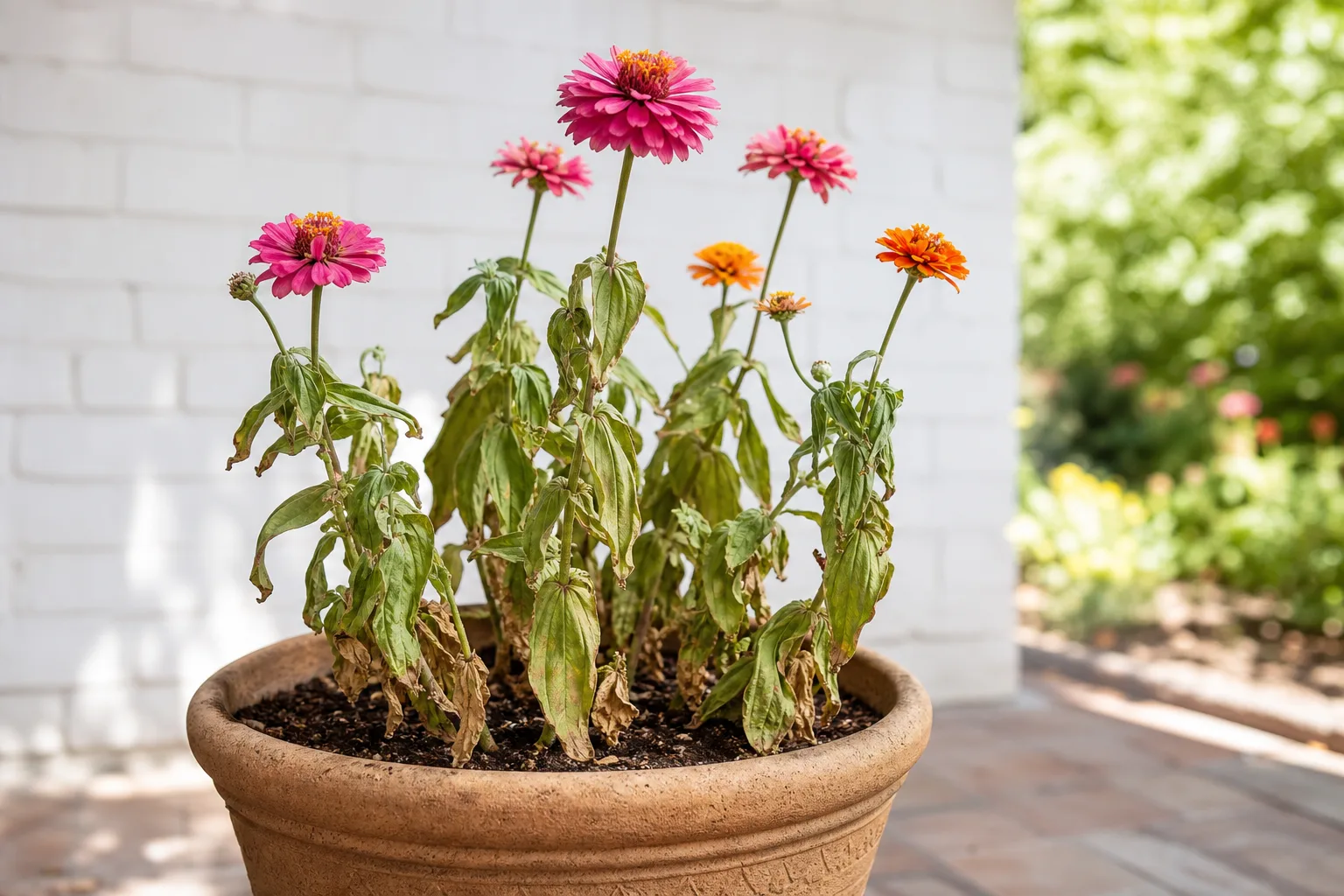
Water Stress on Zinnia: Causes, Checks & Fixes
This guide covers water stress on Zinnia. See also the general Water Stress guide, watering, and light pages for this plant.
Water Stress on Zinnia: Causes, Checks & Fixes
Quick answer
Zinnias are heat-tolerant annuals that still need regular water during bloom, but they tolerate drier soil better than soggy mix. Water stress means roots cannot maintain steady hydration-either from too little moisture in fast-draining summer beds or from soil that stays wet too long.
First step: check soil moisture at the base before you pour. If the top 3 cm is dry and plants wilt in afternoon heat, water deeply at soil level until moisture reaches several centimetres down. If soil feels wet and leaves yellow while stems stay limp, stop watering and improve drainage-do not add more water because foliage looks tired.
Which guide to read: This page is the umbrella moisture hub-use it when you cannot tell drought from overwatering. Flower heads drooping but you already know soil is dry? See underwatering on Zinnia. Yellow lower leaves on chronically wet mix? See overwatering on Zinnia. Wilt as the main symptom with disease checks? See drooping leaves on Zinnia. Basal stem collapse with mushy roots? See root rot on Zinnia.
| What you find at 3 cm depth | Stem base | Wilt pattern | Likely cause | First action |
|---|---|---|---|---|
| Dry, lightweight pot | Firm green | Afternoon droop; perks by morning after soak | Drought stress | Deep base watering until drainage runs |
| Wet, heavy pot | Firm or slightly soft | Afternoon droop only in heat | Temporary heat wilt | Wait; recheck probe before soaking |
| Wet, sour-smelling mix | Soft, darkening | All-day limp despite moisture | Overwatering / root failure | Stop watering; improve drainage |
| Wet mix + grey mould on blooms | Firm or cankered | Wilt + spotted petals | Overhead watering + blight | Dry foliage; remove mouldy flowers; route to blight guide if stems canker |
Keep foliage dry going forward per the zinnia watering guide-base watering in morning is the single best cultural fix after you correct the immediate mismatch.
Why Zinnia gets water stress
Zinnia elegans grows fast in full sun and pulls water quickly through tall stems and large flower heads. In containers or raised beds on hot porches, the top layer can go dry within a day while roots still have moisture below-or the reverse in dense clay that holds water near the crown.
Underwatering stress shows up when peak afternoon heat outpaces root uptake. Flower heads droop first because blooms transpire heavily; leaves may look fine until soil is genuinely dry several centimetres down. This pattern is common in Indian summer when pots need water every two to three days but gardeners skip a day during travel or rain forecasts that never arrive. For thirst-only depth, see underwatering on Zinnia.
Overwatering stress happens when fear of wilt leads to daily soaking in cool weather or poorly drained mix. Clemson Extension notes overwatering can lead to root rot and stunted growth. Wet crowns also invite grey mould on flowers and Alternaria blight on foliage-problems that look like general plant decline but trace back to watering habits. Chronic wet-soil protocols live on overwatering on Zinnia.
Overhead watering compounds both extremes: foliage dries slowly in humid monsoon weather, and UMN Extension recommends watering the base of the plant, not the foliage, to reduce fungal disease pressure.
What water stress looks like on Zinnia
Drought-related water stress:
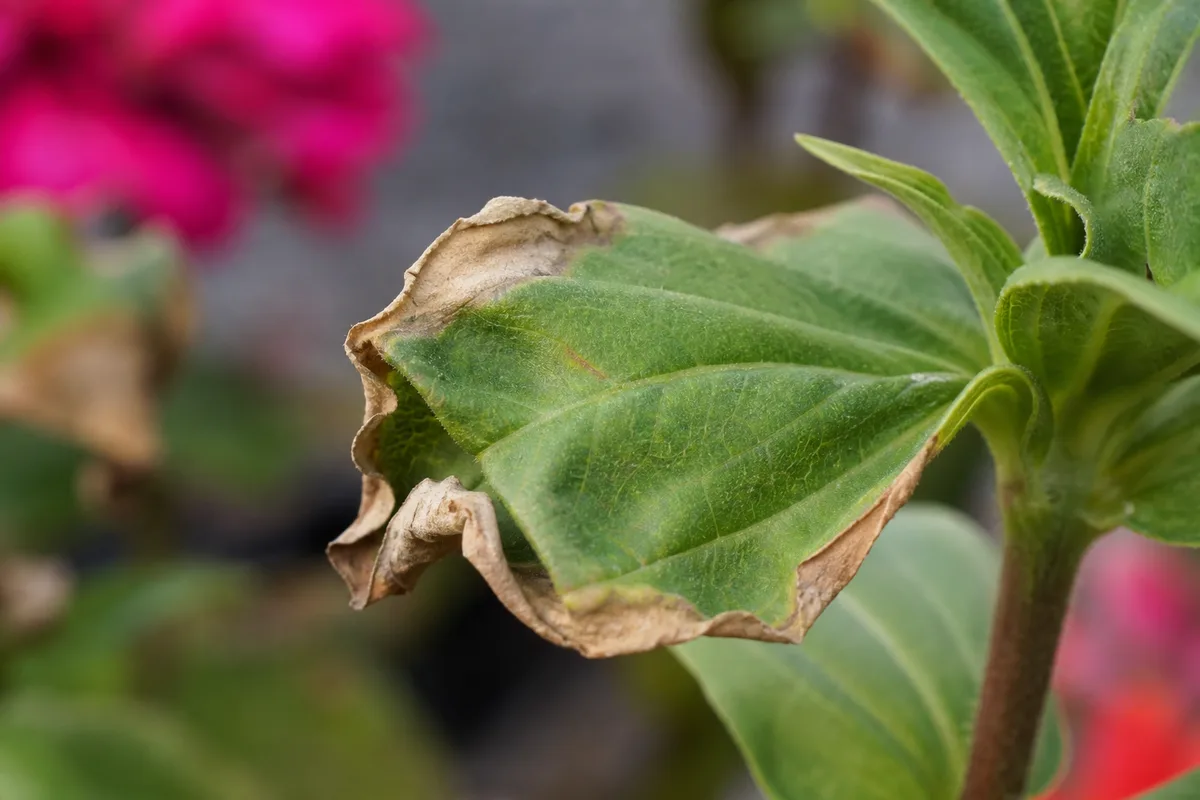
Water Stress symptoms on Zinnia - compare with healthy tissue on the same plant.
- Flower heads drooping in afternoon sun while stems still feel firm
- Leaves slightly limp on upper growth; edges may crisp if dry persists
- Soil dry to 3 cm or more; lightweight containers
- Recovery within hours after deep base watering
- Buds may abort or produce smaller blooms if drought repeats
Overwatering-related water stress:
- Yellowing lower leaves while upper leaves still green, then widespread fade
- Wilting despite wet soil-the classic mismatch when roots fail
- Soft, darkening tissue at stem base; plants may topple
- Grey mould on spent or wet flower petals
- Sour smell from mix; white mould on soil surface in seed trays
- Stalled new growth and fewer blooms even with fertilizer
Shared signs that still need a moisture check:
Both drought and root damage can cause general wilt. The soil at the base-not the leaf appearance alone-tells you which direction to go. When wilt is the headline symptom, cross-check the drooping leaves guide for time-of-day patterns and stem-base inspection.
How to confirm the cause
Work through these checks in order:
- Finger test at the base - Probe 3 cm deep near the stem. Dry means drought is likely; soggy or cool-wet means hold water.
- Pot weight - Lift the container edge. A light pot in full sun strongly suggests underwatering; a heavy pot that never lightens suggests overwatering or poor drainage.
- Time-of-day pattern - Afternoon wilt that resolves by morning after watering points to heat drought. All-day limp on wet soil points to root stress-see wilting on Zinnia when the pattern is unclear.
- Stem base inspection - Firm green stems support drought diagnosis. Soft brown tissue at nodes or the crown supports rot from excess moisture-escalate to root rot on Zinnia if roots smell sour.
- Flower inspection - Crispy dry petals differ from brown water-soaked spots or grey fuzzy mould after wet weather.
- Drainage check - Confirm containers have drainage holes and saucers are emptied within 30 minutes. Cache pots without drainage are a frequent hidden cause of chronic wet roots.
If soil is evenly moist at 3 cm and the plant looks healthy, you may be seeing temporary heat wilt that needs no action until the probe reads dry.
Realistic scenario (terrace pots, June 2026): A 30 cm Profusion zinnia in a south-facing terrace pot showed afternoon flower-head droop while stems stayed firm-the top 3 cm read bone dry and the pot felt light. One slow base soak at 7 a.m. brought heads upright by evening. A neighbour’s identical cultivar in a cache pot without drainage showed yellow lower leaves and all-day limp stems on wet mix; stopping water for ten days until the top 3 cm dried, emptying the saucer, and trimming yellow lower leaves produced new buds on day 18. Same wilt look, opposite fixes-soil at the base separated the two.
First fix for Zinnia
Check soil moisture at the base, then act on what you find-do not water by habit.
- If dry: Water slowly at soil level until moisture penetrates at least 15 cm in beds or until water runs freely from drainage holes in containers. Do not wet foliage or flowers-keep the stream on the soil.
- If wet: Skip the next scheduled watering. Move containers to better sun and airflow if they sit in shade holding moisture. Do not repot on day one unless the mix smells sour and roots are visibly mushy.
This single diagnostic step prevents the most common mistake: adding water to an already saturated zinnia because leaves look wilted.
Step-by-step recovery
After the first moisture correction:
- For drought-stressed plants - Mulch the soil surface with compost or straw to slow evaporation. In extreme heat, a second deep soak the next morning may be needed before the top 3 cm dries again.
- For overwatered plants - Let soil dry until the top 3 cm feels dry before the next drink. Trim yellow lower leaves that will not recover. Remove grey-mouldy flowers to reduce spore load.
- Improve drainage if needed - Mix in coarse sand or compost in garden beds; for containers, repot only into fresh, airy mix with drainage holes if soil stays wet more than two days after one thorough watering.
- Switch to base watering permanently - Use a watering can spout at soil level or drip at the stem base. Water when the top 1 to 2 inches of soil feel dry and apply about 1 inch per week as a baseline, adjusted for heat and container size-in a hot Indian terrace pot that often means every two to three days, not a fixed weekly calendar.
- Hold fertilizer until new growth looks firm and green. Stressed roots cannot safely take up feed.
- Deadhead spent blooms during recovery so the plant directs energy to roots and new buds rather than rotting petals.
Monitor for one to two weeks before changing multiple variables at once.
Recovery timeline
| Stress type | First visible improvement | Full recovery signal | What old tissue does |
|---|---|---|---|
| Mild afternoon drought | Hours after deep soak; heads lift same evening | New buds and firm upper leaves within a week | Crisp leaf edges stay crisp; they do not re-green |
| Repeated drought cycles | Perks after each soak | Blooms may delay one to two weeks | Smaller flowers on stressed stems |
| Overwatering (caught early) | Wilt stops worsening once soil dries | New clean leaves and buds in 1–3 weeks | Yellow lower leaves drop or stay yellow |
| Stem-base rot girdling plant | None after correction | Plant does not recover | Remove plant; protect neighbours |
Judge success by new growth and stable soil moisture rhythm, not by old yellow or crisp leaves regaining colour.
Lookalike symptoms to rule out
Alternaria blight causes reddish-brown leaf spots with grey centres and basal stem cankers-not uniform wilt from dry soil. Spots appear even when moisture is balanced if foliage stayed wet. Missouri Botanical Garden documents basal cankers that cause wilt independent of simple drought. Full dieback protocol: blight on Zinnia.
Powdery mildew shows white powder on leaves in humid crowded beds. It spreads in high humidity with poor airflow; fix spacing and base watering rather than increasing irrigation. See powdery mildew on Zinnia.
Transplant shock wilts newly moved seedlings for several days even with correct moisture. Zinnias prefer direct sowing; disturbed roots need steady base watering without repeated handling.
Heat alone can make zinnias look tired at midday in full sun without true drought if soil still holds moisture at depth-confirm with the finger test before soaking.
Aphids on new tips cause curling and sticky residue, not soil-linked wilt patterns. Inspect shoot tips if leaves distort without a moisture story.
Seedling damping-off yellows and collapses seedlings at the soil line in wet sterile mix-that is not adult drought stress. See damping off on Zinnia.
Mistakes to avoid
Do not water on a fixed calendar. Check the top 3 cm every time; cool weeks need less, heat waves need more.
Do not mist leaves or use overhead sprinklers on zinnias in bloom. Wet foliage and flowers invite blight and mould that mimic ongoing water stress.
Do not assume all wilt means drought. Adding water to soggy soil accelerates root rot.
Do not repot into a much larger container to “fix” watering-extra wet mix without roots to fill it stays saturated longer.
Do not fertilize a wilted zinnia hoping to revive it. Fix moisture first.
Do not ignore drainage holes or standing water in saucers on balcony containers.
How to prevent water stress next time
Water in the morning when the top 3 cm is dry, directing flow at the stem base. Morning watering gives foliage time to dry if splashed and matches peak uptake before afternoon heat.
Mulch garden rows and container surfaces to reduce evaporation without keeping crowns constantly wet.
Learn your pot’s dry weight in summer versus after watering-experienced growers often lift containers before deciding.
Match frequency to season: every two to three days in hot Indian summer containers, every four to five days in cooler autumn weather for established in-ground plants, always guided by soil feel rather than the calendar. Once established, zinnias are fairly drought-tolerant in beds but containers dry faster.
Choose disease-resistant cultivars such as Profusion or Zahara series in humid regions where wet foliage causes repeat blight after overhead watering mistakes.
Deadhead spent flowers every two to three days so rotting petals do not hold moisture against stems.
After recovery, lock in rhythm with the zinnia watering guide.
When to worry
Treat as urgent when stems soften and darken at the base, multiple plants collapse in the same wet bed, or grey mould spreads across open flowers after rainy overhead irrigation. Basal cankers from Alternaria blight can girdle stems and kill the plant even if you stop watering-route to blight on Zinnia.
Mild afternoon wilt on dry soil during a heat wave is common and reversible the same day-do not panic, but do not ignore it through a second hot afternoon.
Seedlings in wet sterile mix that yellow and collapse at the soil line need reduced watering and more airflow immediately-that is damping-off territory, not adult drought stress.
Advanced root failure with mushy stems and sour mix: follow root rot on Zinnia rather than repeating shallow soaks.
Related Zinnia guides
Use this hub when you need to decide drought vs. overwatering before you pour. Jump to a sibling when the cause is already clear or symptoms have escalated:
| Your situation | Start here | Escalate to |
|---|---|---|
| Unsure if soil is too dry or too wet | This page | Underwatering or overwatering once probe confirms |
| Wilt is main symptom; need disease checks | Drooping leaves on Zinnia | Wilting if pattern stays ambiguous |
| Yellow lower leaves on chronically wet mix | Overwatering on Zinnia | Root rot if stems mush at base |
| Crispy pots, skipped watering days | Underwatering on Zinnia | - |
| Grey mould on blooms + stem cankers | Blight on Zinnia | Stem rot if mix stays soggy |
| Seedling collapse in wet flats | Damping off on Zinnia | - |
Cluster links:
- Zinnia overview - care hub for this sun annual
- Zinnia watering guide - ongoing base-watering rhythm after recovery
- Drooping leaves on Zinnia - wilt-focused diagnosis when moisture fork is settled
- Overwatering on Zinnia - single-cause wet-soil depth
- Underwatering on Zinnia - single-cause thirst depth
- Root rot on Zinnia - advanced crown and root failure
- Blight on Zinnia - Alternaria dieback after wet foliage
- Powdery mildew on Zinnia - white coating vs. moisture wilt
- Wilting on Zinnia - persistent wilt when probe and weight disagree
- Damping off on Zinnia - seedling collapse in wet mix
Next steps checklist
Before you close this tab, confirm:
- Probed top 3 cm at stem base-not surface crust alone
- Matched action to probe result (soak if dry; hold water if wet)
- Watered at soil level only; foliage and flowers stayed dry
- Noted whether wilt is afternoon-only or all-day on wet soil
- Removed grey-mouldy flowers and yellow leaves that will not re-green
- Set ongoing rhythm via the zinnia watering guide
Judge recovery by new buds and firm stems-not by old damaged tissue regaining colour.
Frequently asked questions
How do I tell drought from overwatering on zinnias without guessing?
Probe the top 3 cm at the stem base. Dry soil with afternoon flower-head droop and firm stems points to drought-deep base watering should perk plants within hours. Wet soil with yellow lower leaves and all-day limp stems despite moisture points to overwatering; stop watering and check drainage. The wet-soil-with-wilt paradox is the key fork this page owns.
When should I use this water-stress guide vs. the drooping-leaves page?
Use this page when you are unsure whether the problem is too little or too much water and need the drought-vs-overwatering decision fork. Use the drooping leaves guide when wilt is your main symptom and you already suspect thirst, heat flop, or disease wilt. Single-cause depth lives on the overwatering and underwatering guides.
Will damaged Zinnia leaves and flowers recover after I fix watering?
Crisp or yellow leaves rarely return to perfect green, but new growth and buds come in clean once moisture is balanced. Flower heads that drooped from one dry afternoon usually reopen after watering. Blooms with grey mould or brown blight spots should be removed-they will not self-repair.
When is zinnia water stress urgent-not just afternoon heat wilt?
Act quickly when stems soften and darken at the base, several plants collapse together in wet soil, or grey mould spreads across open flowers after overhead watering. Mild afternoon wilt on dry soil in hot weather is common and reversible if you water the same day.
How do I keep zinnias on a steady moisture rhythm through summer?
Water at the base in morning when the top 3 cm dries, match frequency to heat rather than a fixed calendar, mulch beds and containers to slow drying, space plants for airflow, and never spray leaves or flowers when watering. After recovery, follow the zinnia watering guide for ongoing schedule.