Spider Mites on Zinnia: Causes, Checks & Fixes
Quick answer
Spider mites on Zinnia show as pale stippling and fine webbing on leaves during hot, dry spells-especially on drought-stressed plants in crowded beds. First step: spray leaf undersides with a strong stream of water in early morning and repeat every two to three days before reaching for soap.
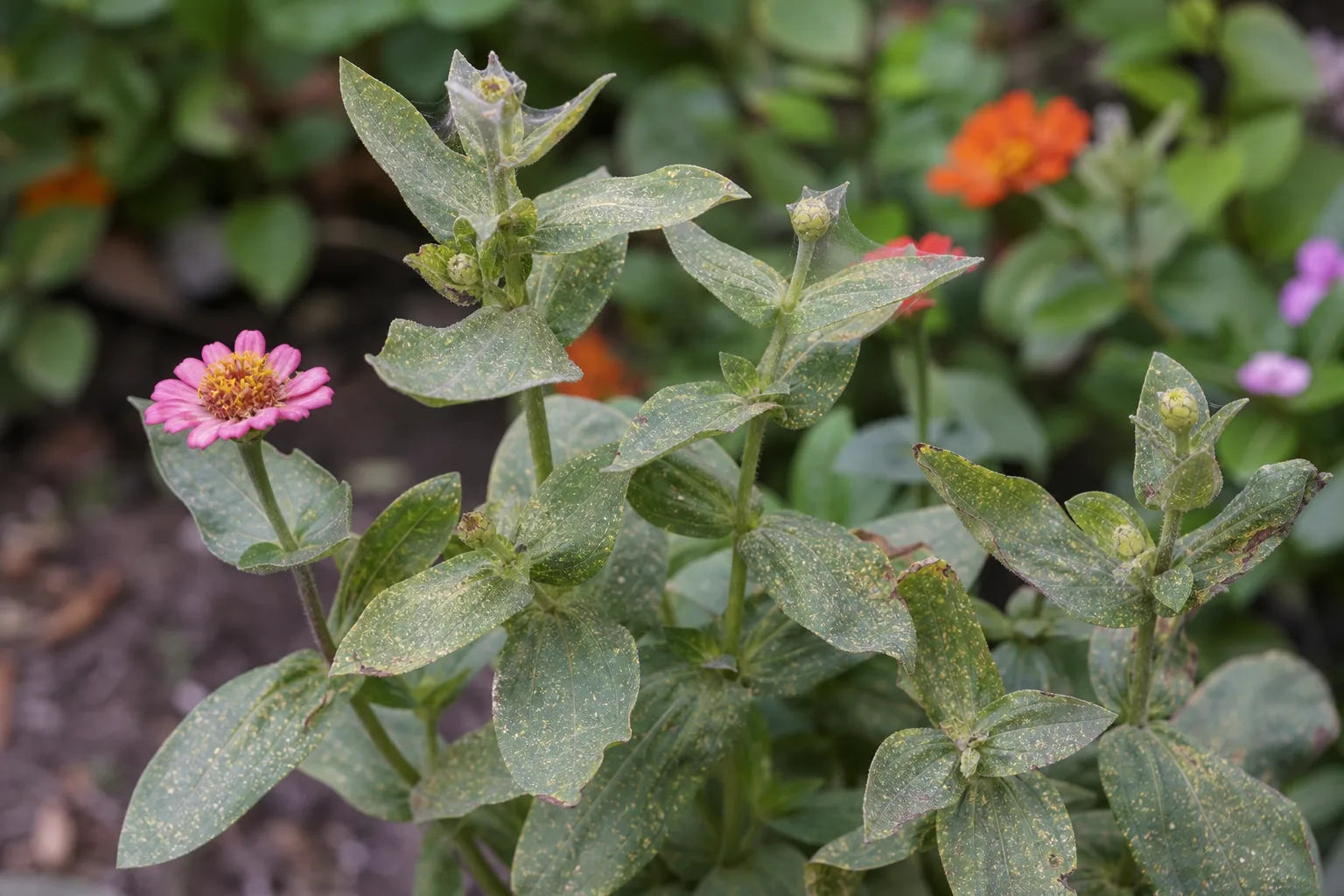
Spider Mites on Zinnia: Causes, Checks & Fixes
This guide covers spider mites on Zinnia. See also the general Spider Mites guide, watering, and light pages for this plant.
Spider Mites on Zinnia: Causes, Checks & Fixes
Quick answer
Spider mites on Zinnia (Zinnia elegans) appear as pale stippling, bronzing, and fine webbing during hot, dry weather-most often on drought-stressed plants in crowded beds or sun-baked containers. The two-spotted spider mite feeds from leaf undersides, so damage shows on upper surfaces before you notice the pests themselves.
First step: spray leaf undersides with a strong stream of water in early morning, then repeat every two to three days. That physical knockdown removes mites, eggs, and webbing before you escalate to insecticidal soap. Do not spray soap or oil on day one without confirming live mites-a tap test over white paper takes thirty seconds and prevents treating drought bronzing or old sun scorch as pests.
What spider mites look like on Zinnia
Zinnia leaves are relatively thick and coarse compared with many annuals, but mites still puncture leaf cells and remove chlorophyll, leaving thousands of tiny feeding holes. Early damage reads as:
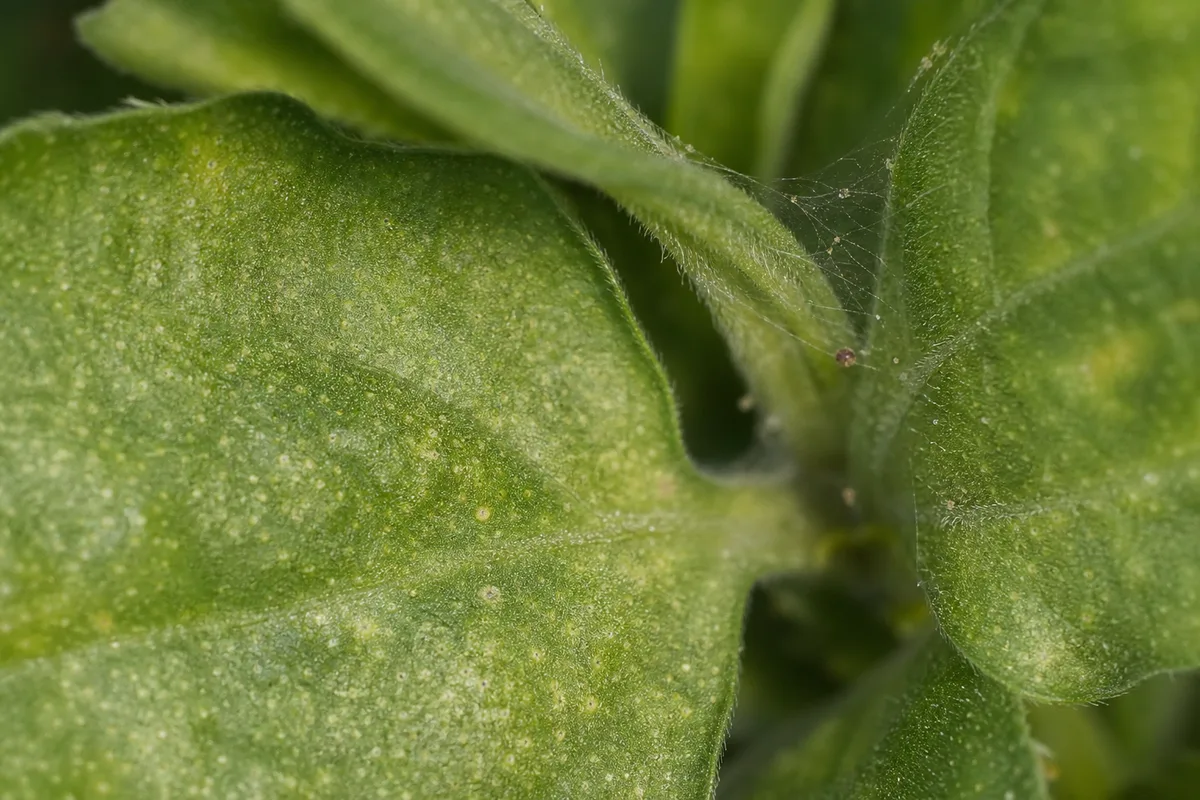
Spider Mites symptoms on Zinnia - compare with healthy tissue on the same plant.
- Fine yellow or white stippling scattered across upper leaf surfaces, often starting on lower or inner leaves closest to the soil
- Dull, dusty, or bronzed patches where feeding has been heavy for a week or more
- Silky webbing at leaf petioles, stem joints, or along leaf undersides-webbing indicates a spider mite infestation, not the same as spider webs spanning between plants
- Slowed bloom production on heavily infested stems because stressed zinnias redirect energy away from flowers
Mites themselves look like moving pinpoints-barely visible without magnification. Shake a suspect stem over white paper; if specks crawl after a few seconds, you have an active colony.
What zinnia mite damage is not:
- Irregular chewed holes - caterpillars, slugs, or beetles; no stippling pattern
- Sticky shiny residue - aphids on soft shoot tips; often with ant traffic
- Dry white powder on leaf faces - powdery mildew; wipes off differently than bronzing
- Silvery scars on petals - thrips in the same hot dry window; petals look streaked, not stippled
Why Zinnia gets spider mites
Zinnias are built for Zinnia light guide and fast summer growth, which puts them outdoors exactly when spider mite populations explode. Twospotted spider mites thrive during hot, dry weather and can go from egg to adult in as little as five days under favorable conditions-meaning a small colony on one seedling can spread through a row before you see obvious webbing.
Several zinnia-specific habits raise risk:
Drought stress in peak heat. Zinnias in containers and raised beds dry quickly when the top 3 cm of mix goes bone dry every afternoon. Mites prefer stressed hosts; drought bronzing and mite stippling can look alike until you find live pests or webbing.
Crowded spacing. Direct-sown zinnias thinned late, or nursery packs planted too tight, create humid stagnant pockets at the base while upper leaves bake in sun. Mites migrate across touching foliage faster than they cross open air.
Heat-reflecting walls and pavement. Container zinnias on sunny terraces get radiant heat that speeds mite life cycles while soil dries unevenly-classic outbreak conditions on balcony and rooftop plantings.
Prior broad-spectrum sprays. Zinnia beds treated repeatedly for caterpillars or beetles may lose predatory mites, lacewings, and lady beetles that normally hold spider mite populations in check outdoors.
Zinnias are not more susceptible than other sun annuals, but their fast bloom cycle means you notice damage quickly-and you have less time to recover a bed before the season ends.
How to confirm the cause
Work through these checks in order:
- Tap test - Hold white paper under a stippled leaf cluster and tap the stem sharply. Crawling specks confirm mites. Static debris does not.
- Webbing check - Look at leaf undersides and stem forks with a hand lens. Fine silk threads at joints strongly support mites over drought alone.
- Pattern and progression - Mite stippling starts lower and moves up; drought often hits exposed outer leaves uniformly after a dry spell. Mite damage spreads plant to plant in a row over days.
- Neighbor scan - Inspect adjacent zinnias and marigolds in the same bed. Mites jump rows through contact or wind.
- Soil moisture - Stick a finger 3 cm into the mix. If it is parched and there are no mites on the tap test, correct watering first and recheck in two days.
- Honeydew vs webbing - Sticky leaves with soft-bodied clusters on tips suggest aphids. Webbing without stickiness points to mites.
If stippling is old and static with no live mites on repeated tap tests, the outbreak may already have crashed naturally-focus on hydration and new growth rather than repeated chemical sprays.
First fix for Zinnia
Spray the entire plant with a forceful stream of water early in the morning, directing the spray upward into leaf undersides and stem joints.
Hold stems steady and work from the base up so runoff carries mites off the plant rather than onto clean lower leaves. Let foliage dry in full sun the same day-zinnias tolerate morning rinses well when the mix is not already waterlogged.
Repeat this knockdown every two to three days for at least one week before deciding soap is necessary. A forceful spray of water removes mites, eggs, and webbing when coverage is thorough.
Do not apply insecticidal soap, horticultural oil, or neem during the hottest midday window on stressed plants-leaf burn risk rises when tissue is already bronzed. Do not fertilize a mite-hit zinnia hoping to push new leaves; nitrogen-rich growth is soft mite-friendly tissue.
Step-by-step recovery
After the initial water blast:
- Repeat water sprays every two to three days until tap tests show no crawling specks for two consecutive checks.
- Apply insecticidal soap or horticultural oil if stippling spreads after a full week of rinsing. Coat upper and lower leaf surfaces and stems; these products only kill mites they touch directly and have no residual activity-coverage matters more than brand.
- Continue soap or oil on label intervals-typically every five to seven days-for at least three applications to catch newly hatched nymphs. One spray rarely clears a generation cycle.
- Water at the base when the top 3 cm of mix dries. Even moisture reduces drought stress that invites reinfestation; avoid wetting flowers and foliage on a fixed calendar if the pot is still heavy.
- Thin or trim the worst leaves only after knockdown-removing heavily webbed lower foliage improves spray access and airflow. Compost only if you are sure the pile will heat; otherwise bag and discard.
- Isolate container plants from mixed annual displays until two clean tap tests a week apart. Mites walk and drift on breeze across touching pots.
- Preserve predators on in-ground beds. Avoid broad-spectrum residual insecticides that kill lady beetles and predatory mites unless a different pest forces your hand.
Recovery timeline
Water knockdown often stops spread within three to five days when colonies are moderate and plants are not severely defoliated. A full soap or oil course with label-interval repeats typically takes two to three weeks.
Stippled leaves do not green up again-watch for clean new leaves at growing tips and fresh buds without fresh speckling. On fast zinnia varieties, new clean growth can appear within seven to ten days after mites are gone. Late-season plants with heavy lower-leaf loss may bloom acceptably from upper stems even if lower foliage stays bronzed.
Lookalike symptoms to rule out
Drought bronzing follows a dry spell and lifts after deep base watering-no webbing, no crawling specks on tap test.
Powdery mildew shows as white flour-like patches on leaf surfaces, common in humid crowded zinnia beds-the opposite environmental trigger from mites.
Aphids cluster on tender shoot tips, curl new leaves, and leave sticky honeydew. They are soft-bodied and visible without magnification.
Thrips scar zinnia petals and leaves with silvery streaks in the same hot weather; flowers look distorted rather than uniformly stippled.
Alternaria leaf spot produces dark brown lesions with defined edges-not the evenly speckled pale dots of mite feeding.
Mistakes to avoid
Do not treat every stippled zinnia with chemical spray before a tap test confirms live mites.
Do not spray only the tops of leaves-mites and eggs sit on undersides and in webbing at joints.
Do not stop after one good rinse. Mite eggs hatch on cycles; a single wash misses the next generation.
Do not use long-lasting pyrethroid sprays for mites-they kill natural enemies and can worsen outbreaks on outdoor annual beds.
Do not overhead water on a fixed schedule during cool wet stretches; soggy zinnia foliage invites fungal problems unrelated to mites but equally damaging.
Do not compost heavily webbed clippings near clean zinnia rows if your pile does not reliably heat.
Zinnia care cross-check
Spider mite recovery on zinnias depends as much on culture as on sprays:
- Light - Full sun (six or more hours direct) keeps zinnias vigorous. Shade-weakened plants recover slowly even after mites are gone.
- Water - Deep base watering when the top 3 cm dries; avoid letting containers bake dry every afternoon during heat waves.
- Spacing - Thin or transplant to roughly 20–30 cm so air moves through stems; crowded monsoon-season beds hold humidity at the base while mites exploit dry upper leaves.
- Feeding - Hold nitrogen-heavy fertilizer until new growth looks clean for two weeks. Bloom fertilizers can resume once mites stay gone on tap tests.
How to prevent spider mites next time
Scout zinnia beds every three to five days during hot dry stretches-exactly when mite reproduction outpaces predators. Lower leaves and inner stems deserve the first look.
Keep even moisture through heat waves without leaving pots soggy. Mulch in-ground rows lightly to slow surface drying.
Rinse foliage with plain water occasionally during dusty dry spells on container plants-physical disruption prevents colonies from settling.
Space at sowing or transplant so stems do not touch by midseason. Good airflow helps foliage dry after morning dew or irrigation.
Quarantine new nursery packs for several days before adding them to mixed beds. Mites often ride in on purchased annuals.
Conserve beneficial insects. Lady beetles, lacewings, and predatory mites control outdoor mite populations when broad-spectrum sprays have not removed them.
Choose open, breezy bed sites over tight corners against heat-reflecting walls when possible-or accept that container zinnias in those spots need more frequent scouting.
When to worry
Treat as urgent when webbing spans most of the plant, buds abort before opening, leaves drop in clusters, or multiple zinnias in a tight row fail together within a week. Fast annuals have limited recovery runway-heavy defoliation in late summer may not leave time for a meaningful second flush.
Pull and bag individual plants that are mostly webbed if neighbors are still clean-isolation beats saving one stem that reinfects the row.
Natural mite crashes happen when weather turns humid and cool; if tap tests go clean without chemicals, maintain watering and monitor-do not keep spraying a resolved problem.
Conclusion
Stippled zinnia leaves in hot dry weather usually mean spider mites, not random bad luck. Confirm with a tap test, knock them off with repeated morning water sprays, and escalate to soap or oil only when live pests persist. Fix drought stress and spacing alongside treatment so new growth and blooms return clean before the season runs out.
When to use this page vs other Zinnia guides
- Zinnia watering guide - Use for routine moisture checks before assuming spider mites is the main issue.
- Zinnia problems hub - Browse all 38 common issues on this species.
- Thrips on Zinnia - Different entry point when symptoms overlap with spider mites.