Zinnia Fertilizer: When, How, and Mistakes to Avoid
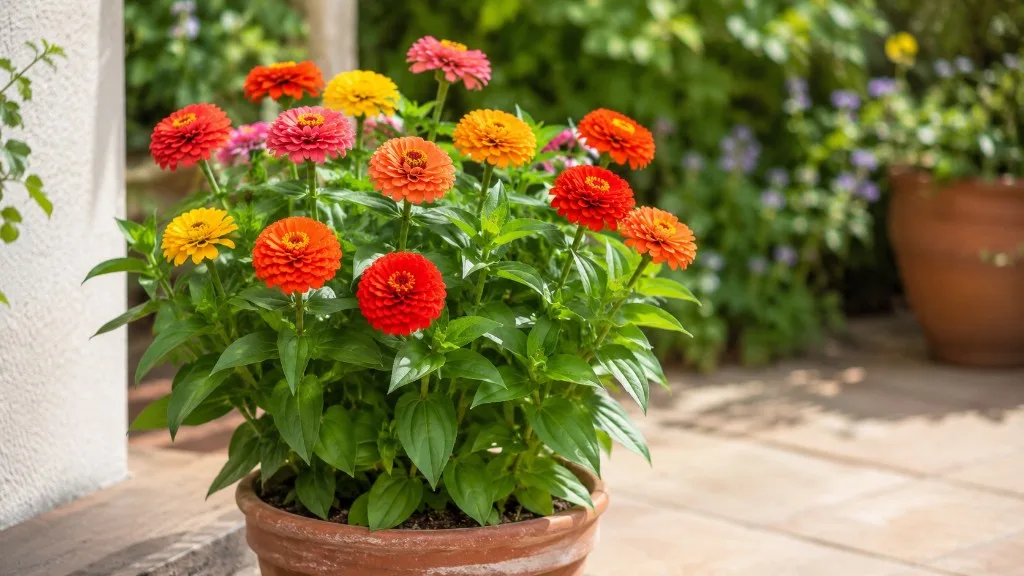
Zinnia Fertilizer: When, How, and Mistakes to Avoid
Zinnia Fertilizer: When, How, and Mistakes to Avoid
Zinnia fertilizer strategy comes down to one practical split: feed for structure early, feed for flowers later, and never let excess nitrogen steal the show. Zinnia elegans and its relatives - including compact Zinnia angustifolia and heat-tolerant Zinnia marylandica hybrids like the Zahara series - are warm-season annuals built to pump out daisy-like blooms from midsummer until frost. They are not heavy feeders, but they are not self-sufficient either. A lean pot or tired garden bed will produce thin stems, pale leaves, and a disappointing flower count long before disease or drought become the headline problem.
The default home grower plan is straightforward: use a balanced water-soluble fertilizer at half the label strength while seedlings establish and stems bulk up, then shift to a bloom-boosting formula with higher phosphorus once you see the first flower buds forming, typically six to eight weeks after planting. Apply on a regular but light schedule - every two to four weeks in containers, every four to six weeks in enriched garden soil - and stop feeding four to six weeks before your first expected frost. Water onto moist soil, never onto dry roots. Avoid high-nitrogen lawn or foliage formulas during peak bloom season; they push leaves at the expense of the color you actually planted zinnias for.
Why Fertilizer Matters for Zinnias
Zinnias are moderate feeders - faster and hungrier than succulents, less demanding than tomatoes in Zinnia light guide, but still responsive to steady nutrition during active growth. Utah State University Extension recommends roughly 0.15 pounds of nitrogen per 100 square feet per year, split with half applied at or before planting and the remainder side-dressed during the growing season (Utah State University Extension - Zinnia Cut Flower Production). Every watering leaches soluble nutrients from the root zone, especially in containers. Fertilizer replaces what the plant uses - but only up to the point roots can absorb without salt stress.
Clemson University’s Home & Garden Information Center recommends a soil test before fertilizing, because phosphorus and potassium needs vary by site and excess P and K can build up over repeated seasons (Clemson HGIC - How to Grow Zinnias). Think of fertilizer as maintenance for a healthy, actively growing zinnia - not a rescue tool for a pale plant in too little light or soggy mix. Fix light and water first, then feed conservatively. Zinnias want full sun, fertile well-drained soil, and about an inch of water per week.
When to Fertilize Zinnias: Active Growth vs Dormancy
Timing follows the plant’s metabolism more than a rigid calendar. Zinnias are frost-sensitive warm-season annuals. They do not go dormant indoors like a houseplant coleus might; they simply stop growing and die back when temperatures fall and days shorten. Feed when zinnias are actively producing new leaves, extending stems, and setting buds, and stop when that growth engine winds down in late summer and early fall.
A zinnia direct-seeded in May may look small for weeks, then suddenly race upward in June heat. That is normal. Feeding before roots are established wastes nutrients and risks salt burn on tender seedlings. Waiting until the plant has true leaves and a functioning root system - then feeding lightly - produces better results than front-loading the season with strong fertilizer at sowing time.
Spring Through Summer Feeding Window
Start feeding when seedlings have several sets of true leaves and roots have filled their cell, plug, or pot enough that you can gently lift the root ball without it crumbling apart. For direct-sown garden zinnias, that usually means three to four weeks after germination, once plants are 4 to 6 inches tall and growing steadily. For transplants set out after the last frost, a light balanced feed at planting or within the first week in the ground gives roots a gentle boost without forcing soft, disease-prone growth.
The main feeding window runs from late spring through late summer - roughly May through August in temperate climates. Home growers do well with half-strength liquid every two to six weeks depending on container size and soil richness, far below commercial greenhouse feeding intensity - Utah State University Extension classifies zinnias as moderate feeders that do best with measured nitrogen rather than constant heavy liquid programs.
| Month (temperate climate) | Growth phase | Feeding guidance |
|---|---|---|
| May | Establishment, true leaves | Light balanced feed at half strength if actively growing |
| June–July | Vegetative surge, first buds | Balanced feed early month; switch to bloom booster at bud set |
| August | Peak flowering | Bloom-boosting formula every 4–6 weeks; containers every 2–4 weeks |
| September | Slowing, shorter days | Taper frequency; final light feed if still blooming |
| October onward | Frost approach, decline | Stop feeding 4–6 weeks before expected first frost |
The table is a framework, not a law. A zinnia in a 12-inch pot on a sunny deck in July may need feeding on the shorter end of the interval because frequent watering leaches nutrients faster. A zinnia in compost-amended garden soil with a spring soil test showing adequate phosphorus may need little beyond a single side-dress in midsummer. Watch the plant: if it is producing sturdy stems and fresh buds on pinched branches, the timing is right. If it is static, solve light and water before adding food.
Fall Taper and End-of-Season Pause
Taper feeding in early to mid-fall as night temperatures cool and flower production naturally slows. Zinnias do not need fertilizer to “prepare for winter” - they are annuals that complete their life cycle in one season. Late feeding pushes soft new growth that frost will kill and wastes nutrients the plant cannot convert into flowers before the season ends.
Stop fertilizing entirely four to six weeks before your average first frost date. That pause lets stems harden, reduces salt buildup in the root zone before the plant dies back, and avoids encouraging lush foliage that is more susceptible to powdery mildew when humidity rises in cool mornings. If your zinnias are still blooming heavily in early fall and the forecast shows several weeks of mild weather ahead, one final half-strength bloom-boosting feed is reasonable - then stop.
For growers who treat zinnias strictly as annuals and let frost finish the bed, there is no winter feeding question. If you are in a frost-free climate and zinnias persist longer, reduce to no fertilizer once new growth and bud set slow sharply, regardless of the calendar month.
Balanced Fertilizer vs Bloom Booster for Zinnias
The most useful zinnia fertilizer decision is which NPK profile matches the growth phase you are in right now. Zinnias pass through vegetative establishment, then reproductive flowering. Phosphorus supports root function and flower development; nitrogen drives leaf and stem expansion; potassium supports overall vigor. The ratio shifts as the plant matures, and too much nitrogen during bud formation is why many gardeners describe zinnias as “all leaves, no flowers.”
When Balanced NPK Fits Best
Use a balanced fertilizer - equal or near-equal N-P-K numbers such as 10-10-10, 14-14-14, or 20-20-20 - during:
- Seedling and young transplant establishment, when the priority is root expansion, stem thickness, and healthy green foliage
- The first four to six weeks after planting, while the plant builds the branching framework that will carry dozens of blooms later
- Recovery periods after transplant shock, when a mild complete feed supports root regrowth without forcing an immediate bloom push
- Garden beds with unknown fertility, where a balanced formula is safer than guessing phosphorus needs without a soil test
Balanced feeding at half the label strength applied to moist soil gives zinnias the macronutrient baseline they need without the excess nitrogen hit that dedicated lawn fertilizers or high-first-number foliage blends deliver. Clemson HGIC emphasizes fertile, organically rich, well-drained soil at planting (Clemson HGIC - How to Grow Zinnias). Incorporating an inch of low-salt compost before sowing or transplanting often supplies enough early nutrition that the first liquid feed can wait until true leaves are expanding actively.
If your zinnias are lagging in early summer with yellowish lower leaves on an otherwise well-watered plant in full sun, a single balanced feed at half strength is a reasonable response - provided you have ruled out drought stress, compacted soil, and root rot from overwatering on Zinnia first.
When to Switch to a Bloom-Boosting Formula
Switch to a bloom-boosting fertilizer - higher middle number (phosphorus), such as 5-10-5, 10-20-10, or 15-30-15 - when you see the first visible flower buds forming at stem tips and branch nodes, typically six to eight weeks after sowing or transplanting depending on cultivar, temperature, and light. That is the moment the plant’s internal priority shifts from building structure to filling out blooms.
Continue the bloom-boosting formula through peak flowering, on the same light schedule you used for balanced feeding - every two to four weeks in containers, every four to six weeks in garden beds. The goal is not to drown the plant in phosphorus; it is to tilt the ratio toward flower production while still supplying enough nitrogen and potassium to keep existing foliage healthy and stems strong enough to support heavy double-flower cultivars.
Some growers use one balanced feed at planting, one balanced feed four weeks later, then bloom booster from first bud onward. Others run balanced formula through June and switch in July when heat drives bloom production. Both approaches work if you watch the plant: lush green growth with no buds by midseason often signals excess nitrogen or insufficient light, not phosphorus deficiency. Pale leaves with few buds may signal general under-feeding or a soil pH problem locking up nutrients - not a need for more bloom booster.
Do not use bloom-boosting formulas on brand-new seedlings or as a “more flowers” hack on stressed plants. Phosphorus without a healthy root system and adequate nitrogen does not manufacture blooms from nothing.
Why Excess Nitrogen Works Against Zinnia Flowers
Excess nitrogen is the silent bloom killer on zinnias. Nitrogen is the nutrient most directly tied to chlorophyll production and vegetative growth - bigger leaves, longer internodes, softer tissue. That is exactly what you want in early establishment. It is not what you want when the plant should be partitioning energy toward flower buds, petal pigment, and sturdy bloom stems for cutting.
When nitrogen outpaces reproductive needs, zinnias grow tall, leafy, and late to bloom - dark lush foliage, long internodes, and powdery mildew on dense soft canopy growth. A 24-8-16 lawn-style feed applied twice in June causes this more often than phosphorus deficiency. Utah State’s measured annual nitrogen rate reflects how easily overshoot happens (Utah State University Extension - Zinnia Cut Flower Production). If the plant looks vigorous but budless after a recent nitrogen-rich feed, do not add more nitrogen - confirm full sun, then switch to bloom booster only once buds are actually forming.
Best Fertilizer Type and NPK Ratios for Zinnias
The best fertilizer for zinnias for most home gardeners is a complete, water-soluble, all-purpose or flowering-annual formula you can dilute precisely and apply to moist soil. Granular slow-release products work in garden beds at planting time. Liquid concentrates work everywhere, especially containers, because you control dose and timing.
Early season default: balanced 10-10-10 or 14-14-14 at half label strength.
Bud set through peak bloom: bloom-boosting 5-10-5, 10-20-10, or similar elevated-phosphorus ratio, also at half strength.
Organic options - fish emulsion, compost tea, seaweed extract - work at diluted rates every three to four weeks. Slow-release granules at planting can carry a bed six to eight weeks; skip overlapping liquid feeds for the first month. Skip high-nitrogen lawn fertilizers, undiluted concentrates on containers, and foliar feeding in hot sun. Utah State notes phosphorus and potassium should follow a soil test because they accumulate (Utah State University Extension - Zinnia Cut Flower Production). A complete formula with micronutrients covers most container situations; pale new leaves between veins may signal iron or magnesium issues tied to pH, not nitrogen hunger.
Container Zinnias vs In-Ground Feeding Schedules
Container and in-ground zinnias share the same two-phase NPK logic - balanced early, bloom booster at bud set, avoid excess nitrogen - but they do not share the same feeding frequency. The difference comes down to root zone volume, leaching rate, and how fast nutrients leave the system every time you water a pot until it runs from the drainage hole.
Feeding Pots, Planters, and Hanging Baskets
Container zinnias have a small reservoir of soil that dries and gets rewetted constantly. Each watering event carries dissolved nutrients out the bottom. Even a rich potting mix fortified at planting time is usually depleted of available nitrogen by midseason unless you replace it.
For actively growing container zinnias in full sun during summer:
- Balanced half-strength liquid every two to four weeks from true-leaf stage until first buds
- Bloom-boosting half-strength liquid every two to four weeks from bud set through peak bloom
- Plain water only between feeds - do not fertilize at every watering unless you are deliberately running a very weak constant-feed program at roughly one-quarter strength, which most home growers should avoid
- Monthly leaching flush - water heavily with plain water until drainage runs clear - if you see white salt crust on the soil surface
Compact cultivars in 10- to 12-inch pots sit at the two- to three-week end in hot weather; tall Zinnia elegans in larger pots may tolerate three- to four-week intervals. Morning feeding on already-moist soil reduces salt damage risk in warm containers.
Feeding Garden Beds and Cut-Flower Rows
In-ground zinnias pull from a much larger nutrient pool. A spring incorporation of compost, a soil test, and one or two targeted feeds often outperform a heavy monthly synthetic schedule.
For garden beds and cut-flower rows:
- Compost or balanced slow-release at planting, following soil test recommendations for phosphorus and potassium
- Side-dress nitrogen at half the annual rate in midsummer if growth is pale or bloom count is low - Utah State’s model of splitting nitrogen between planting and midseason side-dress fits here
- Balanced or bloom-boosting liquid at half strength every four to six weeks from active growth through peak bloom if soil is not already rich
- Often no additional feeding if the bed was compost-amended, tested adequate, and plants show deep green leaves and continuous buds
Cut-flower rows harvested weekly may need slightly more consistent feeding than borders - but overfed plants produce soft stems and dense foliage that invite powdery mildew (Clemson HGIC - How to Grow Zinnias).
| Situation | Suggested frequency | Formula phase | Strength |
|---|---|---|---|
| Container, full sun, peak summer | Every 2–3 weeks | Bloom booster after bud set | Half label strength |
| Container, moderate heat | Every 3–4 weeks | Balanced then bloom booster | Half label strength |
| In-ground, compost-amended bed | Every 4–6 weeks or 1–2x season | Balanced then bloom booster | Half label strength |
| In-ground, lean or sandy soil | Every 4 weeks | Balanced then bloom booster | Half label strength |
| Newly transplanted (either) | Wait 1–2 weeks, then light feed | Balanced only | Quarter to half strength |
How Much and How Often to Feed Zinnias
If you remember one number, make it half strength - never full label strength on container zinnias, and rarely full strength in garden beds unless a soil test documents a specific deficiency and you have experience with leaching salts afterward.
Cut label rates to one-half for liquid feeding during active growth; quarter strength suits seedlings or rich compost-amended beds. If the bottle says 1 tablespoon per gallon, use 1½ teaspoons. A clear schedule with plain water between feeds beats constant micro-dosing, which stacks salts in small pots. For in-ground beds, Utah State’s 0.15 pounds nitrogen per 100 square feet per year spreads across one or two modest applications - not a heavy handful every week.
Step-by-Step: How to Fertilize Zinnias Safely
Step 1 - Check the plant and calendar. Feed only during active warm-season growth. Skip wilted, stressed, or newly transplanted plants until new growth appears, and stop within four to six weeks of expected frost.
Step 2 - Confirm soil moisture. Water first if soil is dry. Fertilizer on dry roots burns fine root hairs within days.
Step 3 - Mix at half strength in a watering can. Use the solution within a few hours.
Step 4 - Apply at the base in the morning, avoiding leaf splash. Wet foliage plus sun plus fertilizer residue causes scorch.
Step 5 - Water until slightly draining from containers; empty saucers. Apply to the root zone in beds, not bare paths.
Step 6 - Record and repeat on schedule. Switch from balanced to bloom booster when buds are visible. Alternate feeds with plain deep watering to leach salts.
Step 7 - Pause if anything looks wrong. Salt crust or tip burn means stop, flush, and wait - not double the next dose.
Signs Your Zinnia Nutrition Is Off
Nutrient problems on zinnias overlap with water, light, and disease issues - so read the whole plant in context, not one leaf in isolation.
Signs of under-feeding or depleted soil include pale or yellowish older leaves on an otherwise well-watered plant in full sun, stunted stems, small flowers, and slow rebloom after deadheading. In containers, under-feeding is more common than in compost-rich beds. Confirm the plant gets six or more hours of direct sun before blaming fertilizer - shade produces similar pale, leggy growth without any soil deficiency.
Signs of over-fertilizing or salt buildup include brown or crispy leaf tips and margins, a white or yellowish crust on the soil surface, sudden lower leaf yellowing and drop shortly after feeding, and wilting despite wet soil because damaged roots cannot take up water. University of Maryland Extension identifies excessive fertilizer as a primary cause of high soluble salts in container plants, with tip burn and marginal necrosis as classic symptoms (University of Maryland Extension - Fertilizer Toxicity).
Signs of excess nitrogen specifically include deep green lush foliage, long internodes, delayed flowering, and a plant that looks “healthy” but produces few buds. Tall cutting cultivars naturally stretch somewhat, but a carpet of leaves with bare lower stems and no flowers at midsummer is a nutrition and light checklist item, not a cultivar quirk.
Signs the bloom-booster phase is working include increased bud count at branch tips after deadheading, richer petal color on some cultivars, and stems thick enough to support double flowers without flopping - assuming water and sun are already correct.
How to Fix Over-Fertilized Zinnias
Stop feeding immediately, then flush the root zone with plain water - several minutes through containers, a deep soak in garden beds. Empty saucers so roots do not reabsorb salty runoff. Remove mostly necrotic leaves; leave partially affected foliage. Wait four to six weeks before resuming at quarter to half strength. Badly burned annuals may not recover fully before frost - note the dose that caused the problem rather than repeating rescue feeds.
Common Zinnia Fertilizer Mistakes
Using high-nitrogen fertilizer all season. Lawn food, leafy-green boosters, and anything with a first number dramatically higher than the others keeps zinnias in vegetative mode. Switch to bloom booster at bud set and keep total nitrogen moderate.
Feeding on dry soil. This is the fastest route to root burn, especially in containers on a hot patio. Water first, feed second.
Full label strength “because zinnias are fast growers.” Fast growth does not mean salt tolerance. Half strength on a clear schedule outperforms full strength monthly.
Fertilizing at every watering without measuring. Constant micro-dosing stacks salts in small pots. Use plain water between scheduled feeds.
Ignoring container vs bed differences. A schedule perfect for a garden row will overfeed a 10-inch pot or underfeed a hanging basket baking on a south-facing railing.
Skipping soil tests in permanent beds. Years of bloom booster without testing can push phosphorus to levels that lock up micronutrients. Clemson HGIC recommends testing before fertilizing (Clemson HGIC - How to Grow Zinnias).
Late-season feeding before frost. Soft growth wastes nutrients and invites mildew. Stop four to six weeks before expected frost.
Feeding stressed plants. Drought, root rot, powdery mildew collapse, and fresh transplant shock are not solved with fertilizer. Fix the stressor, then feed lightly when new growth returns.
Chasing blooms with phosphorus before buds exist. Bloom booster does not create flowers on a nitrogen-drunk, shaded plant. Correct light and nitrogen balance first.
How Fertilizer Ties Into Light, Water, and Soil
Fertilizer is the third leg of the stool. Full-sun zinnias use more nutrients but dry out faster; soggy soil blocks uptake regardless of how much you feed. Clemson HGIC recommends fertile well-drained soil, full sun, and base watering to limit leaf spot (Clemson HGIC - How to Grow Zinnias). Let the top 1 to 2 inches of bed soil dry between waterings; avoid constant sogginess in pots. Deadheading redirects energy to new buds only when nutrients, water, and sun are already in range. If feeding correctly still produces pale stunted plants, a soil test beats another fertilizer bottle. Fertilizer amplifies a good setup - it does not rescue a bad one.
Conclusion
Zinnia fertilizer works best as a two-phase, light-touch program: balanced 10-10-10 or similar at half strength while plants establish, then a bloom-boosting 5-10-5 or 10-20-10 at the same dilution once buds appear - always on moist soil, always in morning cool, and always with excess nitrogen held in check during peak bloom season. Containers need feeding every two to four weeks; in-ground plantings in compost-rich beds often thrive on every four to six weeks or a simple midsummer side-dress. Stop four to six weeks before frost, flush salts if tips brown, and never feed drought-stressed or newly transplanted plants until new growth confirms roots are working again.
When in doubt, feed less and watch bud count over the next ten days. Zinnias are generous feedback plants - they will tell you whether the balance is right long before the season ends.
When to use this page vs other Zinnia guides
- Zinnia overview - Start here for whole-plant context before deep-diving this topic.
- Zinnia problems hub - Jump to symptom-specific fix guides when this care topic does not resolve the issue.
- Overfertilization on Zinnia - Escalate here when fertilizer adjustments are not enough.
- No Flowers on Zinnia - Escalate here when fertilizer adjustments are not enough.
Related Zinnia guides
- Zinnia overview
- Zinnia watering
- Zinnia light
- Zinnia soil
- Zinnia propagation
- Zinnia repotting
- Overfertilization on Zinnia
- No Flowers on Zinnia
- Zinnia problems
Related tool
Try the Fertilizer Dilution Calculator with zinnia pre-selected to estimate needs for your setup.