Overfertilization on Zinnia: Causes, Checks & Fixes
Quick answer
Overfertilization on Zinnia usually means too much nitrogen: dark green, fast-growing plants with few or small flowers. First step: stop all fertilizer immediately and flush container soil if you see salt crust or crispy leaf edges.
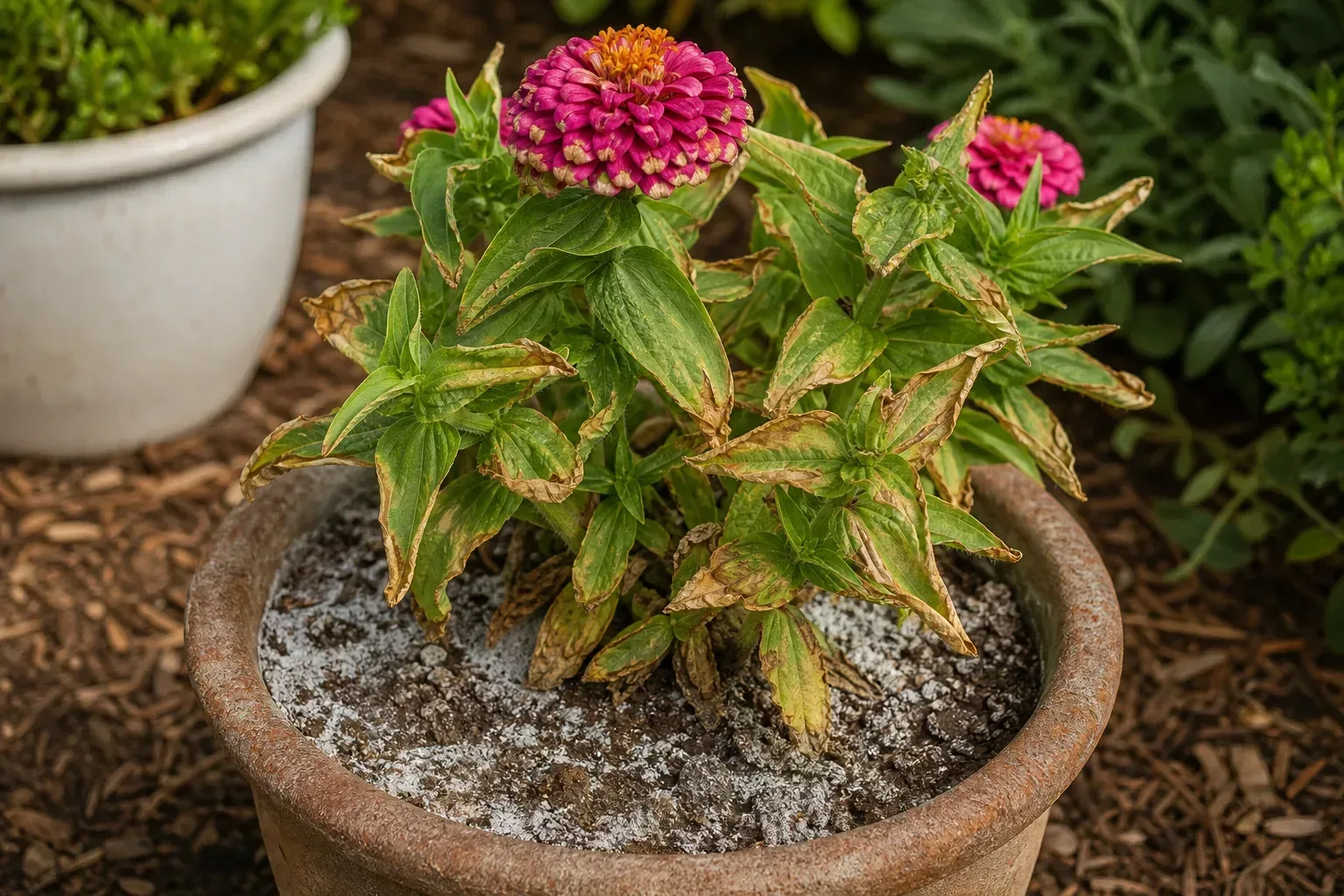
Overfertilization on Zinnia: Causes, Checks & Fixes
This guide covers overfertilization on Zinnia. See also the general Overfertilization guide, watering, and light pages for this plant.
Overfertilization on Zinnia: Causes, Checks & Fixes
Quick answer
Overfertilization on Zinnia usually means too much nitrogen: dark green, fast-growing plants with few or small flowers. Salt-heavy feeding in containers can also burn leaf edges and leave a crusty white film on the soil surface.
First step: stop all fertilizer immediately. Do not add bloom booster on top of the problem hoping to force flowers. If containers show salt crust or widespread leaf-tip browning after recent feeding, flush the pot with clear water until it drains freely. Then wait two to three weeks before any diluted feed.
Why Zinnia gets overfertilized
Zinnias are fast-growing warm-season annuals that respond dramatically to nitrogen. That makes them easy to overfeed. A little extra nitrogen pushes lush foliage; repeated high-nitrogen doses redirect the plant away from flower production entirely.
Common triggers on zinnias:
- Weekly liquid feed at full label strength on containers that already sit in compost-amended mix
- High-nitrogen lawn fertilizer drifting or running off into zinnia beds after rain
- Weed-and-feed products applied near annual beds-misapplied preemergent weed killers combined with fertilizer can stunt annuals for the whole season
- “More blooms” products applied too early or too often-phosphorus-heavy bloom boosters used alongside regular nitrogen feeds stack nutrients quickly in small pots
- Feeding stressed plants-fertilizing drought-wilted or heat-stressed zinnias increases burn risk because salts concentrate in leaves when transpiration is high
Zinnias in garden beds with annual compost top-dressing often need less supplemental fertilizer than container plants baking on a sunny terrace. Containers dry and leach unevenly; salts from synthetic feeds accumulate faster in a limited root zone.
What overfertilization looks like on Zinnia
Nitrogen excess (most common on zinnias):
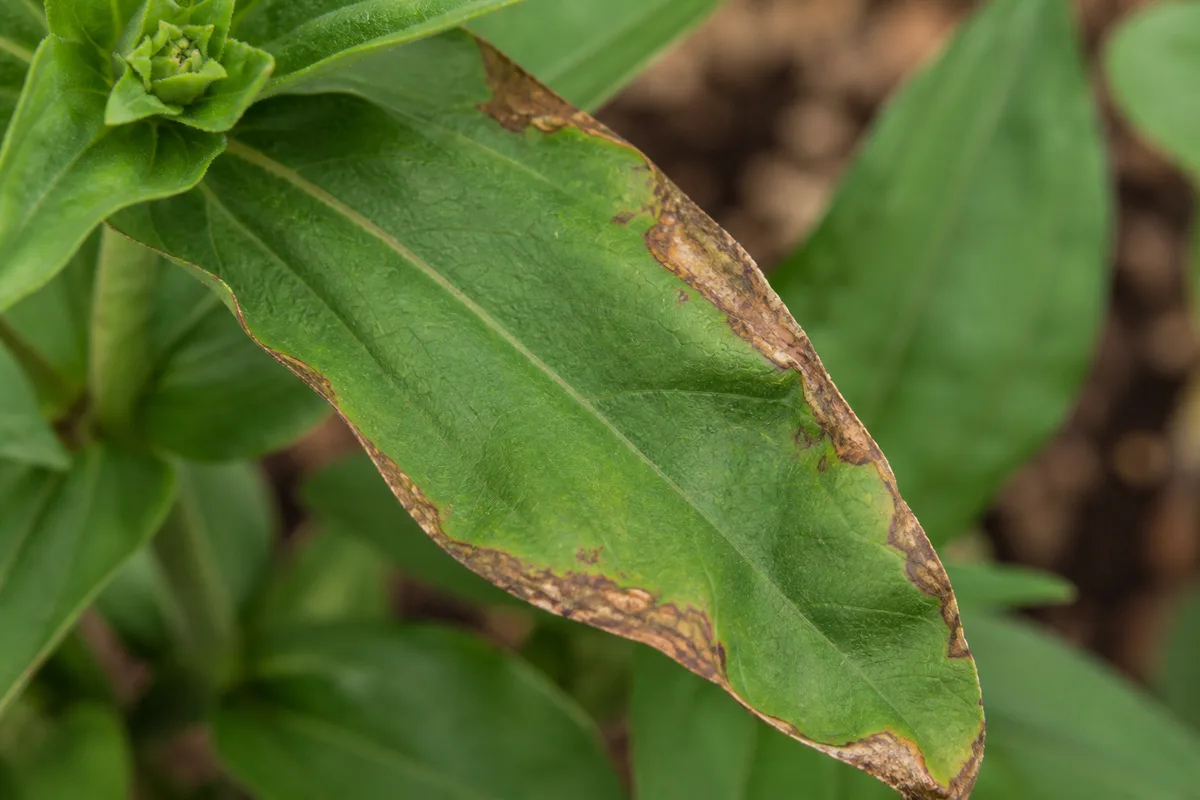
Overfertilization symptoms on Zinnia - compare with healthy tissue on the same plant.
- Dark, almost glossy green leaves on tall stems
- Rapid vertical growth with long internodes between leaves
- Few buds despite mature plant age and warm weather
- Small or sparse flowers when blooms finally appear
- Soft, lush tissue that may invite powdery mildew in humid or crowded plantings
Salt burn and fertilizer injury (common in containers):
- Brown or tan crispy edges on leaf tips and margins
- Wilting shortly after feeding even when soil is moist
- White or pale crust on the soil surface from evaporated fertilizer solution
- Stunted new growth after an aggressive feed
These patterns differ from zinnias that simply lack sun-shade causes pale, stretched stems with thin leaves, not the deep green lushness of nitrogen excess. They also differ from drought stress, where wilted plants recover overnight after a deep base watering.
How to confirm the cause
Work through these checks before changing your feeding routine:
- Feed history - List every fertilizer applied in the past four weeks: product N-P-K ratio, concentration, and frequency. Two or more full-strength soluble feeds in that window on the same container strongly suggests excess.
- Bloom versus foliage ratio - Mature zinnias in full sun should carry visible buds within six to eight weeks of germination in warm weather. All leaves and no buds after heavy feeding points to nitrogen imbalance.
- Sun check - Confirm at least six hours of direct sun. Shade alone can reduce flowers, but paired with dark green lush growth after feeding, nitrogen is the primary suspect.
- Salt signs - Look for crusty deposits on container soil and marginal leaf burn that appeared within days of the last feed. UMD Extension notes that excess fertilizer salts cause marginal browning and scorch on herbaceous flowers.
- Soil moisture - Push a finger into the top 3 cm. Soggy soil with yellow lower leaves suggests overwatering, not overfeeding. Bone-dry wilt with no recent feed history suggests underwatering.
- Nearby drift - Check whether lawn fertilizer, manure top-dressing, or weed-and-feed was applied uphill or upwind of the zinnia bed recently.
If plants are young seedlings under three weeks old with no buds yet, patience may be normal-not overfertilization. Confirm the plant is old enough and sunny enough before blaming feed.
First fix for Zinnia
Stop all fertilizer immediately-including bloom boosters-and do not feed again until you see how the plant responds over the next two weeks.
This single pause prevents additional salt buildup and lets the plant shift energy away from vegetative growth. Many gardeners make overfertilization worse by adding phosphorus bloom products on top of excess nitrogen, which does not cancel the nitrogen signal telling the plant to grow leaves.
If containers show salt crust, white soil deposits, or widespread leaf-tip browning that appeared right after feeding, follow the stop with a flush: water slowly with clear water until it runs freely from drainage holes. Repeat once after the pot drains. Skip fertilizer for at least four weeks after a flush.
Do not foliar-feed burned plants. Do not repot on day one unless roots smell sour from combined overwatering and salt stress.
Step-by-step recovery
After stopping feed (and flushing if salt burn is present):
- Verify full sun - Move containers to the sunniest spot available. Nitrogen-corrected plants still will not bloom well in shade.
- Resume base watering only - Water at the base when the top 3 cm dries. Even moisture supports recovery without adding salts.
- Deadhead any small or distorted blooms - Removing spent flowers signals the plant to keep producing rather than setting seed on weak heads.
- Wait two to three weeks - Watch for new bud formation on fresh stem tips. Do not feed during this waiting period unless plants show pale lower leaves across the whole bed-not just normal aging of bottom foliage.
- Restart at half strength - When new buds appear, use a balanced or slightly phosphorus-forward liquid feed at half the label rate. Apply every three to four weeks during active growth, not weekly.
- Prefer slow release in garden beds - MSU Extension recommends slow or controlled-release fertilizer in spring, with a possible mid-season top-up for long-blooming annuals-not constant soluble feeding.
- Trim severely scorched leaves - Brown crispy margins will not green up. Remove the worst leaves after the plant stabilizes so you can judge new growth clearly.
Garden-bed zinnias with nitrogen excess but no salt burn often recover with a feeding pause alone. Containers with visible salt crust need the flush step before recovery begins.
Recovery timeline
Expect the first normal-sized buds within two to three weeks after stopping excess nitrogen feed in warm, sunny conditions. Mild salt burn on container zinnias may take an extra week if you flushed late.
Signs recovery is working:
- New stem tips carry visible bud clusters
- Fresh leaves emerge without brown margins
- Flower size increases on newly opening blooms
- Vertical stretch slows and side branching increases
Signs the problem is worsening:
- Leaf-tip browning spreads to new growth after you stopped feeding
- Wilt persists despite moist soil and drainage-possible root damage from salts
- Powdery mildew spreads rapidly on soft lush foliage in humid weather
- Entire plants collapse within days of a heavy feed
Zinnias are single-season annuals. If severe burn hits late in the season, starting a fresh succession sowing may yield more flowers than nursing badly damaged plants.
Lookalike symptoms to rule out
Not enough light produces pale, thin, stretched stems-not the deep green lushness of nitrogen excess. Move a shaded plant to sun before assuming a feed problem.
No flowers from young plants is normal if seedlings are less than six weeks old in cool spring weather. Zinnias need warmth and sun before bud formation.
Powdery mildew adds white powdery patches on leaves. It often follows humid crowded conditions and can worsen on soft nitrogen-fed growth, but mildew itself is a fungal issue-not proof you overfed.
Overwatering yellows lower leaves and can cause stem rot at the base with soggy soil-not typically the dark green leafiness of nitrogen excess. Check whether the pot stays wet for days.
Underwatering wilts plants in afternoon heat but leaves stay normal green. A deep watering test separates drought from salt damage.
Mistakes to avoid
Do not keep feeding high-nitrogen products hoping blooms will eventually appear. An excess of nitrogen promotes lush vegetative growth and fewer flowers-continuing the same feed repeats the cause.
Do not apply dry granular fertilizer to wet zinnia foliage. WSU Hortsense notes that granular products contacting wet leaves can burn foliage directly.
Do not fertilize drought-stressed or heat-wilted zinnias. Salts concentrate in leaf tissue when the plant cannot transpire normally.
Do not stack bloom booster on top of regular all-purpose feed in the same week. Two products in seven days doubles the salt load in containers.
Do not assume garden-bed compost eliminates all feeding needs in pots. Container zinnias in full sun use nutrients faster than in-ground plantings but still burn easily from overapplication.
How to prevent overfertilization next time
Feed zinnias lightly and predictably. Annual flowers benefit from balanced nutrition, but more fertilizer does not mean more blooms once basics are met.
Prevention habits that work for zinnias:
- Use half-strength liquid feed every three to four weeks during active growth-not weekly at full label dose
- Choose slow-release products for in-ground beds applied once in spring; supplement containers only if growth palens
- Keep lawn and weed-and-feed products away from zinnia beds and container edges
- Deadhead spent blooms every few days so plants keep flowering without needing extra nitrogen pushes
- Space plants 20–30 cm apart for airflow-lush nitrogen-fed foliage in tight humid plantings invites mildew
- Water at the base after any feed to wash salts off leaves and distribute nutrients evenly
Compost-amended garden soil often supplies enough baseline fertility for zinnias. Containers in full sun may need supplemental feed, but the dose should stay modest.
When to worry
Treat as urgent when zinnias wilt within 24 hours of a heavy feed, brown leaf margins spread to most of the plant in hot dry weather, or white salt crust covers the entire soil surface. Salt injury concentrates in leaf tips as moisture evaporates-severe cases can kill roots before you see full foliar damage.
Replace container plants that collapse after a flush attempt rather than feeding again. For late-season garden zinnias with mild nitrogen excess and no burn, a feeding pause is usually enough-no panic required.
Conclusion
Overfertilized zinnias talk clearly: dark green, tall, and leafy with flowers as an afterthought-or crispy edges and salt crust when feeding went too far in pots. Stop fertilizer first, flush containers if salts built up, confirm full sun, then restart at half strength only after new buds show. That path turns a common beginner mistake into a fixable mid-season correction rather than a lost bloom season.
Related Zinnia guides
- Zinnia overview
- Zinnia watering
- Zinnia light
- Yellow Leaves on Zinnia
- Brown Tips on Zinnia
- Slow Growth on Zinnia
- All Zinnia problems
Conclusion
Use this page to confirm overfertilization on Zinnia by pattern and pot checks-not by treating every houseplant the same. When symptoms overlap with sibling pages, follow the linked guide for the matching cause before stacking fertilizer, repotting, or pesticide.