Flowers Turning Brown on Zinnia: Causes, Checks & Fixes
Quick answer
Brown zinnia flowers after rain or overhead watering usually mean Alternaria blight or Botrytis on wet petals-not normal aging alone. First step: snip off every brown flower head and stop wetting blooms.
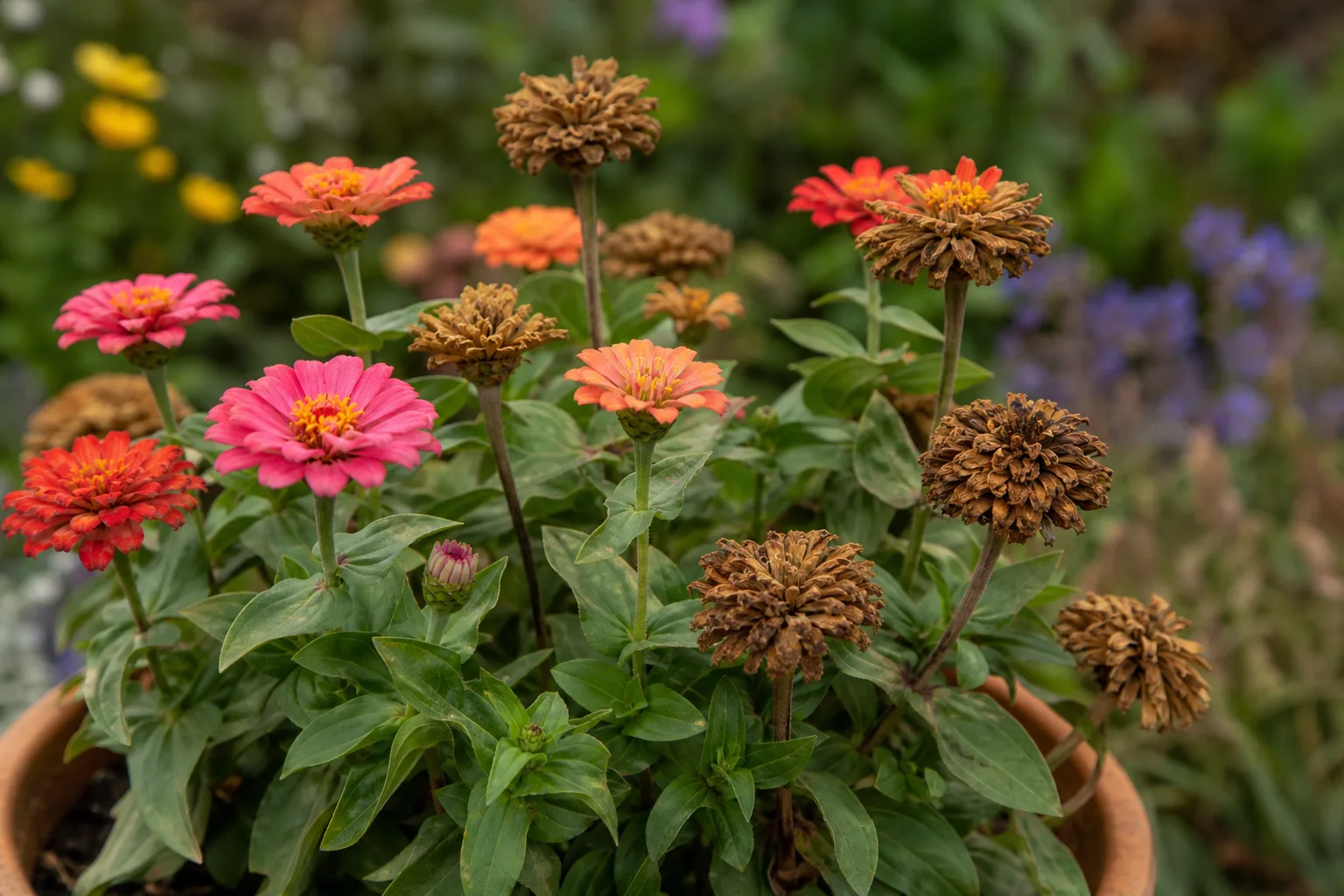
Flowers Turning Brown on Zinnia: Causes, Checks & Fixes
This guide covers flowers turning brown on Zinnia. See also the general Flowers Turning Brown guide, watering, and light pages for this plant.
Flowers Turning Brown on Zinnia: Causes, Checks & Fixes
Quick answer
Brown zinnia flowers after a wet night or sprinkler pass usually point to fungal infection on wet petals-not the gradual fade of a spent bloom. Zinnia elegans produces bold ray flowers that hold moisture on their dense petal layers, making them prime targets for Alternaria blight and Botrytis grey mould when foliage and blooms stay wet.
First step: snip off every brown or spotted flower head today. Cut back to the next healthy leaf node or side bud. Do not wait for petals to dry on the plant-infected tissue sheds spores onto opening buds below. After removal, switch to base watering only and check spacing before considering any spray.
Why Zinnia flowers turn brown
Zinnias are fast-growing summer annuals bred for large, layered ray flowers in Zinnia light guide. That flower architecture traps dew and irrigation water longer than flat-petaled blooms, which is why petal diseases show up here before many other garden annuals struggle.
Alternaria blight (Alternaria zinniae) is the most common and conspicuous zinnia disease. Small reddish-brown spots with grayish-white centers appear on ray-flower petals, enlarge quickly, and cause entire heads to darken and wither. Warm, wet, or humid weather drives outbreaks, and the fungus survives on seed and plant debris in soil for up to two years.
Botrytis blight (grey mould, Botrytis cinerea) attacks senescing and wounded flower tissue. Petals develop water-soaked tan to brown spots; in humid conditions fuzzy grey fungal growth covers infected areas. Spent blooms left on the plant are especially vulnerable-Botrytis colonizes dying petals first, then spreads to healthy buds.
Overhead watering and crowding set both diseases up. Zinnias need water at the base when the top 3 cm of soil dries; wetting flowers and leaves in the evening leaves petals damp through the night. Dense rows in monsoon-season beds or crowded containers hold humidity against blooms that never fully dry before the next rain cycle.
Natural aging also browns zinnia flowers, but on a different schedule. A finished bloom fades evenly from petal tips inward over several days, often shifting through paler versions of its original color before turning papery brown. Disease browning arrives as discrete spots or sudden collapse after wet weather-not a slow, uniform fade across the whole head.
What brown flowers look like on Zinnia
Alternaria on petals:
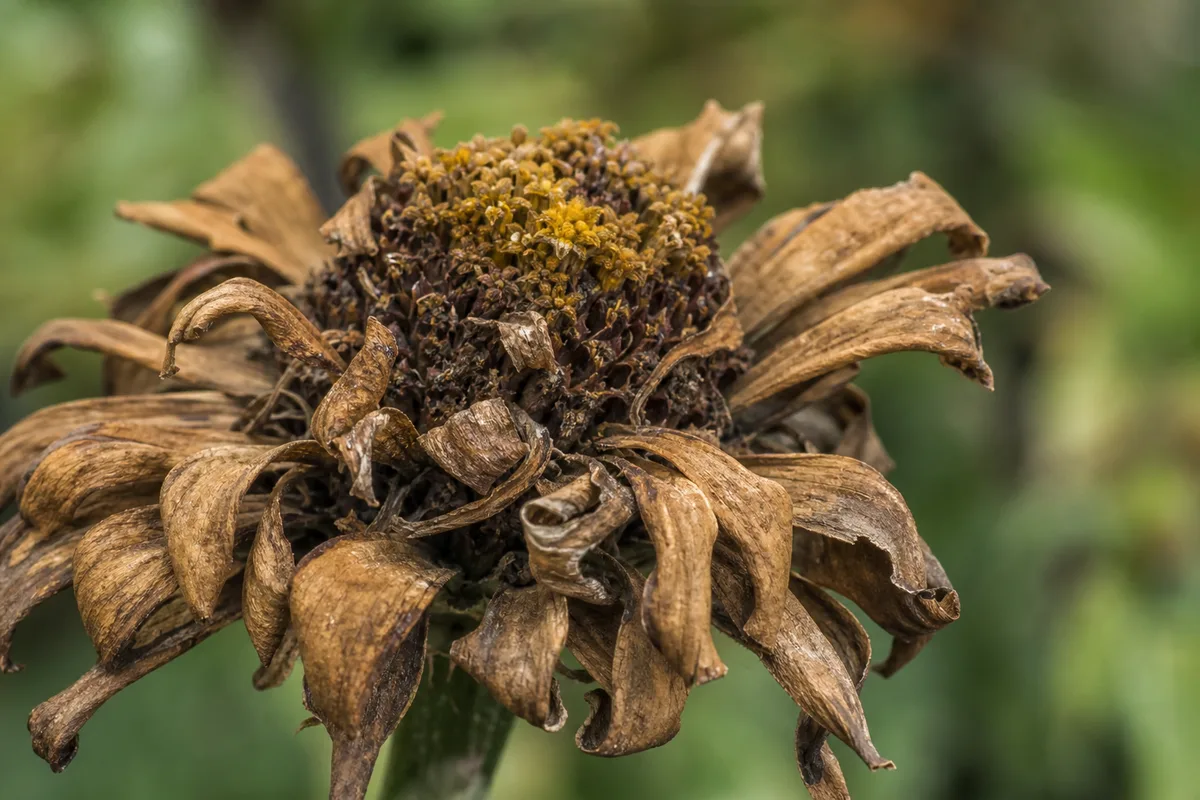
Flowers Turning Brown symptoms on Zinnia - compare with healthy tissue on the same plant.
- Small reddish-brown spots, 1–2 mm across, with grayish-white centers on bright ray petals
- Spots merge until the whole flower head turns brown and papery
- Often appears on outer petals first while the center disk is still yellow
- May coincide with brown leaf spots and stem lesions on the same plant
Botrytis on petals:
- Water-soaked brown or tan patches on petals, sometimes starting at petal edges
- Fuzzy grey to brown mould visible on infected flower parts in humid weather
- Entire heads collapse soft and wet rather than drying crisp
- Frequently starts on spent blooms that were not deadheaded
Normal spent-bloom aging:
- Even color loss across all petals over several days
- Petals feel dry and papery, not water-soaked
- No grey mould, no sharp spot margins, no sudden spread to neighboring fresh buds
- Lower leaves and stems look healthy
Environmental stress browning:
- Petals bleach and crisp at the edges during extreme heat when soil dries completely
- Flower heads droop in afternoon sun before browning
- Whole planting shows uniform stress, not spotty lesions after rain
How to confirm the cause
Work through these checks in order before you treat.
1. Note the timing. Did brown spots appear within 24–48 hours of rain, sprinklers, or heavy dew? Alternaria and Botrytis both need extended leaf and petal wetness. Gradual fading without a wet trigger points to natural aging or drought stress.
2. Examine spot pattern. Run your finger along a spotted petal. Disease spots feel slightly sunken with a defined margin and often a paler center. Age-related browning lacks that target-like pattern and affects the whole head uniformly.
3. Check plant position in the bed. Inner plants surrounded by taller neighbors show disease first because airflow is poorest and petals dry last. If only border plants brown while inner rows stay clean, suspect heat or drought on exposed heads instead.
4. Inspect stems and leaves on the same plant. Alternaria rarely stops at petals-you may find reddish-brown leaf spots with gray centers or dark cankers near the soil line. Botrytis on flowers often follows spent blooms on the same stem. Clean foliage with only one brown head suggests isolated aging or physical damage.
5. Look for grey mould. In humid morning conditions, lift a collapsed flower head. Fuzzy grey growth on petal tissue confirms Botrytis. Alternaria dries tissue without that cottony surface growth.
6. Rule out bacterial spot. Bacterial leaf spot (Xanthomonas campestris pv. zinniae) can produce reddish circular spots on petals, but it typically starts on lower leaves with angular brown lesions surrounded by yellow halos. Petal-only spotting after wet nights still favors fungal blight.
The first fix to try
Remove every brown, spotted, or collapsed flower head immediately.
Use clean, sharp scissors or pruners. Cut the stem just above the next leaf node or lateral bud-do not yank heads, which tears stem tissue and opens fresh wounds for Botrytis. Drop cuttings into a bag and discard them in the trash, not the compost pile, because both Alternaria and Botrytis survive in debris.
This single sanitation step stops the fastest spore source and is the safest first action. Spraying fungicide on a bed still full of infected blooms wastes product and leaves active inoculum behind.
After deadheading:
- Stop overhead watering and sprinklers on zinnias entirely
- Water at the base in morning so any splashed foliage dries by afternoon
- Thin overcrowded plants if inner rows have not been opening to sun and air
Step-by-step recovery
Once infected flowers are removed, work through these steps over the next two weeks based on severity.
Improve airflow. Space plants to 20–30 cm apart if rows have filled in. For containers, move pots so they do not touch and trim lower leaves that drag on wet soil. Zinnias in full sun with room between stems dry faster after rain.
Adjust watering. Water deeply at the base when the top 3 cm of soil is dry-typically every two to three days in hot Indian summer, less in cooler weather. Never wet flowers or foliage on purpose. If rain is forecast, deadhead any fading blooms beforehand so senescing petals do not sit wet for days.
Monitor new buds daily. Healthy recovery shows clean petals on the next blooms to open. If new buds open already spotted, disease pressure is still high.
Apply protectant fungicide only if spotting continues on fresh blooms. For home gardens, copper-based or chlorothalonil protectant sprays on leaves and young buds can reduce Alternaria spread when cultural fixes alone fail. Spray in early morning on dry plants, and follow label rates. Fungicides protect new tissue-they do not restore brown petals already damaged.
Remove severely affected plants. When stem cankers girdle the base, leaves brown in waves up the plant, or every new bud opens diseased, pull the entire plant and discard it. Replanting into the same crowded, debris-filled spot without rotation often repeats the cycle next season.
Recovery timeline
| Stage | What to expect |
|---|---|
| Days 1–3 | Removed heads stop shedding spores; remaining blooms may still show old spots |
| Days 4–10 | Next buds open; clean petals mean your sanitation and watering changes are working |
| Days 10–14 | Steady deadheading should produce mostly clean flowers if weather dries |
| Beyond 2 weeks | Persistent spotting on every new bud means high inoculum-escalate to fungicide or replant |
Brown petals themselves never revert to bright color. Judge success by new blooms, not old tissue.
Lookalike symptoms
Faded flowers before brown. Heat and drought bleach zinnia colors and crisp petal edges without the water-soaked spots of blight. Check soil moisture-if the top 3 cm is bone dry and plants wilt in afternoon sun, deep base watering may resolve the issue without any disease treatment.
Powdery mildew. White flour-like coating on leaves and stems is a different fungus entirely. It rarely starts on petals, though severely affected plants may produce smaller, weaker blooms. Treat mildew with spacing and airflow improvements rather than assuming flower browning shares the same cause.
Thrips scarring. Thrips rasp petal tissue in hot dry weather, leaving silvery streaks and distorted blooms. Damage looks scraped rather than water-soaked, and you may see tiny dark insects inside folded petals when you blow gently on a bloom.
Physical damage. Heavy rain, hail, or wind can bruise zinnia petals, creating brown torn patches on otherwise healthy plants. Damage is confined to exposed outer petals and appears immediately after a storm, not as spreading spots over subsequent days.
Mistakes to avoid
Leaving spent blooms on the plant. Fading flowers are Botrytis entry points. Deadhead every two to three days during peak bloom and humid weather, even when petals look only slightly dull.
Spraying water overhead to “cool” plants. Wet petals in evening humidity invite blight. If heat stress is the concern, water the base in early morning and mulch containers instead.
Composting infected flower heads. Alternaria survives in debris; Botrytis spores spread from compost piles near active beds. Bag and trash diseased tissue.
Reaching for fertilizer on spotted plants. Nutrient boosts do not cure fungal petals and may push soft new growth that stays wet longer. Fix moisture and sanitation first.
Ignoring stem cankers. Petal spotting that moves down to brown sunken lesions at the stem base means the plant is systemic. Deadheading alone will not save it-remove the whole plant before adjacent zinnias infect.
How to prevent brown flowers on Zinnia
Water at the base in morning. This is the single most effective prevention for zinnias. Extension guides consistently recommend avoiding overhead irrigation as a primary blight driver on Zinnia elegans.
Space for airflow. Sow or transplant at 20–30 cm spacing. Zinnias tolerate closer planting in arid climates but need more room in humid monsoon regions where nights stay warm and damp.
Deadhead on schedule. Remove spent blooms every few days before petals rot. This limits Botrytis inoculum and keeps energy directed toward clean new flowers.
Choose resistant varieties. No zinnia cultivar is fully immune to Alternaria, but resistant Zinnia elegans selections reduce severity. Rotate planting sites yearly in beds where blight appeared the previous season.
Treat seed if saving your own. Alternaria can carry on seed. Hot-water seed treatment at 52°C (125°F) for 30 minutes before sowing reduces seedborne inoculum-use fresh seed if unsure, because older seed tolerates heat treatment less well.
Scout after wet weather. A five-minute walk through the bed after rain catches the first spotted petals when sanitation alone can still contain an outbreak.
When to worry
Escalate beyond basic deadheading and watering changes when:
- Every new bud opens with spots despite dry petals for a week
- Fuzzy grey mould covers multiple flower heads on the same plant
- Stem cankers form at the base and upper growth wilts
- Brown spotting spreads to several plants across the bed within days
- Lower leaves develop matching reddish-brown lesions with gray centers
A lone papery brown head at the end of a long bloom cycle, with clean new buds opening above it, is normal senescence-not an emergency.
Conclusion
Brown zinnia flowers split cleanly into two paths: normal aging of finished blooms versus fungal blight on wet petals. The wet-weather spot test decides which you have. Remove infected heads first, keep petals dry, and let the next round of buds tell you whether the problem is solved. Zinnias bloom fast-when sanitation and base watering stick, clean flowers usually return within two weeks.
When to use this page vs other Zinnia guides
- Zinnia watering guide - Use for routine moisture checks before assuming flowers turning brown is the main issue.
- Zinnia problems hub - Browse all 38 common issues on this species.