Wind Damage on Zinnia: Causes, Checks & Fixes
Quick answer
Wind damage on zinnia snaps tall stems and shreds open flower heads-especially on leggy, top-heavy, or diseased plants. First step: stake any bent stems upright with soft ties, then prune cleanly below breaks.
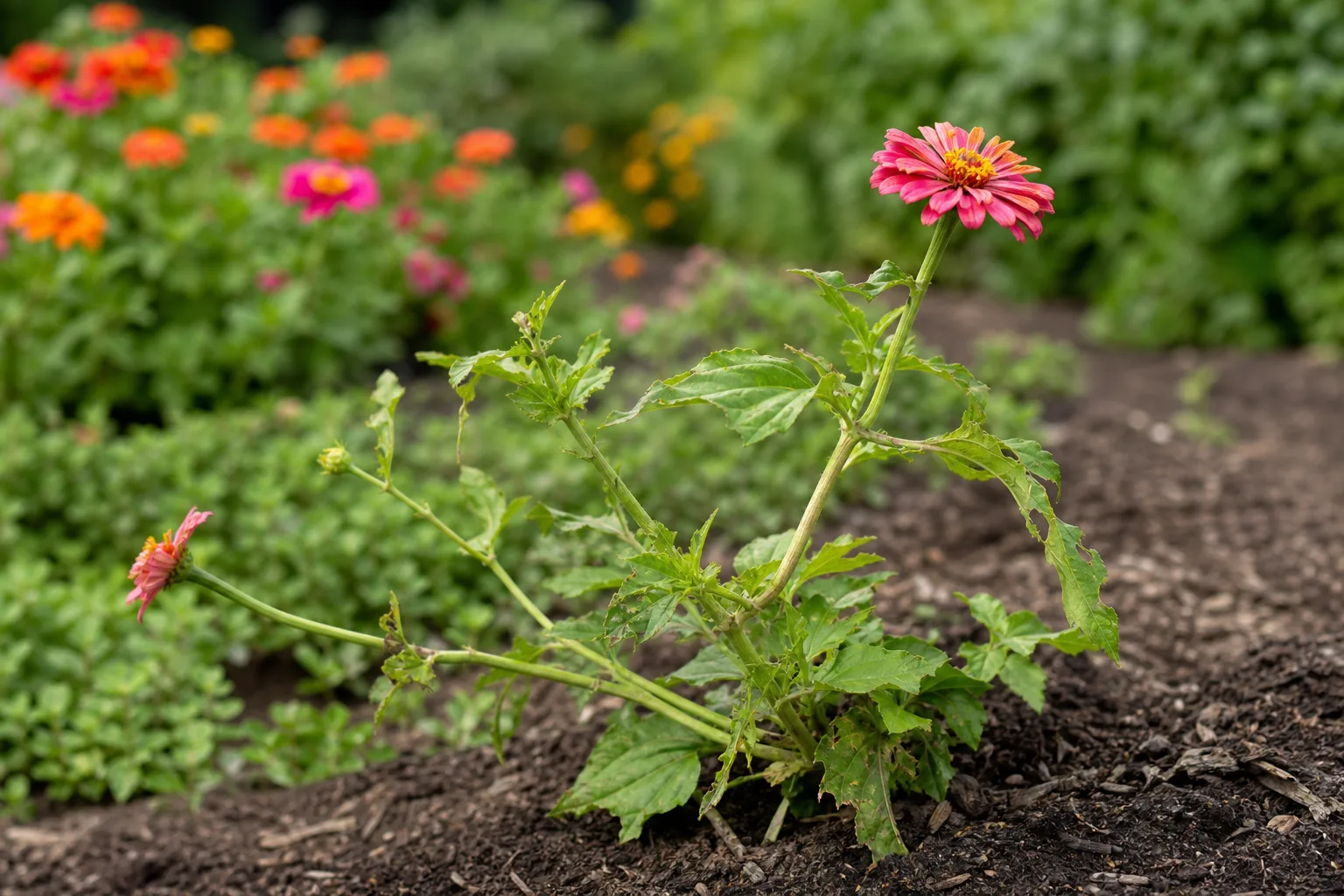
Wind Damage on Zinnia: Causes, Checks & Fixes
This guide covers wind damage on Zinnia. See also the general Wind Damage guide, watering, and light pages for this plant.
Wind Damage on Zinnia: Causes, Checks & Fixes
Quick answer
Wind damage on zinnia shows up as snapped stems, flattened plants, and shredded open blooms-usually right after a gusty day or summer storm. Tall cultivars like Benary’s Giant and State Fair are most vulnerable because they grow up to four feet with relatively slim stalks that carry large flower heads.
First step: stake any bent or leaning stems upright with soft ties at the damage point. Do not yank stems straight by hand-support them gently so tissue does not tear further. Once plants are stable, prune broken stems cleanly below the snap and remove shattered blooms.
Wind damage is mechanical, not a watering mistake. Roots should still be firm. If the whole plant collapses on wet soil with a soft stem base, suspect stem rot or blight instead and inspect before you stake.
Why Zinnia gets wind damage
Zinnia elegans is built for speed, not storm resistance. These fast-growing full sun annuals push upright stems in weeks, often reaching 60–90 cm or more on cutting varieties. That rapid vertical growth produces long stems with large daisy-form heads at the top-a lever wind can exploit.
Several zinnia-specific factors increase risk:
Height and variety. Dwarf types stay under 30 cm and rarely need support. Tall series used for bouquets-Benary’s Giant, State Fair, and similar-carry the most sail area. MSU Extension notes Benary’s Giant reaches 40–52 inches on tall stems, making them natural wind targets on exposed sites.
Leggy, weak stems. Zinnias grown in partial shade, overcrowded flats, or with excess nitrogen produce thin stems with wide internodes and few side branches. Those plants lodge easily because growth concentrates high on the stalk instead of low on the plant. Pinching when plants are 8 to 12 inches tall forces side branching and sturdier structure.
Top-heavy bloom load. Open double flowers and clusters of spent heads add weight at the tip. Deadheading reduces wind leverage, but a bed in full bloom during monsoon gusts is inherently top-heavy.
Disease-weakened tissue. Alternaria blight girdles zinnia stems at nodes and creates basal cankers. Missouri Botanical Garden notes affected stems die back and plants wilt even when cankers do not fully encircle the stalk. Wind snaps these already-compromised points first.
Exposure placement. Rooftop planters, balcony rails, open field rows, and driveway borders catch full gusts. Zinnias still need sun-but a sunny windy corner is harder on tall types than a sheltered bed with the same light hours.
What wind damage looks like on Zinnia
Wind injury on zinnias is usually obvious and sudden:
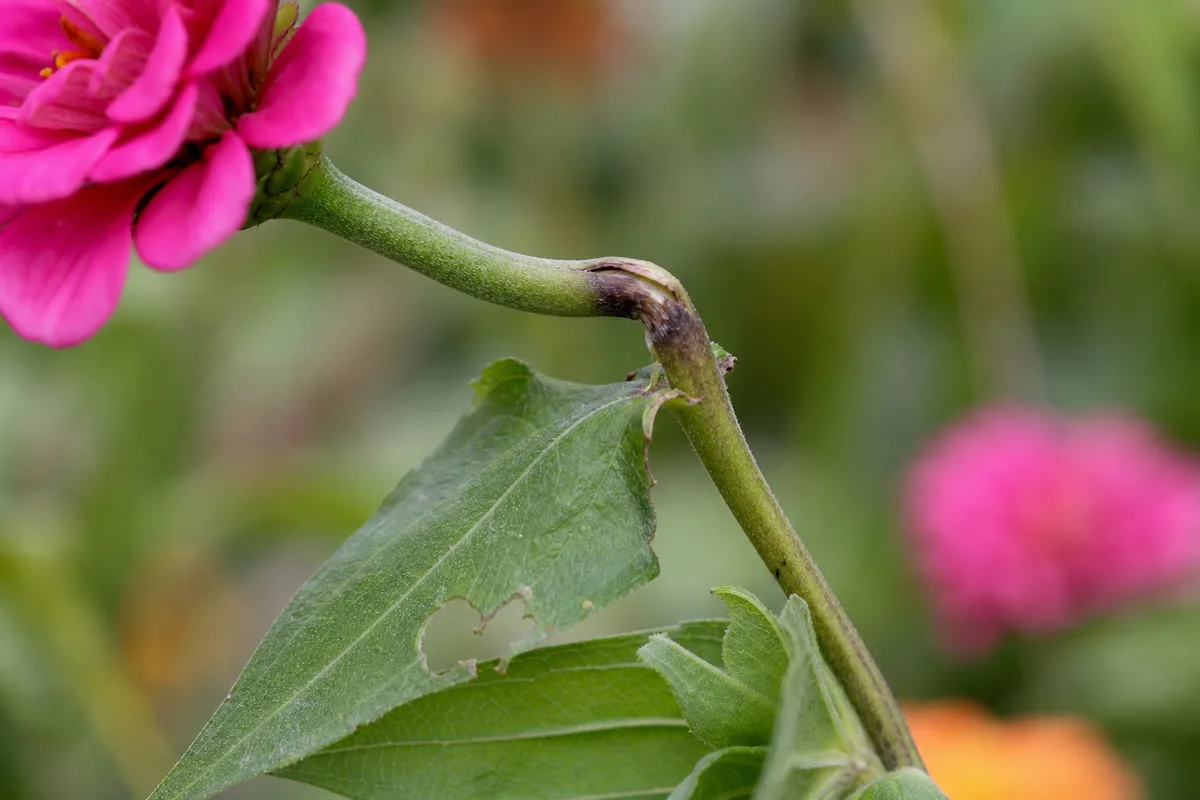
Wind Damage symptoms on Zinnia - compare with healthy tissue on the same plant.
- Snapped stems mid-height or just below a flower head, often at a node or old pruning cut
- Plants flattened to one side with roots still anchored-the whole stalk bent near the base
- Torn ray petals on open blooms, sometimes stripping one side of the flower disk
- Leaning stems that have not fully snapped but hold a permanent kink
- Scuffed foliage on the windward side from rubbing against stakes, netting, or neighbors
What wind damage does not look like: gradual yellowing over a week, uniform wilting on dry soil in calm weather, or seedling collapse at the soil line in a flat-that pattern points to drought, rot, or damping-off instead.
Broken tissue does not heal cosmetically. Torn petals stay ragged. A kinked stem may stiffen crooked even after staking. Recovery means new side shoots and fresh blooms-not perfect old tissue.
How to confirm the cause
Work through these checks in order:
- Timing - Did damage appear within hours of windy or stormy weather? Wind injury is event-linked. Gradual flop over days suggests water stress, disease, or leggy shade growth.
- Stem break pattern - Clean snaps at mid-stem or below heavy blooms fit wind. Dark sunken lesions at nodes or the base point to Alternaria blight weakening tissue before the gust.
- Root and base check - Dig gently around one affected plant. Firm white roots and a solid stem base confirm the plant can recover from mechanical damage. Mushy roots or soft basal tissue mean rot-not something staking alone fixes.
- Soil moisture - Wind damage can happen on both dry and moist soil. If plants wilt on wet soil without a recent storm, inspect for basal cankers instead.
- Neighbor pattern - Several plants leaning the same direction after one weather event strongly confirms wind. Random collapse scattered through a wet bed suggests disease.
If stems broke at diseased nodes, treat the blight path alongside physical repair-remove infected tissue and improve spacing so foliage dries faster.
First fix for Zinnia
Stake bent or leaning stems upright with soft ties-garden twine, cloth strips, or reusable plant tape-within a day of the wind event.
Insert a bamboo or metal stake beside the plant if the base is still firm. Tie loosely below the lowest undamaged node so the stem is supported without cutting into tissue. For stems snapped but still partially connected, splint the break with a stake and two ties above and below the fracture before you prune.
Do not fertilize storm-damaged zinnias on day one. Do not overhead-water shredded blooms-that invites Botrytis on wet petals. Stabilize first; prune second.
Step-by-step recovery
After staking:
- Prune broken stems with clean snips just above the next healthy node or side branch. Angle cuts are not critical on annual zinnias-clean and quick matters more.
- Remove shattered blooms and torn foliage that drag on soil or hold pooled water.
- Pinch or trim remaining long stems if the plant looks lopsided after losses. Removing the top 8–10 cm of regrowth tips encourages bushier side branching on surviving stalks.
- Water at the base if soil is dry-stressed plants still need moisture, but avoid soaking foliage.
- Inspect for blight on cut surfaces and lower stems. Dark spreading lesions mean remove more tissue or pull severely infected plants to protect the row.
- Add bed-level support if multiple plants lodged. Horizontal netting pulled taut between stakes lets stems grow up through a grid-more even than one stake per plant in dense rows.
Plants with roots intact and at least one healthy node below damage usually resume blooming. Completely uprooted seedlings rarely recover-re-sow if the season still has eight or more frost-free weeks.
Lookalike symptoms to rule out
Drought wilt droops leaves and flower heads on dry soil in calm hot weather. Stems stay flexible, not snapped. Deep base watering perks plants within hours-wind-broken stems stay broken.
Alternaria blight causes reddish-brown leaf spots, basal cankers, and wilt on wet foliage-not necessarily a recent storm. Stem breaks at girdled nodes may follow wind but the underlying cause is fungal. Look for spot patterns predating the weather event.
Damping-off collapses seedlings at the soil line in cool wet flats. It does not snap tall blooming stems mid-height outdoors.
Transplant shock wilts recently moved zinnias for several days without mechanical breaks. Zinnias prefer direct sowing because root disturbance sets them back-wilting from shock lacks torn petals and directional lean.
overwatering on Zinnia and stem rot soften the base on soggy soil. The whole plant may fall over without wind. Roots smell sour and feel mushy.
Recovery timeline
Bent stems often stiffen in the corrected position within two to three days if staked promptly. New side shoots emerge from nodes below pruning cuts in one to two weeks during warm summer weather. Fresh blooms follow roughly two to three weeks after pinching, depending on variety and heat.
Torn petals on remaining open flowers do not regenerate-deadhead and wait for the next flush. Severely blighted plants that lost most foliage may not produce well again that season; succession sowing fills gaps faster than nursing a bare stalk.
Judge success by firm new growth and clean buds-not by how the old broken stem looks.
Mistakes to avoid
Do not delay staking. Bent zinnia stems lignify at awkward angles within days, and later correction is harder.
Do not bind ties tightly against soft green tissue-circulation damage shows up as indented scars.
Do not compost heavily blighted clippings near zinnia beds. Alternaria survives on debris.
Do not choose the tallest cutting varieties for windy rooftop pots without netting or a windbreak. Compact or disease-resistant series handle exposure better.
Do not confuse a single cosmetic snap with basal rot. Soft stem bases need drainage fixes, not just a taller stake.
How to prevent wind damage on Zinnia
Install support early. USU Extension recommends horizontal netting before buds form, suspended between stakes and raised as plants grow. For small groups, one stake per tall plant set when stems are one-third mature height works. Late staking still helps but bent stems are harder to train.
Pinch young plants at 20–30 cm to force low branching and reduce top-heavy single-stem architecture.
Space for sturdy growth. Crowded zinnias compete for light and produce weaker stems. Aim for roughly 30 cm between plants in home beds-MOBOT notes good air circulation also limits fungal leaf diseases that weaken stalks.
Deadhead regularly. MSU Extension recommends deadheading for continuous bloom-it also removes spent heads that catch wind like small sails.
Site with a windbreak, not shade. Place beds along a fence, hedge, or house wall that blocks gusts while still delivering six or more hours of direct sun. A windbreak that casts afternoon shade will reduce flowering-that trade-off fails on zinnias.
Choose variety to exposure. On windy balconies, grow shorter Zahara or Profusion types. Reserve Benary’s Giant and similar tall cutters for sheltered cutting gardens with netting.
Manage blight proactively. Water at the base, space plants, and remove spotted leaves so stems stay strong before storm season peaks.
When to worry
Routine wind snaps on otherwise healthy zinnias are normal annual maintenance-not a crisis. Escalate when:
- Multiple plants lodge at the base with dark cankers and wilt-blight may be spreading
- Stem bases feel hollow or mushy on wet soil-rot has compromised the root system
- Every tall stem in a row breaks at the same node-inspect for girdling disease, not just weather
- Recovery stalls with no new shoots three weeks after pruning on warm soil
In those cases, remove badly affected plants, improve drainage and spacing, and sow a fresh batch if the calendar allows. Zinnias are fast annuals-replacing a few lost plants is often faster than fighting advanced basal disease.
Conclusion
Wind damage on zinnia is common on tall, fast-growing varieties in exposed spots-but it is usually survivable when roots stay healthy. Stake bent stems immediately, prune below clean breaks, and support the bed before the next gust. Pair physical support with bushier pinching, timely deadheading, and blight prevention so stems stay strong enough to handle the weather your garden actually gets.
When to use this page vs other Zinnia guides
- Zinnia watering guide - Use for routine moisture checks before assuming wind damage is the main issue.
- Zinnia problems hub - Browse all 38 common issues on this species.