Distorted Leaves on Zinnia: Causes, Checks & Fixes
Quick answer
Distorted zinnia leaves on new growth usually trace to aphids sucking sap or mosaic virus spread by sucking insects. First step: inspect leaf undersides and stem tips for aphids or honeydew before you spray or pull plants.
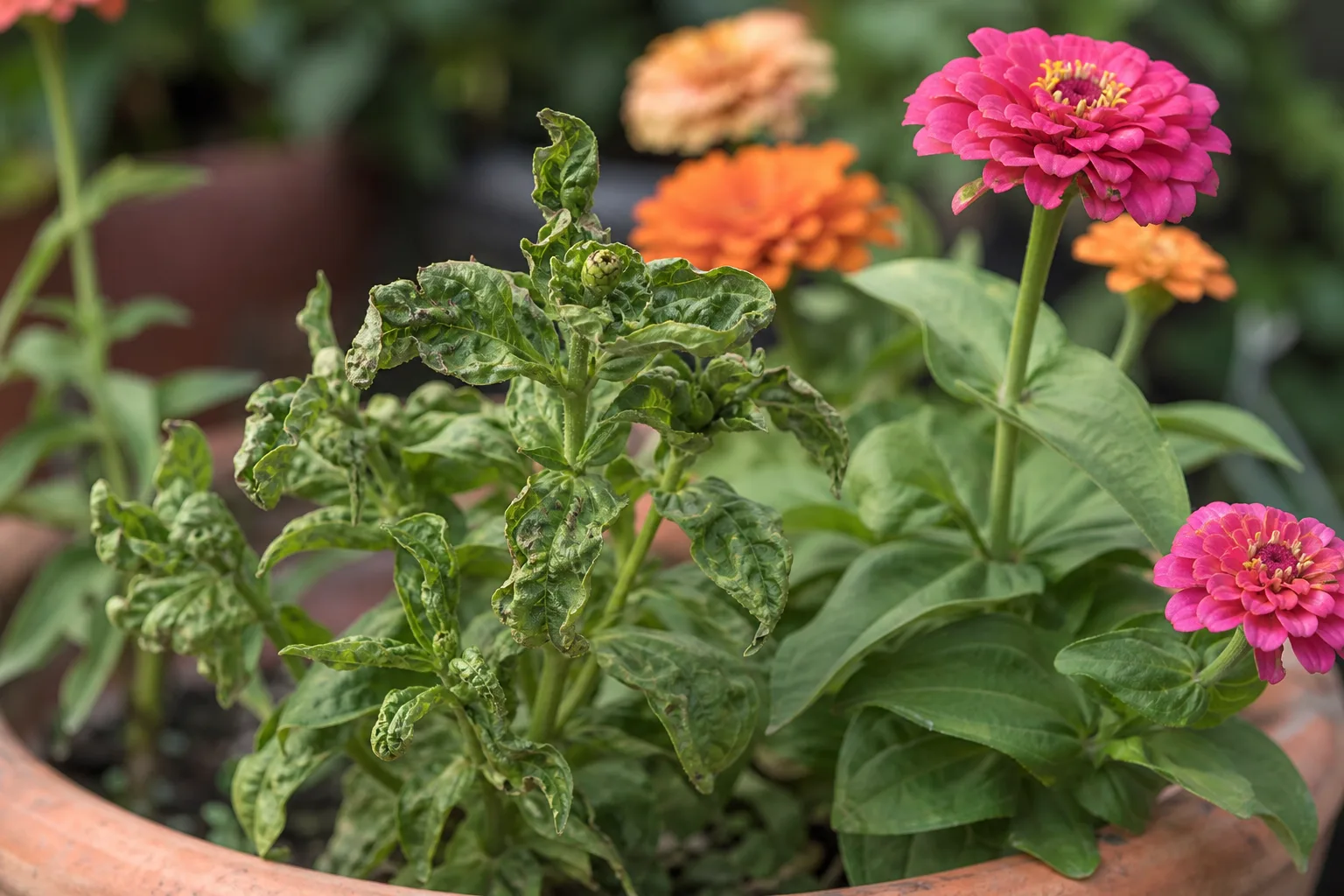
Distorted Leaves on Zinnia: Causes, Checks & Fixes
This guide covers distorted leaves on Zinnia. See also the general Distorted Leaves guide, watering, and light pages for this plant.
Distorted Leaves on Zinnia: Causes, Checks & Fixes
Quick answer
Twisted, puckered, or narrow zinnia leaves on new growth usually mean sap-feeding insects or a virus-not a watering slip you can fix with one deep soak. Zinnia elegans pushes soft shoots constantly in Zinnia light guide, and aphids cluster on those tips faster than on older, tougher foliage. Mosaic viruses cause similar distortion but add mottled color and stunting that worsens over weeks.
First step: inspect the undersides of the newest leaves and stem tips before you spray or pull anything. If you find aphids, honeydew, or ants farming sap, treat for insects. If the plant shows patchy light-and-dark mottling with no insects and declining vigor, suspect virus and remove it.
Why Zinnia gets distorted leaves
Zinnias are fast-growing annuals that produce tender new leaves and buds throughout the warm season. That growth rhythm makes them a magnet for aphids, thrips, and the viruses those insects carry.
Aphids pierce phloem sap from young zinnia tips. Their feeding injects saliva that curls, puckers, and stunts new leaves. Heavy colonies also coat foliage with sticky honeydew, which attracts ants and can grow sooty mold on upper leaf surfaces. Aphids reproduce quickly in warm sheltered beds where zinnias bloom in crowded rows.
Mosaic viruses-including cucumber mosaic virus-affect zinnias and produce mottled, distorted, stunted foliage. Texas A&M AgriLife Extension lists mosaic, curly top, and tomato spotted wilt among virus diseases on zinnia. These viruses spread when sucking insects feed on infected plants and move to healthy ones. Weeds and other garden flowers can harbor the same viruses, so a clean zinnia bed can still pick up infection from nearby hosts.
Thrips scar zinnia petals and leaves in hot dry weather, sometimes leaving distorted or streaked new growth. They are less common than aphids on zinnias but worth checking when distortion appears without obvious aphid clusters.
Herbicide drift can mimic virus symptoms-curled, twisted, malformed leaves on one side of a bed or downwind from a lawn treatment. University of Maryland Extension notes that herbicide exposure and plant viruses can look very similar on zinnias. Herbicide-damaged plants sometimes outgrow mild exposure; virus infections do not resolve.
Zinnias in shade or chronically wet soil grow weakly, but those conditions cause leggy stems and yellow lower leaves-not the twisted new growth this guide addresses. Rule out insects and virus before blaming water or light alone.
What distorted leaves look like on Zinnia
Aphid distortion:
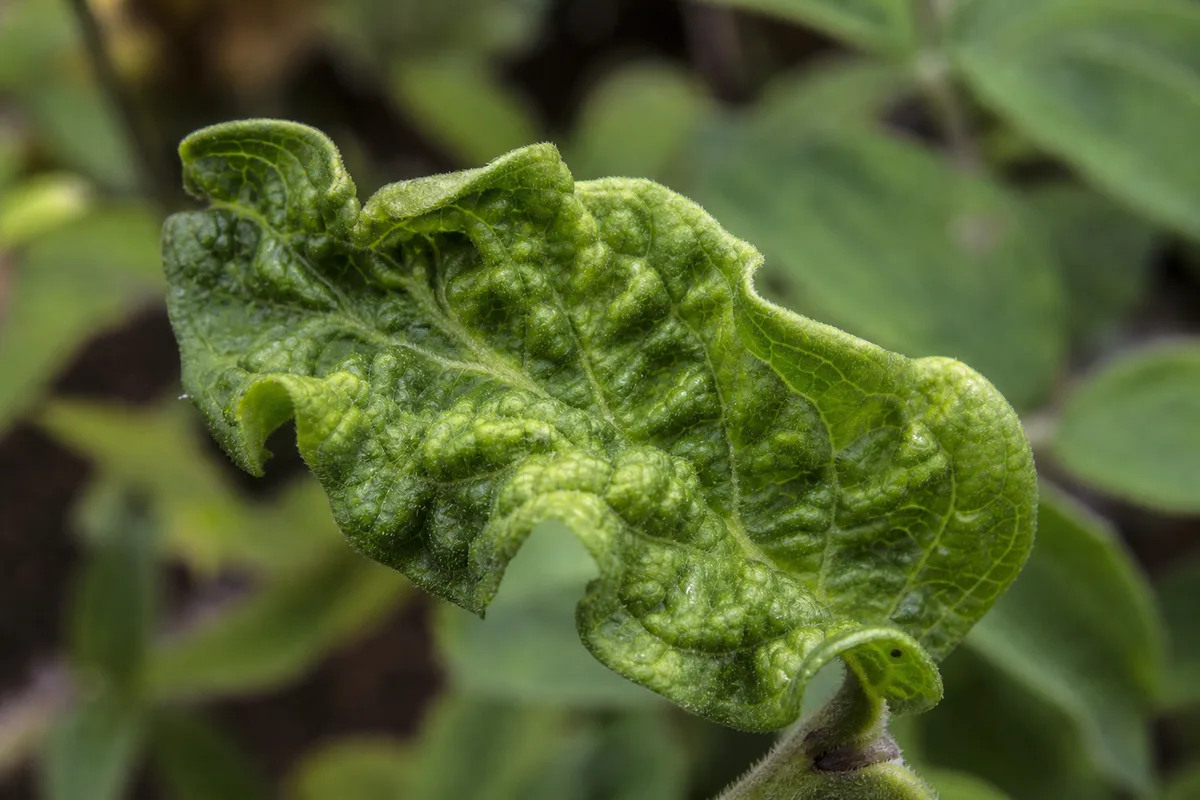
Distorted Leaves symptoms on Zinnia - compare with healthy tissue on the same plant.
- Newest leaves curl downward or pucker along the midrib
- Tips look narrow, twisted, or smaller than normal zinnia foliage
- Soft green, black, or pink aphid clusters on stems and leaf undersides
- Sticky honeydew on upper leaves or nearby surfaces; black sooty mold in heavy infestations
- Ants crawling on stems attracted to honeydew
Virus distortion:
- Light-and-dark green mottling or mosaic pattern across multiple leaves
- Twisted, strap-like, or stunted new growth that worsens over two to four weeks
- Reduced flower size or discolored blooms on affected plants
- Whole-plant decline-not damage limited to one branch or one side only
Thrips distortion:
- Silvery streaks or scarred tissue on petals and young leaves
- Distorted flower buds that fail to open cleanly
- Tiny slender insects visible with a hand lens on bud scales
Herbicide lookalike:
- Twisted or cupped leaves often on the side of the plant facing the spray source
- Symptoms appear days after nearby lawn or field herbicide application
- No insects, honeydew, or progressive mottling unless a second problem is present
Fungal leaf spot from Cercospora or Alternaria produces discrete reddish-brown spots with gray centers-not twisted leaf shape. Powdery mildew coats leaves with white powder rather than puckering them. Caterpillars chew holes; they do not curl intact leaf margins.
How to confirm the cause
Work through these checks in order:
- Age of affected tissue - Distortion on the newest two to three leaf pairs points to aphids, thrips, or virus on active growth. Spots on lower leaves only suggest fungal disease instead.
- Underside inspection - Flip twisted tips and look with a hand lens. Aphids stay as soft-bodied groups; thrips are slender and fast; virus cases may show no insects at all.
- Honeydew and ants - Sticky residue or ant trails strongly support aphids even when colonies are small.
- Mottling pattern - Random light-and-dark patches across the plant with ongoing stunting suggest virus. Uniform yellowing from the base up suggests overwatering on Zinnia, not distortion from this guide.
- Spread speed - Aphid damage can stabilize once insects are knocked down. Virus symptoms spread to new leaves weekly regardless of watering fixes.
- Neighbor plants - One twisted plant with insects is likely aphids. Several zinnias in a row with matching mottled distortion suggests virus moving through the bed.
- Recent herbicide use - Note whether a lawn was treated within two weeks upwind. Cupped leaves on the exposed side without insects fit drift better than virus.
If aphids are present, treat for them first and re-evaluate in one week. New growth that stays mottled and twisted after aphids are gone points to virus.
First fix for Zinnia
Blast the newest growth and leaf undersides with a strong stream of water early in the morning.
This single step dislodges aphids from tender zinnia tips, washes fresh honeydew before ants arrive, and lets you see whether distortion was insect-driven. Aim the spray up from below so undersides get direct contact. Let foliage dry in sun the same day-zinnias tolerate full sun but crowded wet leaves invite fungal problems.
Do not pull the plant on day one unless mottling is already plant-wide with no insects in sight. Do not apply insecticide before confirming aphids or thrips. Do not compost clippings from virus-suspect plants.
Step-by-step recovery
After the initial water blast:
- Repeat water sprays every two to three days until live aphids are gone on inspection of new tips.
- Apply insecticidal soap if colonies persist after several rinses. Cover undersides thoroughly and repeat every four to five days through one full pest generation. Avoid spraying open zinnia blooms during peak bee activity-treat early morning or evening.
- Manage ants on stems if they protect aphid colonies. Ant barriers or bait on bed edges can help natural enemies reach aphids.
- Remove and destroy virus-suspect plants when mottled distortion spreads despite clean pest checks. Bag the plant and trash it-do not compost. Pull neighboring zinnias that show the same mosaic pattern.
- Scout remaining plants weekly for six weeks after removal. Control any new aphids immediately to limit further virus spread.
- Trim only heavily coated leaves if sooty mold blocks light after honeydew stops. Distorted leaf tissue itself will not revert to flat blades-judge recovery by clean new growth.
For thrips, repeat water sprays and use insecticidal soap or spinosad on buds and new leaves if scarring persists. Isolate badly affected plants from clean seedling flats.
Recovery timeline
Water knockdown shows results within two to three days when aphid colonies are moderate. A full soap course may take one to two weeks with label-interval repeats. Expect normal-looking new zinnia leaves within two to three weeks once insects stay gone, though older curled leaves may remain cosmetically twisted.
Virus-infected zinnias do not recover. Symptoms typically worsen over two to four weeks. Replace with clean seed or healthy transplants rather than waiting for the plant to outgrow infection.
Mild herbicide drift may produce new normal leaves within two to three weeks if exposure was light. Progressive mottling rules out herbicide and confirms virus.
Lookalike symptoms to rule out
Alternaria and Cercospora leaf spot produce round reddish-brown spots with gray or whitish centers. Spots may merge and kill leaves, but they do not curl intact new tips the way aphids do.
Powdery mildew coats zinnia leaves with white flour-like powder in humid crowded plantings. Leaves may yellow from the base, but they are not typically twisted or mottled in a mosaic pattern.
Spider mites cause stippling and fine webbing on lower leaves in hot dry weather, not the puckered new growth at stem tips. Confirm with a tap test over white paper.
Overwatering yellows lower leaves and can rot stems at the base. It does not produce twisted new zinnia foliage unless a secondary pest moves in on weakened tissue.
Caterpillar feeding chews irregular holes in leaves and buds overnight. Holes and ragged edges differ from curled whole leaves.
Mistakes to avoid
Do not assume every twisted zinnia leaf means virus. Aphids are more common and treatable-confirm insects before you destroy plants.
Do not compost infected or heavily aphid-coated zinnia clippings near garden beds. Viruses and pests can survive in pile edges or reinfect next year’s sowings.
Do not increase nitrogen feeding during an active aphid infestation. Soft lush shoots attract more sap feeders.
Do not ignore ants on zinnia stems. Aphid control is harder while ants defend colonies.
Do not overhead water in the evening on crowded zinnia rows. Wet foliage at night favors fungal leaf spot, which adds confusion when you are already checking for distortion.
Do not treat virus-suspect plants with repeated fungicide hoping leaves will flatten. There is no cure for mosaic virus on zinnias-removal is the correct response.
How to prevent distorted leaves next time
Scout new zinnia tips weekly from late spring through peak bloom. Warm weather and full sun push constant soft growth-the tissue aphids and thrips prefer.
Space plants 20–30 cm apart so air moves between stems. Crowded zinnia beds hold humidity and make pest colonies harder to spot until distortion is advanced.
Direct-sow in final location when possible. Zinnia elegans dislikes root disturbance, and stressed transplants attract pests faster than direct-sown plants.
Control aphids early on neighboring weeds and garden flowers. Cucumber mosaic virus infects many hosts beyond zinnias, including weeds in bed edges.
Use clean seed from reputable sources. Some zinnia diseases can carry on seed-hot-water seed treatment is used commercially but is risky for home gardeners without precise temperature control.
Water at the base when the top 3 cm of soil dries. Even moisture keeps zinnias vigorous without the wet foliage that combines with crowding to stress plants.
Preserve beneficial insects. Lady beetles, lacewings, and parasitic wasps reduce aphids when broad-spectrum sprays have not eliminated them.
When to worry
Treat as urgent when mottled distortion spreads across most of the plant within two weeks, multiple zinnias in one bed show matching symptoms, or buds abort before opening on virus-suspect plants. Remove those plants immediately to protect the rest of the row.
Act quickly when aphid colonies coat every new tip and ants are farming honeydew at scale-heavy infestations vector virus faster than small early colonies.
Replace severely declining zinnias rather than fighting endless reinfestation on a stressed annual. Zinnias are seasonal flowers; restarting from clean seed mid-season is often simpler than repeated chemical cycles on infected stock.
A single twisted tip with visible aphids and no mottling is manageable-not an emergency. Water knockdown and soap usually resolve it before virus enters the picture.
Conclusion
Distorted zinnia leaves on new growth most often mean aphids or mosaic virus-not generic leaf stress. Inspect undersides first, blast aphids with water before you spray, and remove plants that show spreading mottled distortion with no recovery on new leaves. That path saves treatable aphid cases from unnecessary destruction and stops virus before it moves through a whole sunny zinnia bed.
When to use this page vs other Zinnia guides
- Zinnia watering guide - Use for routine moisture checks before assuming distorted leaves is the main issue.
- Zinnia problems hub - Browse all 38 common issues on this species.