Cold Damage on Zinnia: Causes, Checks & Fixes
Quick answer
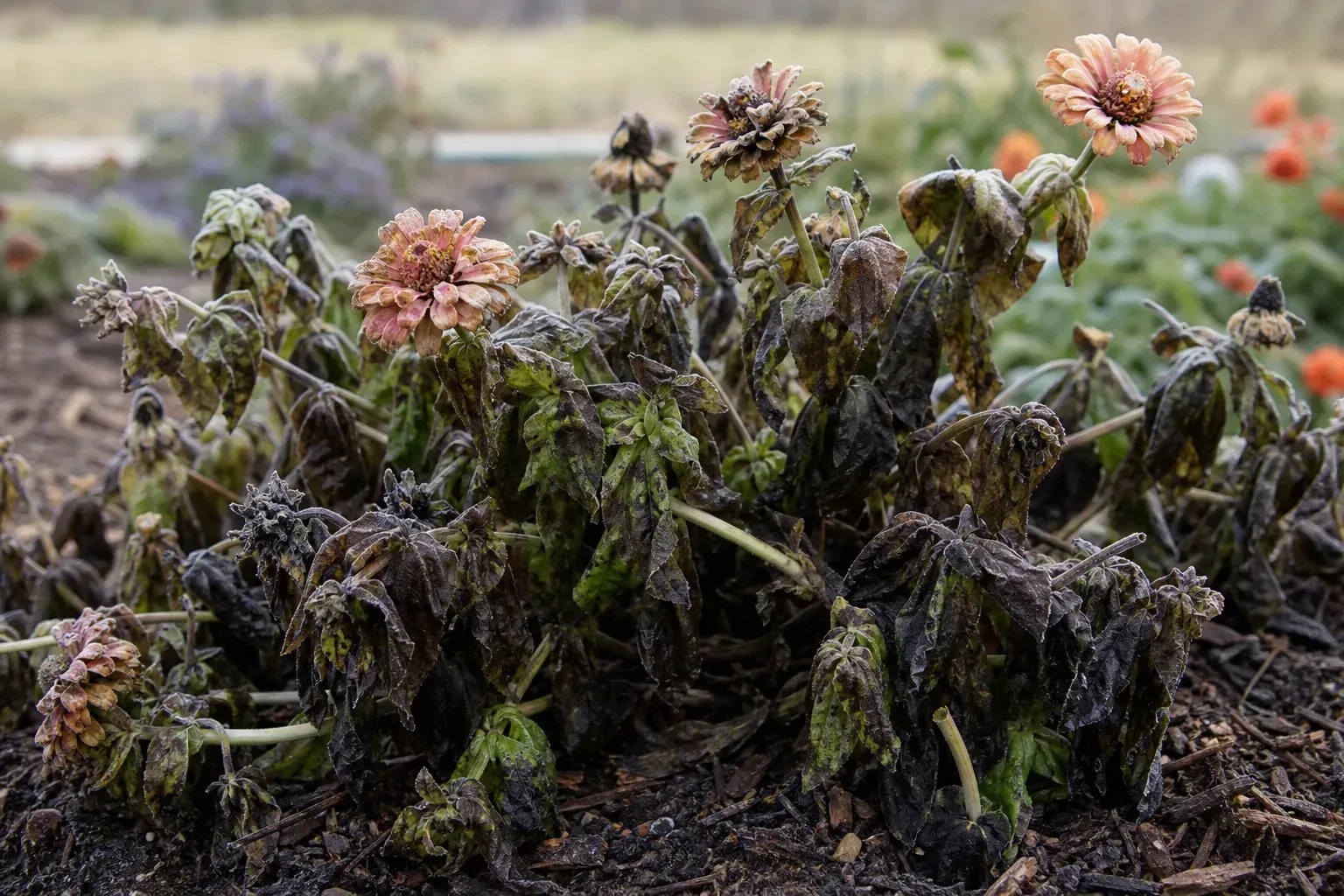
Cold damage on Zinnia blackens and kills tender tissue-Zinnia elegans is a frost-tender warm-season annual. First step: move containers to shelter or cover plants tonight if another cold snap is forecast before you prune or resow.
Cold Damage on Zinnia: Causes, Checks & Fixes
This guide covers cold damage on Zinnia. See also the general Cold Damage guide, watering, and light pages for this plant.
Cold Damage on Zinnia: Causes, Checks & Fixes
Quick answer
Zinnia (Zinnia elegans) is a warm-season annual native to Mexico that cannot handle frost. Cold nights blacken leaves, abort flower buds, and can collapse seedlings overnight-especially in containers that chill faster than garden beds.
First step: if another frost or sub-10°C (50°F) night is forecast, move containers to shelter or cover plants before sunset. Stopping further cold exposure matters more than pruning on day one. Once nights stay warm, you can assess what tissue is dead and what stems might resprout.
Why Zinnia gets cold damage
Zinnias are built for summer heat, not spring chills. Clemson Extension recommends sowing when soil and air reach about 70°F after the last frost-because the species has little tolerance for cold soil or air. UMN Extension notes zinnias perform best in very warm locations with full sun; they are not short-season cool-weather plants like pansies.
Planting or moving outside too early is the most common trigger. Air may feel mild while soil at seed depth still reads 15–18°C. Zinnias planted into cold ground sit stalled, yellow, and vulnerable-then one frost finishes them. Indoor seedlings hardened off too quickly face the same shock when a late spring freeze hits.
Containers amplify cold. Pots on patios, balconies, and rooftop edges lose heat fast. Soil in a black nursery pot can drop several degrees below in-ground beds on the same night. Elevated baskets and railing planters are often the first zinnias to show frost burn.
Open, low sites collect cold air. Valley beds, lawn dips, and spots near bare soil radiate chill on clear calm nights even when a thermometer on the porch reads above freezing.
Chill without hard frost still hurts. Rutgers research on cut-flower zinnias notes that temperatures below 60°F (15°C) can yellow foliage and delay flowering-chlorosis that looks like nutrient trouble but traces to cold stress. That is not full frost kill, but it stalls bloom and weakens plants heading into hot season.
Zinnias also dislike root disturbance. Transplants moved outside just before a cold snap suffer compounding stress-wilting that looks like underwatering on Zinnia but follows a cold night on disturbed roots.
What cold damage looks like on Zinnia
After frost or hard freeze:
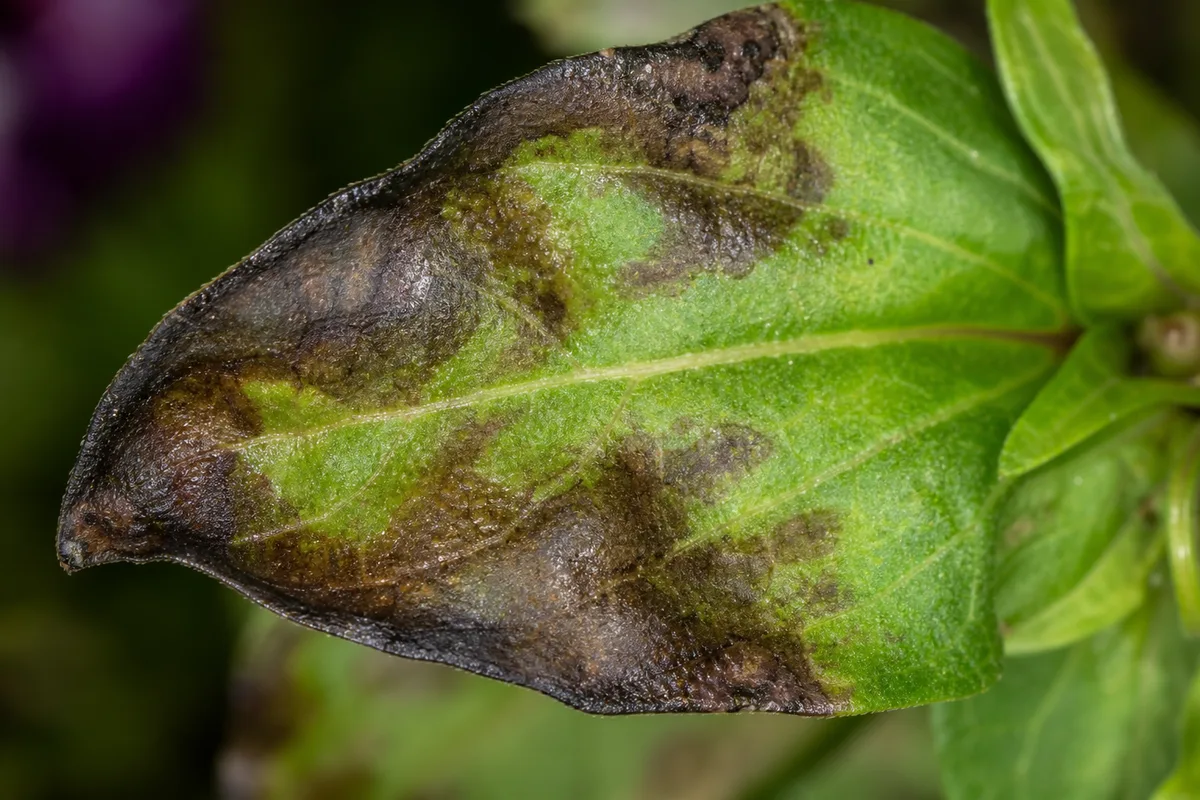
Cold Damage symptoms on Zinnia - compare with healthy tissue on the same plant.
- Leaves turn black, translucent, or water-soaked, often overnight
- Open flower petals brown and collapse; buds blacken before opening
- Outer and upper leaves fail first; lower leaves near the base may survive briefly
- Seedlings wilt flat at the soil line or turn mushy across the whole plant
- Stems feel soft and dark when tissue has frozen through
After cold nights above frost (roughly 10–15°C / 50–59°F):
- Yellowing or pale chlorosis on newer leaves without blackening
- Stalled growth-plants look alive but do not size up for weeks
- Bud drop before flowers open
- Purplish or bronzed leaf edges on exposed container plants
What does not recover visually: Fully blackened or mushy leaves and petals stay damaged. Only new growth from surviving nodes replaces them.
Normal lookalikes to separate: Alternaria leaf spot shows reddish-brown lesions with gray centers in warm wet weather-not sudden overnight blackening after cold. Damping-off collapses seedlings in cool wet flats indoors, often with thin brown stems at the soil line, not after a clear frost night outdoors.
How to confirm the cause
Work through these checks in order:
-
Weather timing - Did a frost advisory, sub-10°C low, or cold front pass within 24 hours of symptoms? Cold damage appears fast; disease spreads over days in humid weather.
-
Exposure pattern - Did open containers, tall varieties, or edge plants fail while sheltered in-ground neighbors look fine? That pattern fits cold, not uniform disease.
-
Stem firmness - Pinch stems above the damaged zone. Firm green tissue means the plant may resprout. Soft, hollow, or black stems through the base mean the plant is lost.
-
Soil temperature history - For yellow stunted plants without black frost burn, push a thermometer 5 cm into soil. Readings long below 21°C (70°F) suggest cold-soil stunting rather than a single frost event.
-
Seedling tray context - Seedlings blackened after sitting on a cold windowsill or moved outdoors one warm afternoon then hit by frost confirm cold shock. Seedlings collapsing in a soggy indoor flat without frost point to damping-off.
-
Leaf surface clues - Powdery white coating means mildew, not cold. Reddish spots with halos mean leaf spot. Neither appears as uniform overnight blackening from frost.
-
Forecast check - Before any pruning, confirm whether another cold night is coming. Partially damaged zinnias die quickly if left exposed again.
If damage followed a documented frost and stems below the injury stay firm, cold damage is confirmed. If symptoms grow in warm wet weather with spots, switch to a disease diagnosis path.
First fix for Zinnia
If another cold or sub-10°C night is forecast, move containers to a garage, porch, or sheltered spot-or cover in-ground plants with frost cloth or an old sheet before sunset.
Do not rush to prune blackened leaves while nights remain cold; damaged tissue already insulates buds slightly, and repeated exposure kills surviving stems. Do not fertilize frozen plants-salt stress on injured tissue makes recovery harder.
Once the forecast shows several warm nights ahead, you can trim dead material and judge resprout potential.
Step-by-step recovery
After cold exposure stops and nights stay warm:
-
Wait one warm day before heavy pruning - Let plants show which stems are truly dead versus merely scorched at tips.
-
Trim dead tissue - Cut blackened leaves and flowers back to firm green stem with clean scissors. Remove mushy seedling remains entirely.
-
Check stems at the base - If the stem is firm and green at soil level, leave the root in place. Zinnias can push new shoots from nodes within one to three weeks in warm weather.
-
Water at the base only when dry - Cold-stressed roots take up water slowly. Water when the top 3 cm dries; avoid soaking cold-damaged plants in soggy mix.
-
Hold fertilizer - Skip feed until new growth looks healthy for two weeks. Nitrogen on stressed tissue encourages soft growth that cold snaps can damage again.
-
Replace total losses - Seedlings that collapsed completely or stems soft through the base should be resown or replaced. Direct-sow at ¼ inch depth when soil at 5 cm holds 21°C+ rather than nursing dead starts.
-
Harden off any replacements - Move new transplants outdoors gradually over 7–10 days when nights stay above 10°C. Zinnias resent sudden moves from warm rooms to cold patios.
-
Stake tall survivors - Partially damaged stems are weak; support prevents wind snap while side shoots develop.
Recovery timeline
Light frost on outer leaves: Brown tips may remain, but new clean growth from upper nodes often appears within 7 to 14 days once nights stay warm.
Moderate damage with firm stems: Side shoots and replacement buds typically show within 2 to 3 weeks in full sun and warm soil.
Severe seedling collapse: Individual seedlings do not recover-plan to resow within days once soil temperature is adequate. Losing two weeks early in season still allows bloom if resown promptly.
Chronic cold-soil stunting (no frost): Plants may sit yellow and small for weeks until soil truly warms; they rarely catch up to warm-soil peers without replanting.
Judge success by new green leaves and buds, not by old damaged tissue regaining color. Black leaves never revert to green.
Lookalike symptoms to rule out
Damping-off kills seedlings in cool wet indoor trays with pinched stems at the soil line-Wisconsin Extension notes damping-off peaks in cool, wet soils. No frost required.
Alternaria leaf spot shows reddish-brown lesions with gray centers spreading over days in humid weather-not overnight uniform blackening after a freeze.
Transplant shock causes wilting after moving seedlings outdoors but usually without black frozen tissue unless a frost followed the move.
Underwatering wilts zinnias in afternoon heat with dry soil; leaves stay green-yellow, not black and water-soaked.
overwatering on Zinnia yellows lower leaves in warm weather with soggy soil and may cause stem rot-stem base softens in heat, not after a frost event.
Botrytis gray mold affects wet flowers in cool humid weather with fuzzy gray growth-distinct from frost-blackened petals.
Mistakes to avoid
Do not plant zinnias outdoors the day after the calendar frost date if soil at 5 cm is still cold. Air warmth misleads; soil at 70°F matters for healthy starts.
Do not leave containers on cold concrete or metal rails through spring nights-they chill roots faster than in-ground plantings.
Do not prune all damaged foliage before the last cold night passes-you expose tender buds and remove insulation.
Do not assume yellow stunted plants need fertilizer. Below-60°F chill causes chlorosis and delayed flowering without a nutrient shortage.
Do not transplant zinnias the same week a cold snap is forecast. Root disturbance plus frost is a common double hit.
Do not throw away firm-stemmed plants after one light frost. Wait for warm weather and check for node sprouting before pulling.
How to prevent cold damage next time
Timing: Direct-sow or set transplants after last frost when soil at 5 cm depth reads 21°C (70°F) consistently. In short seasons, start indoors on a heat mat, then harden off only when outdoor nights stay above 10°C.
Placement: Grow in full sun-6+ hours daily, ideally more-but avoid frost pockets and open hilltops where cold air drains. Sheltered sunny beds outperform exposed cold patios for early plantings.
Containers: Move pots indoors or into a garage when frost is forecast. Group containers together and cover with frost cloth; remove covers during warm days for airflow.
Succession sowing: Sow a backup batch 2–3 weeks after the first. One lost tray to late frost does not end the season if the second sowing waits for real warmth.
Variety note: Profusion and other hybrids tolerate heat and mildew pressure well once growing-but all Zinnia elegans types remain frost-tender. Creeping zinnia (Z. angustifolia) is somewhat more heat-tolerant but still not frost-hardy.
Indian climate context: Sow February–March and June–July in North India when nights stay warm; avoid monsoon overcrowding that traps humidity after cold-stressed plants weaken.
When to worry
Act the same day when another frost or sub-10°C night is forecast and plants are still partially green-cover or move them before sunset.
Resow rather than wait when seedlings are mushy through the stem base or every plant in a tray blackened after one night outdoors.
No need to panic over slight brown tips on outer leaves after a light borderline frost if the forecast shows warming nights and stems stay firm-trim after warmth returns.
Switch diagnosis if black spots spread in warm humid weather with reddish halos-that is likely leaf spot or blight, not environmental cold injury.
Conclusion
Cold damage on zinnia is almost always a timing and placement problem-frost-tender annuals planted or left exposed before warmth settles. Protect plants on the next cold night first, then trim dead tissue once nights stay warm and judge recovery by firm stems and new shoots. Seedlings that collapse fully need resowing in warm soil; established plants with green bases often bloom again if you stop the cold exposure and give them full sun through summer.
When to use this page vs other Zinnia guides
- Zinnia watering guide - Use for routine moisture checks before assuming cold damage is the main issue.
- Zinnia problems hub - Browse all 38 common issues on this species.
- Drooping Leaves on Zinnia - Different entry point when symptoms overlap with cold damage.