Yucca Plant Care: Light, Water, Soil & Tips
Yucca elephantipes
Yucca plants need bright light and infrequent watering. They tolerate drought and dry air, making them low-maintenance indoor trees.
Yucca Plant Care: Light, Water, Soil & Tips
Start with wateringThe most common care mistake for Yucca PlantWatering guide →Yucca Plant care essentials
Light
bright indirect to direct light, some shade
Water
Water sparingly; allow soil to dry completely between waterings.
Soil
Fast-draining sandy or cactus mix.
Humidity
Low to average humidity (30–50%)
Temperature
18°C to 30°C (65–86°F)
Fertilizer
Feed lightly during active growth. Balanced slow-release or diluted liquid fertilizer.
About Yucca Plant
Yucca Plant has a upright growth habit.
| Detail | Information |
|---|---|
| Growth habit | Upright |
| Scientific name | Yucca elephantipes |
Yucca Plant Care: Light, Water, Soil & Tips
What Is the Yucca Plant?
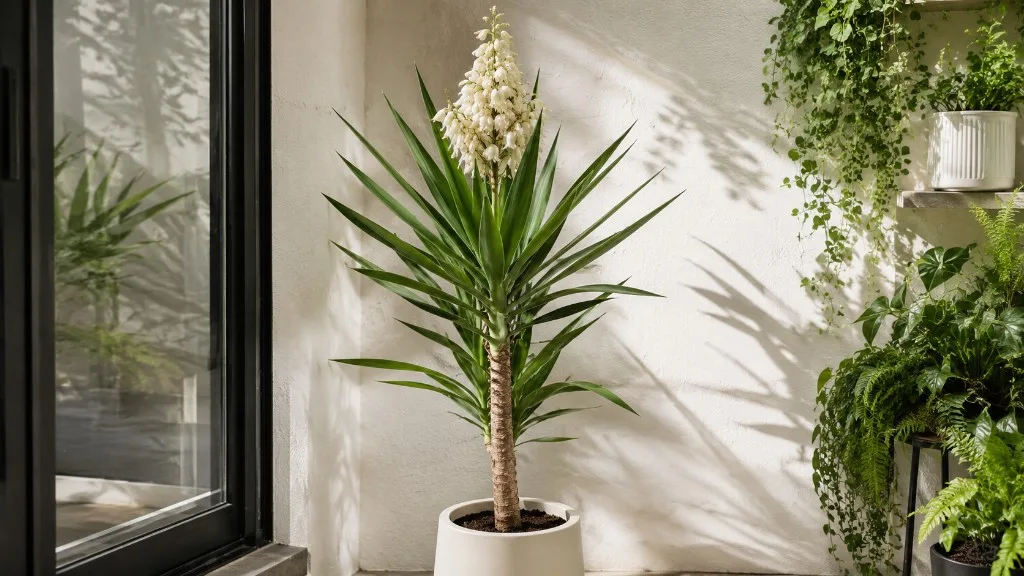
The yucca plant sold as a houseplant under names like spineless yucca, yucca cane, giant yucca, and stick yucca is most often Yucca elephantipes - a name still widely used on tags and in garden centers. Botanists increasingly treat the same plant as Yucca gigantea, and you may see either Latin name on labels. For practical indoor care, they refer to the same soft-leaved, trunk-forming species: a drought-tolerant evergreen that develops thick cane-like stems topped with rosettes of stiff, sword-shaped leaves. It is not a palm, not a true succulent in the botanical sense, and not the edible root crop called yuca or cassava (Manihot esculenta), which belongs to an entirely different plant family.
Indoors, spineless yucca typically reaches 4 to 6 feet (1.2 to 1.8 m) tall over several years, sometimes taller in very bright atriums, with a spread of roughly 2 to 3 feet (60 to 90 cm) per head of foliage. Growth is slow to moderate indoors compared with outdoor specimens in warm climates, where plants can reach 15 to 30 feet (4.5 to 9 m) (Missouri Botanical Garden). The architectural silhouette - bare woody trunk, clustered leaf rosettes, occasional branching into multiple heads - is the main reason Yucca Plant overview became a fixture in offices, lobbies, and bright living rooms. It reads as a small indoor tree without the humidity demands of a ficus or the constant moisture needs of a tropical foliage plant.
If you are deciding whether yucca fits your home, the honest summary is this: yucca rewards bright light, fast-draining soil, and a Yucca Plant watering guide that respects dry-down time - and it punishes overwatering on Yucca Plant, oversized pots, and dim corners. It is easier than a fiddle-leaf fig for many growers and harder than a snake plant for anyone who waters on autopilot. The payoff is a sculptural, low-humidity-tolerant statement plant that can live for years with modest feeding. One critical caveat for pet owners: yucca contains steroidal saponins and is toxic to cats, dogs, and horses according to the ASPCA, which surprises people who assume tough, desert-looking plants are automatically pet-safe.
Botanical Background and Naming Confusion
Spineless yucca belongs to the family Asparagaceae - historically grouped under Agavaceae in older references - alongside agaves and many drought-adapted ornamentals. That family connection matters for care because these plants share a baseline pattern: roots need oxygen, drainage matters more than rich soil, and most failures start with too much water around a trunk or root zone that evolved for seasonal dryness. The leaves store some moisture, the trunk stores structural carbohydrates, and the root system expects the surrounding mix to dry thoroughly between rain events in its native range.
The species is native to Mexico and Central America, including Guatemala, where it grows in warm, seasonally dry habitats. Outdoors it is winter hardy to USDA zones 9 through 10 in most of the U.S., with USDA zones 9B through 11 in frost-free subtropical Florida, performing best in full sun to part shade and well-drained ground. In temperate regions it is grown almost exclusively as a container or indoor plant unless moved outdoors only during frost-free summer months. Unlike spiky desert yuccas such as Yucca rostrata or Yucca gloriosa, spineless yucca has relatively soft, flexible leaf margins without dangerous terminal spines, which is a major reason it dominates the indoor market.
Commercial yucca canes are often imported stem sections that were rooted after cutting, not seed-grown trees. That origin explains the uniform trunk diameter, the occasional bare cane segment below the leaf rosette, and why the same pot may contain one, two, or three canes of different heights - growers bundle cuttings for visual balance. When your plant outgrows the ceiling, you are not fighting a fragile tropical stem; you are working with a species that tolerates hard pruning and resprouts from the cut more reliably than most houseplants.
Do not confuse this plant with cassava (Manihot esculenta), the starchy root vegetable sold as yuca in Latin American groceries. Cassava is an entirely different species and family. Also note that Dracaena species - especially corn plant and Madagascar dragon tree - are frequently sold near yucca in shops and share a similar cane aesthetic, but they want more consistent soil moisture and lower direct-sun exposure. If your “yucca” wilts quickly in what should be dry soil, double-check the botanical name on the tag.
Why the Cane Form Works Indoors
The trunk is not decorative excess; it is the plant’s strategy for elevating leaves above competing ground vegetation in nature and for storing resources through dry stretches. Indoors, that trunk creates a vertical accent that fits corners, flanking furniture, and office entries where a spreading pothos would look out of scale. Because the foliage is concentrated at the top, yucca reads cleanly in minimalist rooms and photographs well against plain walls - one reason designers specify it for staging and commercial spaces.
The cane form also changes how you water. A tall yucca in a heavy ceramic pot can stay dry at the surface while retaining moisture lower in the root ball, or dry quickly at the top while the base remains damp in an oversized container. The trunk itself can feel firm and healthy while roots below are failing from chronic wet soil. Successful yucca care means reading pot weight, soil depth, and trunk firmness together, not treating the plant like a small leafy herb that telegraphs thirst through limp foliage alone. Yucca leaves may stay stiff long after the root zone has crossed into trouble, which is why proactive moisture checks matter more than waiting for dramatic wilting.
Multi-cane specimens branch visually without requiring you to wait for natural division. Over time, pruning cuts on a single cane often stimulate multiple new heads below the wound, producing a fuller, more tree-like profile from what began as a single rosette on a pole. That resilience is unusual among common houseplants and makes yucca a long-term resident rather than a seasonal refresh - provided light and watering stay aligned with its drought-adapted biology.
Best Growing Conditions for Yucca Plant
Yucca does best when your space approximates the bright, warm, dry-season rhythm of its native range. The four variables that decide almost every outcome are light, water, soil, and temperature. Align those and feeding, Yucca Plant repotting guide, pruning, and propagation become straightforward maintenance. Misalign any one - especially water in low light or an oversized pot - and the plant can decline slowly while still looking acceptable from across the room.
Light Requirements
Yucca plant needs bright light - the more, the better for compact indoor growth. A practical target is six to eight hours of strong light daily, whether from a window or supplemented with a grow light in winter. South- and west-facing windows are often ideal indoors, with the plant set close enough to receive bright indirect light and, once acclimated, some direct sun for part of the day. East-facing windows work well too, delivering gentler morning rays. North windows can sustain the plant temporarily in an otherwise bright room, but long-term growth tends to become leggy, pale, and slow as the cane leans toward the glass.
Outdoors in frost-free climates, spineless yucca tolerates full sun to partial shade, according to UF/IFAS Extension. Indoors, the transition to stronger sun should be gradual. A yucca purchased from a dim shop corner moved straight onto a south sill without acclimation may show bleached patches, brown scorched tips, or curled leaves at midday. Shift exposure over one to two weeks, or filter harsh afternoon rays with a sheer curtain until new leaves form under the stronger regime.
The fastest diagnostic for incorrect light is new growth geometry, not old lower leaves. Compact rosettes with stiff, dark green to blue-green foliage mean the plant is probably receiving enough intensity. Long, thin leaves on a leaning cane mean it wants more light or a quarter-turn each week for even exposure. Pale, washed-out foliage with brown dry patches on the sun-facing side means reduce direct exposure or acclimate more slowly. If winter light drops sharply, a full-spectrum LED grow light at roughly 15 to 30 watts, positioned 12 to 24 inches (30 to 60 cm) above the rosette on a 10 to 12 hour timer, prevents the stretched, top-heavy look common on yuccas kept solely on northern windowsills between November and February.
Yucca tolerates lower light better than many true desert yuccas, which is why it survives offices - but tolerance is not preference. A dim yucca may hold leaves for months while the root system weakens from reduced photosynthesis and slower drying cycles. If you must keep yucca in moderate light, reduce watering frequency accordingly; a plant that is not actively growing in weak light should not receive a bright-window watering schedule.
Temperature and Humidity
Yucca prefers stable indoor temperatures between 60 and 80°F (15 and 27°C) during active growth. It tolerates brief heat above that range when soil moisture is appropriate, but it dislikes cold drafts and sustained temperatures below about 50°F (10°C). Missouri Botanical Garden recommends bringing outdoor plants inside prior to the first fall frost in borderline climates. Avoid placing the pot directly against a winter window pane where leaf tips can chill, or above a radiator where repeated heat pulses dry the root zone unevenly.
Humidity is one of the least demanding aspects of yucca care. Average home humidity in the 30 to 50% range suits the plant well, and spineless yucca does not require a humidifier in most centrally heated apartments. Very dry winter air below about 30% can encourage spider mites on dusty leaf surfaces, especially if the plant is near a heating vent. Occasional wiping with a damp cloth removes dust and improves light capture better than misting, which raises humidity only briefly and can leave wet leaf bases that invite fungal spotting where foliage clusters meet the trunk.
Outdoor summer placement on a patio can accelerate growth in warm regions, but move the plant back indoors before nighttime temperatures drop into the low 50s°F. Acclimate in both directions: outdoor sun is stronger than indoor glass-filtered sun, and a plant hardened off outside may scorch if returned abruptly to a dim corner.
Soil and Drainage
Use a fast-draining sandy or cactus-style potting mix. The principle matters more than a single branded recipe: water should move through the profile quickly, the root zone should hold air between waterings, and the mix should not remain wet for days after a single thorough soak. A workable home blend is roughly two parts quality cactus or succulent mix, one part coarse perlite or pumice, and optionally one part gritty horticultural sand if your base mix is peat-heavy. Avoid straight all-purpose indoor potting soil unless you amend it heavily with perlite; peat-rich mixes compact over time and retain moisture longer than yucca roots tolerate.
Target soil pH from slightly acidic to alkaline - UF/IFAS Extension notes tolerance from acidic to alkaline on well-drained sites - but hobbyists rarely need to meter pH for container yucca. The bigger practical issues are compaction, oversized pots, and salt buildup from hard tap water and over-fertilizing, which appear as crust on the soil surface and brown leaf margins. Always plant in a container with a drainage hole. Decorative cachepots are fine only if you empty runoff after every watering and never let the outer vessel hold standing water.
Because yucca trunks are heavy and top-weighted, choose a stable, wide-based pot that will not tip as the cane lengthens. Weight at the base also helps counterbalance tall single-caned specimens. If you use a plastic nursery pot inside a heavy outer pot, ensure the inner pot drains freely and is not sealed inside a non-draining decorative shell.
How to Water Yucca Plant
The general rule for yucca is water sparingly and let the soil dry substantially between waterings. Missouri Botanical Garden instructs growers to water regularly but allow the soil to dry out between waterings. More precisely, water when the top 2 to 3 inches (5 to 7 cm) of mix are dry, or when roughly the top half of the root ball has dried in deep pots - then soak thoroughly until a small amount runs from the drainage hole and empty the saucer so the trunk base is not sitting in stale water. In bright, warm indoor conditions that often works out to roughly every two to three weeks, stretching longer in winter or in dimmer rooms, though your calendar should be a reminder to check, not a rule to follow blindly.
Yucca stores water in its leaves and trunk tissues, so it tolerates underwatering on Yucca Plant far better than overwatering. Wrinkled or slightly limp leaf tips on an otherwise stiff rosette often mean the plant is dry and ready for a drink. A firm rosette on constantly wet soil is a warning sign, not reassurance. Check moisture with a finger, a wooden skewer left in the pot for ten minutes, or by lifting the pot - a light pot after the plant has been dry for several days usually means it is safe to water; a heavy pot with a dry surface often means wait.
Water thoroughly when you do water. Light daily sips that wet only the top inch train shallow roots and leave the center of the root ball chronically dry or chronically wet depending on your habit. One full soak that drains freely mimics the infrequent rain pulses this species evolved with.
Watering Rhythm During Active Growth
During the warm, bright months when new leaves occasionally emerge and the cane thickens slowly, yucca uses water on a predictable but not rapid cycle. The goal is a dry-down window between drinks: the mix should not feel like wet mud three days after watering, and it should not stay bone-dry from the middle of the pot outward for weeks unless you are in deep winter dormancy. When in doubt, wait an extra two or three days rather than watering reflexively because the top looks pale.
If you just bought the plant, expect adjustment. Imported canes often arrive in peat-heavy nursery mix that dries unevenly compared with your amended cactus blend. Do not compensate for transplant shock by watering more frequently unless the pot is genuinely dry at depth. Stabilize light first, then refine the interval based on how fast your specific container dries in its actual window position.
Seasonal Adjustments
In cooler, dimmer months - roughly late fall through early spring in temperate latitudes - growth slows and the pot dries more slowly. Stretch the interval between waterings and reduce or pause fertilizer until new growth resumes. The most common winter failure mode is continuing a midsummer watering schedule in lower light, which keeps the lower root zone waterlogged and leads to yellow lower leaves, soft trunk bases, fungus gnats, and root rot on Yucca Plant.
A pot that needed water every two weeks in July beside a south window may need water only every four to six weeks in January in the same spot, and even less if moved away from the glass. Always pair seasonal changes with pot weight and skewer checks, not memory alone.
Common Watering Mistakes
The single most damaging mistake is watering on a fixed schedule without checking the pot. The second is using an oversized decorative pot that holds a large volume of wet mix around a small root system - especially common with multi-cane showroom specimens. The third is letting the plant sit in a full saucer or cachepot, which suffocates roots within days even if the surface looks dry. The fourth is interpreting yellow leaves as a thirst signal and adding more water to already wet soil.
People also misread yucca stiffness. Leaves may remain upright while roots fail underground. If lower leaves yellow, the trunk base feels soft or spongy, or the mix smells sour, stop watering, inspect roots at the drainage hole, and consider repotting into dry fresh mix after removing rotted tissue. If the trunk is firm and the pot is light with dry soil deep down, a thorough watering is appropriate.
How to Feed Yucca Plant
Yucca is a light feeder during active growth, not a hungry foliage plant. A balanced water-soluble fertilizer - for example 10-10-10 or 20-20-20 - diluted to one-quarter to one-half of the label rate is sufficient for most indoor specimens. Apply to already-moist soil roughly once a month from spring through early fall, or every six to eight weeks if the plant is growing slowly in moderate light. Hold fertilizer entirely during the cool, low-light months, after a major repot until new growth appears, and while the plant is recovering from root rot or pest damage.
Overfeeding produces salt buildup and brown leaf margins that persist even when watering seems correct. If margins crisp despite appropriate dry-down cycles, flush the pot with plain water at two to three times the pot volume and pause feeding for two months. Yucca does not need high-nitrogen pushes the way a fast-growing coleus might; excess nitrogen on a plant in marginal light can produce weak, elongated leaves without improving the architectural form you are growing it for.
Repotting and Root Health
Repot yucca roughly every two to three years, or whenever roots circle drainage holes, the plant becomes top-heavy for its pot, or water runs straight through without soaking into old compacted mix. The best timing is late spring to early summer as active growth resumes, giving the plant a full bright season to re-establish. Because indoor growth is slow, many yuccas sit happily in the same pot longer than faster tropicals - but peat-heavy mixes break down over time and quietly increase rot risk even when the cane looks fine.
Choose a pot only one size larger than the current root ball - typically 1 to 2 inches (2.5 to 5 cm) wider. Oversized pots are the most common repotting mistake with yucca; a cavern of wet mix around a modest root system invites rot after what was meant to be a helpful upgrade. Use fresh, fast-draining cactus-style mix, keep the trunk at the same planting depth, and water lightly once after repotting rather than soaking repeatedly. Resume normal deep watering only after the first inch of new mix has dried.
Signs It Is Time to Repot
Physical signs include roots emerging from drainage holes, the pot cracking or deforming from root pressure, or a top-heavy cane that tips easily despite a dry soil ball. Performance signs include water running straight down the sides of the root ball without absorption, chronic yellow lower leaves despite corrected watering, or a mix that has collapsed into fine, water-retentive mud. If the trunk base is soft, address rot before upsizing the container - a bigger pot will not fix decaying tissue.
Multi-cane specimens can be repotted with a partner because they are heavy and awkward. Support the trunks while easing the root ball out, and avoid pulling from the leaves, which can tear at the junction with the trunk. If the plant is too tall to manage safely, prune the cane first, root the cutting separately, and repot the base stump at a more manageable height.
Propagation Methods for Yucca Plant
The standard home propagation method for spineless yucca is cane cuttings, which mirrors how commercial growers produce the plants you buy. Division is possible on multi-cane specimens when the root ball separates naturally at repotting, but forced division of a fused clump often damages both sections. Stem cuttings are simpler for most growers and have the added benefit of controlling height on an overgrown indoor tree.
To propagate by cane cutting, choose a healthy section of trunk with a leafy rosette at the top or plan to remove the top head from an over-tall specimen. Using clean, sharp loppers or a saw for thick wood, cut the cane at the desired height. For the top cutting, remove lower leaves if present, then let the cut end callous in a dry, shaded spot for one to three days until the surface is dry and sealed. Plant the calloused end upright in moist but not wet gritty cactus mix, burying enough stem to stabilize the cutting without burying living leaves. Water lightly, then wait until the mix dries partially before watering again. Bright indirect light and warm temperatures near 70°F (21°C) support rooting over several weeks to a few months depending on season and cane thickness.
The remaining stump in the original pot often produces new shoots below the cut, creating a bushier multi-head plant over time. You can also root mid-cane sections without leaves if each section includes dormant bud tissue - commercial production uses this method - but home growers usually have higher success with a top rosette cutting where photosynthesis continues during root formation.
Do not propagate from a cane with soft, rotting base tissue. Cut only into firm, healthy wood, and if rot was advanced, treat propagation as rescue surgery with no guarantee of success. Sterilize cutting tools between plants to avoid transferring pathogens into the fibrous trunk tissue.
Common Yucca Plant Problems
Most yucca problems are environmental, not mysterious diseases. The plant often looks acceptable long after a problem has begun, which delays correction until the trunk or multiple leaf rosettes are involved. The useful habit is to check moisture at depth, trunk firmness, and light exposure in that order before reaching for fertilizer or pesticide.
Yellow Leaves, Brown Tips, and Pests
Yellow leaves, especially on the lower, older foliage, can mean overwatering, underwatering, natural senescence, sudden light reduction, or cold stress. If yellow leaves are soft and the mix is wet at depth, suspect overwatering and inspect for brown mushy roots and a soft trunk base. If yellow leaves are dry and crisp on a very light pot, underwatering is more likely. A few yellow bottom leaves on an otherwise healthy rosette are often normal aging - pull them gently and watch new growth rather than overcorrecting every variable at once.
Brown leaf tips and margins usually point to underwatering, salt or fluoride buildup from tap water, or low humidity stress in very dry winter air. Flush the pot with plain water if salts are suspected, and review whether the dry-down rhythm matches how fast the plant actually uses water in its current light. Tips that are already brown will not turn green again; judge success by undamaged new leaves emerging from the rosette center.
Leaning canes with stretched pale leaves almost always mean insufficient light or one-sided exposure. Rotate the pot weekly, move closer to a brighter window, or add a grow light, then consider shortening the cane if the trunk has become permanently bent toward the glass. Leaning on a well-lit plant with wet soil points back to root decline - check trunk firmness.
Soft, mushy trunk base is advanced stem or root rot from chronic overwatering. Press the trunk lightly near the soil line; give is a bad sign. If rot is limited to the base, you may save the plant by cutting into firm tissue above the damage, callousing, and re-rooting the top - as described in propagation. If the entire lower trunk is compromised, discard the base and focus on the healthy cutting.
Watch for spider mites in dry indoor air - fine stippling and webbing near leaf bases are the tell. Mealybugs hide in leaf axils as white cottony clusters. Scale appears as immobile brown bumps along the trunk and leaf bases. Fungus gnats indicate overly wet surface mix; let the top layer dry longer between waterings. Catch pests early with monthly inspection. A strong shower on the rosette, manual removal, and insecticidal soap applied per label directions handle most infestations if you act before pests spread to every cane in a multi-stem pot.
Is Yucca Plant Safe for Pets?
Yucca is toxic to cats, dogs, and horses according to the ASPCA toxic plant listing, which covers Yucca spp. The toxic principle is saponins. ASPCA lists vomiting in dogs and cats; in horses, liver disease and dermatitis are reported with different exposure patterns. Severe neurological signs are more associated with large exposures or chronic grazing in livestock than with a single nibble in the home, but any suspected ingestion still warrants attention.
Toxic does not always mean fatal from a small taste, but there is no safe “pet-friendly” amount to aim for. Saponins irritate the gastrointestinal tract, and cats in particular should be treated seriously when plant chewing is habitual. Do not rely on “my pet never touches plants” as a safety plan. Place yucca on stable surfaces out of jump range, use physical barriers in mixed pet-and-plant households, or choose confirmed non-toxic alternatives if you have a cat that treats foliage as enrichment.
If you suspect your pet ingested yucca, contact your veterinarian or the ASPCA Animal Poison Control Center at (888) 426-4435 (a consultation fee may apply). Bring a photo of the plant or leaf sample for identification. This is general information, not veterinary advice - when symptoms are persistent, severe, or involve a small animal that ingested a large piece, professional care is the right move.
For households with curious pets, yucca belongs in the same caution category as dracaena or peace lily: architecturally useful, but a poor choice at nose level. The stiff leaves are less inviting to some dogs than soft herbs, but cats often chew out of curiosity regardless of texture.
Conclusion
The yucca plant (Yucca elephantipes / Yucca gigantea) is a drought-tolerant, cane-forming indoor tree from Mexico and Central America that trades a little light discipline for years of sculptural presence. Give it bright light with six to eight hours of strong daily exposure, fast-draining cactus-style soil, infrequent deep watering after the top few inches of mix dry, and stable temperatures above about 60°F, and it will remain one of the lowest-humidity, lowest-fuss statement plants you can grow indoors. Feed lightly during the warm season, repot only modestly when roots or mix quality demand it, and prune plus propagate by cane cuttings when height or fullness need resetting.
When something looks wrong, read the plant in context: leaning pale canes mean more light; yellow soft leaves on wet soil mean less water and possible rot; crisp brown tips on a light dry pot mean underwatering or salt buildup; a firm rosette on a spongy trunk means rescue cuttings, not another soak. Fix the environment first, adjust watering second, and treat pests before they spread across every cane. Do that, and spineless yucca becomes a genuinely long-lived indoor tree - as long as you respect its dry-soil biology and keep it away from pets that chew leaves.
When to use this page vs other Yucca Plant guides
- Yucca Plant overview - Canonical hub for this species - care topics and problems branch from here.
- Yucca Plant problems - Symptom-first path when you already know something is wrong.
Related Yucca Plant guides
How to care for Yucca Plant?
How much light does Yucca Plant need?
bright indirect to direct light, some shade
- bright indirect to direct light, some shade - bright indirect to direct light, some shade.
When should you water Yucca Plant?
Water sparingly; allow soil to dry completely between waterings.
- Check top 2 inches - Stick a finger or knuckle into the soil; water only when the top layer feels dry.
- Drain excess water - Water sparingly; allow soil to dry completely between waterings.
What soil works best for Yucca Plant?
Fast-draining sandy or cactus mix.
- Well-draining mix - Fast-draining sandy or cactus mix.
Grower notes for Yucca Plant
What matters most with Yucca Plant
Yucca Plant is easiest to grow when you judge the whole plant: new growth, root-zone moisture, light exposure, and how quickly the pot dries after watering. In practice, the care checkpoint is simple: bright indirect to direct light, some shade. Pair that with fast-draining sandy or cactus mix, and avoid changing water, pot size, and placement all at once.
Best placement in a real home
Yucca Plant belongs where bright indirect to direct light, some shade is realistic for most of the day, not only where the pot looks good. Water sparingly; allow soil to dry completely between waterings. If the pot stays wet longer than expected, move the plant into better light or reassess the mix before watering again. Humidity target: Low to average humidity (30–50%).. Temperature comfort zone: 18°C to 30°C (65–86°F).
Before you buy this plant
Choose Yucca Plant with firm new growth, clean leaf undersides, and soil that does not smell sour or feel compacted. Be cautious if you see brown-tips, sticky residue, collapsed crowns, or a pot that is wet in poor light. Cosmetic old-leaf damage is less worrying than weak roots or active pests.
First month after bringing it home
Do not repot Yucca Plant on day one unless the mix is failing or pests are obvious. Quarantine it, learn how fast the pot dries, and keep care boring while it adjusts. Watch especially for brown-tips and yellow-leaves. If problems appear, correct the condition first rather than stacking fertilizer, repotting, and pruning together.
Safety note for Yucca Plant
Yucca Plant is not a plant to keep within reach of pets or children. Treat it as an inaccessible display plant. Use gloves if sap or plant tissue is irritating, and pick a pet-safe alternative for floor pots or low shelves.
How to tell Yucca Plant is settling in
If you plan to multiply it later, common methods include Stem cuttings and Offsets. If yellow-leaves shows up early, inspect light, watering, and roots before assuming the plant is permanently weak.
Is it pet safe?
Yucca Plant is toxic to cats and dogs.
Mildly toxic to cats and dogs; causes vomiting and drooling if ingested.
Watering Yucca Plant
Water sparingly; allow soil to dry completely between waterings.
Soil & potting for Yucca Plant
Fast-draining sandy or cactus mix.
Humidity & temperature for Yucca Plant
Yucca Plant prefers low to average humidity (30–50%), though normal home humidity is usually fine. Keep temperatures around 18°C to 30°C (65–86°F).
| Detail | Information |
|---|---|
| Humidity | Low to average humidity (30–50%) - normal home humidity is fine. |
| Ideal temperature | 18°C to 30°C (65–86°F) |
Fertilizer & pruning for Yucca Plant
Use feed lightly during active growth. Balanced slow-release or diluted liquid fertilizer. for Yucca Plant.
| Detail | Information |
|---|---|
| Fertilizer type | Feed lightly during active growth. Balanced slow-release or diluted liquid fertilizer. |
Common problems on Yucca Plant
Aphids
MediumLikely cause: Aphids cluster on new yucca leaf bases, causing sticky honeydew and distorted growth.
Quick fix: Spray insecticidal soap on new growth; wipe honeydew from leaf bases.
Full fix guide →Brown Tips
LowLikely cause: Fluoride in tap water, low humidity, or fertilizer salts brown yucca leaf tips.
Quick fix: Use filtered water; reduce feeding and flush salts from the soil surface.
Full fix guide →Cold Damage
MediumLikely cause: Yucca elephantipes suffers below 7°C with blackened water-soaked leaf tissue indoors.
Quick fix: Move away from cold windows and drafty doors; trim damaged leaf tips.
Full fix guide →Crown Rot
HighLikely cause: Wet soil rots the yucca cane base where rosettes attach, collapsing the plant.
Quick fix: Cut away soft base tissue; repot remaining firm cane in dry cactus mix.
Full fix guide →Draft Stress
MediumLikely cause: Cold drafts from windows or AC vents shock yucca leaves, causing tip browning.
Quick fix: Relocate to a stable-temperature bright spot away from vents.
Full fix guide →Drooping Leaves
MediumLikely cause: Yucca leaves droop when roots are stressed by overwatering or poor drainage.
Quick fix: Check soil moisture and root firmness; reduce watering if soil stays wet.
Full fix guide →Fertilizer Burn
MediumLikely cause: Strong fertilizer or salt buildup scorches yucca leaf margins and tips.
Quick fix: Flush soil with water; feed at half strength every 2–3 months in summer only.
Full fix guide →Leaf Spot Disease
MediumLikely cause: Fungal leaf spot causes brown or black spots on yucca sword leaves in humid stagnant air.
Quick fix: Remove spotted leaves; improve airflow and reduce overhead moisture.
Full fix guide →Leggy Growth
MediumLikely cause: Insufficient light produces thin stretched yucca canes with sparse rosettes.
Quick fix: Move to bright indirect or direct light near a south window.
Full fix guide →Low Humidity
LowLikely cause: Dry indoor air browns yucca leaf tips though the plant tolerates 30–50% humidity.
Quick fix: Use filtered water; avoid placing near heating vents.
Full fix guide →Mealybugs
MediumLikely cause: Mealybugs hide at yucca leaf bases and along canes as white cottony clusters.
Quick fix: Dab with isopropyl alcohol; spray neem oil on stems and leaf axils weekly.
Full fix guide →No Drainage Hole
HighLikely cause: Pots without drainage trap water at yucca roots, causing rapid rot.
Quick fix: Repot immediately into a container with drainage holes and sandy mix.
Full fix guide →Not Enough Light
MediumLikely cause: Yucca elephantipes weakens in deep shade, producing pale thin leaves.
Quick fix: Provide bright indirect to direct light for at least 6 hours daily.
Full fix guide →Overfertilization
MediumLikely cause: Excess fertilizer accumulates salts that burn yucca leaf tips and slow growth.
Quick fix: Flush soil; feed sparingly every 2–3 months during spring and summer.
Full fix guide →Overwatering
HighLikely cause: The leading yucca problem—wet soil rots roots and softens the cane base.
Quick fix: Allow soil to dry completely; empty saucers and reduce winter watering.
Full fix guide →Poor Drainage
HighLikely cause: Heavy soil without sand or perlite causes waterlogging and yucca root rot.
Quick fix: Repot in fast-draining cactus mix with 30% sand or perlite.
Full fix guide →Root Rot
HighLikely cause: Consistently wet soil causes foul-smelling mushy roots and collapsing yucca canes.
Quick fix: Unpot, trim rotten roots and soft trunk sections; repot in dry sandy mix.
Full fix guide →Likely cause: Fertilizer salts crust on yucca soil and burn leaf tips from the roots up.
Quick fix: Scrape surface salts; flush pot with water and use filtered water going forward.
Full fix guide →Scale Insects
MediumLikely cause: Scale insects attach as hard bumps on yucca stems, causing sticky honeydew.
Quick fix: Scrape with alcohol-soaked cotton; apply horticultural oil to stems.
Full fix guide →Slow Growth
LowLikely cause: Yucca grows slowly indoors in low light or when overwatered roots are stressed.
Quick fix: Increase light exposure; ensure soil dries between waterings.
Full fix guide →Spider Mites
MediumLikely cause: Spider mites cause fine webbing and stippling on yucca leaves in dry indoor air.
Quick fix: Rinse leaves and apply insecticidal soap; increase humidity slightly.
Full fix guide →Stem Rot
HighLikely cause: Soft discolored areas at the yucca cane base indicate rot spreading from wet roots.
Quick fix: Cut away soft trunk tissue with sterile tools; repot firm sections in dry mix.
Full fix guide →Sticky Leaves
MediumLikely cause: Scale and aphid honeydew coats yucca leaves with a sticky film that attracts sooty mold.
Quick fix: Treat underlying pests with alcohol or insecticidal soap; wipe leaves clean.
Full fix guide →Likely cause: Sudden move to intense direct sun scorches yucca leaves moved too quickly outdoors.
Quick fix: Acclimate gradually; trim scorched tips and provide partial shade for one week.
Full fix guide →Underwatering
MediumLikely cause: Yucca leaves curl and feel less rigid when soil stays dry too long between waterings.
Quick fix: Water deeply when the top few cm of soil are dry; avoid long drought in summer.
Full fix guide →Water Stress
MediumLikely cause: Alternating wet and dry cycles stress yucca roots, causing yellow or drooping leaves.
Quick fix: Water only when soil is dry; maintain consistent drainage and light.
Full fix guide →Wilting
MediumLikely cause: Yucca wilts from root rot when overwatered or from severe underwatering drought.
Quick fix: Check root firmness before watering; adjust drainage if soil smells sour.
Full fix guide →Wrong Soil Mix
HighLikely cause: Standard potting mix without sand suffocates drought-adapted yucca roots.
Quick fix: Repot in fast-draining sandy or cactus blend with perlite.
Full fix guide →Yellow Leaves
MediumLikely cause: Yellow yucca leaves with brown halos signal constant overwatering and root stress.
Quick fix: Let soil dry fully; inspect roots and repot in dry mix if any are mushy.
Full fix guide →Fungus Gnats
MediumLikely cause: Fungus gnats on Yucca Plant almost always mean the soil surface stays wet too long. First step: stop watering and let the top 2–3 inches dry completely-yucca cane stores water in its trunk and tolerat
Quick fix: See plant-specific guide for step-by-step fixes.
Full fix guide →Mold on Soil
MediumLikely cause: White mold on Yucca Plant soil usually means the surface stays damp from overwatering or peaty mix-not a dangerous disease on a healthy trunk. Scrape the mold, let the surface dry, and fix your wateri
Quick fix: See plant-specific guide for step-by-step fixes.
Full fix guide →