No Drainage Hole on Yucca Plant: Causes, Checks & Fixes
Quick answer
Yucca Plant cannot survive long in a sealed pot-water pools at the bottom and rots drought-adapted roots within weeks. First step: lift the plant out of any cache pot and check whether the bottom of the mix stays wet after watering.
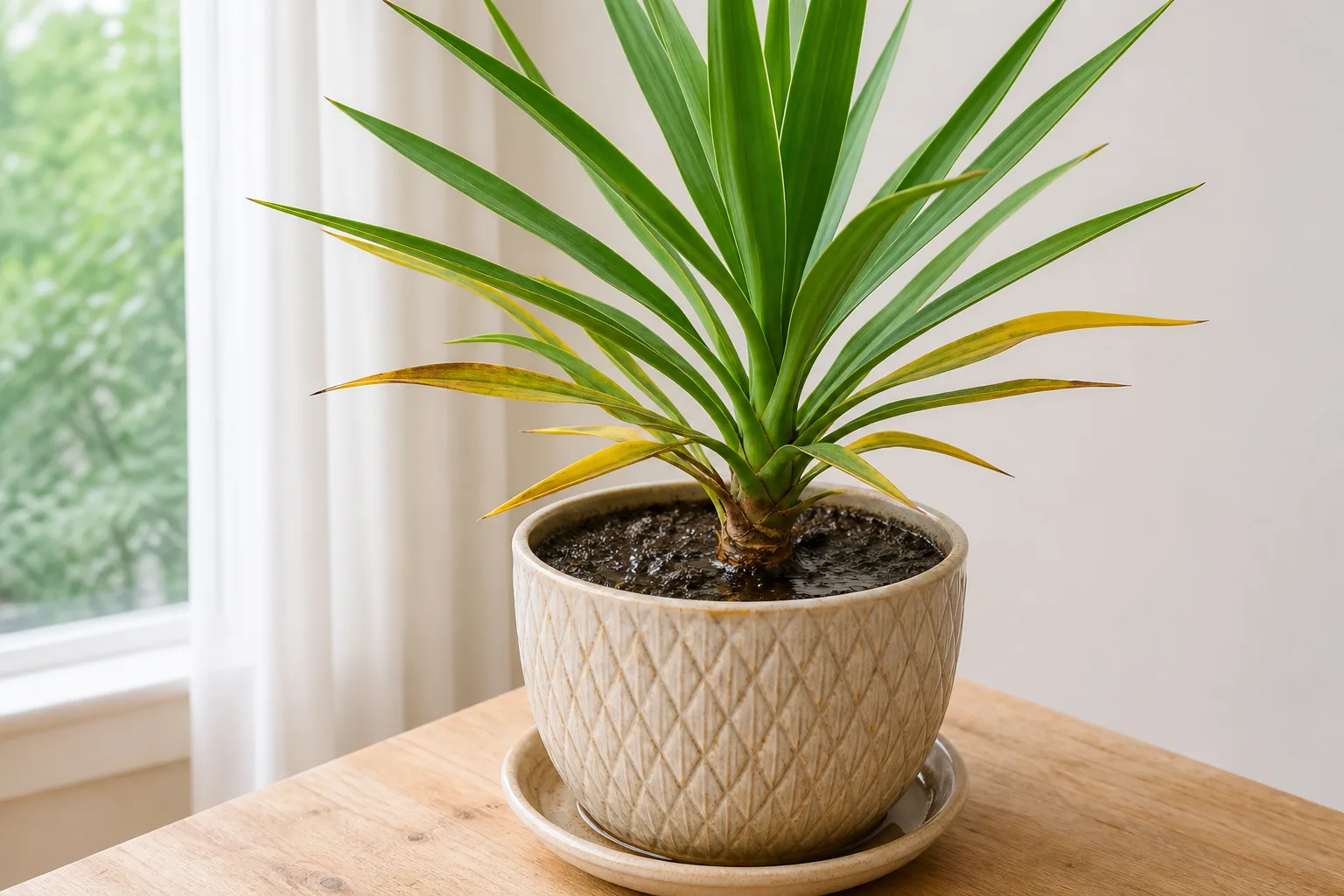
No Drainage Hole on Yucca Plant: Causes, Checks & Fixes
This guide covers no drainage hole on Yucca Plant. See also the general No Drainage Hole guide, watering, and light pages for this plant.
No Drainage Hole on Yucca Plant: Causes, Checks & Fixes
Quick answer
A pot with no drainage hole is one of the fastest ways to kill Yucca Plant indoors. Spineless yucca (Yucca elephantipes) needs a well-drained sandy soil mix and time to dry out between waterings-both impossible when water has nowhere to exit. Even careful top watering accumulates at the base until roots suffocate and rot.
First step: lift the plant out of any decorative cache pot and check whether the bottom of the mix stays wet days after you watered. If the lower soil is soggy while the surface looks dry, trapped water-not underwatering on Yucca Plant-is the problem.
Why missing drainage kills Yucca Plant
Yucca elephantipes evolved in Mexico to Guatemala on fast-draining ground and is tolerant of drought. Its thick trunk stores water, but the root system still needs oxygen between drinks. When a pot lacks holes-or sits inside a sealed decorative shell-every watering adds to a reservoir at the bottom. The mix turns anaerobic, roots lose function, and fungal decay follows.
This species is especially vulnerable because indoor growers often treat it like a tropical foliage plant. Standard peat-heavy mix in a glazed ceramic pot with no holes holds moisture far longer than yucca roots tolerate. Cool dim rooms slow water use further, so the same Yucca Plant watering guide that works on a pothos becomes lethal here.
Common setups that cause trouble:
- Glazed ceramic or concrete planters sold without holes
- Nursery pots dropped into sealed decorative cache pots
- Drainage holes blocked by roots, pebbles, or a glued-in saucer
- Oversized sealed containers where the root ball sits in a wet soil column
What trapped water looks like on Yucca Plant
Early damage can mimic thirst. Sword-shaped leaves yellow or droop even though you watered recently-because rotting roots cannot move water up the trunk. The pot stays unusually heavy for days or weeks. Pull the plant slightly from its container: the bottom third of the mix may look dark, cling to your finger, and smell sour while the top inch feels merely cool.
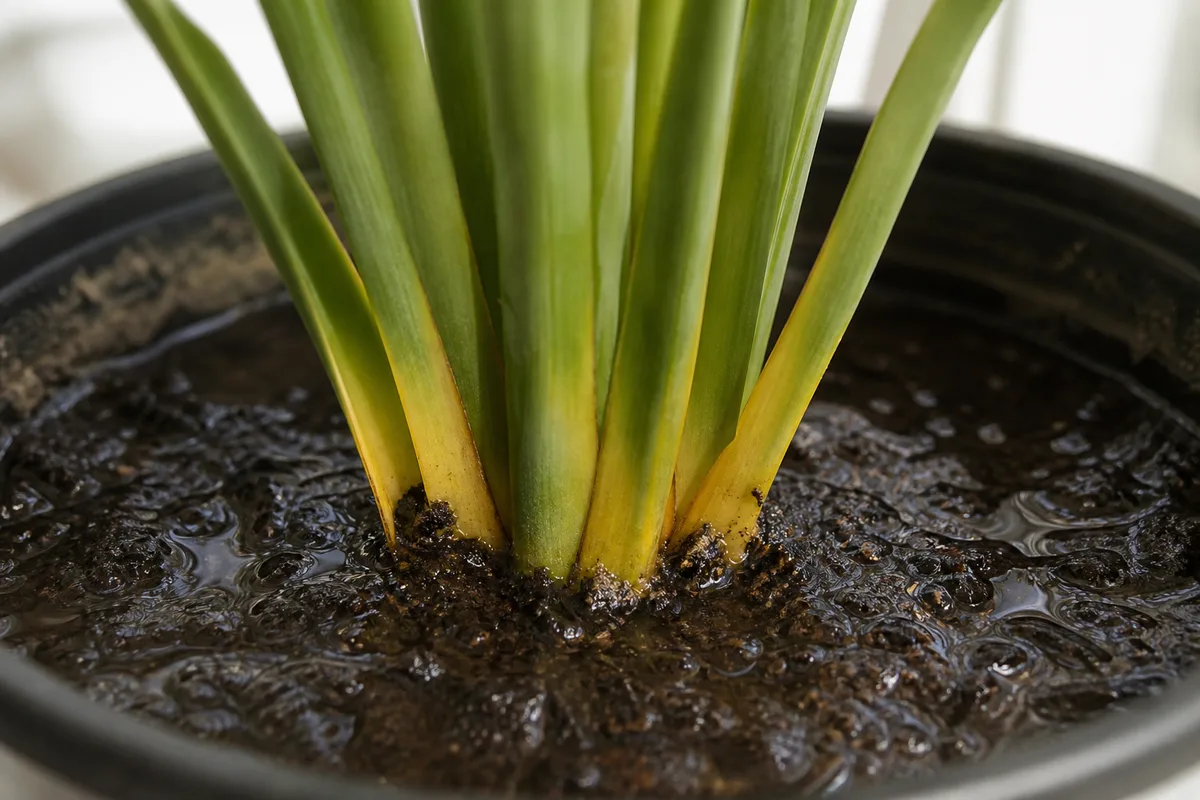
No Drainage Hole symptoms on Yucca Plant - compare with healthy tissue on the same plant.
Watch the trunk base, not just leaf tips. A healthy yucca cane feels firm and woody where it meets the soil. Soft, squishy tissue at that junction while the mix is wet is a serious sign. You may also see fungus gnats hovering near the surface-over-watering and poor drainage can encourage fungus gnats when soil stays moist too long.
How to confirm the cause
Work through these checks before Yucca Plant repotting guide:
- Hole test - Water thoroughly. Water should run from the bottom within minutes. If none exits, holes are absent or blocked.
- Cache pot check - Lift the inner pot from any decorative sleeve. Standing water in the outer shell confirms trapped runoff.
- Bottom moisture - Slide the plant partway out and feel the lowest mix. Persistent wetness there with a dry surface points to poor exit path, not careful watering.
- Weight and smell - A heavy pot long after watering, plus sour or rotten odor, supports waterlogging.
- Trunk firmness - Press the base gently. Firm wood with dusty dry mix suggests a different problem; soft base with wet mix confirms rot risk from trapped water.
If the pot drains freely, the mix dries appropriately, and the trunk is firm, look at overwatering on its own or dense soil instead of missing holes.
First fix for Yucca Plant
Remove the plant from any sealed container and stop watering until you can repot into a pot with open drainage holes.
Do not wait for leaves to drop further. Do not add more water hoping to flush the mix-that deepens the pool at the bottom. If the trunk base is still mostly firm, plan to unpot within a day, trim any mushy roots, let cut surfaces air-dry, and repot into fresh sandy cactus mix in a container that drains freely.
If a decorative pot is non-negotiable, use the nursery pot inside it and empty the outer shell every time you water. Never let runoff sit beneath the inner pot.
Step-by-step recovery
After the plant is out of the sealed setup:
- Unpot gently and rinse away wet soil so you can see root color and texture.
- Trim mushy roots with clean scissors, cutting back to firm white or tan tissue. Sterilize tools between cuts if rot is advanced.
- Inspect the trunk base. Cut away soft black tissue until you reach firm cane if rot climbed the stem.
- Air-dry the root ball and any trunk cuts for 24–48 hours in Yucca Plant light guide.
- Repot into a pot only slightly larger than the remaining root mass, with multiple open holes and fast-draining mix.
- Wait one week before the first light watering; resume only when the mix is dry several centimeters down.
If the base is soft throughout, focus on salvaging firm cane sections for cuttings rather than saving the whole plant.
What not to do
Do not drill holes in a pot already full of wet mix and assume the problem is solved-roots may already be damaged; inspect first.
Do not add a gravel layer at the bottom instead of drainage holes. Research from extension services shows a coarse layer beneath finer soil can create a perched water table that keeps the root zone wetter, not drier.
Do not keep watering because leaves look wilted when the soil is already saturated. Wilted leaves may indicate soil that is too wet when rotting roots cannot take up water.
Do not repot into regular potting soil without sand or perlite. Do not fertilize a stressed plant.
Wear gloves when handling cut tissue; Yucca is toxic to cats and dogs and sap can irritate skin.
Lookalike symptoms to rule out
Overwatering with good drainage - Holes are open and saucers emptied, but you water before the mix dries. Fix the schedule first; repot only if roots are mushy.
Poor drainage from heavy mix - Pot has holes, but peat-heavy soil stays wet. Repot into gritty cactus blend rather than only changing containers.
Underwatering - Mix is dusty dry throughout, leaves may curl and feel less rigid, trunk stays firm. Water deeply once, then fix the sealed pot issue before the next cycle.
Low light slowing dry-down - Drainage exists, but the plant uses water slowly in a dim corner. Move to brighter light before assuming holes are the problem.
Recovery timeline
Stopping water in a sealed pot shows stability within a few days if the trunk is still firm. After repotting with trimmed roots, expect one to three weeks before new leaf tips look normal. Severely rotted bases rarely push new rosettes-judge success by firm trunk tissue and fresh growth from the top, not by old yellow leaves greening up.
How to prevent it next time
Choose containers with open drainage holes sized to the root ball, not the full height of the canopy. Potted plants should always have good drainage, and pot coverings can hold water even when the inner pot drains-check decorative shells after every watering.
Use mineral-heavy cactus mix and allow soil to dry between waterings. Empty saucers within an hour of watering. In winter, reduce watering to the minimum indoors so slow growth does not leave the mix wet for weeks.
Terracotta with holes can help excess moisture evaporate through the walls; glazed pots work if drainage is open and you respect dry-down timing.
When to worry
Treat missing drainage as urgent the moment the trunk base softens, black patches climb the stem, or most roots are mushy on inspection. Mild root trimming on a firm trunk has a fair chance after repotting into a draining container. A collapsed base usually means the plant cannot be saved whole-take cuttings from any firm cane sections before rot spreads.
If the plant looks healthy but sits in a sealed pot, fix the container now. Yucca can appear fine until one extra watering fills the hidden reservoir.
Conclusion
No drainage hole turns every watering into a slow flood for Yucca Plant. Confirm trapped water at the bottom of the mix, get the plant into an open-draining pot with gritty soil, and trim rot before it reaches the trunk base. That single setup change does more for long-term survival than adjusting fertilizer or humidity ever will.
When to use this page vs other Yucca Plant guides
- Yucca Plant watering guide - Use for routine moisture checks before assuming no drainage hole is the main issue.
- Yucca Plant problems hub - Browse all 29 common issues on this species.