Brown Tips on Yucca Plant: Causes, Checks & Fixes
Quick answer
Brown tips on Yucca Plant are usually cosmetic stress from fluoride or salts in tap water, over-fertilizing, or uneven watering-not a disease. First step: switch to filtered or rainwater and pause fertilizer for one month while you watch new growth.
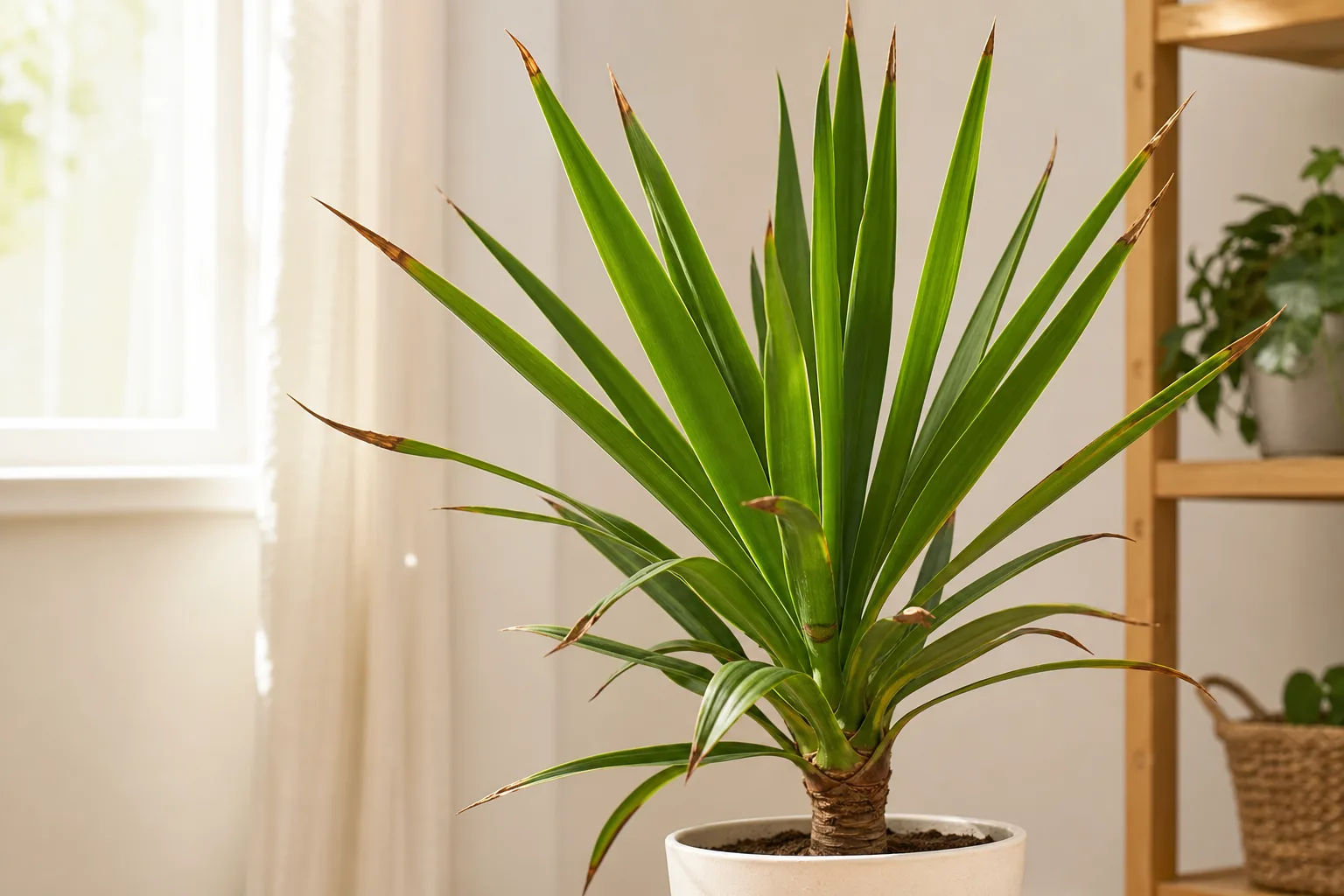
Brown Tips on Yucca Plant: Causes, Checks & Fixes
This guide covers brown tips on Yucca Plant. See also the general Brown Tips guide, watering, and light pages for this plant.
Brown Tips on Yucca Plant: Causes, Checks & Fixes
Quick answer
Brown leaf tips on Yucca Plant (Yucca elephantipes, spineless yucca) are almost always environmental stress, not disease. On this slow-growing desert-adapted cane, the most common triggers are fluoride and mineral salts in tap water, over-fertilizing, and uneven watering that stresses roots-poor water quality and soluble salts are common drivers of indoor tip browning. Yucca is tolerant of drought and handles normal household humidity well-tip burn rarely means you need a humidifier.
First step: switch to filtered or rainwater and stop fertilizing for one month. Watch the next two or three new leaves at the rosette tops. If tips stay clean, you have confirmed water quality or salt stress. If browning continues with a heavy wet pot, move to root and drainage checks before trimming anything else.
What brown tips look like on Yucca Plant
On spineless yucca, tip damage shows on the narrow, sword-shaped leaves at the ends of each rosette along the cane. Healthy yucca leaves are stiff, blue-green, and pointed. Tip burn looks different from the major failures Yucca Plant overview warns about.
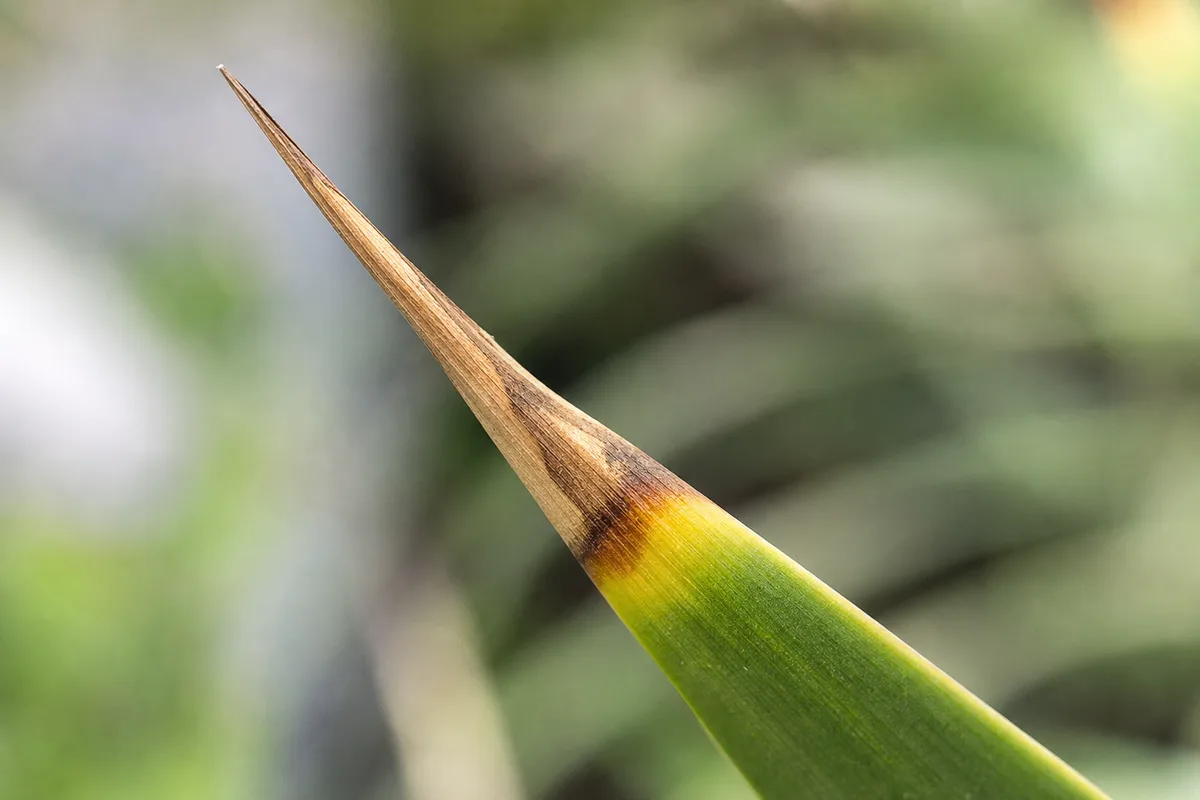
Brown Tips symptoms on Yucca Plant - compare with healthy tissue on the same plant.
Typical cosmetic tip burn:
- Dry, tan-to-brown tissue only at the very point or along the last centimeter of the leaf
- Rest of the blade stays firm and green
- Damage appears on several leaves at once, often evenly across the plant
- Trunk and leaf bases remain hard; no soft rot at soil line
- White or tan crust may sit on the soil surface
Patterns that suggest a different problem:
- Yellow leaves with brown halos on Yucca Plant plus a heavy pot → overwatering on Yucca Plant or root stress, not simple tip scorch
- Black water-soaked patches after a cold snap → cold damage near a window
- Bleached, papery tips on the sun-facing side only → sun scorch after a sudden move to harsh direct sun
- Brown spots with yellow rings mid-leaf → fungal leaf spot in stagnant humid air, not tip necrosis
- Fine webbing and stippling with tip browning → spider mites in very dry heat, not humidity alone
Brown tips are the farthest point from roots on each leaf, so they appear when moisture or chemistry at the root zone cannot support the leaf margin. On yucca, that usually traces to what is dissolved in your water, not a missing pest treatment.
Why Yucca Plant gets brown tips
Spineless yucca evolved for bright light, sharp drainage, and infrequent deep watering in Mexico and Central America. Indoors it grows slowly in a small root zone, so minerals from tap water and fertilizer accumulate faster than on fast-draining outdoor plantings. Leaf tips are where excess fluoride, chloride, and salts concentrate.
Fluoride and minerals in tap water
Yucca is sensitive to fluoride toxicity, which shows as brown leaf tips and margins. Municipal tap water in fluoridated areas delivers small doses every watering; over months the ions build in potting mix and leaf tissue. Letting tap water sit overnight removes some chlorine but does not remove fluoride-that is a common reason tip burn keeps returning.
Hard water adds calcium and magnesium salts that also crust on soil and burn margins. If you use a sodium-based water softener, that salt load is especially harsh on container roots.
Fertilizer and salt buildup
Yucca needs light feeding during active growth only. Heavy or year-round fertilizer leaves soluble salts in the mix. Following fertilizer labels helps avoid over-fertilizing, which can damage roots and show up as scorched tips before you see white crust on the soil. Slow-growing yuccas in large pots are easy to over-feed because the same dose sits in a small root ball for weeks.
Uneven watering and root stress
Yucca stores water in its trunk and stiff leaves, but damaged roots cannot hydrate leaf tips evenly. Long dry spells followed by heavy soaking stress feeder roots. Chronic overwatering is worse-wet soil drives rot-but even alternating drought and flood can produce tip burn on otherwise firm plants. Allow the soil to dry out between waterings; yucca prefers dry-down cycles, not a constantly moist mix.
Low humidity-usually secondary
Dry winter air can crisp leaf edges on many houseplants. Yucca, however, is tolerant of drought and urban indoor conditions. If only tips are brown while the trunk is firm and you have been using tap water, fix water chemistry before buying a humidifier. True humidity stress more often pairs with spider mites near heating vents, not isolated papery points alone.
Drafts, heat vents, and sun scorch
Cold drafts from windows or AC vents shock leaf edges in winter. Hot air from radiators desiccates tips on the facing side. Sudden moves to intense direct sun-especially after a dim corner-can bleach and brown the exposed leaf points even though yucca enjoys full sun to part shade once acclimated.
How to confirm the cause
Work through these checks in order. One clear match is enough to start the right fix.
- Water source - Have you used straight tap water for months? Is your city water fluoridated? Any water softener on the line? Fluoride sensitivity fits dry papery tips on multiple leaves with an otherwise healthy cane.
- Soil surface - White or tan crystalline crust points to salt buildup from fertilizer and hard water. Scrape lightly with a spoon-thick crust confirms accumulated minerals.
- Feeding history - Did tips appear within two weeks of a heavy feed or winter fertilizer? Did you feed while the plant was idle in cool months? Salt burn fits that timeline.
- Pot weight and moisture - Lift the pot. If it stays heavy for seven to ten days after watering, roots may be stressed by excess moisture even if tips look dry. Press a finger deep into the mix: wet deep soil with firm trunk suggests you should dry the plant out, not add humidity.
- Trunk firmness - Press the cane above soil. Hard wood with only tip damage is cosmetic. Soft, dented base tissue means rot-stop tip-trimming and inspect roots instead.
- Placement - Is the plant against a cold window, above a heat vent, or freshly moved to blazing afternoon sun? Localized browning on one side fits environmental edge stress.
- New growth - Inspect the youngest leaves emerging at rosette centers. Clean new tips after a water change confirm fluoride or salt was the driver. Browning on brand-new leaves despite filtered water suggests ongoing overwatering or draft damage.
If water quality, feeding, and drainage all look sound and tips still spread with webbing on undersides, check for spider mites before assuming more humidity will help.
First fix for Yucca Plant
Switch to filtered or rainwater and pause all fertilizer for four to six weeks.
Pour through the existing mix with the new water source on your normal dry-down schedule-do not soak a plant that is already sitting in wet soil. This single change stops new fluoride and salt from entering the root zone while you observe the next leaves unfurling. Do not repot, prune heavily, or start a humidifier on day one unless the trunk base is soft or soil smells sour.
After one month, if new tips emerge clean, resume feeding at half strength every two to three months during spring and summer only. If tips keep browning on new growth with a heavy pot, move to the recovery steps below for flushing and drainage-water quality alone was not the whole story.
Step-by-step recovery
Once you have switched water and stopped feeding, work through these steps based on what you confirmed:
- Flush accumulated salts - If white crust is present, scrape the top centimeter of crusty soil and discard it. Set the pot in a sink or outdoors and run plain filtered water through until it flows freely from the drainage holes for several minutes. Let the pot drain fully; never leave yucca in a saucer of standing water.
- Stabilize watering - Water only when the top half of the mix is dry in bright rooms, or when the full pot has dried during winter slowdown. During indoor winter months, reduce watering to the minimum-keep soils dry with just enough moisture to prevent foliage loss. Judge by pot weight, not a calendar.
- Trim cosmetic damage - Cut dead brown tips with clean scissors, following the natural leaf curve. Leave a thin brown margin at the cut so you do not slice into living green tissue. Old blades will not re-green; trimming is for appearance only.
- Adjust placement - Move off radiators and drafty window sills. If you recently increased direct sun, pull back to bright indirect light for two weeks, then acclimate gradually to stronger sun.
- Hold Yucca Plant repotting guide unless necessary - Do not repot a firm-trunk yucca solely for tip burn. Repot only if crust is deep through the root ball, mix stays wet for weeks, or roots are circling and water runs straight through. Use well-drained sandy soil mix with perlite or coarse sand and a pot one size up with open drainage.
- Resume light feeding - After two clean new leaves, feed at half label strength once in late spring or early summer. Skip fall and winter feeds unless the plant is under strong grow lights and actively pushing rosettes.
Recovery timeline
Tip burn is slow to stop and impossible to reverse on old tissue. Expect four to eight weeks after switching water before you can fairly judge new growth-yucca unfolds leaves slowly indoors.
Signs you are winning:
- New rosette leaves open with green tips
- No fresh crust on soil surface
- Trunk stays firm; older blemished leaves simply age in place
- Pot weight drops predictably between waterings
Signs the problem is deepening:
- Tips brown on every new leaf despite filtered water
- Yellowing spreads up the plant with a constantly heavy pot
- Trunk softens at soil line or smells sour
- Leaves droop and feel limp while mix stays wet
Cosmetic tip trimmings improve appearance immediately, but botanical recovery is measured by new foliage, not old blades turning green.
Lookalike symptoms
- Overwatering / root rot on Yucca Plant - Yellow leaves, limp foliage, soft base, sour soil. Fix drainage and dryness; filtered water alone will not save rotting roots.
- underwatering on Yucca Plant - Curled, less rigid leaves, very light pot, dry mix throughout. Deep soak once, then return to dry-down rhythm; tips may have crisped from drought, not fluoride.
- Leaf spot disease - Brown or black spots mid-blade with yellow halos in humid stagnant air. Remove spotted leaves and improve airflow; do not flush fertilizer salts as the main fix.
- Cold damage - Blackened, water-soaked patches after exposure below about 7°C near glass. Move to stable warmth; prune dead tissue after the plant stabilizes.
- Spider mites - Fine webbing, stippling, and dusty undersides in hot dry rooms. Rinse and treat pests; humidity trays alone miss the colony.
- Normal aging - One or two oldest lowest leaves brown at tips while new growth stays perfect. Remove aged leaves if unsightly; no culture change needed.
What not to do
Do not mist heavily as your main humidity strategy-wet leaf bases in low airflow invite rot on a plant that prefers dry conditions. Avoid increasing fertilizer to “green up” tips; that adds salts. Do not water on a fixed weekly schedule regardless of pot weight. Skip deep tip pruning into green tissue-you create larger wounds on slow-healing leaves. Do not repot into standard peat-heavy mix without grit; poor drainage turns tip burn into trunk rot. Wear gloves when trimming-Yucca is toxic to cats and dogs if ingested.
How to prevent brown tips next time
Use filtered, distilled, or rainwater for routine watering in fluoridated areas. Feed sparingly in spring and summer only, and flush the pot with plain water each spring before the growing season. Grow in bright light with a fast-draining sandy or cactus blend, and allow soil to dry between waterings. Keep the cane away from heating vents and icy window panes. Rotate the pot a quarter turn monthly so one side does not bake against glass. Judge plant health by firm trunk wood and clean new leaves, not by whether every old sword blade is flawless.
When to use this page vs other Yucca Plant guides
- Yucca Plant watering guide - Use for routine moisture checks before assuming brown tips is the main issue.
- Yucca Plant problems hub - Browse all 29 common issues on this species.
- Low Humidity on Yucca Plant - Different entry point when symptoms overlap with brown tips.
- Underwatering on Yucca Plant - Different entry point when symptoms overlap with brown tips.
- Overwatering on Yucca Plant - Different entry point when symptoms overlap with brown tips.