Yucca Plant Light Needs: South Window and Sun Guide
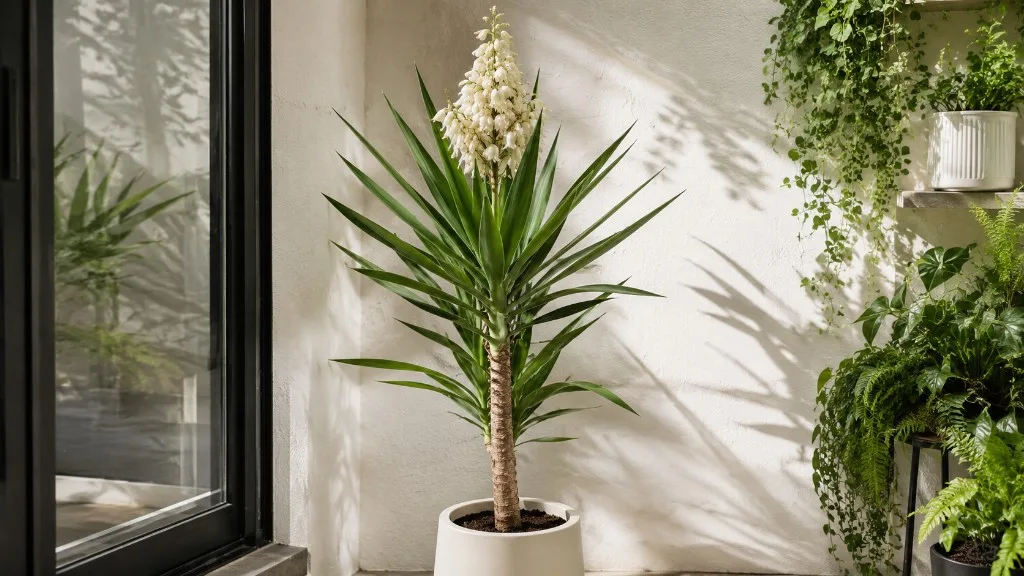
Yucca Plant Light Needs: South Window and Sun Guide
Yucca Plant Light Needs: South Window and Sun Guide
A yucca in the wrong light does not die quickly. It lingers - pale, stretched, slowly losing the upright architectural look that made you buy it. Yucca elephantipes (also sold as spineless yucca, giant yucca, or under the older name Yucca gigantea) is marketed as an easy, low-maintenance houseplant, and that is partly true. It tolerates dry air, infrequent watering, and the occasional missed feed better than most tropical foliage plants. What it does not tolerate well is dim interior light treated as a long-term plan. Yucca is a desert-adapted succulent relative, not a shade-floor philodendron, and its light appetite shows up fast in new stem length, leaf firmness, and canopy density.
The practical indoor target is bright direct to indirect sun - strong daily illumination with direct rays on the canopy for part of the day when acclimated, or very bright indirect light sustained across most daylight hours. In most northern-hemisphere homes, that means a south-facing window is the default ideal placement, with the pot close enough to the glass that light lands on leaves rather than on the floor beside the pot. Low light does not usually kill a yucca in weeks, but it reliably produces leggy, weak growth: elongated internodes, thinner leaves, a bare lower trunk, and a plant that leans hard toward the brightest corner.
This guide covers how much light yucca actually needs, why bright sun is non-negotiable for compact form, how to place pots by window direction, what low light does structurally, when grow lights are worth adding, and how to read warning signs before stretch becomes permanent habit.
How Much Light a Yucca Plant Actually Needs
Yucca elephantipes evolved in bright, open habitats - dry slopes, scrub, and semi-arid margins across Mexico and Central America - where full sun is the norm and shade is the exception. Indoors, that biology translates into a simple requirement: high photon flux for many hours daily. Horticultural references and desert-plant growers consistently place the usable baseline at roughly six or more hours of bright light daily, with a meaningful share of that coming as direct sun when the plant is acclimated. (Missouri Botanical Garden) Bright indirect light alone can maintain a healthy plant when it is truly bright - open sky visible through a large south or west window, canopy within a foot of the glass - but the average “bright room” that looks fine to human eyes often delivers too little energy for compact yucca growth.
Think in terms of leaf-level light, not room aesthetics. A yucca on a console table six feet from a south window may sit in a space that feels sunny to you while the plant receives a fraction of the flux it would get on the windowsill. Yucca responds to that deficit by allocating stem length over leaf thickness - the same etiolation response you see in seedlings reaching from soil toward a gap in the canopy. The difference is that a houseplant yucca can etiolate for months before the owner notices the trunk has become a thin pole with a small tuft of leaves at the top.
For indoor growers, the workable band looks like this:
- Best: South-facing window, pot within 12 to 24 inches (30 to 60 cm) of the pane, with two to six hours of direct sun on the canopy after gradual acclimation.
- Good: Very bright indirect light all day from south or large west glass, or east window morning direct sun plus strong ambient brightness through afternoon.
- Survival only: North window, interior hallway, or office corner with no supplemental light - expect slow growth, pale foliage, and progressive legginess; not a healthy long-term site.
Yucca is more forgiving of suboptimal light than spiny outdoor species like Yucca filamentosa, which sulk indoors without brutal sun. Spineless yucca earned its houseplant status partly by tolerating brief low-light periods better than desert cousins. Tolerance is not preference. A dim yucca can look acceptable for a season and then reveal a structurally weak trunk that no fertilizer corrects.
The Short Answer for Busy Growers
If you only remember four rules, use these. Default placement: south-facing window, as close to the glass as heat allows, with sheer diffusion only if summer leaf scorch appears. Light band: bright direct to indirect sun - not “medium light,” not “anywhere near a window.” Read new growth: short gaps between leaves, firm upright blades, and deep green color on the newest foliage mean the current site works; stretching, smaller new leaves, and yellow-green wash mean move brighter before changing water or feed. Acclimate upward: increase exposure over 7 to 14 days when moving from nursery shade or a dim corner to strong south glass - sudden jumps cause bleached patches and leaf drop even on sun-loving plants.
Give any placement change two to three weeks before declaring failure. Old stretched stem tissue does not shrink backward; only new internodes tell you whether the fix is working.
Why Yucca Plants Are Built for Bright Sun
Yucca leaves are thick, waxy, and structurally stiff - adaptations that reduce water loss under intense radiation and dry wind. The root system and stem store moisture; the leaf surface is built to handle high evaporative demand when roots can still access water. That combination assumes strong light driving photosynthesis during the day. When light is weak, the plant cannot sustain the same carbohydrate budget from a smaller photosynthetic return, so growth slows and the architecture changes.
Unlike many tropical houseplants that evolved under forest canopy, yucca does not maintain dense pigment and compact spacing in chronic shade. It elongates toward the light source, sacrificing the sculptural multi-stem look for photon capture. Indoors, the nearest bright source is almost always a window, which is why yuccas develop a pronounced lean and a one-sided canopy unless rotated regularly.
Desert Origin and What That Means Indoors
Yucca elephantipes belongs to the asparagus family (Asparagaceae) and shares metabolic traits with other arid-zone plants: conservative water use, tolerance of temperature swings, and a growth rhythm tied to strong seasonal light outdoors. Inside a heated apartment, seasons blur, but window direction and latitude still set the photon budget. Winter south light can be the best free grow lamp you have; summer south glass can add heat load that must be managed separately from light quality.
The desert-origin frame also explains a common care conflict. Yucca survives neglect - missed waterings, dry air, stable room temperatures - which encourages owners to park it wherever it looks good aesthetically. A dark dining-room corner meets the “low maintenance” story while violating the “high light” biology. The plant stays alive just long enough to convince you the spot is fine, then spends the next year stretching toward the nearest window like a slow-motion time-lapse.
If you bought your plant as a “yucca cane” with multiple trunks in one pot, each stem competes for the same light pool. Rotate the container a quarter turn every week so all faces see the window and you avoid a lopsided specimen that only looks good from one angle.
Bright Direct vs Bright Indirect Light for Yucca
Bright direct light means sun rays hit the leaf surface - unfiltered or lightly filtered through sheer fabric - for a defined portion of the day. Bright indirect light means the plant sits in strong ambient illumination without direct beam contact, typically within the sunlit zone of a window but just outside the sharp shadow line, or behind a diffuser that spreads rays without eliminating brightness.
Yucca handles both when intensity is high enough. The ranking mistake is assuming indirect is always safer and therefore better. A yucca three feet back from a south window in bright indirect conditions may receive less total energy than a yucca on an east sill with two hours of direct morning sun plus moderate afternoon ambient light. Direct morning sun is cooler and less likely to scorch than late-afternoon west beams magnified through glass.
For most indoor growers, the optimal mix is bright indirect as the baseline with some direct sun on the canopy - especially in winter when sun angle is lower and day length shortens. Spineless yucca in trade production is often grown under high greenhouse light; when it reaches your home, it expects continuity, not a downgrade to a north office window.
When Direct Sun Helps and When It Hurts
Direct sun helps when:
- The plant was acclimated gradually to stronger exposure.
- Leaves formed under similar light - not soft nursery-shade foliage suddenly blasted on a July west window.
- Air moves - a fan, cracked window, or open room reduces heat buildup on leaf tissue and potting mix.
- The window is east or south in cool-to-moderate seasons, delivering intensity without extreme afternoon heat spikes.
Direct sun hurts when:
- A plant moves from low light to unfiltered south glass in one day - expect bleached white patches, crisp brown tips, or sudden leaf drop on the sun-facing side.
- West afternoon sun through clear glass hits a plant that never saw direct rays - glass acts like a lens; leaf temperature can exceed outdoor shade temperature significantly.
- The pot sits against hot glass in summer with no curtain - roots and lower stem heat stress compound leaf scorch.
- Water droplets sit on leaves in direct sun - magnified spotting can burn tissue (water early or keep foliage dry in beam hours).
If you see scorch, reduce intensity before reducing total day length when possible: sheer curtain, move pot six inches back, or shift from west to east. Pulling a scorched yucca into a dim corner fixes leaf burn while restarting etiolation - the wrong trade.
Why a South-Facing Window Is Usually Ideal
In the northern hemisphere, a south-facing window delivers the strongest, most consistent natural light through the year. Winter sun rides lower on the horizon and penetrates deeper into the room; summer sun climbs higher but still supplies long days of high flux at the sill. For yucca - a plant that wants hours of strong light daily - south glass is the default jackpot placement cited across houseplant and desert-plant references. (RHS)
Place the pot so the canopy, not just the pot rim, sits in the lit zone. For a multi-trunk yucca, the top leaf cluster must see sky brightness. If only the lower trunk is in shade and the top clears the window frame, you still get stretch in the shaded internodes.
Distance matters. On the sill or within one foot of south glass is appropriate for most homes in fall through spring. In peak summer heat waves, sliding the pot 18 to 36 inches (45 to 90 cm) back or adding a sheer curtain during midday prevents heat scorch while preserving bright indirect fill. Yucca prefers intensity with heat management, not darkness disguised as caution.
East, West, and North Windows Compared
An east-facing window is the best second choice and often the easiest acclimation path. Morning sun is bright but cooler than afternoon rays. Two to four hours of direct eastern exposure plus strong ambient light frequently produces compact, deep-green growth without the scorch risk of west glass. If your south window is obstructed by buildings or a deep overhang, east can outperform a “south” label on paper.
A west-facing window supplies strong afternoon light - valuable in winter and risky in summer. Use west when you can filter peak hours or place the plant far enough back that direct beams hit only part of the day. Watch the sun-facing leaf side for bleached streaks in the first week after placement. West works well for growers who rotate the plant between a bright west sill in winter and a slightly withdrawn summer position.
A north-facing window is rarely adequate for yucca long-term in the northern hemisphere. North exposures may keep a plant alive in summer at high latitudes with very open sky, but internodes still stretch, new leaves emerge smaller, and the trunk thins over time. Treat north as grow-light territory if you want compact architectural form - not as a permanent home for a desert plant.
Interior spots - foyer tables, bathroom counters away from glass, office desks - fail the same way north windows do, only faster, because human-perceived brightness overstates photosynthetically useful flux at distance from the source.
Low Light Limits and Leggy, Weak Growth
Low light is the most common indoor yucca failure mode, and it is deceptive because the plant does not collapse immediately. Leaves may stay green for months while the stem does the damage. Leggy, weak growth is not a cosmetic flaw you can trim away once; it is etiolation - hormonally driven stem elongation in insufficient light - and it changes the permanent structure of the plant.
In practical terms, low-light yucca shows:
- Long bare trunk with leaves clustered only at the top
- Wide spacing between new leaf attachments on the stem
- Thinner, softer blades that droop rather than arch stiffly outward
- Pale yellow-green new foliage instead of deep green
- Pronounced lean toward the brightest source
- Slow or stalled new leaf production despite otherwise “fine” watering
Low light also raises rot and pest risk indirectly. A yucca photosynthesizing weakly uses less water; soil stays wet longer; roots sit in moisture the plant cannot metabolize. Owners often respond by watering on schedule anyway, which accelerates decline. The fix starts with light, not fungicide.
How Etiolation Changes the Whole Plant
Etiolation is the plant spending stem length to escape shade. Outdoors, that might lift a seedling into a sunfleck. Indoors, the ceiling is the limit, so the yucca becomes a tall, thin pole with a small crown - attractive only if you wanted a sparse palm aesthetic on purpose.
Once an internode has elongated, it does not compact again when you move the plant to better light. New growth after the move can be tight and healthy, but the old bare stem remains unless you cut the trunk back to force branching from a brighter site. That is why early light correction matters more for yucca than for bushy herbs that hide leggy stems under fresh foliage.
If your yucca already looks like a lollipop on a stick, brighter light stops the worsening but does not erase history. Plan on placement correction plus optional pruning - covered later - rather than expecting time alone to restore a dense base.
Outdoor Sun vs Indoor Window Light
Outdoor sun is the reference standard yucca expects. A patio summer - introduced gradually - can reset a struggling indoor specimen faster than any grow light upgrade, because 360-degree sky brightness and full-spectrum direct rays exceed what a single window provides. Move indoor yuccas outside only after last frost risk in your climate, and harden them over a week: shade porch first, then morning sun, then fuller exposure.
Outdoor pitfalls mirror indoor ones: dark pots on hot pavement, sudden moves from shade to blazing deck, and overwatering on Yucca Plant during cool cloudy weeks after a hot spell. Light outdoors is usually sufficient; owner error is often water and temperature shock.
Indoor window light is directional. One face of the plant receives far more flux than the opposite side, which produces asymmetric growth unless you rotate. Window glass also filters some UV and infrared compared with outdoor sun, but the bigger indoor limitation is usually beam angle and day length in winter, not missing wavelengths. Supplemental LEDs fill winter gaps more than they “fix” a permanently dark room.
For apartment growers without outdoor access, maximize window quality first - south or east, tight to glass, clean windows - before buying hardware. Dirty glass and exterior screens can cut flux more than owners realize.
Grow Lights When Natural Light Falls Short
When the brightest available window is still north, obstructed, or winter-short, a full-spectrum LED grow light is the correct tool - not a decorative warm bulb. Yucca needs intensity and duration, not mood lighting. Position a fixture 12 to 24 inches (30 to 60 cm) above the leaf crown and run it 12 to 14 hours daily on a timer to approximate a respectable daily light integral when sun alone is weak. (RHS yucca cultivation guide)
Increase exposure incrementally. Jumping from dim corner to 16 hours of high-output LED can stress leaves like sudden south glass. Start at 10 to 12 hours, watch new growth for two weeks, then extend if stems still stretch.
Fixture Distance, Hours, and Spectrum
Distance controls intensity. Too close - bleached or curled leaves, especially on new soft tissue. Too far - the plant etiolates toward the bulb while the rest of the room looks “lit.” Use the new-growth test: if internodes remain long under the lamp, lower the fixture or upgrade output.
Hours matter because yucca is not a low-light short-day plant. Occasional bulb use on human schedule leaves long dark gaps. A timer makes consistency automatic.
Spectrum: full-spectrum white LEDs labeled for vegetative growth are sufficient. You do not need exotic purple panels for yucca architecture. Prioritize even canopy coverage over spotlighting one side of a multi-trunk pot.
Combine grow lights with window light when possible. A south window plus winter LED often produces the tightest indoor growth, because natural rays provide quality the bulb supplements in quantity.
Acclimating Your Yucca to More Light Safely
Acclimation is non-optional when upgrading light. Nursery yuccas, supermarket specimens, and plants long accustomed to dim interiors have leaves and stems calibrated to low flux. Moving them directly to harsh south or west glass without transition produces sunburn, not vigor.
Use a stepped protocol over 7 to 14 days:
- Days 1 to 3: Move to the target room but 3 feet (about 1 meter) back from the window, or use a sheer curtain full-time.
- Days 4 to 6: Pull 12 to 18 inches (30 to 45 cm) closer; remove curtain for morning hours only on east or south.
- Days 7 to 10: Place at final distance; allow partial direct sun on the canopy.
- Days 11 to 14: Full target exposure if leaves remain firm and unbleached.
Watch the sun-facing side each morning. White or tan papery patches mean pause at the current step. Leaf drop of older lower blades during acclimation can be normal; rapid crown collapse is not.
Rotate the pot every few days during acclimation so all faces toughen evenly. Do not simultaneously repot, fertilize heavily, or overhaul watering during this window - one variable at a time preserves clear cause and effect.
Warning Signs Your Yucca Has the Wrong Light
Yucca communicates light stress through new growth first, then leaf color, then whole-plant posture. Old damage is historical; diagnosis lives at the growing tip.
Too Little Light vs Too Much Sun
Too little light - move brighter:
- Stem stretches between leaves; trunk looks like a skinny pole
- New leaves smaller and paler than older foliage formed in better light
- Plant leans sharply toward window or grow lamp
- Sparse canopy - long bare lower trunk with tuft on top
- Slow leaf emergence despite dry soil and otherwise stable care
- Soil stays wet unusually long because metabolism is low
Too much sun - soften intensity or acclimate slower:
- Bleached white or tan patches on sun-facing leaves
- Crisp brown tips or margins that appear suddenly after a move
- Curling or folding blades during peak beam hours
- One-sided damage on the window-facing hemisphere only
- Yellowing with dry crisp texture on exposed leaves - distinct from soft yellowing of overwatering
When both lists seem to apply, you likely have uneven exposure - one side scorched, the other shaded - common on large pots only half in the beam. Rotate and center the crown in the light pool.
Light, Watering, and Seasonal Adjustments
Light and water are coupled for yucca more than many owners realize. Higher light increases transpiration and carbohydrate demand; the pot dries faster; roots need water on a brighter schedule. Lower light reduces demand; soil lingers moist; root stress follows if watering stays aggressive.
When you move a yucca brighter, check soil moisture more often for the first month. When you must keep a yucca dimmer temporarily (move, renovation, winter guest room), extend dry-down time - not because yucca loves neglect, but because unused moisture in cold soil is riskier than slight underwatering on Yucca Plant for Yucca Plant overview.
Seasonal shifts matter in window-grown plants. Winter: south light is precious; pull yucca closer to glass; wipe windows; add LED hours if stretch resumes. Summer: watch for glass heat; diffuse midday south or west beams; ensure airflow. Latitude: high-latitude winters shorten days sharply - supplemental light prevents winter etiolation even on south sills.
Humidity is secondary for yucca light performance. Average indoor humidity is fine. Do not mist to “compensate” for low light - surface moisture plus sun causes spotting; darkness plus wet soil causes rot.
Fixing a Leggy Yucca and Preventing Recurrence
If your yucca is already leggy, two actions work together: correct light immediately and reshape the structure if the bare trunk offends you.
Step 1 - Light: Move to south or east glass, acclimate, add grow light in winter. Confirm success only when new internodes shorten and new leaves darken over three to four weeks.
Step 2 - Prune (optional): Cut the trunk 4 to 6 inches (10 to 15 cm) below the lowest leaves you want to keep, using a sharp clean blade. Yucca elephantipes often sprouts new shoots from the cut or from the remaining trunk below the cut. Multiple canes in one pot can be cut at different heights for tiered regrowth. Root the top section as a cutting if you prefer propagation over discard.
Step 3 - Prevent recurrence: Keep the corrected placement; rotate weekly; avoid sliding back to a dim “display corner” after recovery. Treat yucca like a window plant, not furniture.
Buying new yucca? Choose specimens with tight leaf spacing on the trunk, firm blades, and no extreme lean - signs the grower supplied adequate light. A cheap tall pole with a tiny top often already carries months of etiolation you inherit.
Conclusion
Yucca plant light needs are not ambiguous once you accept the plant’s desert wiring: bright direct to indirect sun, south-facing window as the default ideal in most northern-hemisphere homes, and no long-term survival strategy in low light without accepting leggy, weak growth. The useful band runs from acclimated direct sun on a south or east sill to very bright indirect at close range - not medium ambient room brightness three meters from glass.
Judge placement by new growth: short internodes, stiff deep-green leaves, and upright habit mean the current site works. Stretching, pale tufted crowns, and bare trunks mean move brighter before you change water, soil, or fertilizer. Acclimate upward over one to two weeks, diffuse only when summer scorch appears, and add 12 to 14 hours of full-spectrum LED when windows cannot deliver enough winter flux. If structure is already compromised, better light stops the decline; optional trunk pruning resets form. Get light right and yucca becomes genuinely low-maintenance - the architectural desert gem it was sold as being.
When to use this page vs other Yucca Plant guides
- Yucca Plant overview - Start here for whole-plant context before deep-diving this topic.
- Yucca Plant problems hub - Jump to symptom-specific fix guides when this care topic does not resolve the issue.
- Not Enough Light on Yucca Plant - Escalate here when light adjustments are not enough.
- Leggy Growth on Yucca Plant - Escalate here when light adjustments are not enough.
- Sunburn / Scorched Leaves on Yucca Plant - Escalate here when light adjustments are not enough.
Related Yucca Plant guides
- Yucca Plant overview
- Yucca Plant watering
- Yucca Plant soil
- Yucca Plant propagation
- Yucca Plant fertilizer
- Yucca Plant repotting
- Not Enough Light on Yucca Plant
- Leggy Growth on Yucca Plant
- Sunburn / Scorched Leaves on Yucca Plant
- Yucca Plant problems
Related tool
Try the Plant Problem Diagnosis Tool with yucca-plant pre-selected to estimate needs for your setup.