Sunburn & Scorched Leaves on Yucca Plant: Causes, Checks &
Quick answer
Sunburn on Yucca Plant is light shock-indoor-grown leaves burn when moved too fast into harsh direct sun. Bleached or brown patches on the sunny side confirm scorch. First step: move to bright indirect or morning sun and acclimate over one to two weeks.
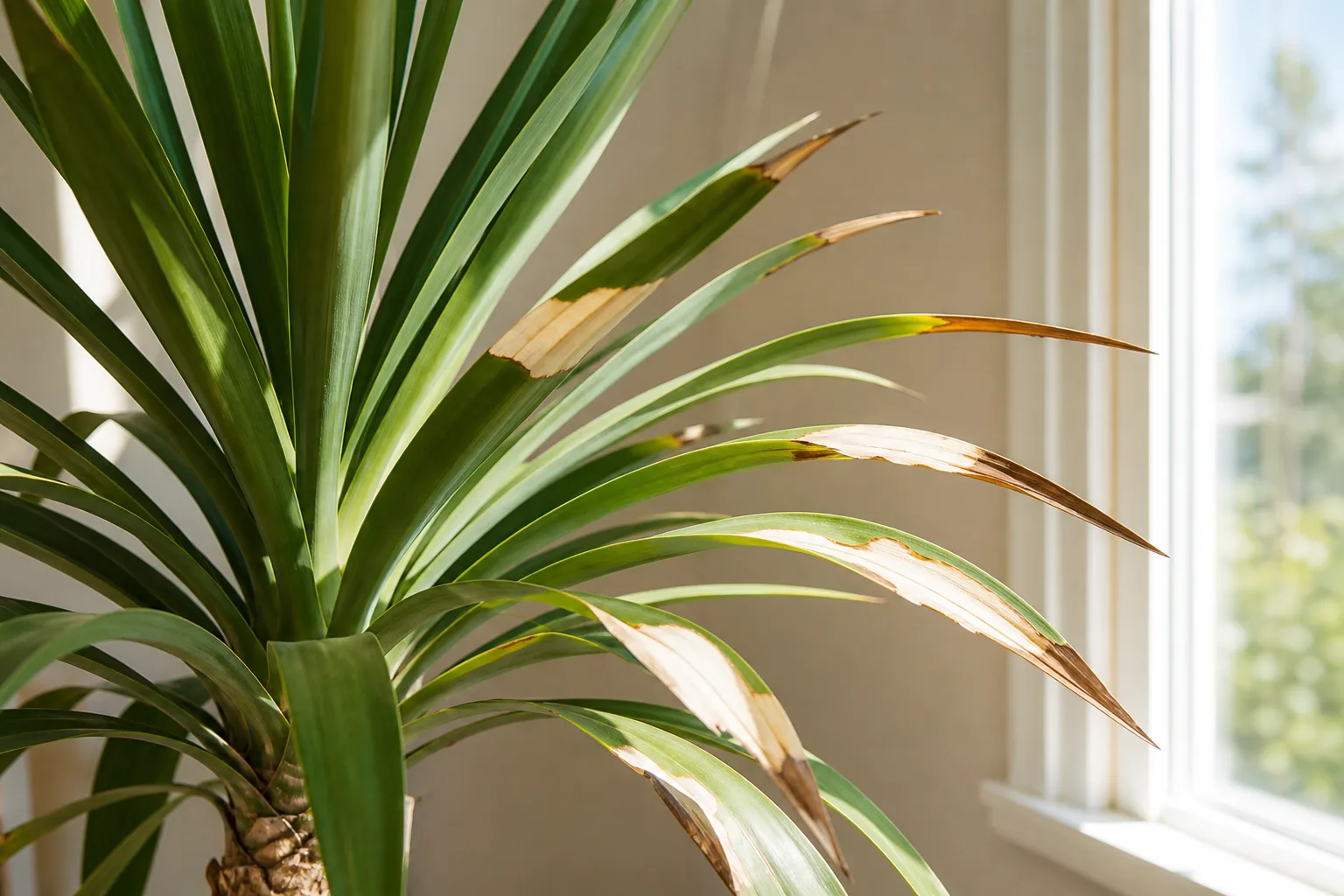
Sunburn & Scorched Leaves on Yucca Plant: Causes, Checks & Fixes
This guide covers sunburn / scorched leaves on Yucca Plant. See also the general Sunburn / Scorched Leaves guide, watering, and light pages for this plant.
Sunburn & Scorched Leaves on Yucca Plant: Causes, Checks & Fixes
Quick answer
Sunburn on Yucca Plant (Yucca elephantipes, spineless yucca or yucca cane) is light shock, not thirst or disease. The species tolerates full sun to part shade when acclimated, but leaves grown in dimmer indoor conditions lack the thicker cell structure needed for harsh midday rays. Move them abruptly to a south patio, unshaded west window, or reflected glass corner and bleached, tan, or crispy brown patches appear on the exposed side within days.
First step: move the plant out of harsh direct sun today-to bright indirect light or morning sun only-and start a gradual acclimation schedule. Do not repot, fertilize, or increase watering because leaves look damaged; fix light first and keep the normal dry-down Yucca Plant watering guide.
What sunburn looks like on Yucca Plant
Yucca sunburn shows up on sword-shaped leaves as distinct patches, not even tip browning across the whole plant:
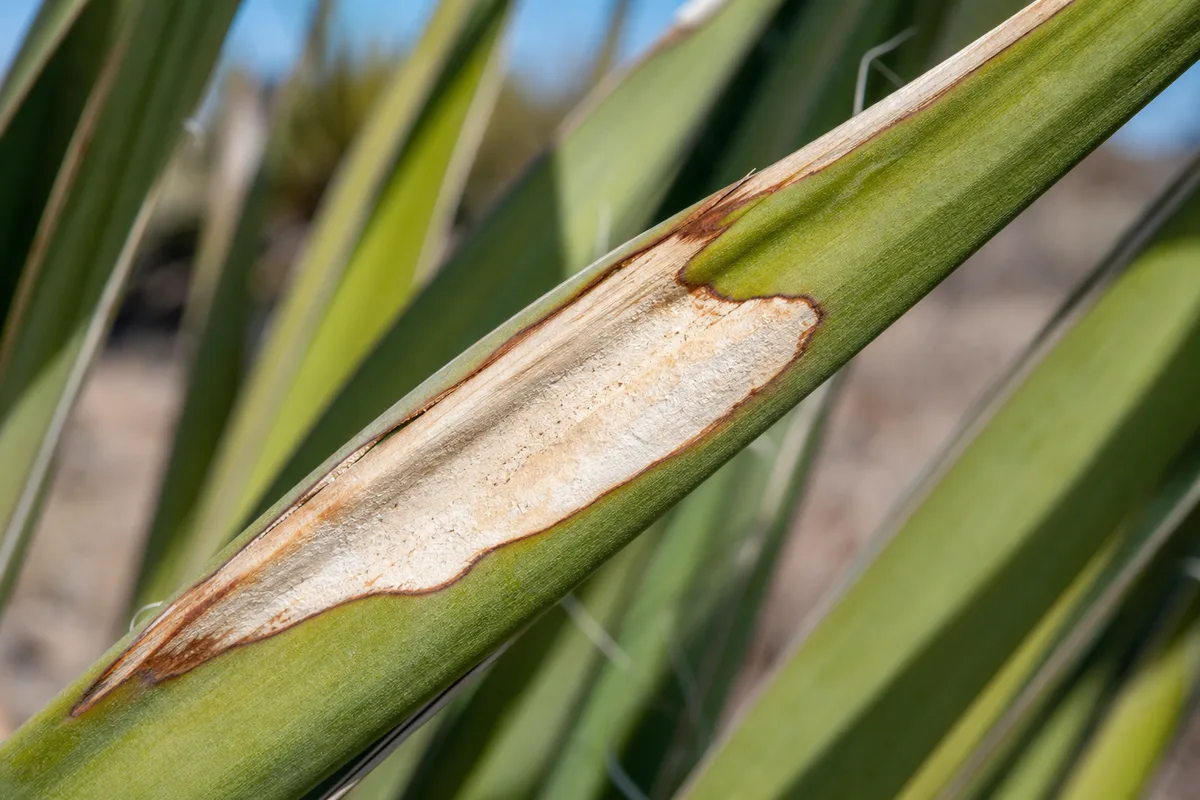
Sunburn / Scorched Leaves symptoms on Yucca Plant - compare with healthy tissue on the same plant.
- Bleached white or pale yellow zones on the leaf surface that faced the strongest light
- Tan or crispy brown sections that feel dry and papery, often on one side of each blade
- Damage concentrated on the sun-facing side of the rosette while shaded leaves look mostly normal
- Symptoms appearing several days after a move, not slowly over months
- Firm cane and trunk with no sour smell from the pot
Advanced scorch can make entire leaf tips collapse, but the pattern still tracks light exposure, not random leaf drop. The spineless yucca’s long blue-green blades show damage clearly because each leaf is a large flat surface catching sun.
What sunburn is not: Brown tips on every leaf from fluoride or salt buildup usually trace to water chemistry, not a one-sided burn. Cold damage below about 50°F creates dark, water-soaked patches-not the dry bleached look of sun scorch. underwatering on Yucca Plant makes leaves curl and feel less rigid throughout the plant, not patchy on one side only.
Why Yucca Plant gets sunburn
Yucca has a reputation as a sun lover, and that half-truth causes trouble. Outdoors in warm climates, mature plants handle strong light. Indoor yucca cane spends months in lower, filtered light through windows. Those leaves are thinner and less pigmented than outdoor-hardened tissue.
The most common triggers:
Sudden outdoor move after winter indoors. Container yuccas may be set outside during the summer months, but tossing a shade-grown plant into full afternoon sun on the first warm day burns foliage fast. Natural outdoor light is far more intense-outdoor direct sunlight peaks at about 10,000 footcandles-than what houseplants receive through glass.
Jumping to a stronger indoor window without acclimation. Moving from a back room to a south-facing sill, or removing sheer curtains, can scorch leaves even without going outside. When a plant gets too much direct light, leaves become pale, turn brown, and die-UMD Extension’s description matches yucca scorch.
Reflected heat and glass. South or west windows, white walls, and patio concrete amplify light and heat. Yucca blades hold heat longer than thin tropical leaves, so scorch can worsen in hot afternoons even when morning sun seemed fine.
Misreading “yucca wants sun” as “yucca wants sun today.” Yucca elephantipes needs bright light long term, but the path to that light must be gradual. Fixing leggy growth by placing the pot in blazing sun for eight hours on day one trades one problem for another.
Heat and drought tolerance do not protect unacclimated tissue. A yucca that survives dry soil can still burn if light intensity jumps before the plant adjusts.
How to confirm the cause
Work through these checks in order:
- Timeline - Did bleaching or crisping start within a week of a placement change? Sunburn fits a recent move; slow tip browning over months suggests salts, fluoride, or low humidity.
- Side pattern - Is damage worst on leaves facing the window or afternoon sun? One-sided injury strongly confirms light stress.
- Trunk and base - Press the cane above soil. Firm wood with dry-looking scorched leaves points to sunburn. Soft, dented base with wet soil suggests crown or stem rot-different emergency.
- Soil moisture - Stick a finger several centimeters into the mix. Normal dry-down with scorched patches fits sunburn. Soggy mix with yellow halos fits overwatering on Yucca Plant, not light alone.
- Pest scan - Check leaf bases and stems for scale bumps, mealybug cotton, or webbing. Pests cause spotty damage with stickiness or insects present; sunburn does not.
- Season context - Spring “move everything outside” days cause a spike in yucca scorch when indoor plants meet unfiltered sun.
If the plant has not moved and damage is even on all leaves with wet soil, look at yellow leaves with brown halos from overwatering before blaming sun.
First fix for Yucca Plant
Move the plant out of harsh direct sun immediately-to bright indirect light indoors or a shaded outdoor spot that gets only gentle morning sun.
Leave it there while you plan acclimation. This single step stops active damage. Trimming, Yucca Plant repotting guide, or feeding can wait until the plant sits in stable, non-scorching light for several days.
Do not compensate for crispy leaves by watering heavily while the plant sits in deeper shade. Reduced light slows water use; soggy soil around a stressed yucca invites rot at the cane base-the more common fatal problem on Yucca Plant overview.
Step-by-step recovery
Once the plant is shaded, work in this order:
- Hold light steady for three to five days - Let the plant stop taking new damage before you increase sun again.
- Trim only fully dead tissue - Cut crispy brown blades at the base with clean, sharp scissors. Leave blades that are bleached but still firm if you prefer; they will not green up but may photosynthesize weakly. Wear gloves when handling cut yucca tissue-the plant is toxic to cats and dogs.
- Acclimate over one to two weeks - Outdoors: start in full shade for a few hours daily, then add morning sun, then lengthen exposure. Indoors: move closer to the target window by a foot every few days, or use sheer curtains and remove them gradually. Increase direct sun by small steps, not one big jump.
- Keep normal watering - Allow the soil to dry out between waterings. In brighter recovered light, the pot may dry faster-check weight before each drink rather than watering on a fixed calendar.
- Skip fertilizer until new growth looks healthy - Salt stress on scorched leaves adds insult; wait until fresh blades emerge unstressed for two weeks.
- Monitor new leaves - The next rosette leaves tell you whether light is right. Normal color and stiffness mean acclimation worked; new bleaching means back off again.
If you need full outdoor sun for summer, plan two to three weeks of hardening. Rushing that window is how most indoor yuccas get scorched in the first place.
Recovery timeline
Scorched patches are permanent on existing blades. They will not revert to green.
Active burning stops within days once harsh light is removed. You should see no new bleaching on the newest leaves after three to seven days in stable light.
New normal-looking leaves often appear within two to six weeks during spring and summer active growth. Indoor winter recovery may stall until longer days return.
Cosmetic recovery-replacing most damaged blades through trimming and new growth-can take several months on a large multi-stem cane. That is fine; a firm trunk matters more than perfect foliage.
Worsening signs: continued spreading bleaching after relocation, softening cane base, leaf yellowing with wet soil, or black water-soaked patches in cold drafts-these point beyond simple sunburn and need different fixes.
Lookalike symptoms
- Brown tips only on Yucca Plant - Often fluoride, low humidity, or fertilizer salts; tips brown symmetrically, not bleached patches on one side.
- Cold damage - Blackened, water-soaked leaf sections after prolonged exposure below about 50°F near windows in winter.
- Underwatering - Leaves curl and feel less rigid plant-wide; soil is very dry and pot feels light.
- Fertilizer burn - Crisp margins after feeding; white crust on soil surface may be present.
- Leaf spot disease - Round brown or black spots with halos in humid stagnant air, not large bleached zones.
- Not enough light - Pale, stretched canes over months; not sudden crispy patches after a sunny move.
What not to do
Do not move the plant straight back into full afternoon sun because it “needs light”-that repeats the injury. Avoid overwatering in shade while leaves look crispy; rot kills yucca faster than sunburn. Do not fertilize burned plants to “push recovery.” Skip repotting on day one unless soil failure is separate from the light issue.
Do not assume every brown yucca leaf is sunburn without checking placement history and trunk firmness.
How to prevent sunburn next time
Acclimate every time light intensity jumps-outdoor spring moves, new south windows, or removing shade cloth. Plan small daily increases over one to two weeks minimum.
Use morning sun as a bridge when hardening outdoor container yuccas. Full sun may be the long-term goal, but morning exposure builds tolerance before hot afternoon rays.
Protect south and west glass in peak summer with sheer curtains or a few feet of distance if leaves show early pale spots.
Bring plants inside before fall frost when summering outdoors, then re-acclimate to indoor windows rather than assuming last year’s indoor spot still matches current leaf toughness.
Pair light changes with watering checks-brighter spots dry faster; dimmer recovery shade dries slower. Match the dry-down rhythm to the new location.
When to worry
Sunburn alone rarely kills a yucca with a firm cane. Escalate immediately if the base softens, stems blacken at soil line, or roots are mushy when you unpot-these are rot emergencies masked by leaf damage.
Seek a different diagnosis if scorch spreads while light stays moderate, or if most leaves drop with wet soil and sour smell.
Conclusion
Sunburn on Yucca Plant is a placement and pacing problem: the species can handle strong light, but shade-grown leaves need gradual hardening. Confirm one-sided bleached or crispy patches after a recent move, shade the plant first, trim dead blades, acclimate slowly, and judge recovery by firm trunk tissue and healthy new leaves-not by expecting old scorch to green up again.
When to use this page vs other Yucca Plant guides
- Yucca Plant watering guide - Use for routine moisture checks before assuming sunburn / scorched leaves is the main issue.
- Yucca Plant problems hub - Browse all 29 common issues on this species.
- Brown Tips on Yucca Plant - Different entry point when symptoms overlap with sunburn / scorched leaves.