Overwatering on Yucca Plant: Causes, Checks & Fixes
Quick answer
Spineless yucca stores water in thick leaves and a woody trunk-wet soil starves roots of oxygen and yellows sword leaves from the base up. First step: stop watering and press the trunk base; firm wood with a heavy pot means dry-down, not another drink.
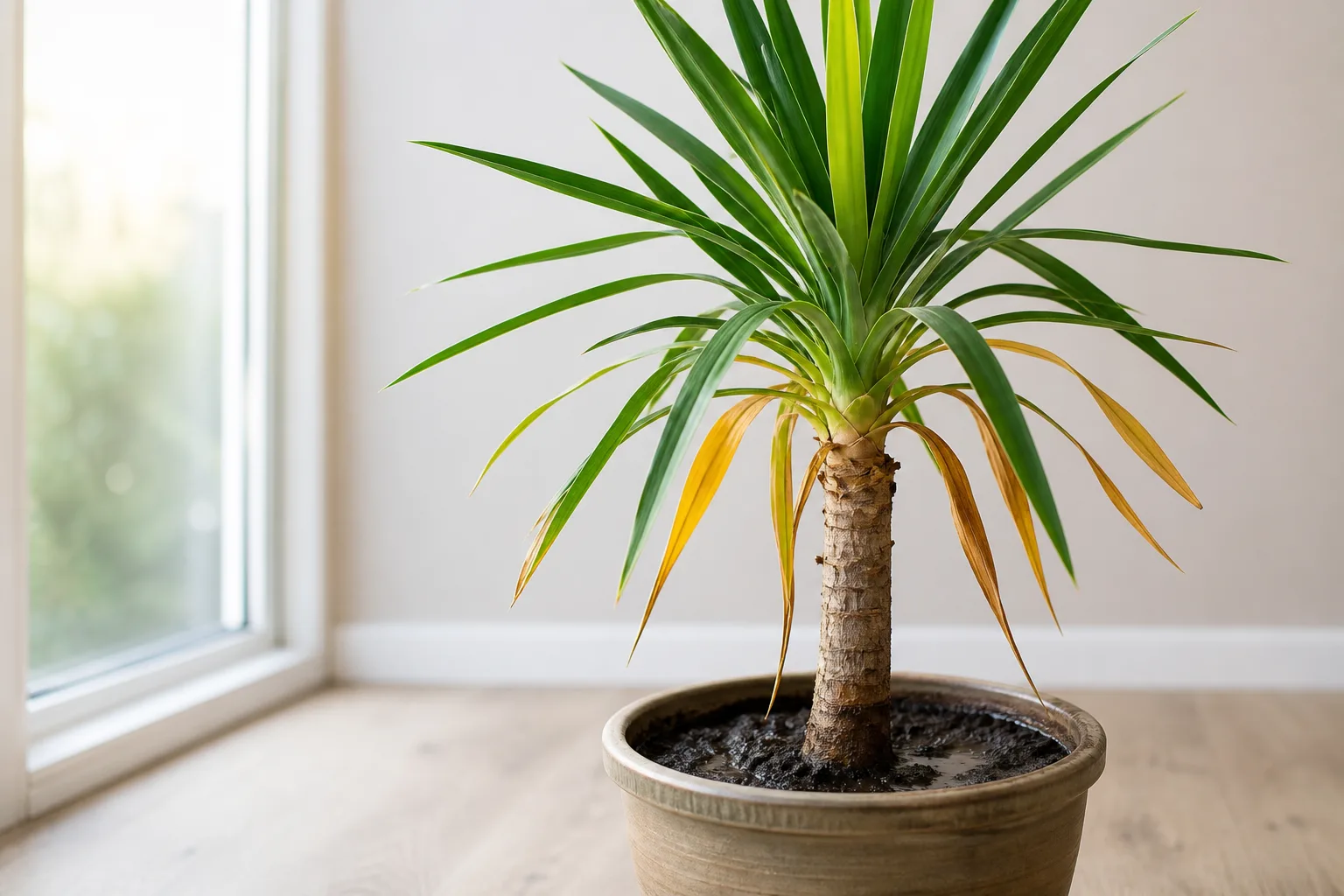
Overwatering on Yucca Plant: Causes, Checks & Fixes
This guide covers overwatering on Yucca Plant. See also the general Overwatering guide, watering, and light pages for this plant.
Overwatering on Yucca Plant: Causes, Checks & Fixes
Quick answer
Yucca elephantipes - the spineless or giant yucca sold in lobbies and garden centers - evolved in Central America and Mexico for long dry spells between heavy rain. Indoors, that means a woody trunk and thick sword leaves store water while roots breathe in fast-draining mix. Keep soil wet on a tropical-houseplant schedule and roots lose oxygen; roots in waterlogged soil cannot absorb the oxygen they need and decay even though the pot feels heavy.
First step: stop watering immediately. Do not repot, fertilize, or mist leaves until you know whether the trunk base is firm or soft. Press the wood at soil line, lift the pot for weight, and check moisture at depth-not leaf color alone.
This page covers wet-soil triage: suspecting and confirming too much water before rot is advanced. For soak-and-dry rhythm and seasonal intervals, use the Yucca Plant watering guide. For confirmed mushy roots and trunk-base decay rescue, see root rot on Yucca Plant.
What overwatering looks like on Yucca Plant
Spineless yucca shows stress in layers. Early signs are easy to misread because the plant looks thirsty while drowning.
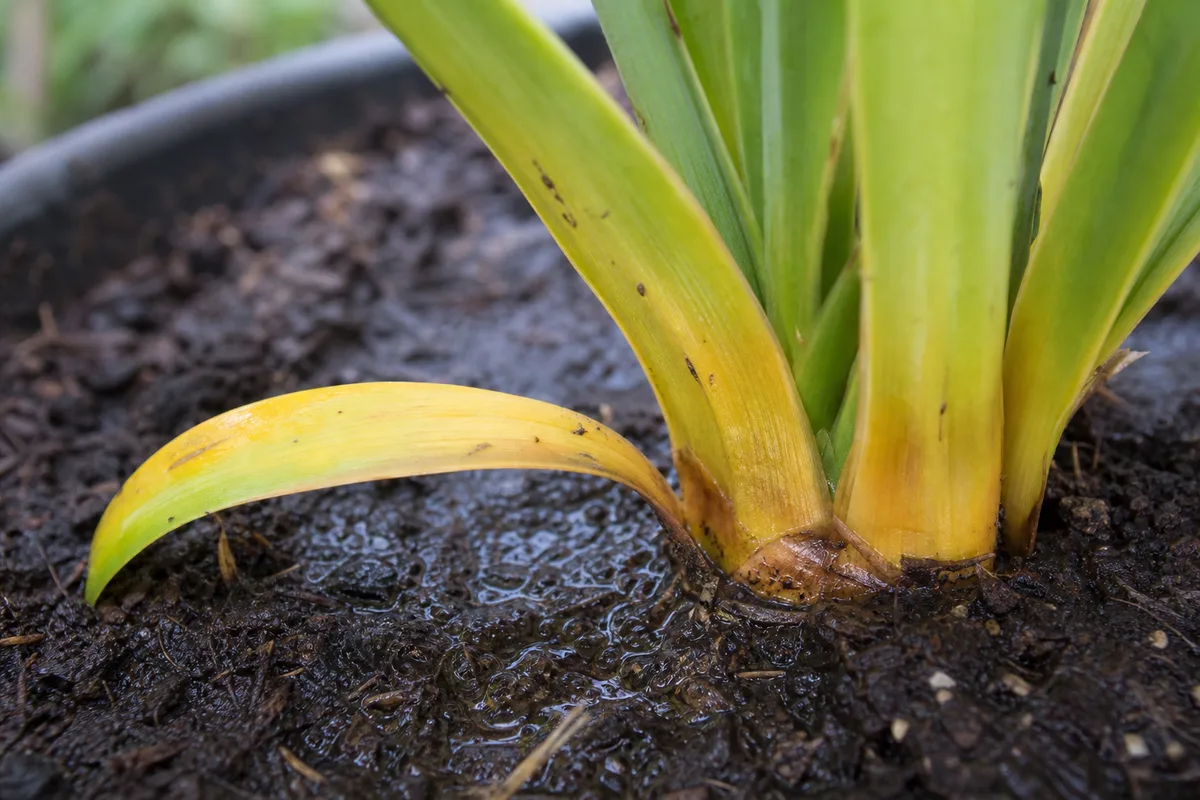
Overwatering symptoms on Yucca Plant - compare with healthy tissue on the same plant.
Early signs
- Yellow lower sword leaves spreading beyond normal one-leaf senescence at the base
- Drooping or limp foliage while mix below still feels cool and damp
- Pot that stays heavy for many days after the last watering
- Dark, cool soil surface that never lightens between drinks
- Fungus gnats hovering when you water-larvae breed in mix that rarely dries
- Slow or absent new rosette growth during warm bright months
Advanced signs (soft trunk base)
- Spongy or dented tissue at the trunk base where canes meet soil-healthy yucca wood feels hard
- Sour or rotten smell from drainage holes
- Brown water-soaked patches on lower leaves
- Blackening at the stem base climbing upward from soil line
The decisive checkpoint on yucca is trunk firmness, not leaf tips. A few yellow bottom leaves on a firm trunk may mean old foliage drop or seasonal adjustment. Multiple yellow leaves plus a heavy wet pot plus any softening at the base means act now.
Retail yuccas often arrive as multi-stem specimens in oversized decorative pots. Surface mix can look pale while the center stays wet for weeks-a common pattern where upper cane stays green while the base rots unseen.
Why Yucca Plant is sensitive to overwatering
Yucca elephantipes is drought-tolerant and built for dry cycles, not constant moisture. Several indoor factors stack against that biology:
Water storage in trunk and leaves. Thick sword blades and a woody caudex hold reserves for weeks. Watering weekly out of habit refills a tank that was not empty.
Winter slowdown. During indoor winter months, reduce watering to the minimum-keeping soils dry with only enough moisture to prevent severe foliage loss. Cool dim rooms use even less water, so a summer schedule waterlogs roots from October through March.
Oversized pots and peat-heavy mix. A tall lobby yucca in a pot sized for visual balance-not root mass-sits in a large wet zone. Standard bagged potting soil holds moisture far longer than the sandy, well-drained mix yucca needs. UF/IFAS lists root rot in soils kept too moist as the primary disease concern for spineless yucca.
Cache pots and full saucers. Outer decorative vessels without drainage trap runoff. Roots sit in invisible standing water cut off from oxygen.
Low light offices. Dim fluorescent light slows transpiration while the same calendar watering continues-mix stays wet longer and roots suffocate.
Recent repotting. Fresh mix holds moisture longer than old, root-filled soil. Many owners water on schedule before the plant has used anything.
How to confirm the cause
Work through these checks in order before repotting or cutting:
- Pot weight - Lift the container. Heavy days after watering means saturated mix. A light pot with limp leaves points to underwatering or a different stress-not wet-soil damage.
- Moisture at depth - Push a dry skewer toward the bottom third. Surface dryness with a wet core still counts as overwatered if you watered recently.
- Trunk firmness at soil line - Press where canes emerge. Soft, squishy wood confirms advanced trouble. Firm wood with yellow leaves may still be early overwatering or natural senescence.
- Smell - Sour odor from drainage holes suggests anaerobic soil and rotting roots.
- Wilt paradox - Wilted leaves may indicate soil that is too dry or too wet. Wilt with wet mix means damaged roots, not thirst.
- Season and light - Are you still on a summer watering frequency in a cool north-facing room in January? That pattern fits overwatering better than disease.
If roots are firm on knock-out inspection, mix dries normally between drinks, and only one old bottom leaf yellowed, you may not be overwatered-recheck against the wilting guide and watering rhythm.
First fix for Yucca Plant
Stop watering and empty any standing water from saucers or cache pots.
That pause prevents new damage while you confirm trunk and root condition. Move the plant to brighter indirect light if it sits in deep shade-faster evaporation helps remaining moisture leave the mix without adding another drink.
Do not repot on day one unless the trunk base is already soft or soil smells foul. Do not fertilize yellow leaves hoping to green them up-salts on compromised roots worsen the situation. Do not mist leaves or add humidity trays; yucca tolerates normal indoor air, and the problem is in the pot.
Step-by-step recovery
Match your response to severity once you confirm overwatering:
Mild case - wet soil, firm trunk, early yellowing
- Withhold water until the entire pot is dry throughout-often two to four weeks indoors in winter, less in bright summer rooms.
- Improve airflow and light slightly so mix dries evenly.
- Test with one soak only when a skewer comes out clean and dry at depth. Water until runoff, empty the saucer, then wait for full dryness again per the watering guide.
- Remove papery yellow leaves at the base; they will not re-green. Watch for new rosette leaves at cane tips.
Moderate case - sour smell, soft root edges, drooping sword leaves
- Unpot immediately and knock away wet mix.
- Trim all mushy root tissue with clean, sharp scissors until you reach firm pale flesh. Sterilize blades between cuts.
- Air-dry the root ball and cut surfaces on newspaper for 24–48 hours in bright indirect light.
- Repot into dry gritty mix-cactus blend with extra perlite or coarse sand. Use a pot only slightly larger than the trimmed root mass.
- Wait one to two weeks before the first light watering. Judge by dryness, not calendar.
- Hold fertilizer until new growth looks healthy for several weeks.
For detailed rot-trim protocol, see root rot on Yucca Plant.
Severe case - mushy trunk base, collapsing lower leaves
- Assess salvage potential. If the entire base is soft, the whole plant rarely recovers. Check whether upper cane sections above the rot line still feel hard and woody.
- Propagate firm cane cuttings if the base is lost-see Yucca Plant propagation for cane-cut rooting before rot climbs.
- Discard all old mix and scrub or replace the pot. Reusing soggy soil reintroduces pathogens.
- If any firm roots remain below a hard trunk, repot minimal dry mix in a snug container.
A mushy trunk base is often fatal for the specimen as planted. Firm upper cane with a rotted base is a propagation project, not a watering fix.
Recovery timeline
Mild overwatering with a firm trunk often stabilizes within two to four weeks once soil dries and watering resets. Yellow sword leaves drop and do not revert; judge progress by firm trunk wood and new rosette growth, not old foliage.
Moderate root damage after trim and dry repot typically needs one to three months before you see confident new leaves. Yucca is not a fast responder-weeks of firm trunk with no further softening is a positive sign even when the canopy looks sparse.
Severe base rot rarely produces a full-looking plant again quickly. If soft tissue keeps spreading after trim and dry repot, shift to cane salvage rather than saving the original form.
Lookalike symptoms to rule out
Underwatering - Mix is light and dusty throughout; trunk feels firm; leaves may curl inward or look slightly shrunken. A deep soak per the watering guide perks the plant within days. Wet heavy soil rules this out-see underwatering on Yucca Plant.
Root rot (confirmed decay) - Overlaps this page once mushy roots and foul smell are confirmed. This overwatering guide stops at wet-soil triage; advanced decay rescue lives on root rot.
Crown rot - Softening and collapse at the rosette atop a cane, not just the soil line. Wet soil can contribute; see crown rot on Yucca Plant when the growing tip fails while lower trunk stays hard.
Stem rot - Decay climbing a mid-cane section after injury or chronic wet soil at one stem base in multi-trunk pots. Route to stem rot when one cane blackens while neighbors stay firm.
Draft or cold damage - Water-soaked black patches after a freeze or cold window contact, often with firm trunk if caught early. Chronic vent airflow without a freeze is draft stress. Cold plus wet soil accelerates base rot-fix warmth and dryness together.
Normal old-leaf drop - One or two lowest sword leaves yellow and dry on an otherwise firm plant with dry soil between waterings. That is senescence, not overwatering-unless wet mix accompanies the pattern.
What not to do
Do not water because sword leaves droop without checking soil moisture first-yucca wilts from both too much and too little water.
Do not repot into a larger container to “help drainage.” A bigger wet zone makes overwatering worse.
Do not mist leaves or raise humidity hoping to fix yellow stems-the problem is almost always in the pot.
Do not keep a yucca in a cache pot that holds runoff. Empty saucers within 30 minutes of watering.
Do not fertilize during recovery.
Do not confuse winter minimum watering with overwatering-see the watering guide for seasonal dry-down and the underwatering page when the pot is genuinely light.
Wear gloves when handling cut tissue; Yucca is toxic to cats and dogs and sap can irritate skin. Keep trimmed material away from pets during recovery.
How to prevent overwatering next time
Water on dryness, not calendar. Allow soil to dry out between waterings during active growth. Most indoor yuccas need a deep soak every 10 to 14 days in bright warm months and roughly monthly or less in winter-always verify with finger or skewer at depth per the watering guide.
Use gritty, fast-draining mix in a pot with open drainage holes. Cactus blend amended with perlite dries faster than straight peat.
Right-size the container. Match pot diameter to root mass, not canopy height. Multi-stem lobby specimens often need a smaller functional pot than the decorative outer vessel.
Match water to light. Brighter indirect light uses water slightly faster; dim offices need far fewer drinks.
Check the trunk base when you water-it should stay firm year-round.
Reduce frequency after repotting until you learn how new mix dries in your home.
When to worry
Treat as urgent when the trunk base softens, lower leaves blacken rapidly, soil smells sour despite stopping water, or more than a third of roots are mushy on inspection. Rot spreads through stored trunk tissue quickly once anaerobic conditions take hold.
Act within days-not weeks-if fungus gnats swarm constantly, multiple sword leaves yellow while mix stays wet, and the pot never lightens. Overwatering is among the most common ways houseplants fail indoors; yucca’s tough reputation does not protect wet roots.
A firm trunk with a few yellow lower leaves and drying soil is not an emergency-adjust the schedule and monitor. Soft tissue spreading upward from the soil line is.
If the base is lost but upper cane sections are firm, start propagation before rot climbs-prevention and early dry-down are far easier than salvage.
Related Yucca Plant guides
- Yucca Plant watering - soak-and-dry rhythm, seasonal intervals, and dryness tests
- Root rot on Yucca Plant - confirmed mushy roots and trunk-base decay rescue
- Underwatering on Yucca Plant - light dry pot and firm trunk lookalike
- Wilting on Yucca Plant - wilt-on-wet-soil paradox and drought confusion
- Crown rot on Yucca Plant - rosette collapse at cane tips
- Stem rot on Yucca Plant - mid-cane decay in multi-stem pots
- Yucca Plant overview - light, temperature, and species background
- Yucca Plant propagation - cane-cut salvage when base rot wins
Conclusion
Overwatering on spineless yucca is a culture mismatch: treating a drought-adapted woody cane like a thirsty fern. Stop watering first, confirm trunk firmness and pot weight, then dry out or trim rot before restarting a sparse schedule tied to soil moisture-not sympathy for drooping sword leaves. Firm trunk wood and new rosette growth mean you corrected the problem; mushy tissue at the base means act fast or salvage firm cane sections above the rot line.