Draft Stress on Yucca Plant: Causes, Checks & Fixes
Quick answer
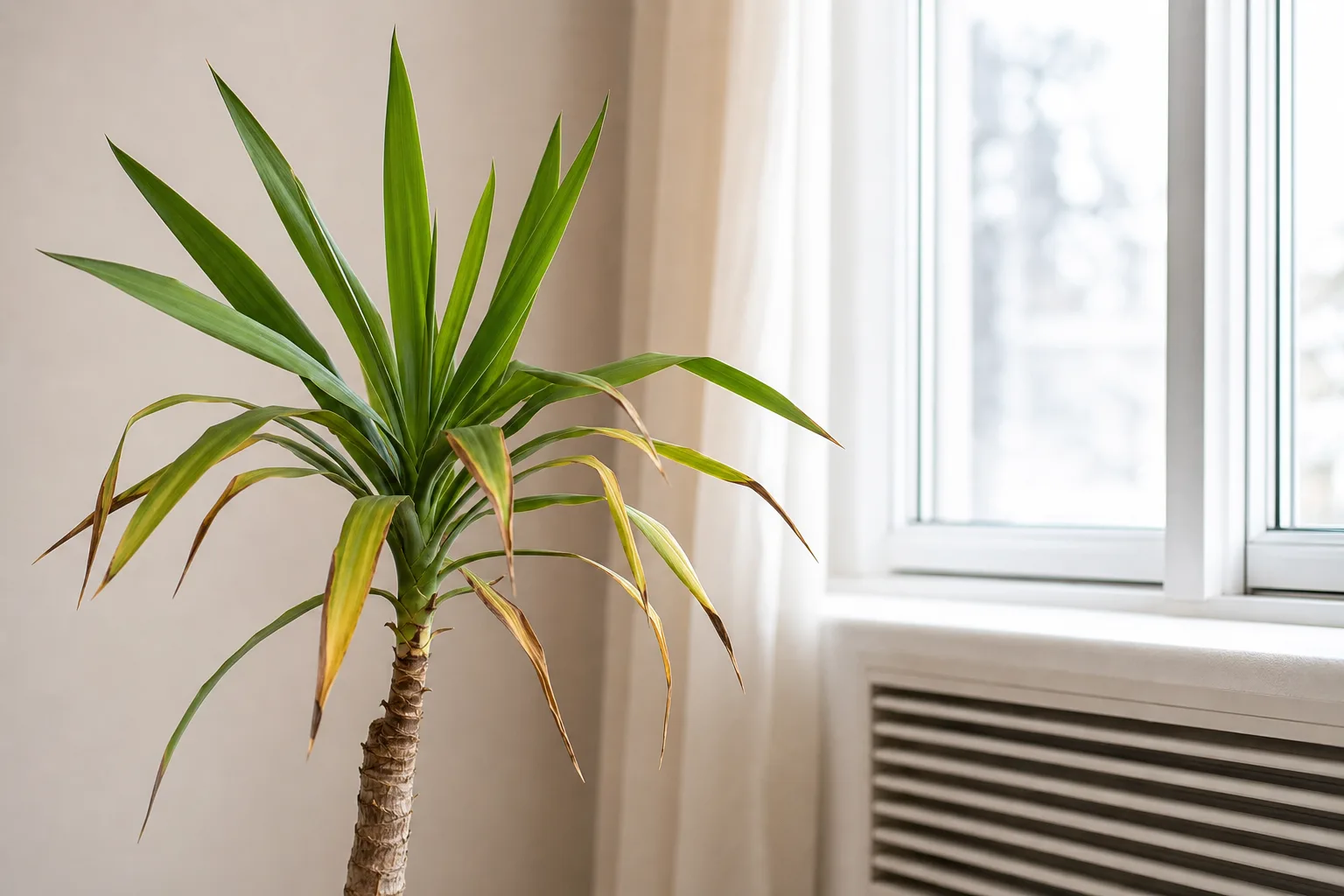
Draft stress on Yucca Plant browns or yellows sword-shaped leaves on the side facing a vent, door, or cold window while the trunk stays firm. Move the pot out of the air stream before changing watering or trimming heavily.
Draft Stress on Yucca Plant: Causes, Checks & Fixes
This guide covers draft stress on Yucca Plant. See also the general Draft Stress guide, watering, and light pages for this plant.
Draft Stress on Yucca Plant: Causes, Checks & Fixes
Quick answer
Draft stress on Yucca Plant (Yucca elephantipes) is environmental-not a disease. Cold or dry air streams from AC vents, open doors, radiators, and winter window glass desiccate the long sword-shaped leaves faster than roots can replace moisture. The result is crisp brown tips, yellowing on one side of the rosette, or leaves that curl slightly toward the draft source.
First step: move the pot out of the air stream. Yucca stores water in its trunk and tolerates average indoor humidity, but constant moving air at leaf level creates a microclimate colder or drier than the rest of the room. Fix placement before you repot, flush soil, or increase watering.
Why Yucca Plant gets draft stress
Spineless yucca is sold as a tough indoor tree, and it is drought-hardy-but that toughness applies to root-zone dryness, not to leaves sitting in a direct blast. Many indoor plant problems occur when plants are placed in drafts of hot or cold air, and yucca shows the damage as tip burn before the trunk is affected.
Several home placements create the problem:
- Winter window sills - Cold glass and leaky frames chill leaves that touch the pane or sit within a few inches of it, even when the room thermostat reads comfortable.
- AC and ceiling vents - Cold, dry airflow raises transpiration on rigid yucca leaves. The side facing the vent browns first.
- Entry doors and hallway drafts - Repeated cold air when doors open shocks foliage on tall canes placed in traffic paths.
- Heat vents and radiators - Hot dry blasts scorch margins the same way cold drafts desiccate tips.
Yucca elephantipes prefers steady warmth in the range most homes provide and grows best with full sun to part shade indoors. What it cannot handle well is the localized temperature swing at a vent or window-often ten degrees or more different from the center of the room.
Because yucca is slow-growing indoors, draft damage can look like it appeared overnight after weeks of hidden stress. The leaf that was fluttering in AC airflow all summer may not show crisp tips until the tissue finally dries out.
What draft stress looks like on Yucca Plant
Typical draft-stress pattern:
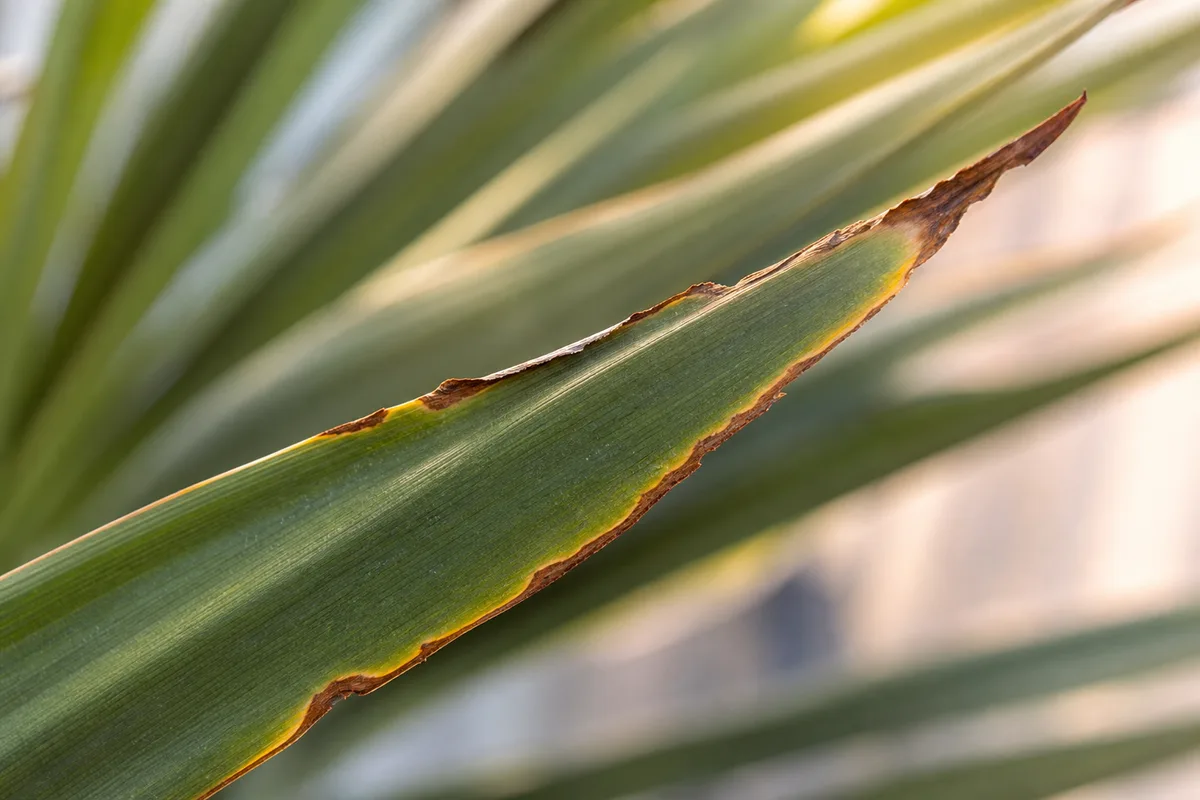
Draft Stress symptoms on Yucca Plant - compare with healthy tissue on the same plant.
- Crisp brown or tan tips on sword-shaped leaves, often worst on one side of the plant
- Yellowing that follows the brown edge but stays confined to exposed leaves
- Leaves that flutter or bend when HVAC runs, while the opposite side looks greener
- Timing that matches a recent move near a vent, door, or window-not gradual decline from wet soil
- Firm woody trunk and normal pot weight for your watering routine
What draft stress is not:
- Soft black water-soaked patches after a hard freeze-that is cold damage, which can overlap with drafts but involves tissue collapse
- Yellow leaves with brown halos on lower foliage while soil stays wet-classic overwatering on Yucca Plant on yucca
- Uniform tip burn on every leaf with white crust on soil-often salt or fluoride, not airflow alone
- Sticky residue or bumps on stems-pests, not environmental drafts
Damaged leaf tissue will not re-green. Judge the problem by whether new leaves emerging from the rosette look clean after you fix placement.
How to confirm the cause
Work through these checks before treating the plant for disease or underwatering on Yucca Plant:
- Air-movement test - Hold a tissue strip near the plant at leaf height when heat or AC runs. Constant flutter points to a draft path.
- Side pattern - Compare leaves facing the vent or window to those on the sheltered side. One-sided damage strongly suggests airflow, not root failure.
- Trunk and soil check - Press the cane base; it should feel firm and woody. Stick a finger into the top few centimeters of mix-yucca wants soil to dry out between waterings. Wet soil plus soft trunk means rot, not draft alone.
- Recent change - Link symptoms to moving the pot, opening a seasonal window, or starting AC for the first time this year.
- Thermometer at leaf level - A cheap indoor thermometer near the foliage often reads colder or hotter than the wall unit across the room.
- Pest scan - Check leaf bases and stems for scale, mealybugs, or webbing. Pests cause spotty damage with sticky residue; drafts cause dry crisp margins without insects.
If air is calm, the trunk is firm, soil dries normally, and damage is still spreading on all sides equally, look at salt buildup, fluoride in tap water, or chronic underwatering before confirming draft stress.
First fix for Yucca Plant
Move the pot to a bright, stable spot at least two feet from vents, radiators, and cold window glass.
Choose a location with strong indirect or direct light-yucca needs brightness to recover-but break the draft path first. Even shifting the pot a few feet off a window sill or away from a ceiling vent often stops new damage within days.
Do not repot on day one. Do not increase watering to “help” browned leaves-that risks root rot on Yucca Plant in cool drafty rooms where the plant already uses less water. Do not fertilize stressed foliage.
After the move, leave the plant alone for one to two weeks except for normal dry-down watering. Trim only fully dead brown tips if they snag or look unsightly; partial green tissue should stay.
Step-by-step recovery
Once placement is stable:
- Maintain dry-down watering - Water when the top several centimeters of mix are dry. In cooler rooms, extend the interval; yucca needs reduced watering during indoor winter months when growth slows.
- Rotate the pot a quarter turn weekly - Prevents one side from taking all future light or any remaining airflow bias.
- Add a vent deflector or curtain - If you cannot move the plant far, redirect AC or heat so it does not hit the rosette directly. Close thermal curtains at night near cold windows.
- Trim dead tips cosmetically - Use clean sharp scissors; cut into dead tissue only. Wear gloves when handling cut leaves-yucca is toxic to cats and dogs.
- Watch new growth - The next one or two leaves from each rosette tell you whether conditions are fixed. Old burned tips can stay brown while the plant is otherwise healthy.
If the trunk base softens or leaves turn black and water-soaked after a freeze, switch to cold-damage or rot protocols-draft tip burn alone does not soften a healthy cane.
Recovery timeline
Expect no visible healing on already-brown tips-they are permanently scorched or desiccated. New growth should look normal within two to four weeks after airflow is fixed during spring or summer active growth. In winter, recovery may wait until longer days arrive; the plant should at least stop producing new burned tips once placement is stable.
Signs of improvement:
- New leaves emerge green with minimal tip burn
- No further yellowing on the draft-facing side
- Trunk remains firm; soil dries on your usual schedule
Signs the problem is worsening or misdiagnosed:
- Trunk base softens or smells sour
- Yellowing spreads to lower leaves while soil stays wet
- Black water-soaked patches appear after cold nights-possible frost injury overlapping draft placement
Lookalike symptoms to rule out
Brown tips from fluoride or salt - Often uniform on all leaves, sometimes with white crust on soil. Switch to filtered water and flush salts; draft damage stays one-sided unless every leaf sits in airflow.
Low humidity alone - Yucca tolerates average indoor humidity better than tropical ferns, but winter heating without airflow can still brown tips. Humidity damage is usually even around the plant, not confined to the vent side.
Cold damage - Prolonged exposure to sustained cold causes blackened water-soaked tissue, not just dry tips. Draft stress near a window can grade into cold damage after hard nights-move the plant and assess whether tissue is soft or merely crisp.
Overwatering - Lower leaves yellow with brown halos, soil stays heavy, and the cane base may soften. Draft-stressed yucca keeps a firm trunk unless rot follows from overcompensating with water.
Sunburn - Sudden move to intense direct sun through hot glass scorches patches mid-leaf, not just tips facing an AC vent. Acclimate bright moves gradually.
Mistakes to avoid
Do not blast the plant with extra water because leaves look dry-wet roots in a cool drafty corner rot faster than crisp tips harm the plant.
Do not mist once and assume humidity is fixed. Moving away from the air stream matters more for yucca than occasional misting.
Do not place yucca directly against winter glass to “give it more light.” Bright indirect light a foot or two inside the window is safer than leaves touching cold pane.
Do not repot and fertilize simultaneously with a placement fix-stacking stress slows recovery on a slow-growing cane.
Do not remove entire leaves when only tips are dead. Yucca loses photosynthetic area slowly; trim tips only unless the whole leaf is brown.
Yucca Plant care cross-check
Draft stress is easier to prevent when the rest of care matches this desert-adapted species:
- Light - Bright indirect to direct sun supports recovery and dry-down Yucca Plant watering guide.
- Water - Allow mix to dry between waterings; empty saucers. Cool drafty rooms need less water, not more.
- Soil - Fast-draining sandy or cactus mix prevents rot if you accidentally overwatered while troubleshooting.
- Temperature - Aim for steady room temps; avoid bouncing the pot between rooms daily.
When placement, light, and watering align, yucca is one of the more forgiving indoor trees-draft stress is usually a placement fix, not a long treatment cycle.
How to prevent draft stress next time
Scout placement seasonally. The vent that was harmless in spring becomes a problem when heat or AC runs daily.
- Keep canes at least 60 cm (2 feet) from AC, heat vents, and radiators
- Pull pots 15–45 cm back from window glass in winter; never let leaves rest on the pane
- Avoid traffic paths where entry doors blast cold air onto foliage
- When moving yucca outdoors for summer, bring it in before fall frost and place it away from the same indoor vent lines
- Use vent deflectors or thermal curtains where furniture limits rearranging
Rotate the pot when you change HVAC seasons so the same rosette does not face a new draft source unnoticed.
When to worry
Simple draft tip burn on a firm-trunked yucca is not an emergency. Move the plant and monitor new growth.
Treat as urgent when:
- The trunk base softens, smells sour, or collapses-possible crown or stem rot
- Leaves turn black and water-soaked after a freeze-cold injury beyond dry tips
- Most of the canopy yellows while soil stays wet-root rot, not airflow
- The plant leans and wobbles in the pot with mushy roots on inspection
Yucca can lose many tip-burned leaves and still recover if the cane and roots are sound. It cannot recover from a rotting base without aggressive trimming and dry Yucca Plant repotting guide.
Conclusion
Draft stress on Yucca Plant is a placement problem disguised as a leaf problem. Cold AC, heat vents, and winter window glass dry or chill sword-shaped leaves while the trunk stays firm. Move the pot out of the air stream first, keep normal dry-down watering, and judge recovery by new rosette growth-not by old brown tips. Fix the microclimate and this slow-growing indoor tree usually stabilizes within weeks.
When to use this page vs other Yucca Plant guides
- Yucca Plant watering guide - Use for routine moisture checks before assuming draft stress is the main issue.
- Yucca Plant problems hub - Browse all 29 common issues on this species.