Root Rot on Yucca Plant: Causes, Checks & Fixes
Quick answer
Root rot on Yucca Plant starts when wet, slow-draining mix suffocates drought-adapted roots-often after calendar watering through winter. Stop watering, unpot, and inspect roots; mushy brown tissue with sour soil confirms rot while a firm trunk may still be saveable.
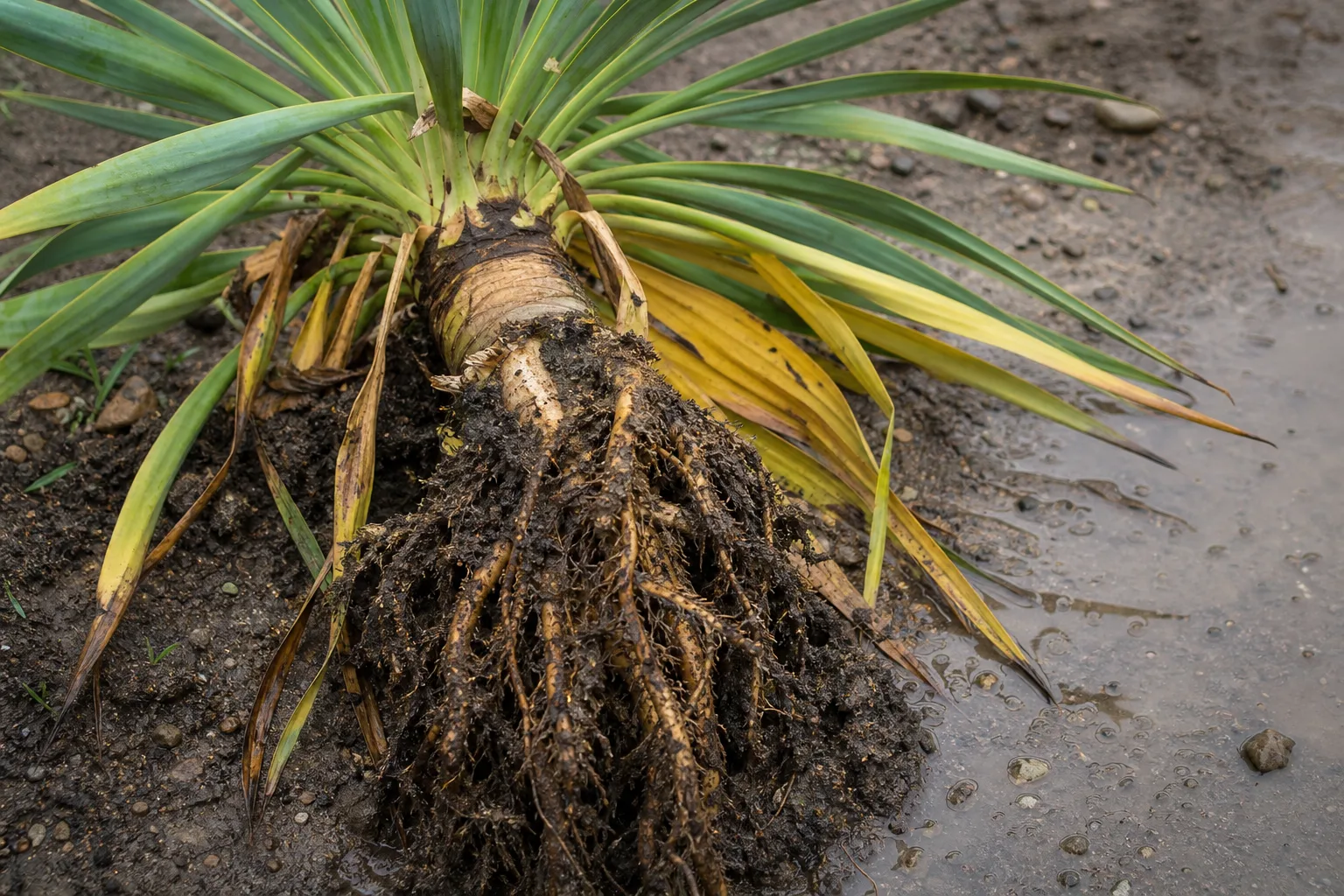
Root Rot on Yucca Plant: Causes, Checks & Fixes
This guide covers root rot on Yucca Plant. See also the general Root Rot guide, watering, and light pages for this plant.
Root Rot on Yucca Plant: Causes, Checks & Fixes
Quick answer
Root rot on Yucca Plant (Yucca elephantipes, also sold as spineless or giant yucca) is decay in the root system-not the trunk crown-caused almost always by soil that stays wet too long. This drought-tolerant cane yucca evolved for dry conditions; in a pot, its sparse roots suffocate when peat-heavy mix or an oversized container holds moisture for days. Winter calendar watering is a common trigger indoors when growth slows but owners keep a summer schedule.
First step: stop all watering and unpot the plant to inspect roots. Mushy brown roots with sour wet soil confirm rot. A firm woody trunk above healthy-looking cane tissue may still be saveable after root pruning-unlike a collapsed base, which points to crown rot or advanced stem rot.
| What you see | Wet soil + mushy roots | Dry soil + limp leaves | Soft trunk base |
|---|---|---|---|
| Likely problem | Root rot | Underwatering or water stress | Crown or stem rot-inspect base first |
| First action | Stop water; trim mushy roots | Water thoroughly once; recheck in a week | Stop water; thumb-test base; see crown-rot guide |
Root rot vs crown rot vs stem rot on Yucca Plant
These three failures share wet soil as a trigger but start in different tissue. Diagnosing the zone matters because salvage steps differ.
Root rot - Decay in the roots below the trunk. The trunk base and crown where leaves attach usually feel firm on early cases. Mushy roots, sour smell, and a heavy wet pot are the clues. Upper leaves may wilt even though the cane still feels woody because damaged roots cannot move water.
Crown rot - Decay at the trunk base where rosettes meet soil. Thumb pressure dents the base while mix stays wet. Roots may be fine or already compromised. See the dedicated crown rot guide when the base softens before roots look bad.
Stem rot - Soft patches on the cane above the soil line, often from an old wound, pest entry, or water trapped in leaf axils-not necessarily saturated mix at the root zone. Stem rot can spread downward into roots if ignored.
On multi-trunk yuccas, one cane’s root zone can fail while others stay healthy. Unpot and inspect each trunk’s root mass separately-a single wet corner of a large decorative pot is enough to rot one side.
Why Yucca Plant gets root rot
Yucca gigantea / Y. elephantipes stores water in its thick trunk and survives dry spells in the wild. Overwatering can cause root rot on this species because its roots expect oxygen between soak-and-dry cycles-not constant moisture.
Several indoor habits push yucca into root failure:
- Calendar watering through winter. Cool dim rooms slow water use, but many growers water on the same weekly rhythm. Wet mix around semi-dormant roots is especially dangerous when indoor winter watering should be reduced to the minimum.
- Oversized pots. Yucca roots stay relatively sparse compared to the tall canopy. A large soil volume stays wet for days around few roots-the classic oversized-decorative-pot trap.
- Peat-heavy potting mix. Standard indoor blend holds water far longer than the well-drained sandy or cactus mix this plant needs. Roots lose oxygen in saturated peat.
- Cache pots and blocked drainage. Double-potting without removing the nursery pot to drain, or saucers that hold runoff, keeps the root zone anaerobic. Extension guidance on yucca houseplants stresses that continuously wet soil rots roots.
- Low light slowing water use. Dim corners mean the same watering volume dries slower. Drooping leaves in low light can look like thirst-leading owners to add more water and worsen rot. See overwatering on Yucca Plant when the pattern fits chronic wet soil without mushy roots yet.
Trunk water storage masks early root failure. Upper sword-shaped leaves can stay green for weeks while roots decay underneath-the plant draws on stored moisture in the cane until the reserve runs out.
What root rot looks like on Yucca Plant
Early root rot mimics thirst, which tempts owners to water more-the worst response. Watch for this pattern on spineless yucca:
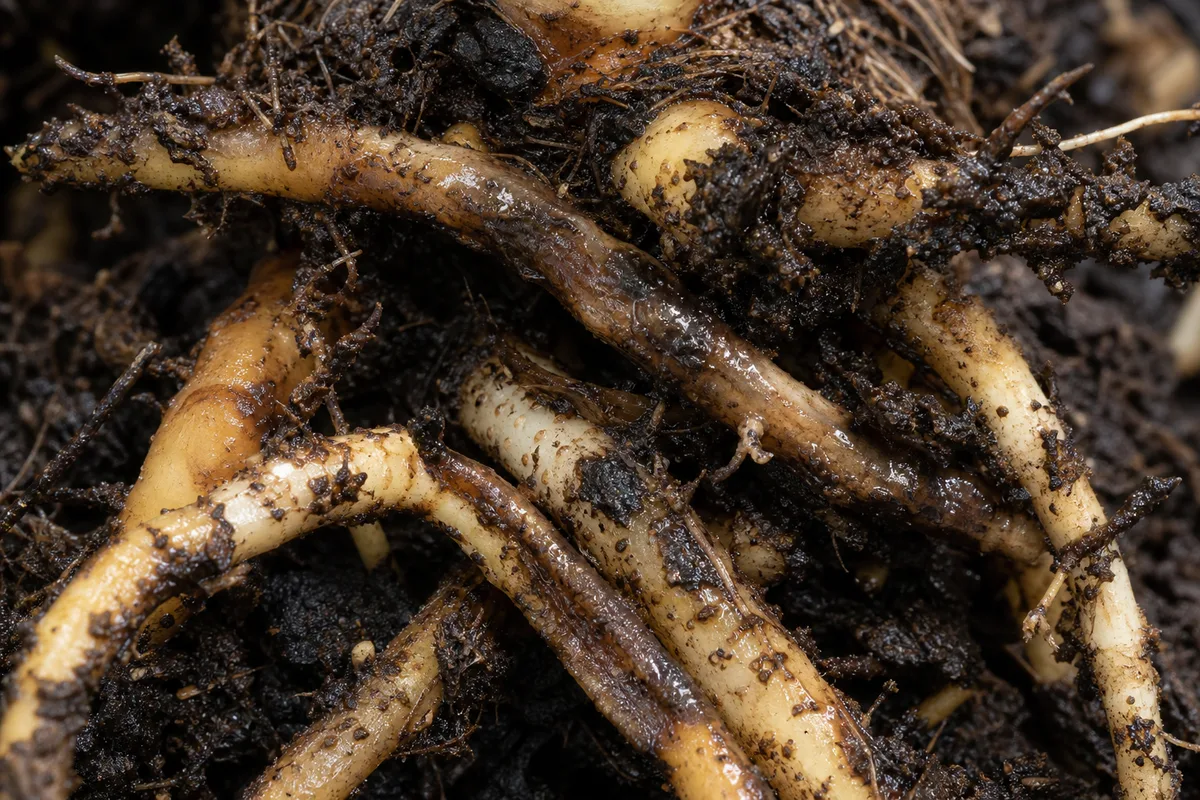
Root Rot symptoms on Yucca Plant - compare with healthy tissue on the same plant.
- Lower leaves yellowing or drooping while soil stays wet-not dusty dry.
- Wilting despite wet mix because rotting roots cannot take up water. Wilted leaves with persistently wet soil often indicate root failure, not drought.
- Heavy pot weight days after the last watering.
- Sour or rotten smell from the drainage hole-overwatered soil often smells sour or rotten.
- Firm trunk base on early root-only cases-the crown has not softened yet. Do not assume all is well because the base feels hard; roots below may already be mushy.
- Brown, translucent, or mushy roots on unpotting-healthy yucca roots are firm and pale.
Advanced root rot may climb into the crown: blackening at the stem base, lower rosettes collapsing, and softness when you press near the soil line. At that stage, root and crown rot overlap-act on both zones.
How to confirm the cause
Work through these checks before repotting or cutting:
- Pot weight and moisture - Lift the pot. If it stays heavy a week after watering, the mix is not drying. Push a finger or skewer deep near the trunk-persistent wetness supports root rot over drought.
- Smell check - Sniff the drainage hole. Sour or rotten odor means anaerobic conditions and decay-not normal potting soil.
- Trunk base firmness - Press the base on all sides. Firm wood with mushy roots below is root rot. Squish at the base suggests crown rot has joined the picture.
- Unpot inspection - Knock the plant out gently. Compare healthy firm pale roots against brown mushy tissue. Trim a small section: healthy root tissue is white or cream inside; rot is brown and watery.
- Leaf and soil pattern - Yellow limp lower leaves plus wet mix point to failing roots. Crispy dry edges with light pot weight suggest underwatering instead-see water stress before trimming roots.
- Drainage audit - Check for blocked holes, roots circling a cache pot, or water sitting in saucers. Fix no drainage hole issues before blaming the plant.
- Rule out lookalikes - Cold damage blackens leaf tips after a chill but leaves the trunk firm. Scale and mealybugs cause sticky residue, not mushy roots. Chronic overwatering stress yellows leaves but roots may still be salvageable if you dry the mix early.
If the mix is dusty dry, the base is firm, and leaves are only slightly limp, root rot is unlikely-reassess watering per the Yucca Plant watering guide before cutting tissue.
First fix for Yucca Plant
Stop all watering immediately. Do not add water because leaves look wilted when the soil is already wet-rotting roots cannot absorb more moisture, and additional water accelerates decay.
Your next move depends on what inspection shows:
- If roots are clearly mushy on a quick peek - Unpot, rinse away wet soil, and trim all soft roots with clean scissors. Let cut surfaces air-dry 24–48 hours before repotting into dry gritty mix.
- If the mix is wet but you have not unpot yet - Stop water, move the plant to bright light with airflow, and unpot within a day or two. Delay lets anaerobic conditions worsen.
- If the trunk base is already soft - Treat as crown involvement too; follow crown rot trim protocol, not root pruning alone.
Do not fertilize, mist, or repot into regular potting soil on day one. Root rot is an excess-moisture problem-your first job is to dry out the situation and see what tissue is still firm.
Step-by-step recovery
When inspection confirms mushy roots and the trunk base is still firm:
- Unpot and rinse roots gently under lukewarm water so you can see firm versus mushy tissue clearly.
- Trim all soft roots back to firm white tissue. Cut away rotted parts until you reach healthy material. Sterilize scissors with rubbing alcohol between cuts.
- Air-dry the trimmed root ball and any cut surfaces for 24–48 hours in bright indirect light. Callousing reduces reinfection when you repot.
- Repot into dry sandy or cactus mix in a pot only slightly larger than the remaining root mass-not the height of the foliage. Ensure drainage holes are open.
- Wait one to two weeks before the first light watering. Resume only when the mix is dry throughout and the trunk base stays firm.
- Propagate firm cane sections if most roots are gone but hard trunk remains above any rot. Cut healthy wood, callous three to five days, plant in dry mix, and withhold water one to two weeks. See Yucca Plant propagation for cane-cutting detail.
Isolate the plant while active decay is present. Shared drip trays and unsterilized tools can spread pathogens to other houseplants.
Recovery timeline
Mild root damage on a firm trunk may stabilize within two to four weeks after trim and dry repot. Positive signs include a firm unchanged base, no return of sour smell, and eventually new leaf tips or steady upper foliage.
Do not judge recovery by old yellow leaves-lower damaged blades will not green up again. Watch root stability, pot weight dropping on schedule after careful watering, and new growth in spring.
Cane cuttings from firm wood may root over several weeks to months. Patience matters more than frequent watering during this phase.
If softness appears at the trunk base within two weeks of repot, or mushy roots return after a single cautious watering, rot outpaced your salvage-take higher cuttings from firm cane before losing the whole plant.
Lookalike symptoms to rule out
Underwatering gives limp leaves with light, dry mix-not sour smell or mushy roots. Water once thoroughly, then wait for dry-down before reassessing.
Chronic overwatering without active rot yellows lower leaves and keeps pots heavy, but roots may still be firm if you dry the mix early. Fix drainage and watering rhythm before trimming healthy roots.
Crown rot without obvious root mush shows soft tissue at the leaf bases while upper cane stays hard. Root inspection may come second-press the base first.
Stem rot higher on the cane appears as localized soft patches above soil, often from wounds-not necessarily wet mix throughout the pot.
Cold damage after exposure below about 7°C (45°F) produces water-soaked black leaf patches, but the trunk stays hard unless secondary rot follows cold plus wet soil.
Low light droop can sag leaves without rot; improve light and verify dry-down timing from the watering guide before surgery.
Mistakes to avoid
Do not water because leaves wilt when the soil is already wet. Rotting roots cannot take up water; more moisture accelerates decay.
Do not repot into regular potting soil, peat-heavy blend, or a pot without drainage holes.
Do not jump to a much larger pot “to help recovery”-extra wet soil volume around sparse roots invites repeat rot.
Do not fertilize a recovering yucca. New nutrients push growth before roots stabilize.
Do not leave the nursery pot inside a cache pot while watering. Remove it, let water drain fully, then return it-otherwise runoff pools at the bottom.
Do not ignore a firm-looking trunk as proof of healthy roots. Unpot when wet soil and wilt persist together.
Do not apply fungicide spray to leaves while ignoring saturated mix. Surface sprays do not fix anaerobic roots.
Wear gloves when cutting-yucca sap can irritate skin, and the plant is toxic to cats and dogs if they chew trimmed tissue.
Yucca Plant care cross-check
Root rot recovery depends on fixing the conditions that caused it:
- Light: Bright indirect to direct light helps the mix dry predictably between waterings.
- Mix: Fast-draining sandy or cactus blend with perlite or coarse sand-one part potting mix to three parts perlite or sand is NC State’s houseplant drainage recommendation.
- Pot size: Match the container to the root mass, not the canopy width.
- Season: Allow soil to dry out between waterings during active growth; reduce winter watering to the minimum when growth slows indoors.
- Watering method: Water the soil, not the leaf rosettes. Empty saucers within minutes.
How to prevent root rot next time
Water only when the mix is dry throughout during active growth-not on a fixed weekly calendar. Follow dry-down tests from the Yucca Plant watering guide. RHS guidance on yucca recommends allowing the surface compost to dry between winter waterings indoors, then watering thoroughly so surplus drains away.
Inspect roots indirectly each time you water: lift the pot for weight, check the drainage hole smell, and press the trunk base for firmness. A pot that stays heavy longer than usual means cut back water before roots turn mushy.
For multi-trunk specimens, each cane shares one root ball-wet soil affects all trunks. Splitting severely rotted multi-head plants into cane cuttings is sometimes safer than saving one shared soggy root system.
Keep cache pots, decorative mulch, and moss away from trapping moisture at the bottom. Move the plant to brighter light during the growing season so it uses water quickly.
When to worry
Treat root rot as urgent when the trunk base softens, black tissue climbs the stem, or more than a third of roots are mushy on unpotting. Mild root pruning on a firm trunk has a fair chance; a fully collapsed base with sour smell throughout rarely saves the whole plant-propagate firm cane sections immediately.
If every root is mushy and the base is denting under thumb pressure, focus on propagation cuttings rather than repotting the original root ball.
When rot follows chronic overwatering and crown tissue is involved, read both this guide and the crown rot page before deciding what to cut.
Conclusion
Root rot on Yucca Plant is a wet-soil failure in the roots-not a mystery disease. Stop watering, unpot, and separate mushy roots from firm trunk tissue before the cane’s water reserves run out. A woody base above trimmed healthy roots can recover in gritty mix with sparse watering; mushy roots left in wet peat will not heal in place. Match watering to how fast your pot dries, size the container to sparse roots, and inspect firmness at the base every time the leaves look thirsty while soil stays wet.
Related Yucca Plant guides
- Yucca Plant overview
- Yucca Plant watering
- Yucca Plant light
- Overwatering on Yucca Plant
- Underwatering on Yucca Plant
- Wilting on Yucca Plant
- Yellow Leaves on Yucca Plant
- All Yucca Plant problems
Conclusion
Use this page to confirm root rot on Yucca Plant by pattern and pot checks-not by treating every houseplant the same. When symptoms overlap with sibling pages, follow the linked guide for the matching cause before stacking fertilizer, repotting, or pesticide.