Water Stress on Yucca Plant: Causes, Checks & Fixes
Quick answer
Water stress on Yucca Plant means the root zone cannot keep leaves hydrated-either from chronic wet soil, long drought, or yo-yo watering. Lift the pot first: a heavy wet container needs drying; a light dry one needs a deep soak-not the same fix.
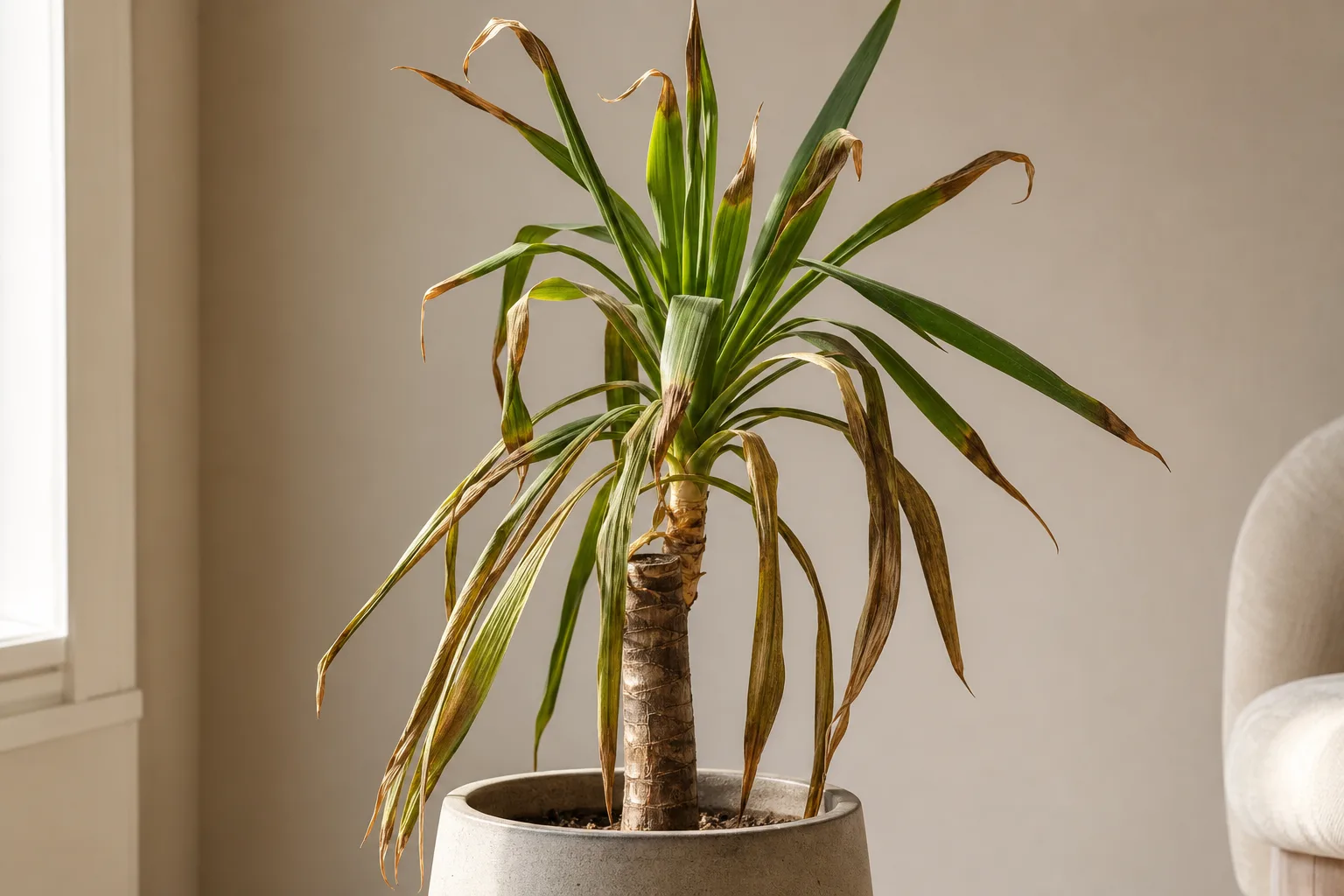
Water Stress on Yucca Plant: Causes, Checks & Fixes
This guide covers water stress on Yucca Plant. See also the general Water Stress guide, watering, and light pages for this plant.
Water Stress on Yucca Plant: Causes, Checks & Fixes
Quick answer
Water stress on Yucca Plant is a root-zone failure-not a leaf problem. Yucca elephantipes stores moisture in its thick trunk and sword-shaped leaves because its roots expect soil to dry out between waterings in a well-drained sandy soil mix. When that rhythm breaks, leaves yellow, droop, or crisp even though you think you are watering correctly.
The trap on yucca is that wet stress and dry stress look similar from the leaves alone. Wilted leaves may indicate soil that is too dry or too wet-overwatered roots cannot move water upward, so the plant wilts while the pot stays heavy.
First step: lift the pot and feel its weight before you change anything. A light dry pot with a firm trunk needs water; a heavy wet pot with limp leaves needs drying and root inspection-not another drink.
What water stress looks like on Yucca Plant
Healthy Yucca elephantipes holds stiff pale green blades in rosettes atop upright canes. Water stress shows when those rigid leaves lose turgor, change color, or drop faster than normal aging.
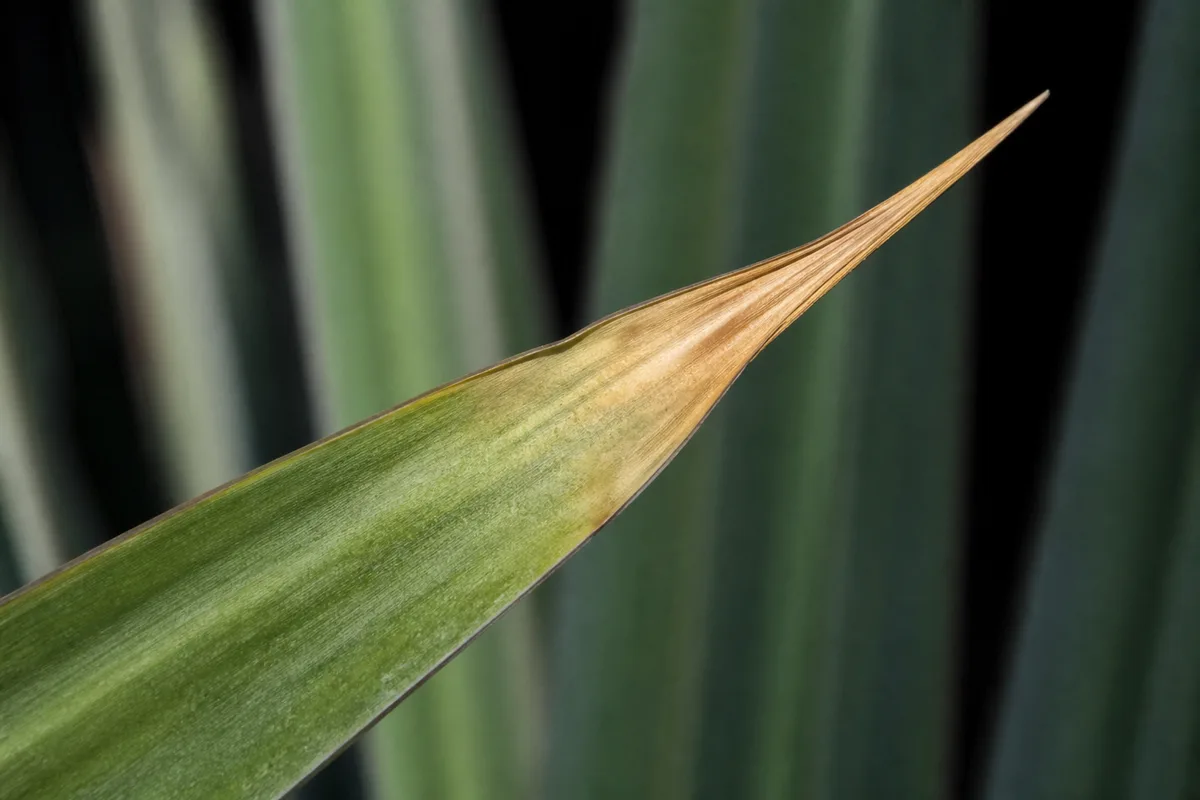
Water Stress symptoms on Yucca Plant - compare with healthy tissue on the same plant.
Wet-stress patterns (too much moisture or poor drainage):
- Yellow lower leaves, sometimes with brown halos spreading upward
- Limp sword leaves while the pot feels heavy and mix stays damp days after watering
- Soft or discolored tissue at the trunk base where canes meet soil
- Sour smell from the drainage hole or white mold on the soil surface
- Sudden collapse of one rosette while others still look upright
Dry-stress patterns (too little moisture during active growth):
- Leaves curl inward slightly and feel less rigid before they hang limply
- Crisp brown tips or margins on otherwise green blades
- Pot feels light; mix is dry several centimeters deep
- Leaves perk within hours after a deep watering-this response confirms dry stress
Inconsistent-cycle stress (alternating flood and drought):
- Patchy yellowing across multiple rosettes without a clear wet-or-dry extreme
- Mix that is bone dry on top but wet and compacted deeper in the pot
- Tip browning that worsens after you react to droop with heavy watering
- Slow new growth in summer despite a seemingly regular schedule
Damaged leaves rarely return to full stiffness. Judge recovery by firm new blades emerging from rosette centers and a trunk that stays solid when squeezed-not by old yellow or flopped foliage re-greening.
Why Yucca Plant gets water stress
Yucca elephantipes is drought tolerant and adapted to infrequent deep rain followed by long dry periods. Indoor care goes wrong when owners treat it like a tropical foliage plant that wants evenly moist soil year-round.
overwatering on Yucca Plant and poor drainage
This is the most dangerous wet stress indoors. Overwatering can cause root rot on giant yucca when mix stays saturated. Heavy peat-based soil, pots without drainage, oversized containers, and watering while the surface still feels damp all keep roots oxygen-starved. Roots growing in waterlogged soil may die because they cannot absorb the oxygen needed to function normally.
underwatering on Yucca Plant during active growth
Yucca survives drought better than most houseplants, but months of neglect in bright summer windows still depletes trunk reserves. Owners who fear root rot sometimes withhold water too long after a prior overwatering scare-swinging from one extreme to the other.
Calendar watering instead of soil checks
Watering every Sunday regardless of season ignores how fast the pot dries. Cool dim winter rooms need far less moisture than bright summer growth. Continuing a summer schedule through winter is a common wet-stress trigger.
Seasonal light and temperature shifts
When days shorten and room temperature drops, yucca uses less water. Soil that dried in three days in July may take two weeks in January. Water stress often appears after autumn when owners have not adjusted frequency.
Wrong soil mix
Standard all-purpose potting mix holds moisture too long for yucca roots. For houseplants, one part potting mix and three parts perlite or sand is recommended to provide good drainage. Old compacted mix that has broken down also traps water around sparse root systems.
Low light slowing water use
In deep shade, yucca photosynthesizes less and the mix dries slowly. Owners who water on habit keep soil wet longer than the plant needs, creating chronic wet stress even with moderate watering amounts.
How to confirm the cause
Work through these checks in order. Each one narrows wet stress, dry stress, or inconsistent cycles before you treat anything.
- Pot weight - Lift the container off the saucer. Light means dry throughout; heavy and waterlogged means saturated.
- Soil moisture at depth - Push a finger or wooden skewer 5–7 cm into the mix. Surface dryness with a wet core suggests poor drainage or recent overwatering.
- Trunk firmness - Grip the cane base just above soil level. Firm wood is healthy; spongy tissue signals rot from wet stress.
- Leaf texture - Soft yellow leaves with wet mix point to overwatering; curled papery leaves with dry mix point to drought.
- Recovery test (dry stress only) - If the pot is light and the trunk is firm, water deeply once and recheck in 12 hours. Perked leaves confirm underwatering.
- Watering history - Note whether you recently watered heavily after seeing droop, skipped weeks of summer watering, or kept a winter schedule into spring.
Diagnosis shortcuts:
| Pattern | Likely stress type | What confirms it |
|---|---|---|
| Heavy wet pot + soft trunk base | Wet stress / root rot | Mushy brown roots when unpotted |
| Light dry pot + firm trunk + curled leaves | Dry stress | Leaves firm up within 24 hours after deep watering |
| Dry surface + wet core + yellow tips | Inconsistent cycles / poor mix | Compact soil; repot into gritty blend |
| Heavy pot + firm trunk + pale stretched canes | Low light slowing dry-down | Brighter placement; hold water until mix dries |
| Stress after Yucca Plant repotting guide | Temporary transplant shock | Firm trunk; no sour smell |
First fix for Yucca Plant
Lift the pot and decide wet or dry before you touch the watering can.
If the pot is heavy and the mix is wet, stop watering immediately. Move the plant to the brightest spot with good airflow so the mix dries faster. Do not add water because leaves look limp-that deepens wet stress. If the trunk base is soft, unpot, trim mushy roots with clean shears, let cuts air-dry 24 hours, and repot firm tissue into dry gritty mix.
If the pot is light and the trunk is firm, water deeply until excess runs from the drainage hole, then empty the saucer completely. One thorough drink fixes dry stress; repeated shallow sips do not rehydrate a large cane. Resume waiting until the mix dries again-allow the soil to dry out between waterings during growth season.
Do not fertilize, mist leaves, or repot into a larger container until you know which stress type you have. Extra inputs on damaged roots make recovery harder.
Step-by-step recovery
For wet-stress and root damage
- Stop watering and improve light and airflow around the pot.
- If the trunk base stays firm, wait until the mix is dry throughout before any next drink.
- If the base softens or soil smells sour, unpot and inspect roots immediately.
- Trim all brown, mushy root tissue; keep only firm white or tan roots.
- Cut away soft trunk sections above the rot line with sterilized tools.
- Let the plant and trimmed cuts air-dry 24–48 hours.
- Repot into fresh fast-draining cactus mix with perlite or coarse sand in a pot only slightly larger than the root ball.
- Wait one to two weeks before the first light watering; then resume only when dry.
For dry-stress
- Water thoroughly until runoff, then discard all saucer water.
- If mix repels water and runs straight through, bottom-soak 20–30 minutes so the root ball rewets evenly.
- Keep the plant in bright light so it uses moisture efficiently.
- Track how many days until the pot feels light again-that interval becomes your summer rhythm.
For inconsistent-cycle stress
- Establish one rule: water only when the mix is dry 5–7 cm deep during active growth.
- During indoor winter months, reduce watering to the minimum-enough to prevent major foliage loss, not enough to keep soil moist.
- If mix stays wet too long even with reduced frequency, repot into gritty blend with open drainage.
- Hold fertilizer until new growth looks normal for two weeks.
Recovery timeline
Mild dry stress often improves within 12 to 24 hours of proper watering. Wet-stress recovery takes two to six weeks before stiff new leaves emerge from rosette centers if the trunk stayed solid. Alternating-cycle damage clears slowly-you need several consistent dry-down cycles before yellowing stops.
Signs the plant is improving:
- New blades emerge upright and stiff from rosette centers
- Trunk base stays firm when squeezed
- Pot weight drops predictably between waterings
- Yellowing stops spreading up the cane
Signs the problem is worsening:
- Trunk base softens further or blackens
- More rosettes collapse while the pot stays heavy
- Sour smell returns after repotting
- No new growth after six weeks in corrected conditions
Lookalike symptoms
Drooping leaves - Drooping is often the visible face of water stress. The diagnostic path is the same: pot weight and trunk firmness first.
Yellow leaves - Yellow lower leaves with brown halos usually mean wet stress. Even yellowing without limpness can follow chronic overwatering before roots fail completely.
Brown tips - Crispy edges with otherwise upright stiff leaves point to fluoride, salt buildup, or low humidity-not whole-plant water stress from root failure.
Wilting - Sudden collapse can mean wet or dry stress. Never assume thirst when the mix is already wet.
Root rot - Advanced wet stress becomes root rot. If mushy roots and soft trunk tissue are present, treat as rot, not mild stress.
Mistakes to avoid
- Watering because leaves look sad - Reflex watering on an already wet yucca is the fastest path to crown rot.
- Swinging from drought to flood - One heavy soak after weeks of neglect, then daily checks and repeated drinks, shocks roots both ways.
- Using standard potting mix alone - Peat-heavy soil holds moisture too long for Yucca Plant overview.
- Misting leaves - Surface moisture does not fix root-zone problems.
- Fertilizing stressed plants - Salts burn damaged roots and worsen tip browning.
- Repotting into a much larger pot - Excess wet soil around sparse roots prolongs saturation.
- Ignoring winter slowdown - A summer schedule in a dim winter room causes chronic wet stress.
Wear gloves if yucca sap irritates your skin, and keep the plant away from pets-Yucca is toxic to cats and dogs.
How to prevent water stress next time
Match watering to how fast the pot dries in your home, not a calendar. During active growth in bright light, water only after the mix dries completely. Cut back sharply in autumn before room light and temperature drop.
Use pots with open drainage holes and empty saucers after every watering. Never let the container sit in standing water. A gritty cactus blend with added perlite or sand drains faster than all-purpose mix alone.
Place yucca where it gets bright indirect to direct light for most of the day so photosynthesis and water use stay in balance. In low light, reduce watering further even if the schedule feels sparse-slow dry-down in shade is normal.
Learn your pot’s dry-down interval in summer versus winter. A yucca that needs water every ten days in July may need only monthly moisture in January. That winter restraint is correct care, not neglect.
When to worry
Treat water stress as urgent when wet soil, soft trunk tissue, and sour odor appear together-that combination can progress to crown rot within days. Also escalate if leaves stay limp more than 48 hours after a confirmed deep watering on dry soil, or if yellow halos climb the cane while the pot stays heavy.
A firm trunk with dry soil and stressed leaves is manageable with one corrected watering cycle. A spongy trunk with wet soil may require cutting the cane above healthy tissue and rooting firm sections-a last rescue, not a guaranteed save.
Conclusion
Water stress on Yucca Plant always traces back to whether roots can access oxygen and moisture in the right balance. The cane stores water because desert-adapted roots hate staying wet. Read pot weight and trunk firmness before you react to leaf color, match your schedule to seasonal dry-down, and judge recovery by stiff new growth-not by hoping damaged blades will rise again.
When to use this page vs other Yucca Plant guides
- Yucca Plant watering guide - Use for routine moisture checks before assuming water stress is the main issue.
- Yucca Plant problems hub - Browse all 29 common issues on this species.