Cold Damage on Yucca Plant: Causes, Checks & Fixes
Quick answer
Cold damage on Yucca Plant shows as blackened or water-soaked leaf tips after nights near freezing or cold window contact. Move away from cold glass and trim only fully dead tissue-do not overwater while the plant recovers.
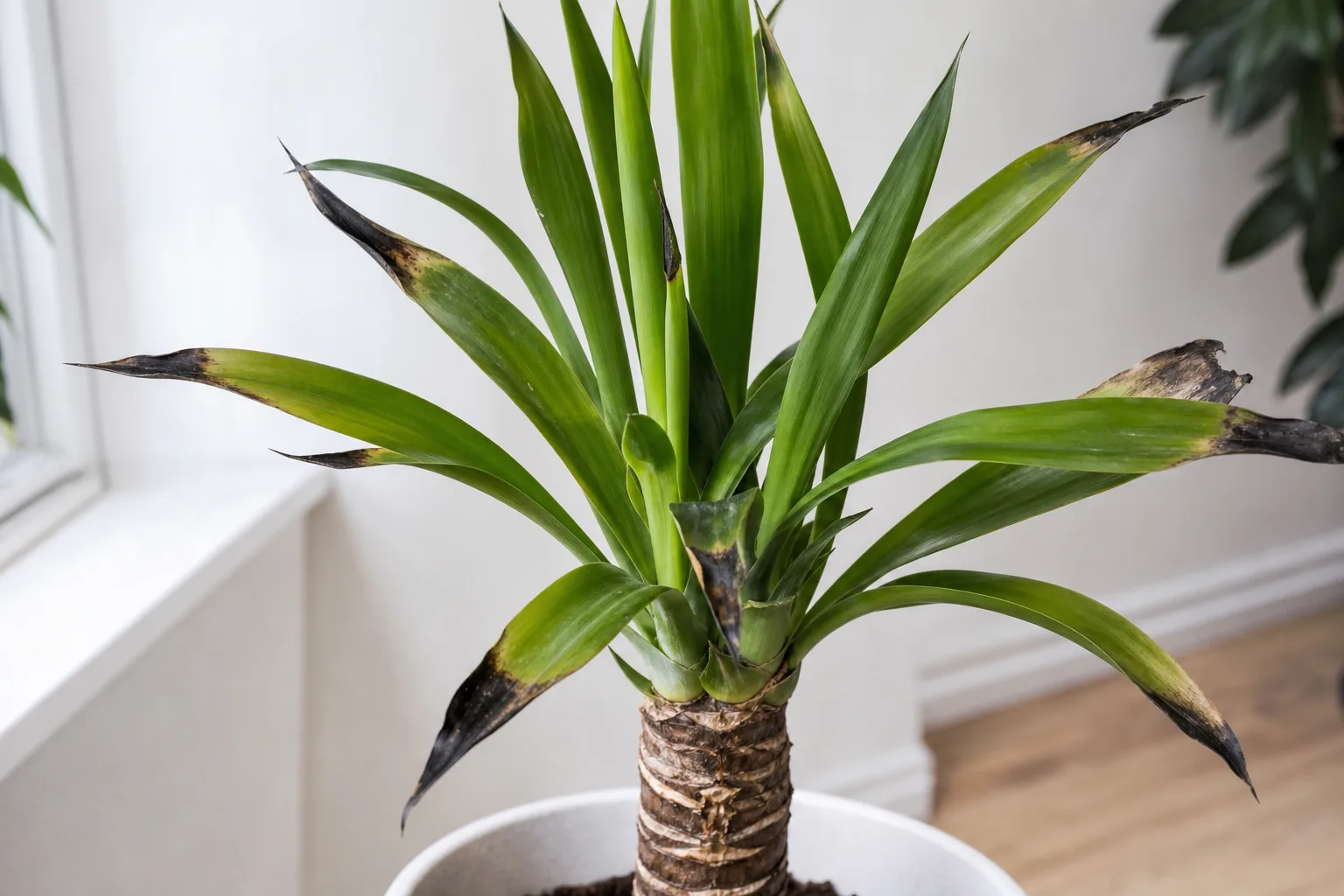
Cold Damage on Yucca Plant: Causes, Checks & Fixes
This guide covers cold damage on Yucca Plant. See also the general Cold Damage guide, watering, and light pages for this plant.
Cold Damage on Yucca Plant: Causes, Checks & Fixes
Quick answer
Cold damage on Yucca Plant (Yucca elephantipes, spineless yucca) appears when sword-shaped leaves are chilled below what this warm-climate, semi-arid species tolerates indoors. Yucca is drought tolerant but frost-tender-it must come inside when outdoor temperatures drop below about 50°F (10°C) and is winter hardy only in USDA zones 10 to 12. Blackened, water-soaked leaf tips after a cold night near a window, an open door, or an early outdoor move are classic cold-injury signs-not a watering disease.
First step: move the pot to a stable bright spot at least 60 cm (2 feet) from cold glass and away from AC vents. Do not flood the plant, repot, or place it on a radiator to warm up fast. Check that the trunk base still feels firm and woody-that checkpoint separates recoverable leaf chill from root rot or crown rot that can follow cold plus wet soil.
For seasonal watering rhythm during recovery, see the Yucca Plant watering guide.
Why Yucca Plant gets cold damage
Spineless yucca evolved for bright light, sharp drainage, and dry seasons in Mexico and Central America. It stores water in its trunk and stiff leaves, which helps it survive missed waterings-but that architecture does not protect leaf tissue from sudden freezing or prolonged chilling.
Semi-arid native range and frost intolerance
Drought tolerance and cold tolerance are not the same trait. A plant adapted to dry heat can still collapse when cell sap freezes or when leaf tissue sits against glass colder than the room thermostat reads. Yucca elephantipes is frost-tender and suited to minimum temperatures around 10°C (50°F) as a houseplant, with 7°C (45°F) as a minimum night temperature in a cool conservatory when growth is idle per the same RHS guidance. Exposure below those ranges-especially with wet soil-invites leaf collapse and base rot.
Winter windowsills, cold glass, and outdoor frost moves
Indoors, the most common trigger is a pot pressed against a single-pane window on a winter night. Glass can run several degrees colder than the wall thermostat, chilling leaves that touch it even when the room feels comfortable. Entry doors, leaky frames, and AC blasts on foliage create the same localized chill.
Outdoors, spineless yucca is often set outside during summer months but must return inside before frost. Leaving a container on a patio through the first cold snap, or bringing it in too late in fall, exposes the entire rosette to temperatures the species cannot handle. Container plants outdoors lose root-zone insulation compared with in-ground plantings - bring pots inside before frost.
Cold plus wet soil rot overlap
Cool rooms slow evaporation and root activity. Many owners keep watering on a summer schedule after a chill event, which keeps soil wet while the plant is stressed. That combination-cold-damaged tissue plus saturated mix-is how localized leaf injury becomes soft trunk base and mushy roots. If the base softens, treat overwatering and rot rescue alongside warmth, not cold damage alone.
Chronic airflow desiccation without a freeze night is a different problem. See draft stress on Yucca Plant when damage built slowly on one side facing a vent rather than after a single cold event.
What cold damage looks like on Yucca Plant
On spineless yucca, cold injury shows on the narrow, sword-shaped leaves at each rosette along the cane. Healthy leaves are stiff, blue-green, and pointed. Cold damage looks different from drought, salt burn, or active rot.
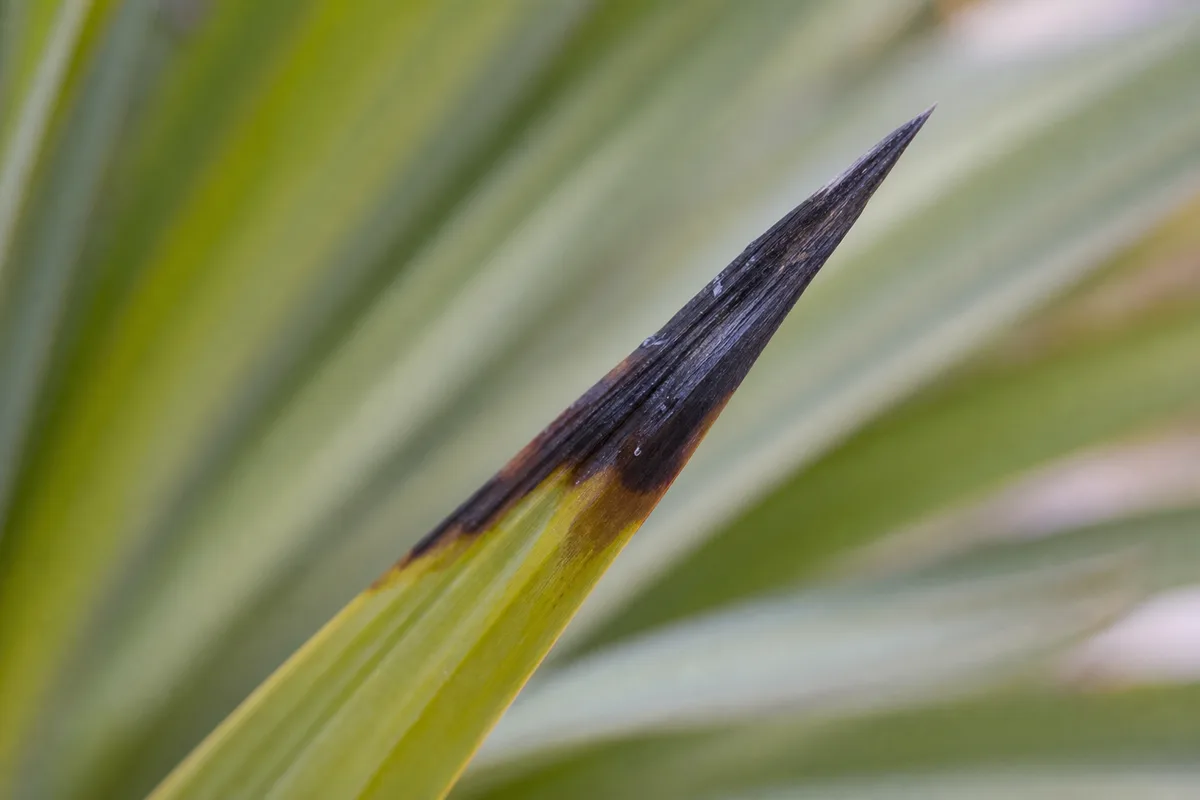
Cold Damage symptoms on Yucca Plant - compare with healthy tissue on the same plant.
Water-soaked sword leaves and blackened tips
Typical cold-injury pattern:
- Dark, water-soaked patches on leaf tips and margins that appear suddenly after one cold night
- Blackened sections that feel soft or collapsed on leaves but the trunk above soil still feels firm
- Sudden browning or blackening while pot weight and soil moisture are normal for your routine
- Timing that matches a recent frost, open window, outdoor night below ~10°C, or leaves pressed to cold glass
Mild versus severe:
- Mild - Localized tip or margin blackening on outer leaves; trunk firm throughout; no sour soil smell
- Severe - Water-soaked tissue spreading down leaf blades; multiple rosettes affected at once; blackening climbing toward the trunk base; pot stayed wet through the cold event
Firm trunk vs. soft base patterns
Press the cane at soil line with a gloved finger. Firm, woody trunk with only leaf damage means cold injury may recover once warmth and dry-down watering stabilize. Soft, dented, or black tissue at the base while mix is wet points to rot-often triggered when chill slowed the plant and excess water sat around roots. Yucca stores reserves in its trunk, but a rotting base spreads upward quickly.
Unlike drought, the pot is not unusually light. Unlike chronic brown tips from salts or fluoride, cold patches are water-soaked and appear after a temperature event, not months of tap-water use.
How to confirm the cause
Work through these checks in order. One clear match is enough to start the right fix.
- Timing - Did symptoms appear within 24–48 hours of a cold night, open window, outdoor frost exposure, or leaves touching cold glass? Cold damage fits acute timing; draft stress often follows weeks of airflow without a freeze.
- Tissue texture - Cold injury shows water-soaked, collapsed black patches. Draft stress shows crisp dry brown tips. Drought shows curled, less rigid leaves and a very light pot.
- Trunk firmness - Press the base; it should feel hard and woody for cold-only damage. Soft, squishy base with sour smell means rot-inspect roots per root rot guide.
- Soil moisture and weight - Lift the pot. Normal dry-down weight with sudden leaf blackening fits chill. Heavy wet pot plus soft base fits cold-plus-overwatering failure.
- Thermometer at leaf level - A cheap sensor near foliage on the windowsill often reads colder than the room center-especially at night.
- Placement history - Recent outdoor move, first frost on patio, or winter shift closer to glass strengthens cold damage. Constant AC flutter on one side suggests draft instead.
- New growth check - After moving to stable warmth, watch rosette centers. Clean new leaves emerging in four to eight weeks confirm recovery; continued blackening on new leaves with wet soil means escalate to rot protocol.
Lookalike comparison table
| Signal | Cold damage | Draft stress | Root / crown rot | Drought | Sun scorch |
|---|---|---|---|---|---|
| Timing | After frost or chill night | Builds over weeks near vent/window | After chronic wet soil | After long dry spell | After sudden move to harsh sun |
| Leaf pattern | Water-soaked black tips/margins | Crisp brown tips, often one-sided | Yellowing, limp leaves; may blacken at base | Curled, less rigid blades | Bleached papery patches on sun-facing side |
| Trunk base | Firm | Firm | Soft, may smell sour | Firm | Firm |
| Pot weight | Normal for your schedule | Normal | Often heavy / wet | Very light | Normal |
| First fix | Move to stable warmth; dry-down water | Move out of air stream | Stop water; unpot and trim rot | Deep soak once; resume dry-down | Pull back to Yucca Plant light guide |
If air is calm, trunk is firm, and damage is evenly crisp on exposed tips only, compare draft stress and brown tips before confirming cold injury.
First fix for Yucca Plant
Move the pot to a stable bright location at least 60 cm from cold glass, entry drafts, and AC vents.
Choose a spot with bright indirect or filtered sun-yucca still needs light during recovery-but away from surfaces that plunge overnight. Hold all watering until you confirm soil dryness with a finger or skewer; a chilled plant in wet mix is at highest rot risk. Do not repot, fertilize, or heat the pot on a radiator on day one.
Once the mix has dried appropriately for your season, resume normal dry-down watering-allow the soil to dry out between waterings-rather than soaking on a calendar. Wear gloves when trimming; Yucca is toxic to cats and dogs if ingested, and sap can irritate skin.
When to escalate to root-rot salvage
Stop cold-damage care and switch to rot protocol if the trunk base softens, soil smells sour, or roots are mushy when you unpot. Trim rotted tissue, air-dry cuts, and repot dry-or salvage firm cane sections via Yucca Plant propagation if the base is gone. Cold shock opened the door; wet soil finished the job.
Step-by-step recovery
After the plant is in stable warmth and you have confirmed firm trunk tissue:
- Wait 48–72 hours - Let the plant acclimate before trimming. Some water-soaked tissue may dry to crisp brown; fully dead sections become obvious.
- Trim only dead leaf tissue - Cut black or collapsed sword leaves back to green firm tissue with clean scissors. Leave a small margin of dead edge rather than slicing into living green. Old damage will not re-green; trimming is cosmetic and reduces rot entry points.
- Verify watering rhythm - Follow the watering guide: water when the top half of mix is dry in bright rooms, or when the full pot has dried during winter slowdown. Reduce watering to the minimum during indoor winter months when growth is slow in cooler rooms.
- Hold fertilizer - Do not feed a stressed yucca until new rosette leaves emerge clean, typically in spring or under strong indoor light.
- Monitor trunk base weekly - Firm wood means stay the course. Any softening means unpot immediately and inspect roots.
- Rotate the pot monthly - Prevents one side from sitting against cold glass all winter.
- Document recovery - Photograph rosette tips weekly. New green sword leaves are the success metric-not old blades turning green again.
Recovery timeline
Cold damage on yucca is slow to stop and impossible to reverse on injured leaf tissue. Expect one to two weeks for active blackening to halt after stable placement, and four to eight weeks before you can fairly judge new rosette growth indoors.
Signs you are winning:
- No new water-soaked patches after the cold event
- Trunk stays firm; soil dries predictably between waterings
- New sword leaves emerge with green tips at rosette centers
- Older blemished leaves simply age in place without spreading black tissue
Signs the problem is deepening:
- Black patches climb from leaves toward trunk base
- Trunk softens at soil line or smells sour
- Yellowing spreads with a constantly heavy wet pot
- New leaves emerge already water-soaked despite stable room temps
Cosmetic trimming improves appearance immediately, but botanical recovery is measured by firm trunk wood and clean new foliage.
What not to do
Do not overwater a chilled plant to “help it recover”-wet cold soil drives rot on a drought-adapted cane. Avoid placing the pot on a radiator or heat vent to warm it quickly; rapid temperature swings stress tissue further. Do not deep-prune living green leaves into healthy tissue; slow-healing sword blades need time. Skip Yucca Plant repotting guide on day one unless roots are clearly mushy. Do not return outdoors until overnight lows stay above ~10°C (50°F) consistently. Never ignore a soft trunk base hoping warmth alone will fix it-that pattern needs crown rot or root-rot intervention.
When to worry
Low urgency: Localized tip blackening, firm trunk, normal pot weight, and a clear link to one cold night near glass or an early outdoor exposure.
Higher urgency: Multiple rosettes water-soaked at once, black tissue moving down leaf blades, or soil that stayed wet through the freeze.
Act today: Trunk base softens, sour soil smell, mushy roots on inspection, or collapse of lower leaves while mix is wet-treat as root rot or crown rot, not cold damage alone. If the base is lost but upper cane sections are firm, see propagation for cane-cut salvage before rot climbs.
How to prevent cold damage next time
Keep spineless yucca above ~10°C (50°F) year-round indoors and bring container plants inside before outdoor temperatures drop below 50°F. When moving outdoors for summer, set plants outside during summer months but bring them indoors prior to the first fall frost and reverse the process in fall before first frost.
Placement habits that matter:
- Pull pots at least 60 cm back from winter window glass; use a thermometer at leaf height to verify.
- Keep the brightest spot available, but not touching cold pane or leaky frame.
- Close doors quickly in traffic paths; tall canes in hall drafts chill fast.
- Match winter watering to slower growth-dry-down tests from the watering guide matter more when rooms cool.
- Keep away from cold drafts or sudden temperature changes year-round, not only in winter.
For background on light and seasonal moves, see the Yucca Plant overview.
Conclusion
Cold damage on spineless yucca is an acute temperature injury-not a disease-when the trunk stays firm and symptoms follow a chill event. Move the pot to stable warmth, resume dry-down watering, and trim only dead sword leaves. Judge recovery by new rosette growth over four to eight weeks, not by old blades re-greening. If the base softens or soil sours, shift immediately to rot salvage and propagation paths. Keeping the cane above ~10°C and off cold glass prevents most repeat damage on this frost-tender but drought-hardy indoor tree.
Related Yucca Plant problems
- Draft stress on Yucca Plant - chronic vent and window airflow without a freeze event
- Root rot on Yucca Plant - soft base and mushy roots after cold plus wet soil
- Crown rot on Yucca Plant - soft trunk base at soil line
- Brown tips on Yucca Plant - chronic salt or fluoride tip burn vs. acute cold patches
- Yucca Plant watering - soak-and-dry schedule and seasonal dry-down
- Yucca Plant overview - light, temperature, and seasonal outdoor moves
- Yucca Plant propagation - cane-cut salvage when base rot wins
FAQ
How can I confirm cold damage on Yucca Plant?
Match symptoms to a chill event within the last day or two. Dark water-soaked patches on sword-shaped leaves after a cold night near a window, an open door, or outdoor exposure below about 10°C (50°F) confirm cold injury. The trunk base should still feel firm and woody-soft base with sour wet soil means rot instead.
How is yucca cold damage different from draft stress?
Cold damage follows a frost or sharp chill and produces water-soaked black tissue that feels collapsed. Draft stress builds slowly from constant airflow-crisp brown tips on the side facing a vent or window without a single freeze night. Both can affect yucca leaf tips, but cold injury is acute and often plant-wide after one event; draft stress is chronic and usually one-sided.
Will Yucca Plant recover from cold damage?
Firm trunk with only localized leaf damage usually recovers once temperatures stay stable above ~10°C and watering returns to dry-down rhythm. Dead leaf tissue will not re-green; look for clean new sword leaves from rosette centers in four to eight weeks. Soft black stem base means rot-recovery of the whole plant is unlikely without cane-cut propagation.
When is cold damage urgent on Yucca Plant?
Act immediately if the trunk base softens, black patches climb the stem, soil smells sour, or roots are mushy on inspection. Yucca stores reserves in its trunk, but base rot spreads fast-especially after cold shock plus overwatering. Localized tip damage on a firm cane is not urgent beyond moving the pot away from cold glass.
How do I prevent cold damage on Yucca Plant?
Keep indoors before fall frost and move outdoor containers inside before temperatures drop below ~50°F (10°C). Pull pots back from winter glass, reduce watering when rooms cool, and acclimate summer outdoor moves gradually. Use a thermometer at leaf height-glass-adjacent spots are often colder than the room thermostat suggests.
When to use this page vs other Yucca Plant guides
- Yucca Plant watering guide - Use for routine moisture checks before assuming cold damage is the main issue.
- Yucca Plant problems hub - Browse all 29 common issues on this species.
- Drooping Leaves on Yucca Plant - Different entry point when symptoms overlap with cold damage.