Crown Rot on Yucca Plant: Causes, Checks & Fixes
Quick answer
Crown rot on Yucca Plant starts where sword-leaf rosettes meet the trunk base in chronically wet soil-the tissue turns soft and black while the mix stays heavy. Stop watering immediately, press the base to test firmness, and unpot before decay climbs the cane.
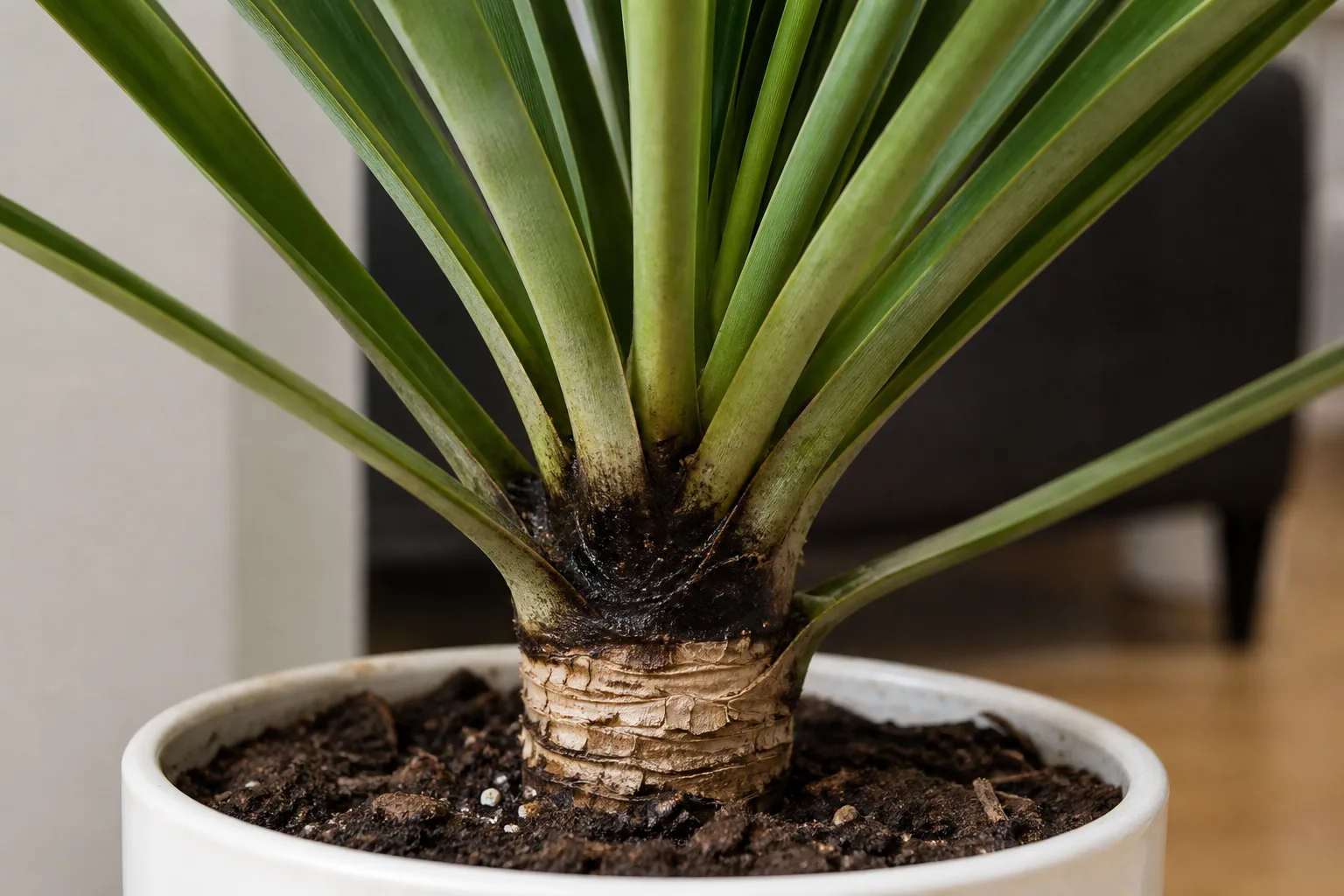
Crown Rot on Yucca Plant: Causes, Checks & Fixes
This guide covers crown rot on Yucca Plant. See also the general Crown Rot guide, watering, and light pages for this plant.
Crown Rot on Yucca Plant: Causes, Checks & Fixes
Quick answer
Crown rot on Yucca Plant (Yucca elephantipes, spineless yucca) is decay at the trunk base where sword-shaped leaf rosettes attach-the crown zone at or just above the soil line. On this drought-adapted cane yucca, it almost always follows chronic overwatering, slow-draining mix, or moisture trapped against the bark where leaves meet the trunk. The upper cane may still feel woody and leaves may still look green while crown tissue underneath turns soft and black.
First step: stop watering and press the trunk base firmly with your thumb. A healthy yucca crown feels hard as wood. Squish confirms active rot. Do not add water because leaves look wilted when the soil is already wet-that accelerates decay up the water-storing trunk.
This page owns crown-zone failure at the rosette–trunk junction. Use the routing table below before you cut tissue.
| What you feel at the soil line | Trunk higher on the cane | Roots on unpotting | Best page |
|---|---|---|---|
| Soft, dented base where leaves attach | Firm woody cane above | Mushy or firm | This page - crown rot rescue |
| Firm base | Soft patches climbing the cane | Varies | Stem rot on Yucca Plant - cane softening above soil |
| Firm base | Firm cane | Mushy brown roots | Root rot on Yucca Plant - root failure below crown |
| Firm base, heavy wet pot, no mush yet | Firm | Firm white roots | Overwatering on Yucca Plant - dry down before tissue fails |
Crown vs root vs stem rot on Yucca Plant
These three failures share wet soil as a trigger but start in different tissue. Salvage steps differ-routing wrong wastes firm cane you could still propagate.
Crown rot (this page) - Decay where rosettes meet the trunk at the soil line. Thumb pressure dents the base while mix stays wet. Roots may already be compromised, but the defining clue is soft tissue at the leaf attachment zone, not just mushy roots below.
Root rot - Decay in roots under the trunk. Early cases often show a firm crown with mushy roots and sour wet mix. See root rot when unpotting reveals root failure before the base softens.
Stem rot - Soft patches on the cane above the soil line, often from an old wound, pest entry, or water held in leaf axils mid-trunk-not necessarily saturated mix at the crown. Stem rot can spread downward into the crown if ignored.
Once crown tissue breaks down in anaerobic wet mix, decay climbs the parenchyma-rich storage trunk faster than owners expect-the plant still looks green above while the base collapses underneath.
The crown zone on spineless yucca
On Y. elephantipes, each cane ends in a rosette of rigid sword leaves. Below the rosette, the trunk thickens into water-storing tissue. At the soil line, roots, trunk bark, and the lowest leaf bases overlap-that junction is the crown.
In a pot, the crown sits in the wettest layer: where drainage slows, saucers hold runoff, and peat mix stays saturated longest. Overwatering can rot the crown when that zone never dries-roots lose oxygen first, then pathogens invade the bark and leaf-base tissue where the plant is thinnest.
Multi-trunk lobby specimens multiply the risk: three canes in one oversized pot means three separate crowns sharing one wet corner. Inspect each base individually-a single failed crown does not mean all trunks are lost.
Why Yucca Plant gets crown rot
Yucca elephantipes evolved to store water in its thick trunk and survive dry spells. Indoors, crown rot is almost always a moisture-trap problem at the base, not a random fungus attack.
Indoor habits that wet the crown zone
- Decorative pebbles, moss, or mulch packed against the trunk. Top dressing holds moisture against bark at the soil line. RHS yucca guidance stresses careful watering and letting the compost surface dry between drinks-covering the base defeats that dry-down where the crown lives.
- Lower sword leaves pulled into the pot rim. Wet mix against leaf bases keeps the attachment zone anaerobic. Trim or lift leaves so the trunk base stays exposed.
- Burying the trunk deeper after repotting to stabilize a tall wobbly cane. That places crown tissue in the wettest soil layer-the fastest route to base failure.
- Calendar watering through winter. Cool dim rooms slow water use, but many growers keep a summer schedule. Wet mix around a semi-dormant crown is especially dangerous when indoor winter watering should drop to the minimum.
- Oversized decorative pots. Large soil volume stays wet around sparse yucca roots. The crown zone at the center never dries.
- Peat-heavy mix without grit. Standard indoor blend holds water far longer than the well-drained sandy or cactus mix this species needs.
- Blocked drainage or standing saucer water. Even a drought-tolerant yucca cannot survive a crown sitting in stale water.
Chronic overwatering on Yucca Plant is the upstream cause-crown rot is often the stage where wet soil finally destroys bark at the rosette junction.
What crown rot looks like on Yucca Plant
Early crown rot mimics thirst, which leads many owners to water more-the worst response. Watch for this pattern on spineless yucca:
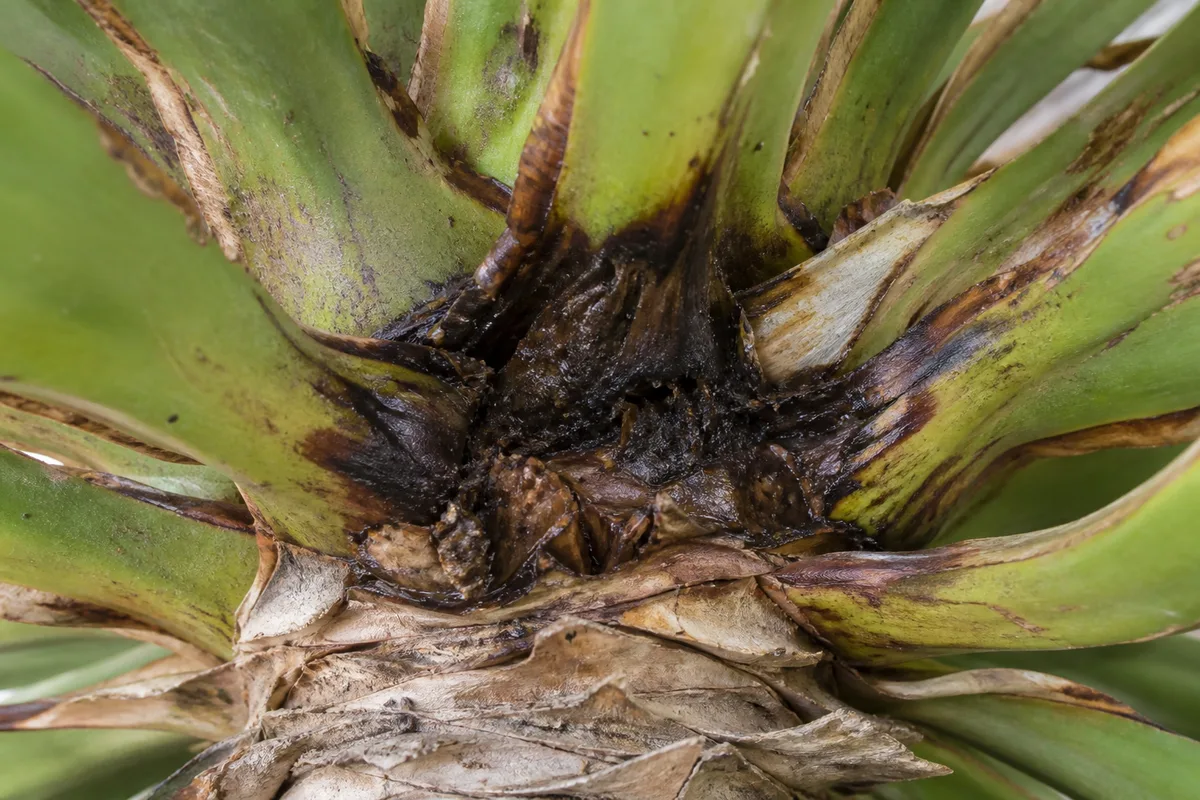
Crown Rot symptoms on Yucca Plant - compare with healthy tissue on the same plant.
Early signs at the rosette base
- Soft trunk base when you press where leaves attach near the soil line. Healthy tissue is firm and woody.
- Black or dark brown tissue at the crown, sometimes hidden under lower leaves pulled into the pot.
- Lower leaves yellowing, blackening, or drooping while soil stays wet-not dry.
- Sour or rotten smell from the pot or drainage hole-overwatered soil often smells sour or rotten.
- Heavy pot weight days after the last watering.
- Upper cane still firm while the base fails-a yucca can look partly healthy until the crown collapses.
Multi-trunk partial failure
On multi-trunk specimens, one cane’s crown can rot while others stay firm. Press each trunk base separately. Smell the mix near each cane-a sour pocket beside one trunk while others stay dry is a common pattern in wide decorative pots.
Advanced crown collapse
Black streaks climbing from the soil line, lower rosettes collapsing sideways, and mushy tissue when you scrape outer bark at the base. A cane that suddenly leans where leaves meet the trunk often has crown tissue too weak to support the weight above.
How to confirm the cause
Work through these checks before repotting or cutting:
- Thumb test at the crown only - Press the trunk base on all sides where rosettes attach. Squish or give under pressure confirms crown rot. Firm wood at the base rules out active crown decay at that point (but check stem rot higher on the cane).
- Pot weight and moisture - Lift the pot. If it stays heavy a week after watering, the mix is not drying. Push a finger or skewer deep near the trunk-persistent wetness supports crown rot over drought.
- Smell check - Sniff the drainage hole. Sour or rotten odor means anaerobic conditions and decay-not normal potting soil.
- Unpot inspection - Knock the plant out gently. Mushy roots, brown translucent root tips, and soft tissue where roots meet the trunk confirm crown rot spreading from the wet crown zone. Firm white roots with dry mix suggest a different problem.
- Leaf pattern - Yellow or wilted lower leaves with wet soil point to failing roots and crown. Crispy dry edges with dusty mix suggest underwatering instead.
- Rule out lookalikes - Cold damage blackens leaf tips after a draft but leaves the trunk firm unless secondary rot sets in. Scale and mealybugs cause sticky residue, not mushy bark. Mechanical damage from repotting can soften one side without the sour smell of rot.
If the base is firm, mix is dry, and leaves are only slightly limp, crown rot is unlikely-reassess watering before cutting tissue.
First fix for Yucca Plant
Stop all watering immediately and move the plant to bright light with good airflow so the mix can begin drying.
Do not repot on impulse, do not fertilize, and do not mist. Crown rot is an excess-moisture problem at the base. Your next action after stopping water is the thumb test: if the base is already soft, proceed to unpot and surgery. If the base is still firm but the mix is wet, let the root ball dry in bright light for several days while you prepare fresh gritty mix and sterile tools.
Only after confirming soft tissue should you cut. Cutting a firm crown causes unnecessary stress.
Step-by-step recovery
When the crown is soft or inspection confirms decay:
- Unpot carefully and brush away wet soil from the trunk base so you can see where firm tissue ends.
- Trim all mushy crown and root tissue with clean, sharp scissors or a knife. Cut back to firm white or green wood. Sterilize blades between cuts with rubbing alcohol.
- Air-dry cut surfaces for 24–48 hours in bright indirect light. Callousing reduces reinfection when you repot.
- Repot surviving firm cane into dry sandy or cactus mix in a pot only slightly larger than the remaining root mass. Set the crown at the same depth-never bury it deeper to “support” a wobbly plant. Mix guidance: Yucca Plant soil.
- Wait one to two weeks before the first light watering. Resume only when the mix is dry throughout and you see no return of softness at the base.
- Propagate firm sections if the main crown is gone but hard cane remains above the rot. Cut healthy trunk sections, let them callous three to five days, then plant in dry mix without watering for one to two weeks. RHS propagation guidance notes yucca stem sections root from coarse sandy mix-see the full Yucca Plant propagation guide for cane-cut detail.
Isolate the plant from other houseplants while active decay is present. Fungal pathogens can spread through shared drip trays, tools, and splashed water.
Salvage case: multi-trunk specimen with one failed crown
A four-foot three-trunk yucca in a lobby cache pot showed two firm bases and one thumb-dent soft crown beside a wet corner of the mix. After stopping water, the owner trimmed mushy tissue at the failed crown only, calloused cuts 48 hours, and repotted all three canes in dry cactus mix without burying any trunk deeper. The two healthy crowns pushed new leaf tips in six weeks; the trimmed cane rooted as a shortened single-trunk plant eight weeks later. The lesson: partial crown failure on multi-trunk yucca is salvageable when you treat each base separately and keep decorative pebbles off the bark.
Recovery timeline
Mild crown damage on a firm upper trunk may stabilize within two to four weeks after trim and dry repot. Positive signs: firm unchanged base, no spreading softness, and eventually new growth from the crown.
Cane cuttings taken from healthy wood may root over several weeks to months-patience matters more than frequent watering. RHS notes stem sections can root in coarse sandy compost with warmth and bright conditions.
Do not judge recovery by old damaged leaves. Lower blackened leaves will not green up again. Watch trunk firmness at the soil line, not leaf color alone.
If softness returns after repot or climbs past your trim line within two weeks, the rot outpaced your salvage-take higher cuttings from firm wood via propagation before losing the whole plant.
Salvage decision matrix
| Crown base on thumb test | Upper cane | Best path |
|---|---|---|
| Mostly firm; small soft spot | Firm | Trim soft crown tissue only; dry repot; minimal water for 1–2 weeks |
| Soft through base; firm 12+ inches above | Firm | Crown lost-propagate firm cane sections; discard mushy base |
| Soft base; softness climbing daily | Any | Urgent cane cuts above rot line; do not wait for leaves to yellow |
| All trunks soft at base | - | Focus on highest firm cuttings; original root system unlikely to save |
Lookalike symptoms to rule out
| Symptom pattern | Likely issue | Route to |
|---|---|---|
| Mushy roots, firm trunk base, wet mix | Root rot before crown involvement | Root rot |
| Soft patches mid-cane, firm base, wound or pest history | Stem rot climbing from injury | Stem rot |
| Yellow leaves, heavy pot, firm base | Early overwatering stress | Overwatering |
| Black leaf patches after cold window, firm trunk | Cold damage | Cold damage |
| Limp leaves, light dry pot, firm base | Drought | Underwatering |
Cold damage after exposure below about 7°C (45°F) minimum night temperature for Y. elephantipes produces water-soaked black leaf patches, but the trunk stays hard unless secondary rot sets in from wet soil afterward.
Mistakes to avoid
Do not water because leaves wilt when the soil is already wet. Rotting roots and crown tissue cannot take up water; more moisture accelerates decay.
Do not bury the trunk deeper after repotting to stabilize a wobbly plant-that puts crown tissue in the wettest soil layer.
Do not pack pebbles, moss, or mulch against the trunk base for aesthetics. Keep the crown zone exposed and dry.
Do not use regular potting soil or pots without drainage holes. Do not leave standing water in saucers.
Do not apply fungicide spray to the leaves while ignoring wet soil at the crown. Surface sprays do not fix a rotting base.
Do not fertilize a recovering yucca. New nutrients push growth before roots and crown tissue stabilize.
Wear gloves when cutting-yucca sap can irritate skin, and the plant is toxic to cats and dogs if they chew trimmed tissue. Keep cut debris away from pets until you discard it.
Yucca Plant care cross-check after recovery
Crown rot recovery depends on fixing the conditions that trapped moisture at the base:
- Light: Bright indirect to direct light helps the mix dry predictably between waterings. See Yucca Plant light.
- Mix: Fast-draining sandy or cactus blend with perlite or coarse sand-not peat-heavy indoor mix alone. Detail on Yucca Plant soil.
- Pot size: Match the container to the root mass, not the height of the foliage.
- Water rhythm: Water only when the mix is dry throughout during active growth-not on a fixed weekly calendar. Full schedule: Yucca Plant watering.
- Base hygiene: Keep decorative mulch, moss, and pebbles away from the trunk. Water the soil, not the leaf rosettes.
How to prevent crown rot next time
Inspect the trunk base each time you water-it should stay firm year-round. If the pot stays heavy longer than usual, cut back water before the crown softens.
Empty saucers within minutes of watering. Repot into gritty mix when the plant outgrows its pot, but avoid jumping to an oversized container.
For multi-trunk yuccas, check each cane base individually. One wet corner of a large pot can rot a single crown while others survive.
Background on spineless yucca culture: Yucca Plant overview.
When to worry
Treat crown rot as urgent when thumb pressure dents the trunk base, black tissue climbs the stem, or most roots are mushy on unpotting. Mild softness caught early may be trimmed and repotted. A fully collapsed crown with softness through the entire base rarely saves the whole plant-propagate firm cane sections immediately before rot reaches all trunks.
If every trunk base is soft and the smell is strong, focus on cuttings rather than saving the original root system.
Crown-rot rescue checklist
- Stop watering; move to bright airflow.
- Thumb-test each crown at the soil line.
- Unpot if base is soft or mix smells sour.
- Trim to firm wood; sterilize tools between cuts.
- Callous cuts 24–48 hours.
- Repot dry gritty mix-same crown depth, no pebble collar.
- Wait 1–2 weeks before first light water.
- Propagate firm upper cane if base is lost.
- Re-check firmness every watering cycle for six weeks.
Related Yucca Plant guides
- Yucca Plant overview - full care hub for spineless yucca
- Overwatering on Yucca Plant - wet heavy pot before mushy tissue
- Root rot on Yucca Plant - mushy roots with firm crown
- Stem rot on Yucca Plant - soft cane above soil line
- Yucca Plant watering - dry-down prevention rhythm
- Yucca Plant soil - gritty mix after recovery
- Yucca Plant propagation - cane-cutting salvage detail
FAQ
Can one trunk rot while others stay healthy on a multi-trunk yucca?
Yes. Each cane has its own crown where leaves attach at the soil line. One trunk sitting in a wet corner of an oversized pot can develop crown rot while neighboring canes stay firm. Press and smell each base separately before deciding salvage.
Should I propagate cane cuttings or try to save the rooted crown?
If the crown tissue is mushy but firm woody cane remains above the rot line, propagation is often the better path-trim to hard wood, callous, and root cuttings in dry mix. Try to save the rooted crown only when the base is still mostly firm after you trim away soft tissue.
Do decorative pebbles around the trunk cause crown rot?
Pebbles, moss, or mulch packed against the trunk base trap moisture against bark at the wettest soil layer. That keeps the crown zone anaerobic even when the surface looks dry. Keep the trunk base exposed and water the soil, not the rosette.
When is crown rot urgent on Yucca Plant?
Act immediately when thumb pressure dents the trunk base, black discoloration climbs the stem, or soil smells sour on inspection. Yucca stores water in its trunk, so upper leaves can look fine while the crown fails underneath.
How do I prevent crown rot on Yucca Plant next time?
Use fast-draining sandy or cactus mix, water only when the mix is dry throughout, empty saucers after every watering, and keep decorative mulch away from the trunk base. Reduce winter watering to the minimum indoors.