Underwatering on Yucca Plant: Causes, Checks & Fixes
Quick answer
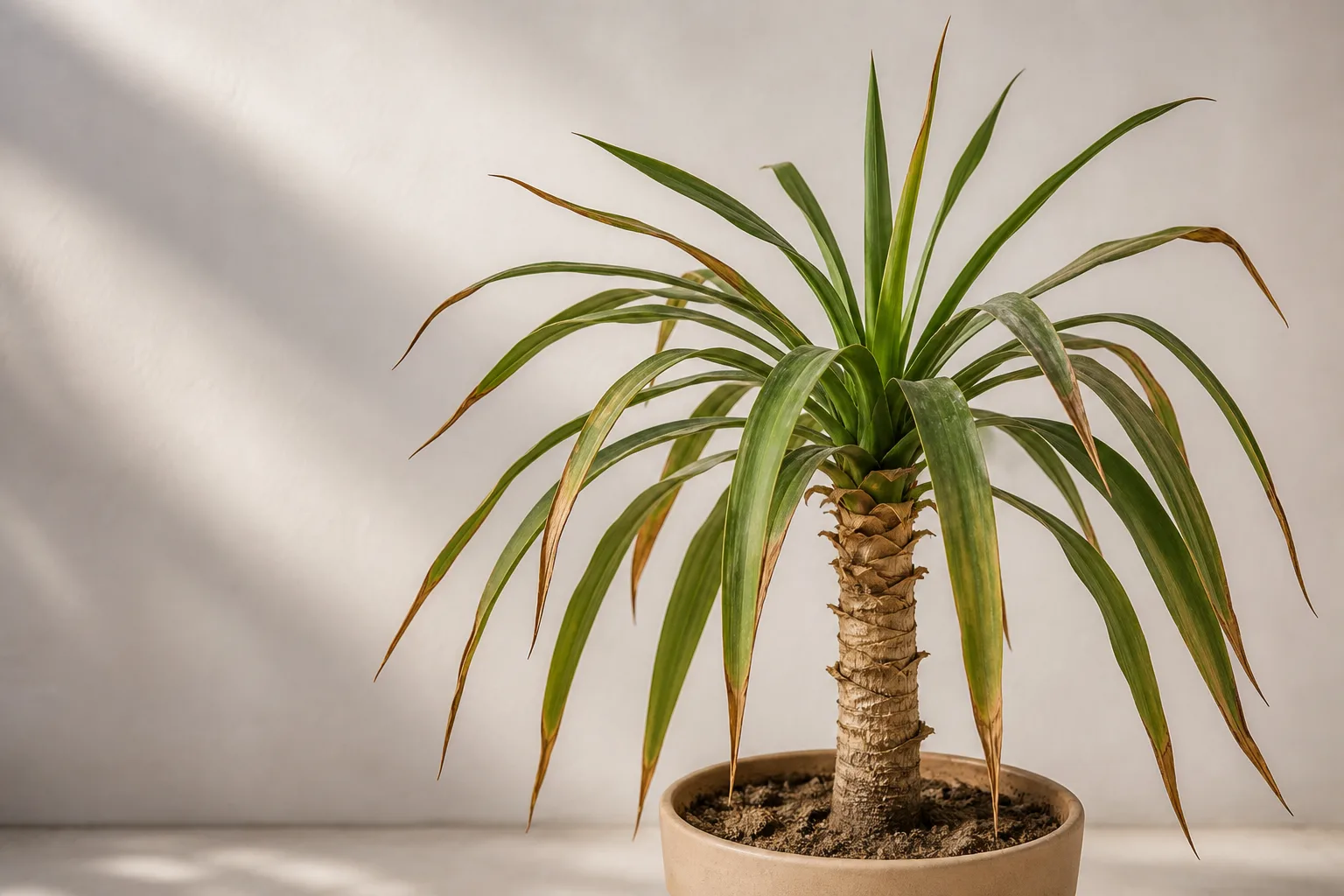
Underwatering on Yucca Plant shows as curled or limp sword leaves, a light dry pot, and dusty mix several centimeters down-usually during bright summer growth. Water deeply once, then return to your normal dry-down rhythm; do not switch to daily shallow watering.
Underwatering on Yucca Plant: Causes, Checks & Fixes
This guide covers underwatering on Yucca Plant. See also the general Underwatering guide, watering, and light pages for this plant.
Underwatering on Yucca Plant: Causes, Checks & Fixes
Quick answer
Yucca Plant is tolerant of drought-its thick trunk and sword leaves store water for dry spells. Even so, long gaps without water during active summer growth can still stress the plant. Curled or limp leaves, a light pot, and dusty dry mix several centimeters down point to underwatering, not rot.
First step: push your finger 5–7 cm into the mix and lift the pot. If the soil is dry throughout and the trunk base stays firm, water deeply once until runoff, then discard saucer water. Do not confuse reduced winter watering to the minimum with thirst-that seasonal dry-down is correct care for Yucca Plant overview.
What underwatering looks like on Yucca Plant
Healthy Yucca elephantipes holds stiff, sword-shaped leaves at a slight upward angle from each rosette atop the cane. When the root zone runs too dry for too long, those rigid blades change texture before they change color.
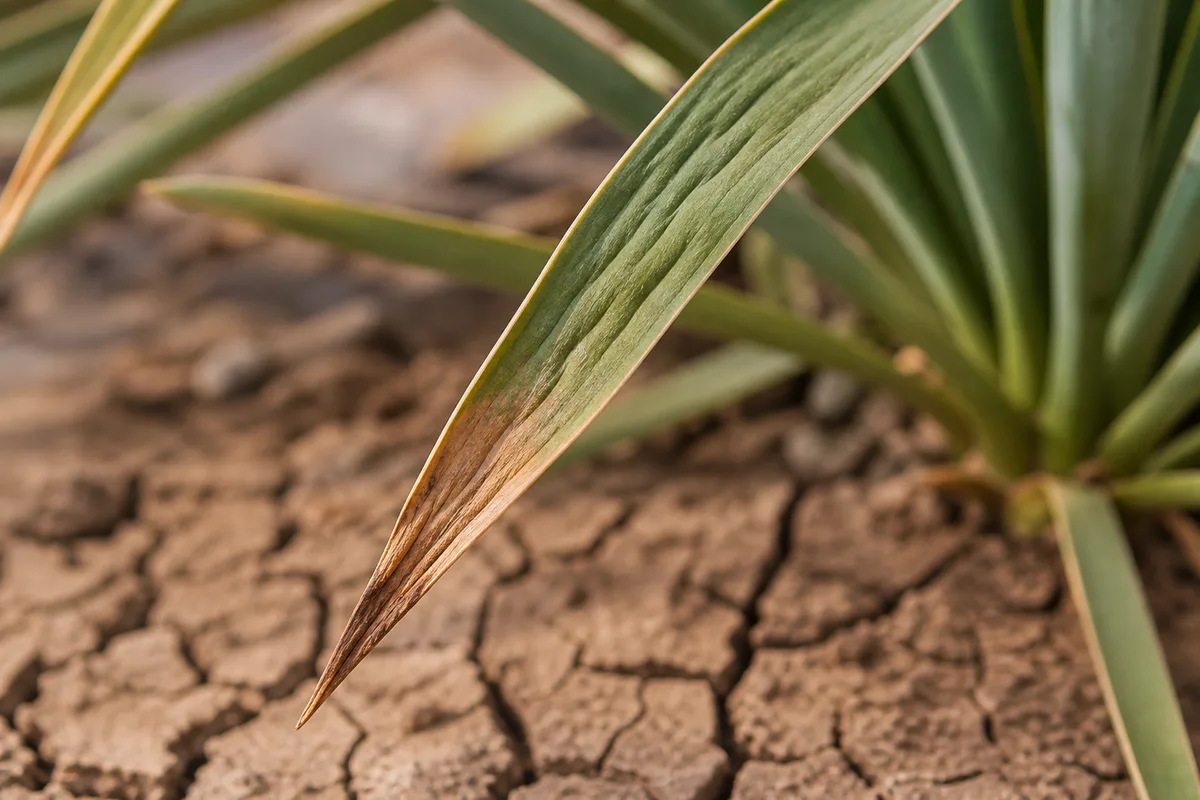
Underwatering symptoms on Yucca Plant - compare with healthy tissue on the same plant.
Typical underwatering patterns:
- Inward leaf curl - blades fold lengthwise or curl toward the midrib to reduce surface area and slow water loss; often the earliest sign
- Loss of rigidity - leaves feel less stiff and may hang limply from the rosette, especially on the side facing the brightest window
- Dry crispy edges - brown, papery margins on otherwise green blades, usually on older leaves first
- Light pot weight - the container feels noticeably lighter than after a recent watering
- Dusty dry mix - soil is dry well below the surface, sometimes pulling slightly away from the pot wall
- Slow new growth - rosette centers produce fewer or smaller leaves during a long dry spell in bright light
Unlike overwatering on Yucca Plant, the trunk stays firm when squeezed at the base, soil is not soggy, and there is no sour smell from the drainage hole. Some lower leaf drop happens on healthy yuccas too-underwatering adds curl and crispness across multiple rosettes, not just yellowing of the lowest blade.
Why Yucca Plant gets underwatering
Yucca elephantipes evolved in dry regions of Mexico to Guatemala where heavy rains drain quickly through sandy soil, followed by long dry intervals. Indoors, the plant still expects that rhythm: a deep soak, then time for the mix to dry completely before the next drink. Underwatering happens when that dry phase stretches too long relative to how fast the plant is using water.
Bright light and active summer growth
In full sun to part shade, yucca photosynthesizes actively and transpires more water through its leaves. A small pot in a south-facing window can dry in a week during spring and summer. Travel, forgotten watering, or fear of overwatering after a past root-rot scare all leave the mix dry too long while the plant is growing fastest.
Hydrophobic or peat-heavy mix
Old potting soil that has dried out completely can repel water. You pour on the surface and water runs straight through the drainage hole while the core of the root ball stays dry. The plant looks underwatered even though you watered recently-a pattern that worsens in fast-draining cactus blends left dry for weeks.
Oversized pot with sparse roots
A large decorative pot around a small root system holds a big volume of mix that dries unevenly. The surface may look briefly damp after watering while the center where roots actually sit stays parched. Owners see dry curl symptoms and assume they watered enough.
Withholding water after overwatering fear
Because overwatering kills yucca faster than drought, many owners swing too far the other way-skipping drinks for three or four weeks in summer when the plant still needs periodic deep soaks. Winter minimal watering is correct; summer drought in bright light is not.
Heat, drafts, and low humidity
Heating vents, hot south windows, and air-conditioning drafts accelerate evaporation from leaves and soil. Yucca tolerates low humidity better than most houseplants, but extreme dry air combined with bone-dry mix speeds dehydration on the leaf margins.
How to confirm the cause
Work through these checks in order before you change your watering routine:
- Pot weight - Lift the container off the saucer. A light pot after several days without water strongly suggests dryness.
- Soil moisture at depth - Push a finger or dry skewer 5–7 cm into the mix. Surface dust with wet core means poor drainage history; dry throughout confirms drought.
- Trunk firmness - Grip the cane base just above soil level. Firm wood supports underwatering diagnosis; spongy tissue means rot from wet soil instead.
- Leaf texture - Curled, papery, or limp blades with firm trunk point to thirst. Yellow lower leaves with brown halos on a heavy wet pot point to overwatering.
- Water absorption test - Water slowly and watch whether the mix darkens evenly or water channels straight through. Channeling confirms hydrophobic dry pockets.
- Season and light context - Active growth in bright summer light with long dry gaps fits underwatering. Minimal winter watering with some lower leaf drop may be normal, not a problem.
Diagnosis shortcuts:
| Pattern | Likely cause | What confirms it |
|---|---|---|
| Light dry pot + firm trunk + curled leaves | Underwatering | Leaves stiffen within 12–24 hours after deep watering |
| Heavy wet pot + soft trunk base | Overwatering / root rot on Yucca Plant | Mushy roots when unpotted; sour smell |
| Crispy tips only, otherwise upright leaves | Low humidity, salts, or fluoride | Even moisture at depth; tips brown without whole-leaf curl |
| Lower yellow leaves on dry soil in winter | Normal seasonal dry-down | Firm trunk; no widespread curl |
| Dry curl after recent surface watering | Hydrophobic soil | Water runs through fast; skewer shows dry core |
First fix for Yucca Plant
Water deeply until excess runs from the drainage hole, then empty the saucer immediately.
One thorough drink rehydrates the root zone better than several shallow top-ups. Pour slowly across the soil surface so water penetrates evenly rather than channeling down one side. If the mix repels water and runs through in seconds, bottom-soak the pot in a basin of water for 20–30 minutes so the root ball rewets, then let it drain fully before returning it to the saucer.
After this single correction, resume your normal rhythm-allow the soil to dry out between waterings before the next soak during active growth. Do not switch to daily light watering out of guilt; yucca roots need dry phases between drinks.
Do not fertilize a drought-stressed plant. Do not repot on day one unless hydrophobic old mix clearly will not rewet. Wear gloves if sap irritates your skin, and keep the plant away from pets-yucca is toxic to cats and dogs if chewed.
Step-by-step recovery
After the initial deep watering:
- Recheck in 12 hours - Curled or limp leaves should feel noticeably stiffer. No improvement with dry soil means hydrophobic mix or damaged roots-proceed to step 3.
- Repeat bottom-soak if needed - If the skewer still pulls out dry from the center after surface watering, soak again until the full root ball darkens.
- Poke aeration holes - For severely repelling mix, gently poke holes into the dry root ball with a chopstick before watering so water reaches the core.
- Move to appropriate light - Bright indirect to direct light helps the plant use water efficiently once rehydrated. Deep shade slows recovery.
- Trim only dead tissue - Cut fully brown, crispy blades at the base with clean shears. Leave green tissue even if edges are damaged-it still photosynthesizes.
- Establish a dry-down rhythm - Note how many days until the pot feels light again in your conditions. Match future watering to that interval during growth season, not a generic calendar.
If the trunk base softens or soil smells sour after rehydrating, stop watering and inspect roots-you may have been dealing with overwatering all along.
Recovery timeline
Mild underwatering often shows visible improvement within 12 to 24 hours as leaves rehydrate and regain stiffness. Moderate drought with crispy edges takes one to three weeks for new upright growth to emerge from rosette centers. Severe prolonged dryness with shriveled trunk tissue may take a month or more, and some lower leaves will not recover their original form.
Signs the plant is improving:
- Leaves stand more upright within a day of proper watering
- New blades emerge stiff from rosette centers
- Trunk stays firm; no softening at the base
- Pot weight drops predictably between waterings again
Signs the problem is worsening:
- Leaves stay limp 48 hours after deep watering with dry soil throughout
- Trunk tissue shrivels or wrinkles along the cane
- Widespread brown desiccation spreads up from lower rosettes
- Water runs through instantly and leaves remain curled-hydrophobic soil or root loss
Lookalike symptoms
Overwatering - Yellow lower leaves, heavy wet pot, and soft trunk base mean too much water, not too little. Wilted leaves with wet soil mean rotting roots cannot take up water-root failure, not thirst.
Drooping leaves - Drooping overlaps with underwatering limpness, but the diagnostic path starts with pot weight. Light and dry confirms thirst; heavy and wet confirms rot.
Brown tips - Crispy margins with otherwise rigid upright leaves usually mean fluoride in tap water, fertilizer salts, or dry indoor air-not whole-plant drought. Check whether only tips are affected while the rest of the blade stays firm.
Low light weakness - Pale stretched canes with sparse drooping rosettes look like dehydration but come from insufficient light. Soil may stay wet longer because the plant is not using water; watering more will not fix the structure.
Normal winter leaf drop - Yucca sheds some lower leaves when watering is reduced indoors in winter. That is expected seasonal behavior if the trunk stays firm and remaining leaves stay rigid.
Mistakes to avoid
- Watering daily after one dry spell - Shallow frequent drinks keep surface mix damp while failing to match yucca’s dry-down cycle and risking root rot.
- Assuming yucca never needs water - Drought tolerance is not zero water needs during active growth in bright light.
- Misting leaves instead of soaking roots - Surface humidity does not rehydrate a dry root ball.
- Ignoring hydrophobic soil - Repeated quick pours through dry mix waste water and leave roots thirsty.
- Confusing winter dry-down with underwatering - Minimal winter watering prevents foliage loss without keeping soil moist; curled summer leaves in a bright window are a different problem.
- Fertilizing to ” perk up” a dry plant - Salts stress drought-weakened roots.
Yucca Plant care cross-check
Underwatering on yucca sits inside a wider care pattern: bright light, gritty fast-draining mix, and deep but infrequent watering. If you fix thirst but the plant curls again within days, check whether the pot is too small for summer demand, whether heat sources are drying the mix faster than expected, or whether the soil blend drains so fast that water never saturates the root core.
Match watering frequency to how quickly your specific container dries in your light conditions-not a blog’s generic schedule. A yucca in a dim cool room needs far less water than the same plant in a bright bay window, even though both are the same species.
How to prevent underwatering next time
During active growth, water only after the mix dries completely throughout-not when the surface alone looks pale. Track pot weight for two full cycles in summer to learn your home’s rhythm. In bright light, expect shorter dry intervals than in shade; increase checks during heat waves or after moving the plant closer to a window.
Use fast-draining sandy soil mix, but refresh peat-heavy components that have gone hydrophobic. Ensure pots have open drainage holes and never sit in standing water after a soak. When travel takes you away, a deep watering before departure and a bright but not scorching location beats leaving the plant in a dark dry room for weeks.
Remember that reduced winter watering is prevention against overwatering, not neglect. Resume fuller dry-down cycles when spring growth and longer daylight return.
When to worry
Underwatering is rarely fatal on yucca-a firm trunk stores reserves that carry the plant through weeks of drought. Worry when the trunk shrivels or wrinkles along its length, multiple rosettes collapse with fully desiccated leaves, or leaves stay limp 48 hours after confirmed deep rehydration. Those patterns suggest root damage, hydrophobic soil failure, or a problem other than simple thirst.
Also escalate if you have been withholding water for fear of rot but the trunk is firm and summer light is strong-prolonged drought in active growth can weaken the plant enough that recovery takes months. A single deep soak is low risk when soil is genuinely dry and the base is solid.
Conclusion
Underwatering on Yucca Plant is the less dangerous side of water stress on a drought-adapted cane-but it still matters during bright active growth. Curled or limp leaves with dry soil and a firm trunk call for one deep watering, not a panic schedule change. Read pot weight and mix moisture at depth, rehydrate hydrophobic root balls when water runs through too fast, and judge success by stiff new growth-not by expecting old crispy blades to unfurl again.
When to use this page vs other Yucca Plant guides
- Yucca Plant watering guide - Use for routine moisture checks before assuming underwatering is the main issue.
- Yucca Plant problems hub - Browse all 29 common issues on this species.
- Wilting on Yucca Plant - Different entry point when symptoms overlap with underwatering.
- Brown Tips on Yucca Plant - Different entry point when symptoms overlap with underwatering.
- Yellow Leaves on Yucca Plant - Different entry point when symptoms overlap with underwatering.